


Andreas Almgren was drinking 144 grams of carbohydrate an hour on his hardest long runs before the New York City Marathon, and breath tests showed his body never burned more than 87 grams an hour of it. For roughly the first 40 minutes of each run, the drink was barely contributing at all.
Those tests shaped the fueling plan the Swede followed on Nov. 1, when he won New York in 2:06:01 in his first marathon. Maurten, the Swedish sports nutrition company whose drink and gels he used, worked through the testing with him and has published the results on its website, next to links to buy the same products.
Almgren, who won the world half-marathon title in a European record of 58:06 in September, had never needed to fuel during a race before this block, and he began taking fuel in his workouts last November with no stomach trouble since. “I’ve aimed for about 120, maybe 130 g per hour, and it hasn’t really been an issue for me,” he says in a video on the Maurten page.
What the Breath Tests Measured
The two tested runs were the 37K (23-mile) session on Aug. 27 and a 40.3K (25-mile) run on Sept. 5, both part of the block MH broke down after the race. He averaged 3:15/km for 2:03:24 on the first, and 3:07/km for 2:05:25 on the second, which he ran without a stop and finished at 2:50/km.
On both he drank 225 ml of Maurten’s Drink Mix 320, holding 36 grams of carbohydrate, every 15 minutes. The carbohydrate was labeled with carbon-13, a heavier and harmless form of carbon that turns up in the breath once the body burns it, so samples collected through each run could tell fuel from the drink apart from the glycogen already stored in his muscles and liver.
Five kilometers into the August run, the drink made up just 3% of the carbohydrate he was using, and only 10% at 10K. From about 16K it settled at around a quarter, reaching 29% at 30K, where he was burning it at 83 grams an hour. The September run traced almost the same curve: 2% after 17 minutes, 10% after 34, 27% from the 52-minute mark, and the 87-gram peak at 96 minutes.
Maurten estimates his total carbohydrate use on those days at 222 and 238 grams an hour, so most of the work still fell to his stored glycogen, which is why Almgren carb-loaded in the days before New York. In the closing kilometers, carbohydrate was supplying 93% of his energy. The company also fed his lab profile, the breath-test results and the New York course into a model of how his stores would drain over the race. On the planned fuel they lasted to the finish, running low only in the last few minutes, while with no fuel at all the model had him running short of carbohydrate for his pace after about 80 minutes, well short of the 126 he needed.
Eleven trained cyclists in a 2022 study in the European Journal of Applied Physiology hit a similar ceiling. Taking in 120 grams an hour over three hours, they burned it at a peak of about 96 grams an hour, and compared with an intake of 90 grams, the extra carbohydrate did not reduce how much of their own stores they used. The standard advice for efforts beyond two and a half hours has long been 60 to 90 grams an hour.

The Plan He Took to New York
Flagstaff, Ariz., at 2,100 meters (about 6,900 feet), was where Almgren spent the last five weeks of his build, and the samples from a third test there on Oct. 6 are still being analyzed. Maurten’s estimate from his heart rate puts his carbohydrate use that day at 274 grams an hour, but the race plan stayed with the averages from August and September. “Your metabolism is constantly higher, so you need more energy,” he said of training at altitude.
In New York he used the same 5K schedule as on his long runs:
- A Gel 100 two minutes before the start
- 225 ml of Drink Mix 320 at 5K, 10K, 15K, 20K, 25K, 30K and 36K
- A Gel 100 Caf 100, Maurten’s caffeinated gel, at 20K
That left 277 grams of carbohydrate waiting on the course, and Maurten put his realistic intake at about 120 grams an hour. Every bottle sat on the right side of the road, so Almgren, who is left-handed, rehearsed taking them at speed from tables set up beside the track.
He also took Maurten’s sodium bicarbonate product, as he had in both his half-marathons, saying “I felt I got a very good effect from it.” The research for bicarbonate is stronger in short, hard efforts than in continuous running, which Maurten’s own page acknowledges.
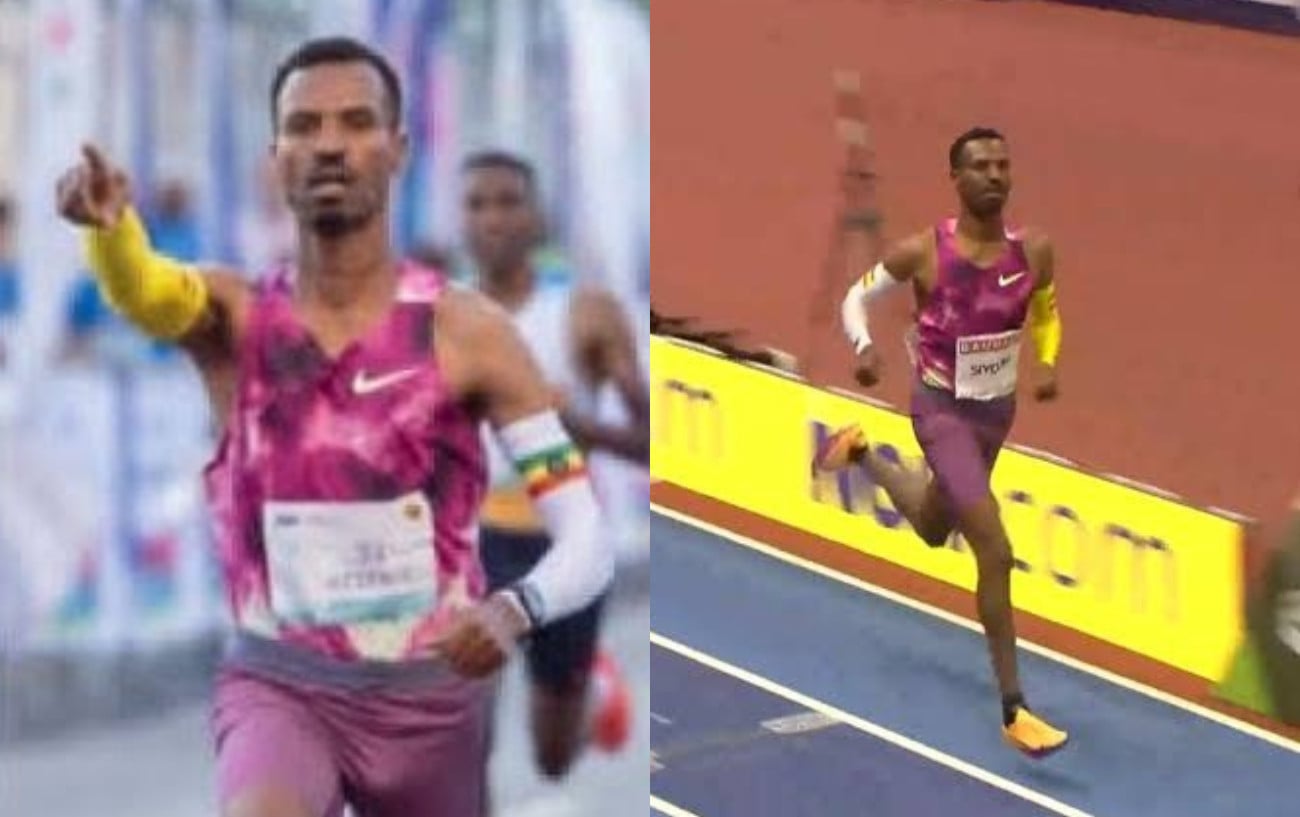
Almgren stayed with the leaders until Central Park and pulled away from Yemaneberhan Crippa in the final mile to win by 13 seconds, a finish broken down in MH’s look at his splits. “I stuck to the plan and I felt good throughout the race. I had no stomach issues or anything like that,” he said. “It was just a little bit weird because, being my debut, I didn’t really know how I was supposed to feel at the different points in the race.”
RunClub
Get more running stories — join RunClub
Daily running news, a community of 300,000+ runners, free training plans for every distance, and a daily running game. Free to join — no card.
Already a member? Log in →






Start the conversation