


Deirdre Keane had a full calendar of races booked for 2026 before she learned she was pregnant, and she kept almost every one of them. The 38-year-old nurse practitioner from New York finished the New York City Marathon on Nov. 1 at 34 weeks pregnant. “This is my seventh marathon pregnant,” she told a reporter in a postrace interview, and she meant seven in this one pregnancy.
Six of those seven came at World Marathon Majors. Keane ran Tokyo in 3:16 in March, before she was pregnant, then Boston (3:16) and London (3:38:40) in April at around five and six weeks, without yet knowing. The rest of her year went Sydney at 25 weeks in 4:05, Berlin at 29 weeks in 4:01, Chicago at 31 weeks in 3:58 and New York at 34 weeks in 4:06. Her Chicago time was actually her quickest since London, and by the end of New York she had collected all seven Majors in a single year (the list has run to seven since Sydney was added in 2025). Her late father would have turned 75 on the day of the New York race.
She and her husband, Brian Innes, had expected it would take a while to get pregnant, so she had built 2026 into one last big year of racing, with her first Ironman, a 100-miler and eight marathons on the list, she told the Washington Post. The Ironman and the 100-miler came off the calendar once a test after London showed she was pregnant, but the marathons stayed on with her doctor’s support. Keane said that support came with a few rules: ease off at any cramping or pain in her abdomen, and keep on top of her eating and drinking.
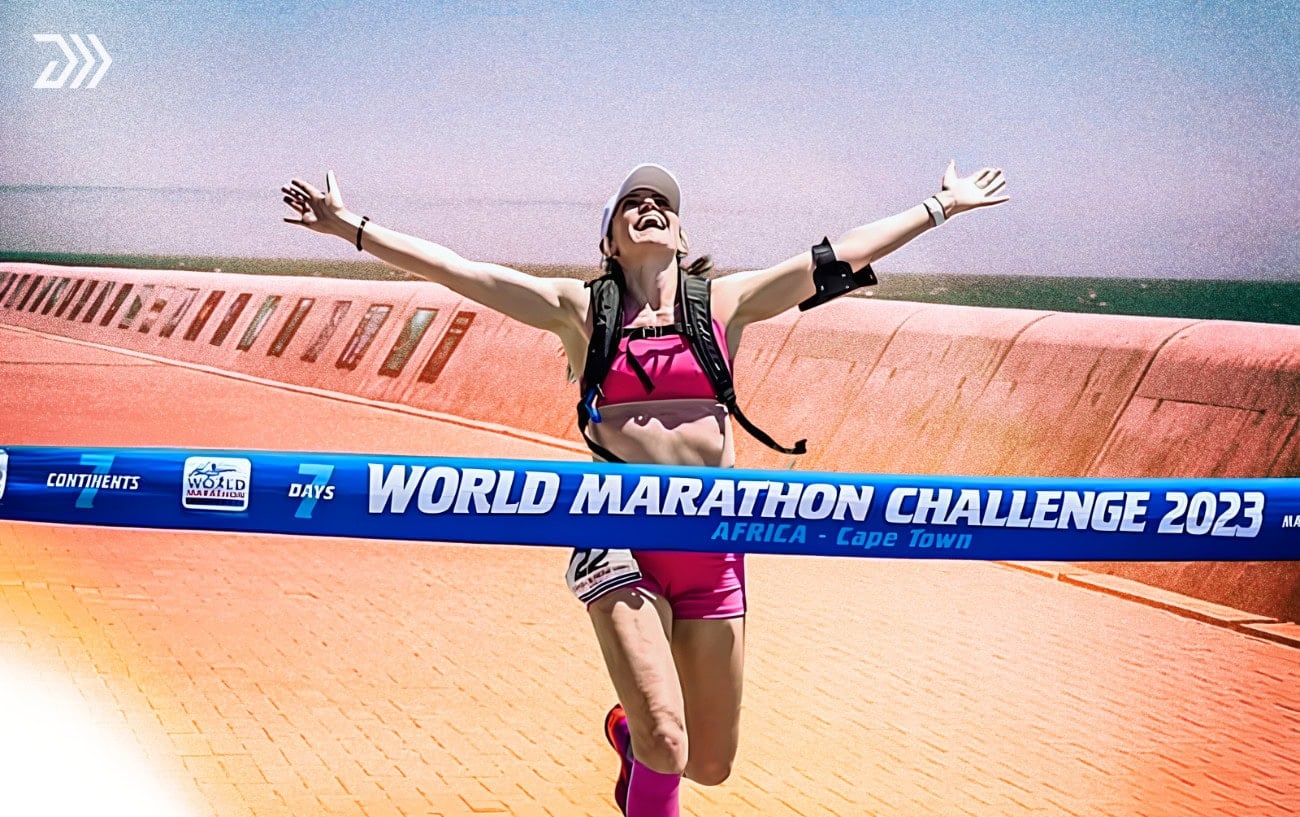
Keane won the women’s race at the 2023 World Marathon Challenge, seven marathons on seven continents in seven days, and she has finished 100-milers at Leadville and Grindstone. Her father, a marathoner, died of cancer when Keane was 13, and it was in his memory that she began running years later as a college student.
What the Research Says About Running Through Pregnancy
The postrace clip traveled fast, and so did the arguments in the comments, where congratulations sat alongside accusations that she had gone too far. One post on X picked up by LBC called it “so beyond foolish.” Most of the argument came down to whether running that far, that late, is safe for the baby.
The American College of Obstetricians and Gynecologists says women who did vigorous exercise before pregnancy can generally keep it up while pregnant, provided there are no complications. Research on the far end of that range is thin. A 2025 survey in Sports Medicine from Margie Davenport’s lab at the University of Alberta asked 331 endurance athletes about their pregnancies. Those who logged more than 300 minutes a week in the third trimester had lower odds of complications during delivery. They also had about four times the odds of diastasis recti, the separation of the abdominal muscles after birth. Because the answers were self-reported, the survey shows a link rather than cause and effect.
A study of 42 elite and world-class runners published in BMC Pregnancy and Childbirth in September, with physiologist Trent Stellingwerff among the authors, found the babies were born at 39 weeks on average and weighed 3.2 kg (just over 7 lb.). Three were born preterm and seven spent time in neonatal intensive care, and half the mothers had an injury that delayed their return to running. Davenport’s group has also published a case study of an ultramarathoner who averaged close to 98 miles (158 kilometers) a week during her second pregnancy and raced five times, three of them ultras. Her baby was born just short of 37 weeks and was a normal size.
Racing late in pregnancy is the part researchers know least about. When Ali Anderson ran 2:59:43 in Sydney at 32 weeks, the same race Keane ran at 25 weeks, she said she kept well below her maximum heart rate throughout. In one study of elite athletes, the baby’s heart rate slowed once the mother went past 90 percent of her maximum. Keane, for her part, was running close to two minutes per mile slower in New York than she had in Boston.
She is one of several women whose pregnant marathons drew attention this year. Calli Hauger-Thackery ran 2:43:58 in Boston at 22 weeks, and Emma Bates, who found out she was pregnant the day after racing Valencia, went on to log her labor on Strava in July.
After New York, Keane summed up her year in one line: “Not quite the year I had planned, but I wouldn’t change a thing.”
RunClub
Get more running stories — join RunClub
Daily running news, a community of 300,000+ runners, free training plans for every distance, and a daily running game. Free to join — no card.
Already a member? Log in →






Start the conversation