


On Friday evening, President Donald Trump gathered more than 50 commissioners, athletic directors, coaches, and lawmakers in the gold-gilded East Room of the White House for what was billed as a college sports roundtable. What it became was something closer to a venting session — with Trump doing most of the venting.
The grievance: NIL. The name, image, and likeness era that now allows college athletes to be paid for their personal brand has, in Trump’s view, broken American college sports. He wants it reined in. Ideally, he’d like to erase it entirely.
“We have to save college sports,” he told the room, according to Reuters.

The Moment That Stopped Everyone
As reported by Reuters, Trump opened by going after retired federal judge Claudia Wilken, crediting her — not warmly — for the legal chain reaction that led to NIL. Her 2014 ruling in O’Bannon v. NCAA found that the NCAA had violated antitrust law by blocking schools from compensating athletes for their name, image, and likeness. Later decisions built on that foundation until the whole structure of amateur athletics started looking very different.
“A person who knew nothing about sports made a ruling, and she turned the whole thing upside down,” Trump said. “And it’s really a disgrace, if you want to know the truth. A damn disgrace.“
Then came the best part of the evening.
Midway through his remarks, someone in the room informed Trump that the Supreme Court had also played a role — specifically through a unanimous 9-0 decision in NCAA v. Alston in 2021, which helped open the door to the NIL era.
“So, the Supreme Court was responsible for this? Gee, that’s surprising,” Trump said.
He pivoted immediately. The Supreme Court, he declared, “ought to be ashamed of itself for a lot of reasons.” A 9-0 ruling, by a court on which three of his own nominees sit. But sure.

What Actually Changed — and Why It Matters
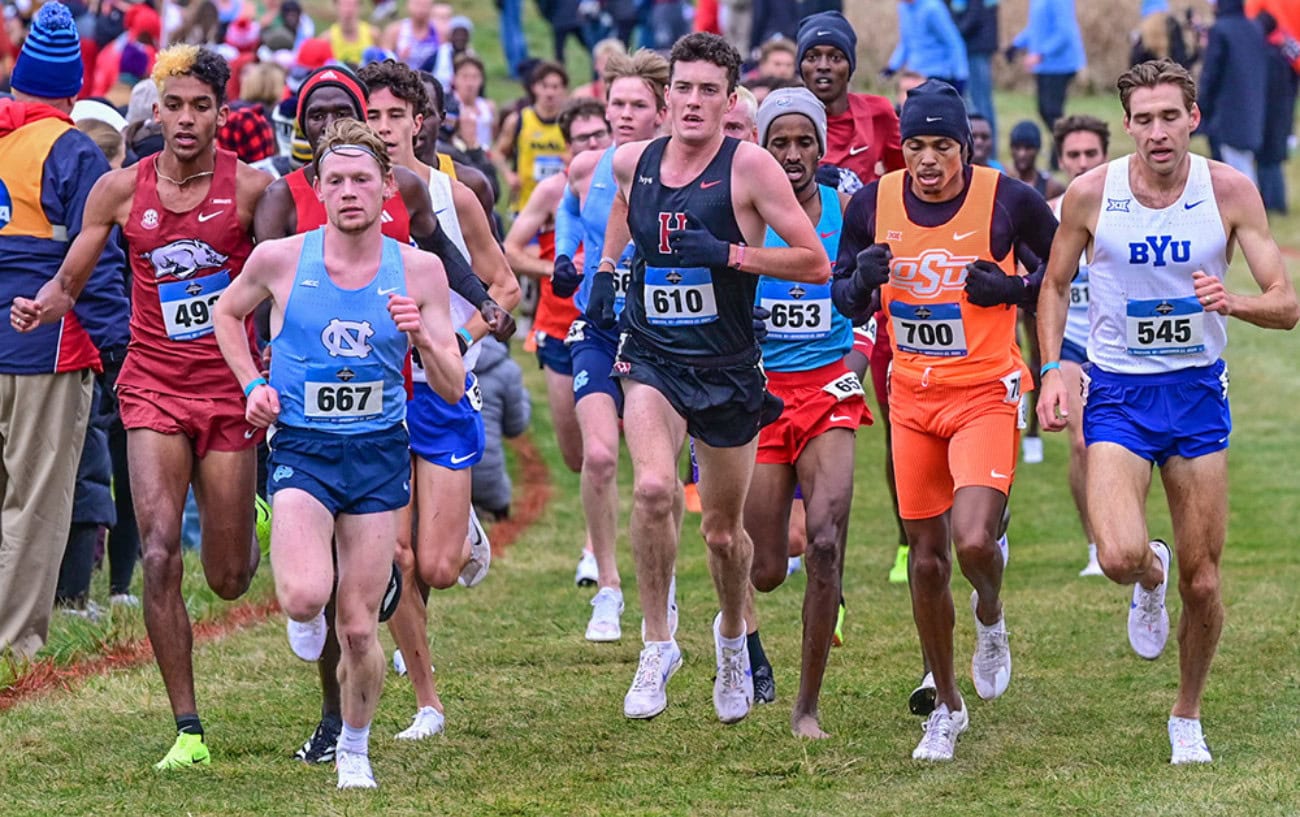
Until five years ago, the NCAA flatly prohibited college athletes from accepting money tied to their name, image, or likeness. Scholarships were the deal. The system was so rigid that a D3 cross country runner was banned just for accepting a donation to help pay for college. Then Alston happened, the NCAA blinked, and the market took over. Fast.
NIL deals — especially for football players — have ballooned into the millions. Schools are effectively bidding for top recruits through collectives and revenue-sharing arrangements. The budgets required to stay competitive in football and men’s basketball have grown so large that something else has to give. And what gives, almost every time, is the programs nobody televises.
Track and field. Cross country. Swimming. Rowing. These are the sports that feed the U.S. Olympic pipeline. They are also the first things universities cut when the football bill comes due.
Notre Dame athletic director Pete Bevacqua didn’t sugarcoat it, calling college football “a runaway financial train” eating up resources that used to fund the rest of athletics. “The industry is nearing the point of no return,” he said.
SEC commissioner Greg Sankey was equally direct: “We cannot go on any longer on this circumstance… we’ll fracture more if we fail to act.”
ACC commissioner Jim Phillips had perhaps the most quotable summary of life in the current legal landscape: “You don’t like a rule, you just go to a local judge.”

The Executive Order
Trump’s plan, such as it is: sign a new executive order within a week. He already issued one in July 2025 targeting certain recruiting payments by third parties, but said Friday’s version will be “more comprehensive.”
He also made clear what he really wants. “I’d like to go exactly back to what we had and ram it through a court,” he told the gathering.
The room went quiet. Which makes sense, because every court that has looked at this — including the Supreme Court, unanimously — has said the same thing: the NCAA cannot use its rules to prevent athletes from being compensated. An executive order attempting to undo that would be challenged almost immediately. Trump acknowledged this himself, saying he hopes the lawsuit finds “a real judge, a compassionate judge with common sense.”
He is essentially betting on the appeals process.

Congress: One Chamber Ready, the Other Not So Much
The legislative vehicle here is the SCORE Act — a Republican-backed bill that would give the NCAA and conferences antitrust protection, prevent athletes from being classified as employees, and set a federal standard for NIL deals.
House Speaker Mike Johnson told the room the bill now has the votes to pass the House and could go to the floor this month. Majority Leader Steve Scalise pushed for a limit on how many times athletes can transfer between schools — a reasonable concern, given that some players move multiple times chasing larger paydays and extra eligibility years.
The Senate is another matter entirely. Getting a bill through requires 60 votes, which means pulling at least seven Democrats across the aisle. Senator Ted Cruz delivered a blunt assessment: zero Democrats in the Senate currently support the SCORE Act.
There was, oddly, a bright spot. About a mile away, while Trump held court in the East Room, senators Maria Cantwell (D-Wash.) and Eric Schmitt (R-Mo.) quietly reached a bipartisan agreement on a narrower bill to amend the Sports Broadcasting Act of 1961, allowing college conferences to pool and sell their TV rights collectively. It’s a smaller step, but it’s a real one, and it’s expected to be introduced in the Senate next week.
The Guest List Had One Notable Gap
The event was chaired by Trump, with Florida Governor Ron DeSantis and New York Yankees president Randy Levine as vice chairs. In the room: NCAA president Charlie Baker, former Alabama coach Nick Saban, NBA commissioner Adam Silver, and ESPN president Jimmy Pitaro.
Tiger Woods was invited but did not come. (His son Charlie is committed to play college golf at Florida State, which gives him more skin in this game than most.)
Saban called for a real revenue-sharing structure and raised the somewhat surreal point that some football players are now in their mid-20s — six or seven years into their college careers — still collecting eligibility.
The most glaring absence, as Democratic Representative Lori Trahan noted directly: no current college athletes. The people most affected by every decision made in that room weren’t in it.
RunClub
Get more running stories — join RunClub
Daily running news, a community of 300,000+ runners, free training plans for every distance, and a daily running game. Free to join — no card.
Already a member? Log in →






Start the conversation