If you’ve been paying even the slightest attention to running lately, you might be wondering: Did someone spike the Gatorade? World records are dropping at a pace that makes it seem like elite runners have collectively unlocked cheat codes.
Just in the past few weeks, we’ve seen:
- Jakob Ingebrigtsen obliterate the indoor mile plus his own 1,500m record in one race (because breaking one record at a time is so last year).
- Yared Nuguse briefly hold that mile record before Jakob decided to ruin his moment.
- Grant Fisher going full “hold my beer” mode and setting new world records in the indoor 3,000m and 5,000m.
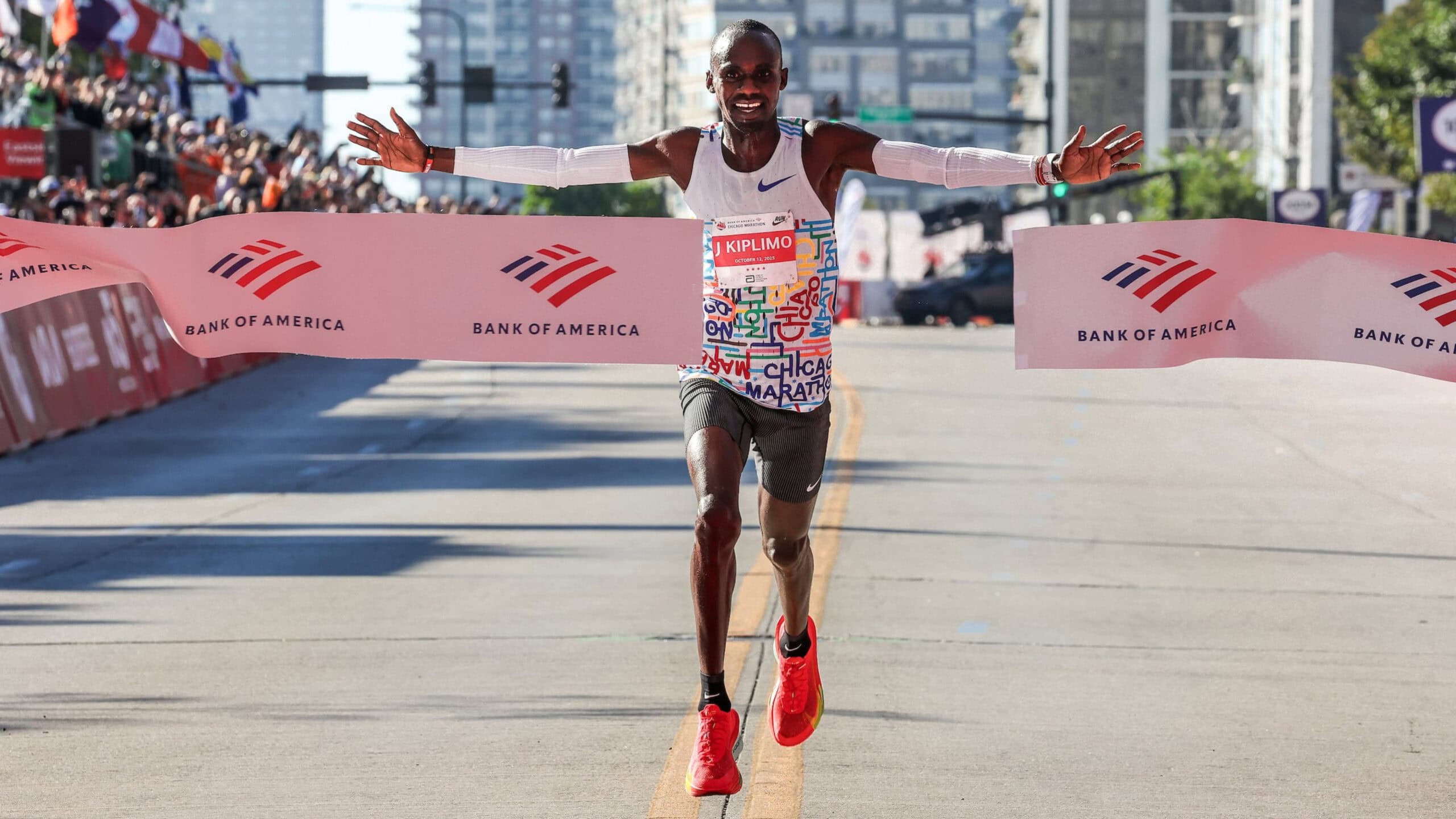
- Jacob Kiplimo smashing the half-marathon world record by 48 seconds—and oh yeah, he’s now taking on the London Marathon, where the first sub-2:00 could be on the table.
So… what’s going on? Is there something in the air? Are runners evolving into faster versions of themselves like Pokémon (or T-1000s, if you’re over 35)?
Let’s break it down—both the records and the reasons behind them.

Let’s Talk About the Big Records First
Before we get into the why, let’s appreciate just how absurd some of these performances have been.
Jakob Ingebrigtsen
The Norwegian golden boy did it again.
At the World Indoor Tour in Liévin, Ingebrigtsen didn’t just break the mile world record—he demolished it, running 3:45.14. And because just breaking the mile wasn’t enough, he also took down his own indoor 1,500m record (3:29.63) in the same race. Efficiency at its finest.
For context, that 3:45 mile is faster than most people can sprint 400m, except he did it four times in a row without stopping.
Now, this wasn’t completely unexpected. Ingebrigtsen has been on an absolute tear in recent years, picking up Olympic golds and world titles like they’re loyalty points at an Espresso House (Google tells me that’s a popular coffee chain in Norway). But even by his ridiculous standards, this was special.
Also, can we take a moment for Yared Nuguse?
The guy had just broken the world record at the Millrose Games in New York five days earlier with a stunning 3:46.63, only for Jakob to come along and treat it like a Skolebrød (that’s a “Norwegian school cookie”). Tough break.

Grant Fisher
Grant Fisher has been that guy in American distance running for a while now, and he decided to make sure everyone knows it. He first dropped an insane 7:22.91 in the indoor 3,000m at Millrose, then backed it up by shattering the indoor 5,000m record in Boston with 12:44.09 (which is basically running 3 x 1,600m repeats in under 4 minutes each, sans rest).
Fisher’s rise has been fascinating. The former Stanford standout and Bowerman Track Club star was already America’s best bet for long-distance glory, but in 2022 and 2023, he kept knocking on the door of greatness without quite smashing through. That changed big time at last year’s Olympics when he got onto the podium in both the 5,000m and 10,000m. These indoor marks further elevate his global profile.
His new records aren’t just good by American standards—they put him right there with the best in the world. And if his indoor form translates to the outdoor season, he could be a genuine medal threat again in both distance events at the World Athletics Championships in Tokyo this summer.
At this rate, Fisher might just start breaking records accidentally during workouts.
Jacob Kiplimo
Jacob Kiplimo looked at 13.1 miles and said, “Yeah, let’s just do that in 56:42.”
Yes, you read that correctly. He ran sub-57 for a half marathon. That’s 4:20 per mile, for 13.1 miles, back-to-back-to-back-to-back-to-back… you get the idea. A lot of very fast miles.
And here’s the real kicker: Kiplimo is running the London Marathon this spring. With the way he’s running, the first-ever sub-2:00 marathon might actually be in play.
Eliud Kipchoge proved that a human can run 1:59 in controlled conditions—but could Kiplimo do it in a real race? Given how absurd his half marathon pace was, it’s not totally out of the question. London just got very interesting.
READ: Two Runners, Two Records—Who Truly Redefined Fast?

So, Why Are All These Records Falling?
Now that we’ve got the jaw-dropping performances out of the way, let’s talk about what’s actually fueling this record-breaking era.
Because let’s be real—it’s not just that today’s runners are that much fitter than their predecessors. A lot has changed in the sport over the past few years.
1. Super Shoes: The Legal Boost That’s Changing the Game

If you’ve been anywhere near a running forum in the past seven or so years, you’ve probably heard the term “super shoes” thrown around. These aren’t just your average running flats—they’re basically mini trampolines strapped to your feet (okay, not really, but close; trampolines aren’t made of supercritical foam and carbon).
The biggest game-changer has been the carbon fiber plate technology, which acts as a spring, returning energy with each step and reducing fatigue over long distances.
Combine this with PEBA-based midsoles (a foam that’s ridiculously bouncy and lightweight), and suddenly, runners are getting 2-4% more efficiency per stride.
That might not sound like much, but at the elite level, 2% over 10,000m could mean shaving off 20-30 seconds from a race time—which is often the difference between a world record and just another “fast” time.
Runners aren’t just getting faster in races, either—shoes are transforming training.
Athletes can recover faster, handle more volume, and push their limits without the same wear and tear as previous generations. It’s no surprise that since the introduction of super shoes, so many world records have fallen.
Does this mean old records were more “legit”? That’s up for debate. But one thing is clear—running in 2025 is fundamentally different from running in 2015.

2. Tracks Are Faster Than Ever
It’s not just what’s on the feet—it’s also what’s under them.
Track surfaces today are designed with one goal in mind: speed. Gone are the days of cinder tracks or even old-school rubberized surfaces.
The latest track materials maximize energy return, meaning runners lose less momentum with every stride.
Then there’s indoor track design, which has evolved massively in recent years.
Newer indoor tracks of course feature banked curves, which allow runners to maintain their speed without fighting as much centrifugal force.
In the past, tight indoor tracks were seen as slower because runners had to decelerate on turns—now, these banked tracks actually help athletes carry their momentum, making fast times more likely.
And let’s not forget track altitude considerations.
Runners are increasingly choosing venues that sit at slight elevations where the air is just thin enough to reduce drag but not high enough to impact oxygen delivery. The science of picking the perfect location to break a record is more advanced than ever.
3. Wavelight Technology: The Ultimate Pacer
In the past, runners had to rely on human pacemakers—which, let’s be honest, could be hit or miss. Some pacers went too fast early and burned out, while others weren’t quite aggressive enough. But now?
Enter Wavelight Technology—essentially a set of LED lights that move around the track at world-record pace.
Instead of guessing whether they’re on pace, athletes have a constant visual cue showing exactly where they need to be.
This has changed everything.
Runners no longer have to worry about inconsistent pacing—they can just lock in, focus, and go. It’s not just about keeping them on schedule; it prevents mental lapses, which are often the difference between a record-breaking performance and just missing it.

4. Training & Recovery Have Become Data-Driven Science
Modern training isn’t just about working hard—it’s about working smart.
- Wearable tech (GPS, HRV monitors, lactate sensors, sweat rate measurement tools) allows athletes to track every single aspect of their physiology. They know exactly when they’re overtraining, when they need to push, and when they need to recover.
- Altitude training camps are now ultra-optimized, with runners alternating between high-altitude stays (for red blood cell production) and low-altitude speedwork (to keep fast-twitch muscles firing).
- Recovery techniques like cryotherapy, hyperbaric oxygen chambers, and infrared therapy help athletes bounce back quicker than ever before.
Back in the day, runners just ran miles and hoped for the best. Now? Every step is analyzed.
5. Competition Has Never Been Deeper
Here’s a fact: competition breeds speed.
In the past, only a small group of athletes were running at world-record paces. Now? You’ve got dozens of guys capable of dropping a 12:50 5K or a sub-27:00 10K. That kind of depth forces runners to get better—or get left behind.
No one is just running on talent anymore. The bar has been raised, and if you’re not optimizing every little detail, you’re not winning.
6. Supplementation is Now a Science (and It Works)
Athletes aren’t just training harder—they’re fueling smarter.
Gone are the days of simply eating a big plate of pasta the night before a race and washing it down with some Gatorade.
Now, runners are tapping into cutting-edge sports nutrition and legal performance-enhancing supplements to squeeze every last ounce of efficiency out of their bodies.

Sodium Bicarbonate (Bicarb)
Speaking of legal performance enhancers…
Ever feel that deep, searing burn in your legs when you’re going all out? That’s lactic acid doing its thing, accumulating in your muscles and eventually slowing you down.
Sodium bicarbonate (yep, baking soda) has been shown to help buffer lactic acid, allowing athletes to sustain high intensities for longer before that burn sets in.
How does it work?
When muscles produce lactic acid, it dissociates into lactate and hydrogen ions. The hydrogen ions lower pH levels, leading to muscle fatigue.
Bicarbonate acts as an alkaline buffer, neutralizing those hydrogen ions and keeping pH levels in check.
The result?
Runners can maintain their speed for longer, particularly in events ranging from the 800m to 10K, where lactic acid buildup is a major limiting factor.
However, the challenge with bicarb has always been stomach issues—taking too much can lead to bloating or GI distress (not exactly ideal mid-race).
That’s why newer bicarb supplementation methods, like slow-release capsules and gels, are becoming more popular, allowing athletes to get the performance benefits without the unpleasant side effects.
Beetroot

Beetroot helps with oxygen utilization—a crucial factor in endurance sports.
Beetroot is naturally rich in nitrates, which the body converts into nitric oxide, a molecule that dilates blood vessels and improves oxygen delivery to muscles.
Why does this matter?
Running fast isn’t just about having strong legs—it’s about how efficiently your body can transport oxygen to those muscles and clear out metabolic waste.
Studies have shown that beetroot supplementation can improve time-to-exhaustion by up to 16% in endurance athletes. That might not sound like much, but in an elite race where margins are razor-thin, it’s the difference between a new world record and just another fast time.
It’s especially useful for events like the 5K, 10K, and half-marathon, where the body is working at near-maximal oxygen consumption for an extended period.
Unlike bicarb, which is best used in specific race scenarios, beetroot juice is often part of daily training routines, helping runners adapt and perform at a consistently high level.
Caffeine
Caffeine isn’t just for getting through Monday mornings—it’s one of the most studied and effective performance enhancers in sports.
It improves endurance, increases fat oxidation (helping preserve glycogen stores), and enhances neuromuscular function. In short, it helps athletes go harder for longer while reducing their perception of effort.
Most runners aren’t just casually sipping a latte before their races, though—dosing and timing matter.
The optimal caffeine range for performance is 3-6mg per kilogram of body weight, taken 30-60 minutes before exercise. That’s why you’ll see elite runners downing pre-race caffeinated gels, espresso shots, or energy drinks just before stepping onto the track.
But caffeine isn’t just for pre-race boosts—it’s also being strategically used mid-race, especially in marathons and half-marathons. Runners are now micro-dosing caffeine through the race, using small but consistent amounts to stave off fatigue and keep energy levels high in the latter stages.
This has become a key strategy in marathon record attempts, helping athletes, especially in marathons, maintain their insane pacing in the final miles.
Hydrogen-Rich Water
This one is still a bit controversial, but it’s worth mentioning because some of the world’s top runners are experimenting with it. Hydrogen-rich water (HRW) is regular water infused with molecular hydrogen, which is believed to have antioxidant and anti-inflammatory properties.
The theory?
Endurance exercise causes oxidative stress, which contributes to fatigue and slower recovery.
Hydrogen molecules act as selective antioxidants, targeting harmful free radicals without interfering with the body’s natural signaling processes (which some traditional antioxidants can do).
Early research suggests that HRW might help reduce muscle fatigue and improve post-exercise recovery, allowing runners to train harder and recover faster.
Is it the game-changer? Maybe not yet.
But when marginal gains are the name of the game, athletes are willing to try anything that might help—and if HRW can shave a few seconds off a marathon time, you can bet more runners will be using it.

Carbohydrate Periodization & Fueling Strategies
Finally, we need to talk about how nutrition itself has become more scientific than ever before.
In the past, carb-loading meant eating a giant plate of pasta the night before a race. Now, elite runners have their glycogen stores calculated down to the gram to ensure they’re racing with optimal fuel levels.
One of the biggest breakthroughs has been dual-source carbohydrate fueling, where runners consume both glucose and fructose in specific ratios to maximize carbohydrate absorption.
Traditional gels and sports drinks could only provide about 60g of carbs per hour before causing stomach issues, but with dual-source fueling, athletes can now absorb up to 90-120g per hour.
This means more energy, less bonking, and faster finishes.
For marathoners in particular, this has been a game-changer.
New carbohydrate formulations like Maurten gels, which use hydrogel technology to slow digestion and reduce GI distress, have allowed runners to fuel aggressively without suffering stomach problems.