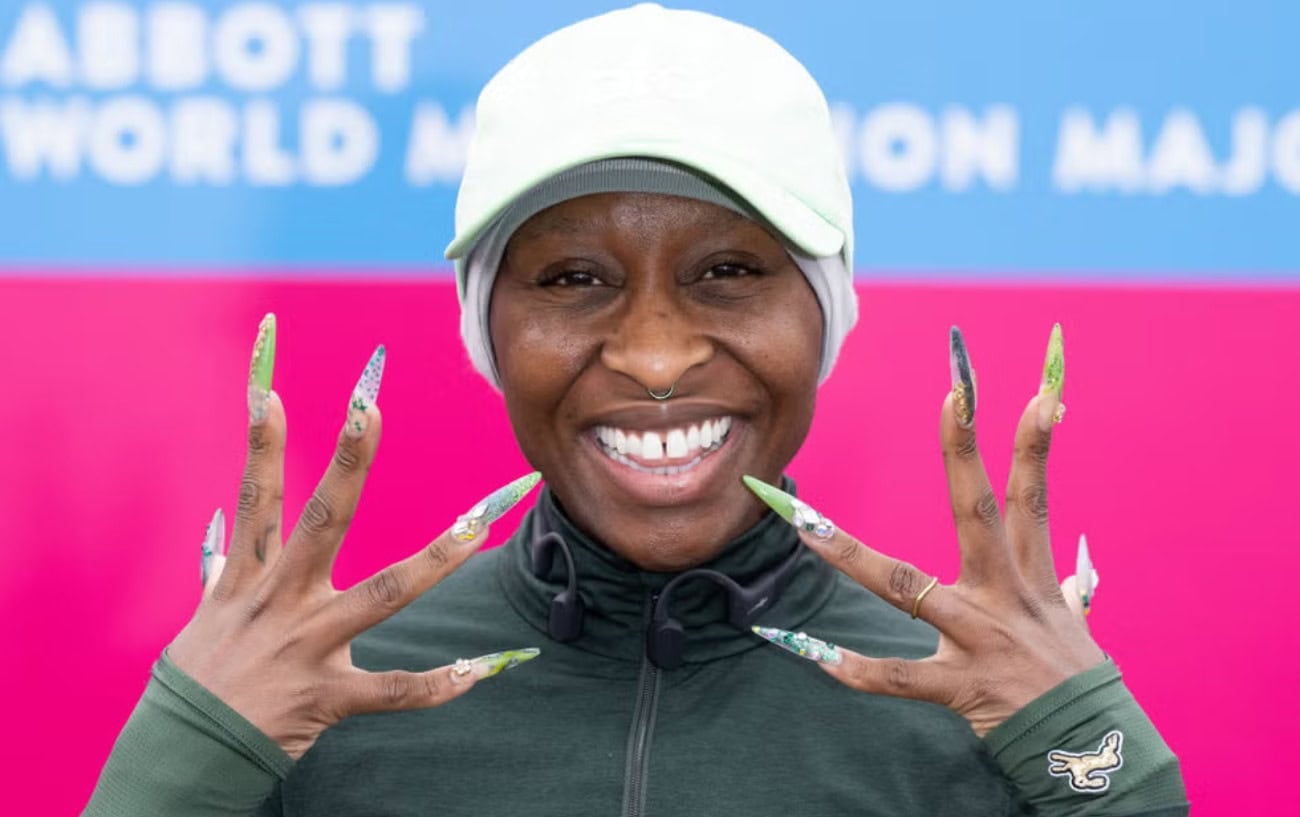
Most runners book the Monday after a marathon as a write-off. Cynthia Erivo has a show.
The British actor—known best for Wicked and The Color Purple—is running the 2026 London Marathon on April 26, then returning to the Noël Coward Theatre the following evening to perform in Dracula. Not as a supporting character. As all 23 of them.
It’s a scheduling quirk that would give most coaches a heart attack, but Erivo, 39, seems unfazed. She’s done this before.
The Numbers
Erivo ran her first marathon at the 2016 New York City Marathon in 3:57:07, while simultaneously performing on Broadway. She came back to London in 2022 and knocked 22 minutes off that time, crossing in 3:35:36. Now she’s targeting 3:15—which would mean shaving off another 20 minutes.
“I really would love to run it at 3:15,” she told Runner’s World. “If I could get a 3:30, 3:25, I’d also be very happy. But 3:15 is the goal.”
That’s a bold target. A 3:15 finish puts you in roughly the top 30 percent of women at a World Marathon Major. It also requires running every single mile at around 7:27 marathon pace—for 26.2 miles—after a week of two-show days and Pilates sessions.
The Training
To get there, Erivo is working with Erika Kemp, a professional marathoner and Brooks-sponsored athlete. It’s the most structured marathon training setup she’s had around a race.
Her week has a clear rhythm: Monday is a shakeout run or 60 minutes on the bike. Tuesday and Thursday are aerobic “time on feet” days—long-ish, nothing fast. Wednesday is the hard session, fartlek and tempo work running between 6:00 and 7:00 minutes per mile. Friday drops to a shorter six-mile run. Saturday is a medium-long effort. Sunday is the long run, ranging from a half marathon to 20-plus miles.
On top of that, reformer Pilates three times a week—sometimes right after a run.
“Easy means easy and hard means hard,” she explained. It’s a simple principle, but one a lot of recreational runners quietly ignore.
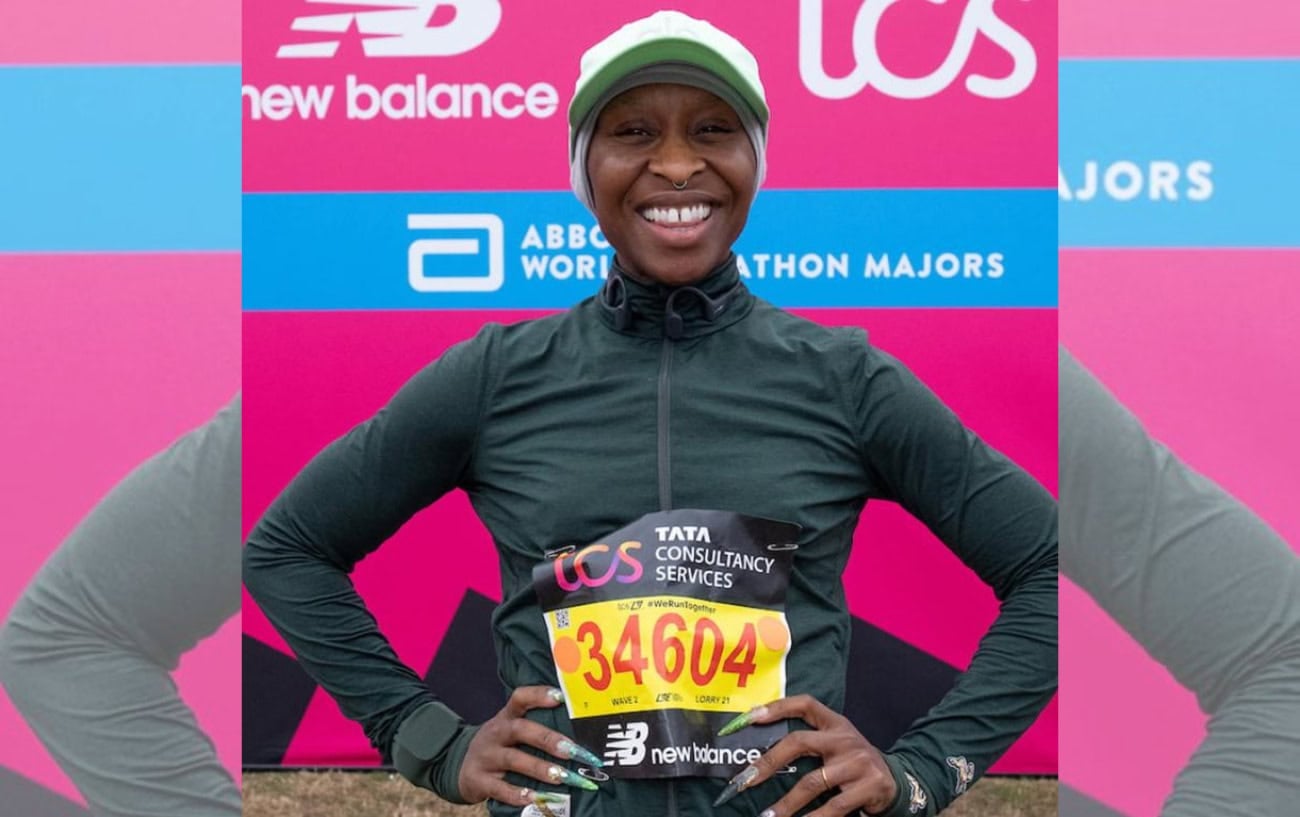
How She Thinks About Miles
Ask Erivo about her race-day mindset and she doesn’t talk about visualisation boards or pre-race rituals. She just talks to herself.
“I’m always like, ‘It’s just one mile left. We just do the next mile,'” she said. “I almost talk myself through it, like a running commentary for myself.”
It’s the same approach she uses on stage—break the whole thing into small pieces, stop staring at the finish line, do the next bit. Mile by mile, scene by scene. “It’s not like taking a big bite out of something. It’s like taking tiny little morsels.”
She’s also firm on water stations: she doesn’t use them. She carries her own hydration in a vest or waist belt. “I don’t know how to do that,” she said of the grab-and-drink manoeuvre. “So I just use a straw or a squeezy bottle and I’m good to go.” Relatable, honestly.
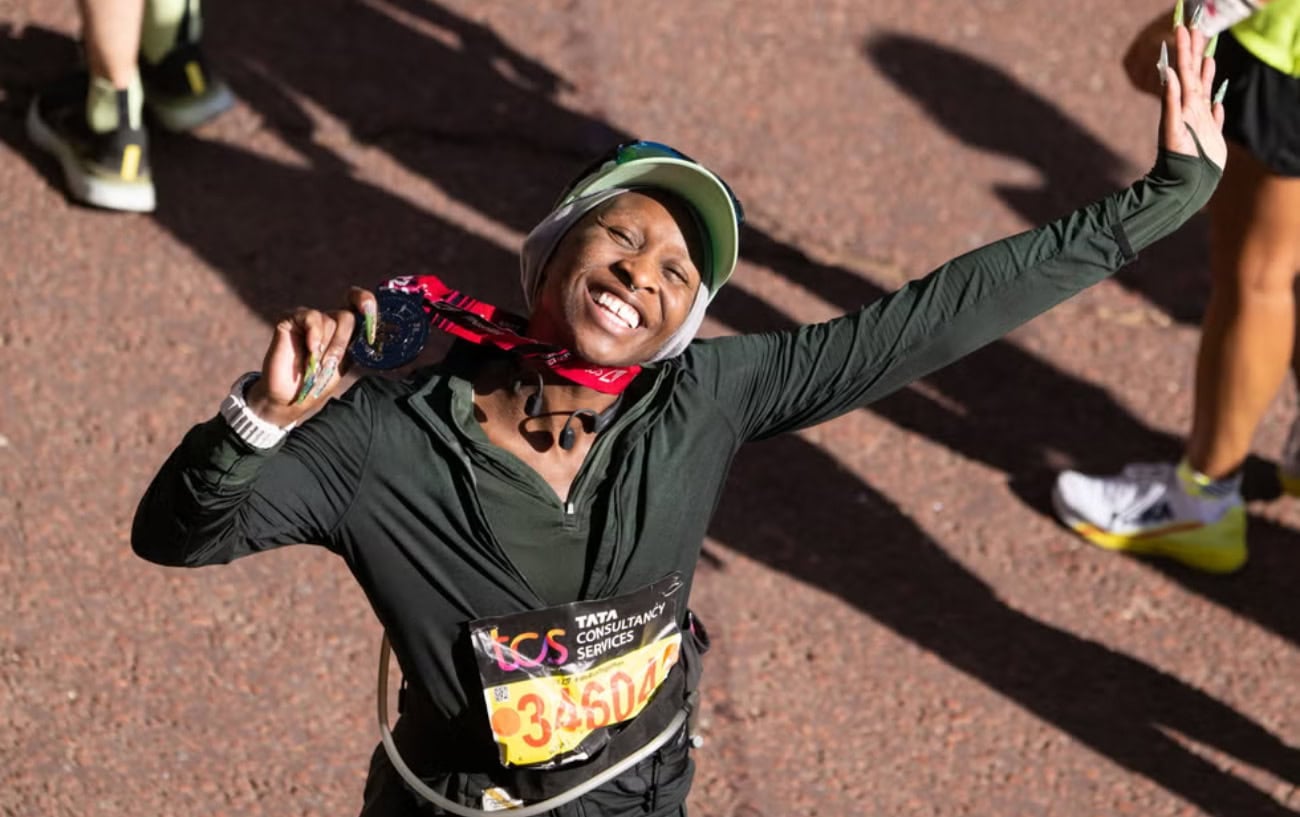
Why London
Erivo grew up in London. She ran it in 2022 and was caught off guard by the crowd support.
“You are supported the entire way,” she said. “They are outside of the pubs, they are outside of their houses, people are on the streets, people are on the bridges.” For a runner used to quiet stretches and lonely miles, that kind of noise changes things. It’s one of the reasons the rules of marathon training always include race-day strategy alongside the physical work.
She’s also performing in the city for the first time in years, which adds a layer she describes as “lots of full circle moments.” Running a PR on home roads, then going back to the theatre. It’s a good story either way.