


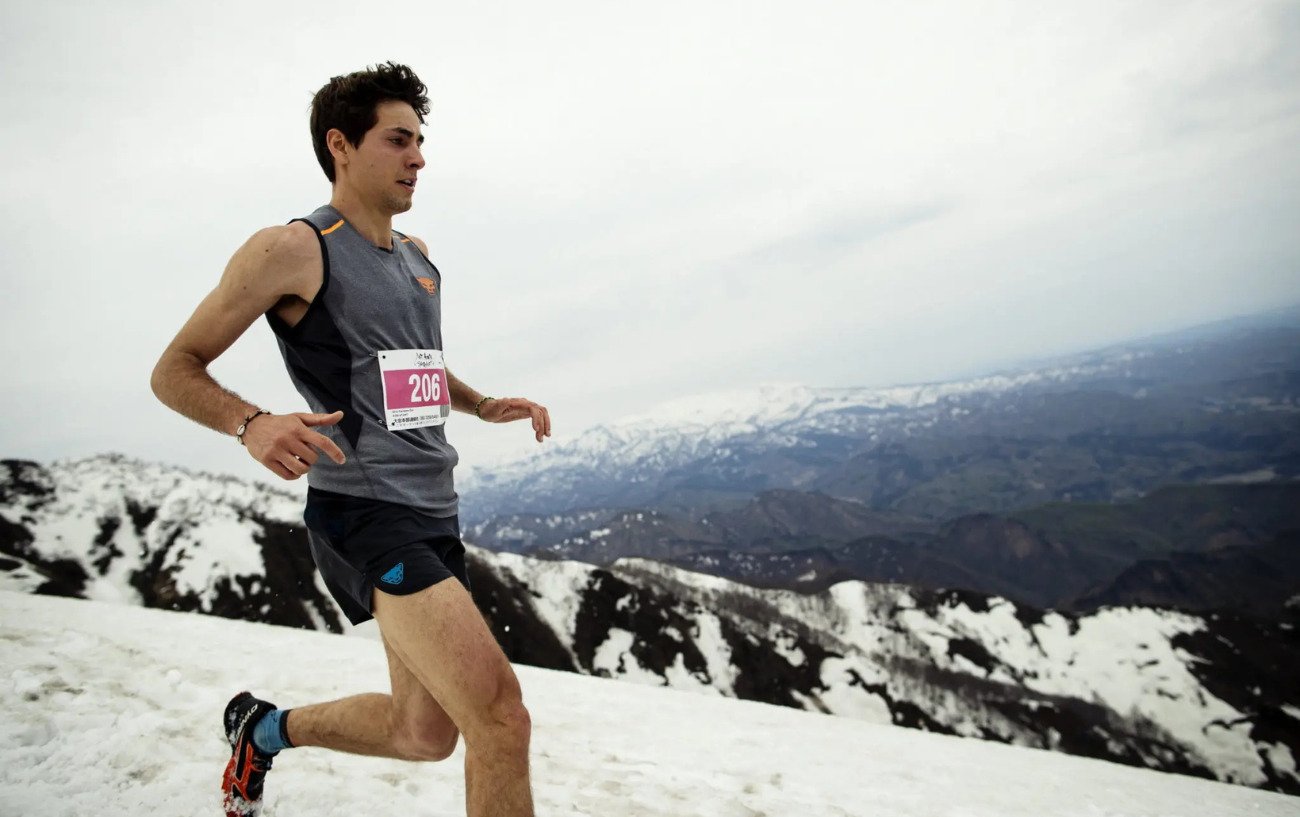
Not long ago, Oriol Cardona was running up mountains in trail shoes like the rest of us (well, like the very fast version of the rest of us). Sixth at Zegama. Podiums on the skyrunning circuit. A promising career on dirt and rock.
Then he swapped his trail shoes for skimo boots, and apparently that was that.
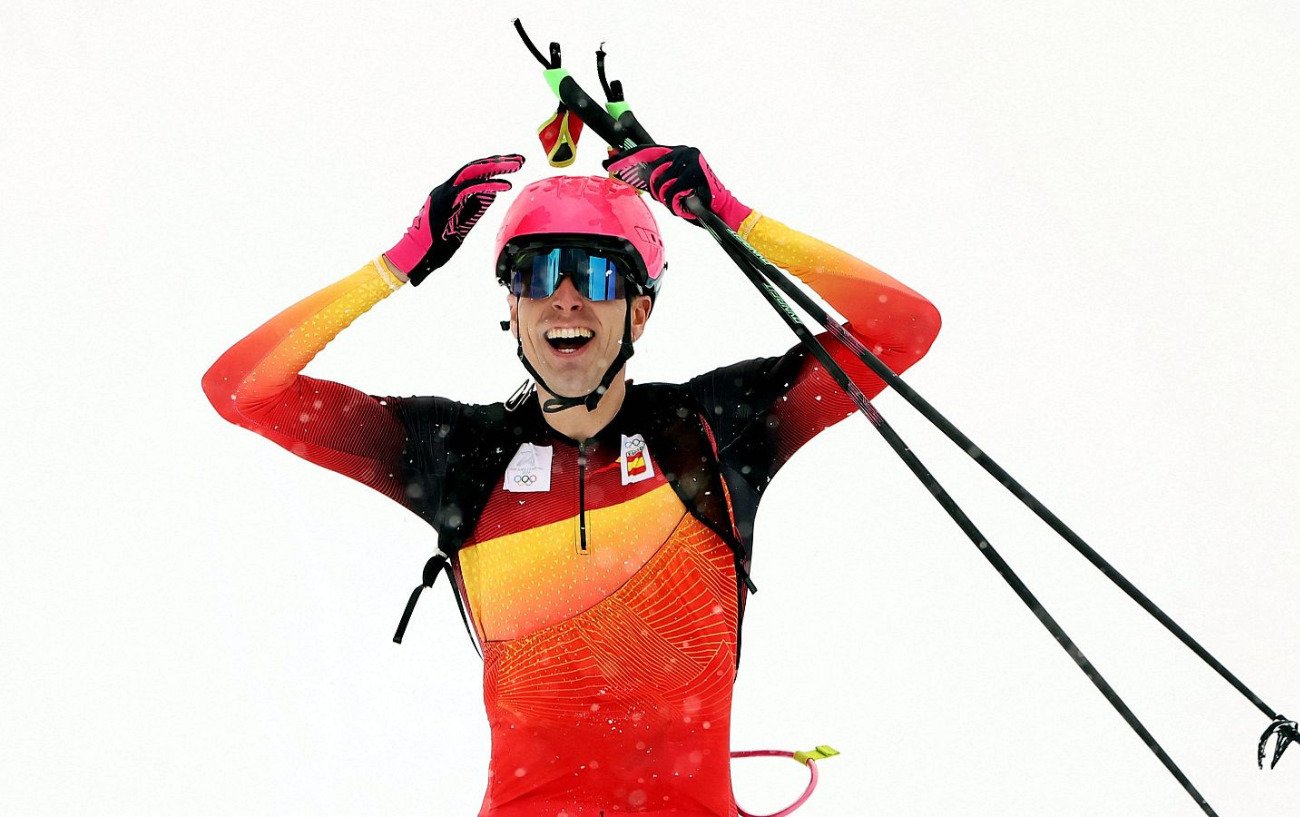
On Thursday in Bormio, Italy, the 27-year-old Spaniard crossed the finish line of the men’s ski mountaineering sprint to become the first Olympic champion in the history of the event. Ski mountaineering made its Olympic debut at the 2026 Winter Games, and Cardona — calm, precise, and apparently untroubled by either falling snow or the weight of history — won it going away in 2:34.03.
So What Even Is Skimo?
Fair question. Ski mountaineering is, at its most basic, uphill racing on skis — which sounds straightforward until you watch someone do it and realize how many things can go wrong in under three minutes.
Competitors attach adhesive skins to the bottom of their skis to grip the snow on the way up, then rip them off to ski back down on equipment that is far lighter and narrower than anything you’d find at a ski resort. In the sprint format, there’s also a “bootpack” section — racers strap their skis to their backs and run up a flight of stairs — before snapping back into their bindings and continuing the climb.
Each transition between climbing, bootpacking, and skiing takes about six seconds. That’s six seconds to rip off skins, clip in, and go. Do it smoothly and you’re in the race. Fumble it and you’re watching someone else celebrate.
The Olympic course took the men roughly 2.5 minutes from start to finish. It is, as one might expect, not a relaxing afternoon on the slopes.
A Near-Perfect Day
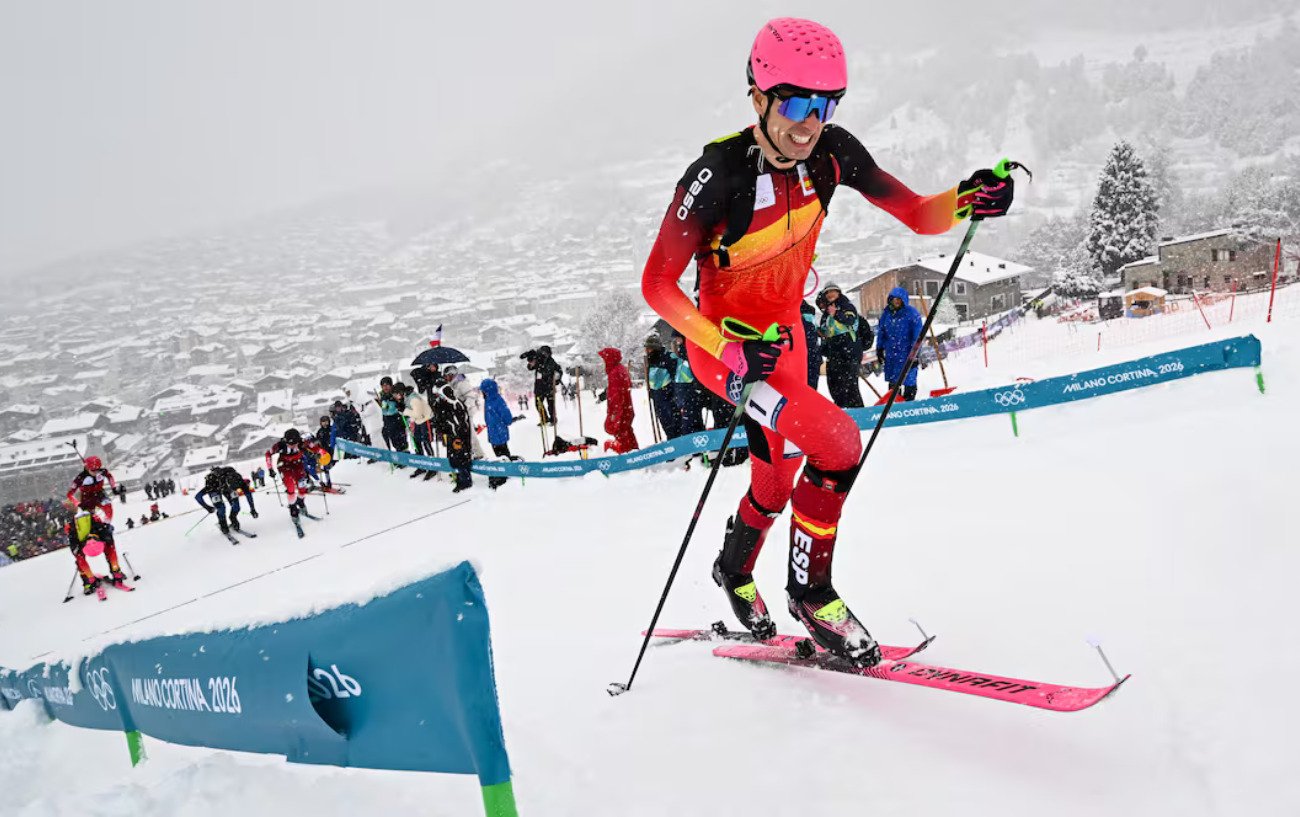
Conditions on Thursday were not particularly cooperative. Snow was falling over the Stelvio Ski Centre high in the Italian Alps, visibility was reduced, and the accumulating powder was getting into the moving parts of ski bindings — the last thing you want when a six-second transition decides a medal.
Cardona had one shaky moment in the semi-finals, placing second behind Switzerland’s Jon Kistler after a slow transition out of the bootpack. In the final, he cleaned it up. He took the lead into the first transition zone and simply didn’t give it back. Several competitors tripped on the bootpack stairs. Cardona did not. He crossed the line with enough time to lift his arms, look around, and presumably register that he had just done something no one had ever done before.
The Running Connection
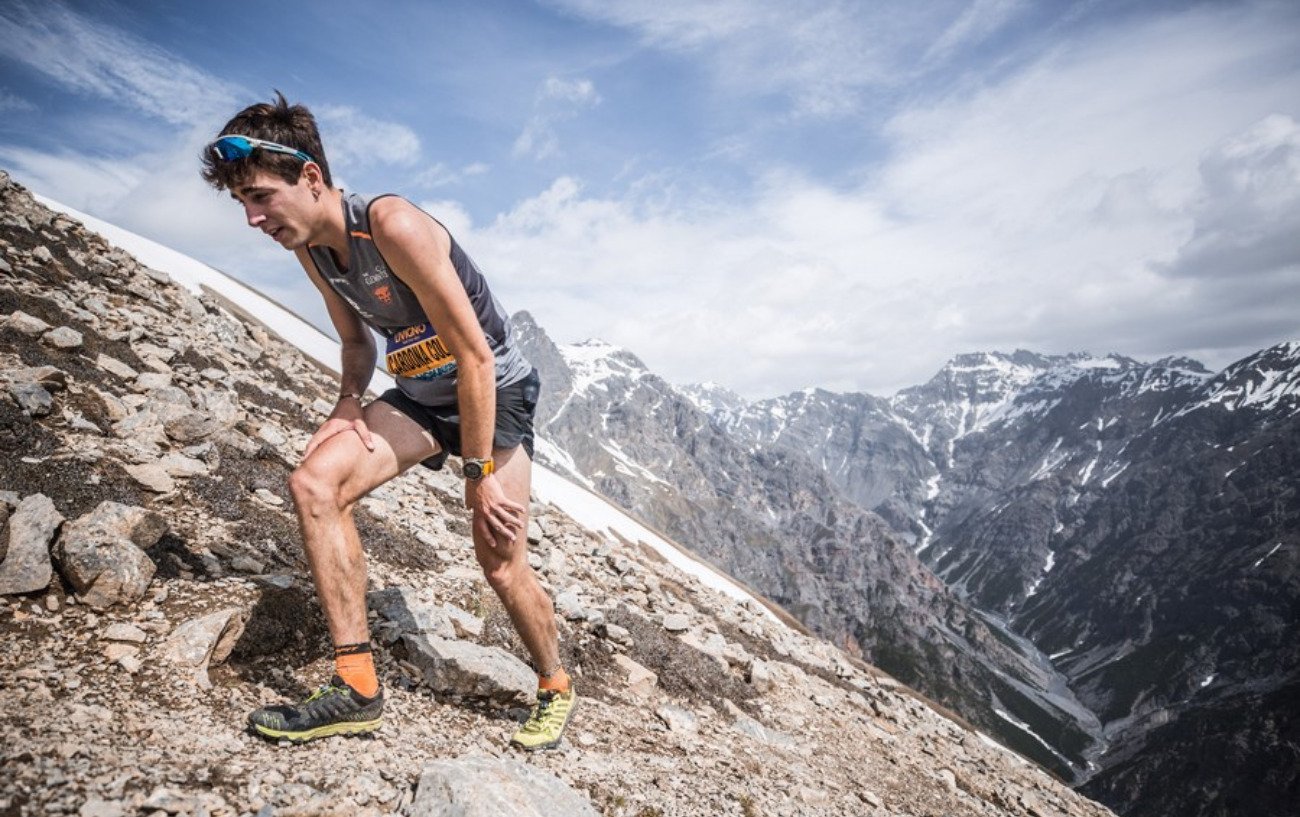
Here’s what makes this story particularly interesting for anyone who follows trail and mountain running: Cardona is not some career skier who stumbled into a new Olympic discipline. He came up through the same mountain racing world that produces Zegama finalists and Golden Trail World Series podium chasers.
His trail résumé from 2019 and 2020 includes second at LimoneExtreme, third at Ultra Pirineu, sixth at Zegama, and multiple top-ten finishes on the Golden Trail World Series circuit. Then, around 2022, he shifted his focus to skimo — and the sport didn’t exactly resist him.
That same year, he won the men’s sprint at the ISMF European Championships. He followed that with World Championship sprint titles in 2023 and 2025. The fitness demands of the two disciplines overlap more than you might expect: explosive uphill climbing, big aerobic engine, comfort with suffering at altitude. Cardona, it seems, brought all of that with him when he moved to snow.
It’s a reminder that the physical toolkit that makes a great skyrunner — raw power on steep terrain, efficient movement under fatigue, fast decision-making mid-race — translates further than most people think. Skimo might be the most extreme example, but it’s not the only one. If you’re curious what that kind of cross-training could do for your own running, it’s worth a thought.
Trail Runners, Meet the Olympic Start Line
Cardona wasn’t the only runner-turned-skier in Bormio. At least six athletes with meaningful trail or skyrunning backgrounds competed in the sprint — a sign of how naturally the two sports borrow from each other.
Americans Cam Smith and Anna Gibson both made the semi-finals, representing Team USA in skimo’s debut. Their partnership is relatively new — they won the 2025 ISMF Solitude World Cup in Utah last December in their first-ever mixed relay race together, which was enough to earn them Olympic spots. Not a bad first outing.
In the women’s sprint, France’s Emily Harrop — who has a top-five finish at La Skyrhune — took silver behind Switzerland’s Marianne Fatton. Spain‘s Ana Alonso, Cardona’s mixed relay partner, won bronze, meaning Spain walked away from Thursday with two medals and some very happy people back in Madrid.
RunClub
Get more running stories — join RunClub
Daily running news, a community of 300,000+ runners, free training plans for every distance, and a daily running game. Free to join — no card.
Already a member? Log in →




Join the conversation
He's Catalan.