


- Kristy Coventry’s election as IOC president signals continuity over reform, with deep ties to Thomas Bach’s administration.
- Track and field athletes may be left behind as athlete compensation and Olympic reform are likely to stall.
- Sebastian Coe returns to World Athletics after his failed IOC bid and may double down on progressive policies.
- Private track leagues and geopolitical pressures, including Saudi investment and Russia’s return, threaten to reshape the sport.
Why Coventry’s Win Matters
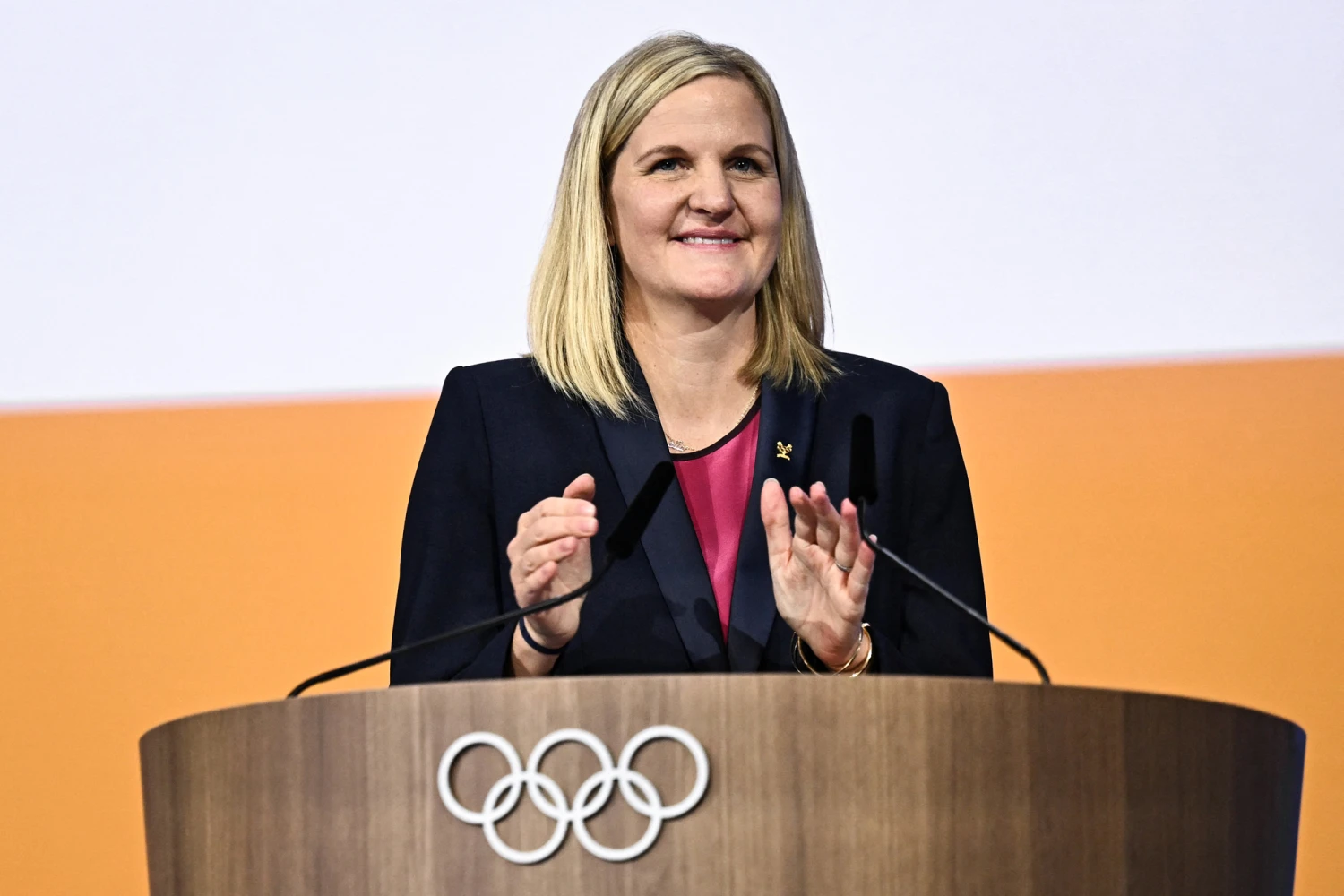
When Kristy Coventry was elected as the next president of the International Olympic Committee (IOC) last week in Lausanne, the announcement was met with a mix of celebration and skepticism. As the first woman and first African to hold the position, her election was hailed by the IOC as a historic step forward.
But for many in the world of track and field — and especially distance running — Coventry’s ascent represents not a bold new era, but more of the same.
A longtime IOC insider and close ally of outgoing president Thomas Bach, Coventry has made a career of upholding the status quo. And her presidency is likely to do the same: preserve tradition, sidestep controversy, and continue the IOC’s longstanding resistance to direct athlete compensation.
At a time when the sport is fracturing and new models are emerging, that kind of steadiness might not be a virtue.
A symbolic milestone, a conservative choice
Coventry’s election was quickly framed as trailblazing: the first woman to lead the IOC, the first African president in the organization’s 130-year history. But much of that narrative falls apart under scrutiny.
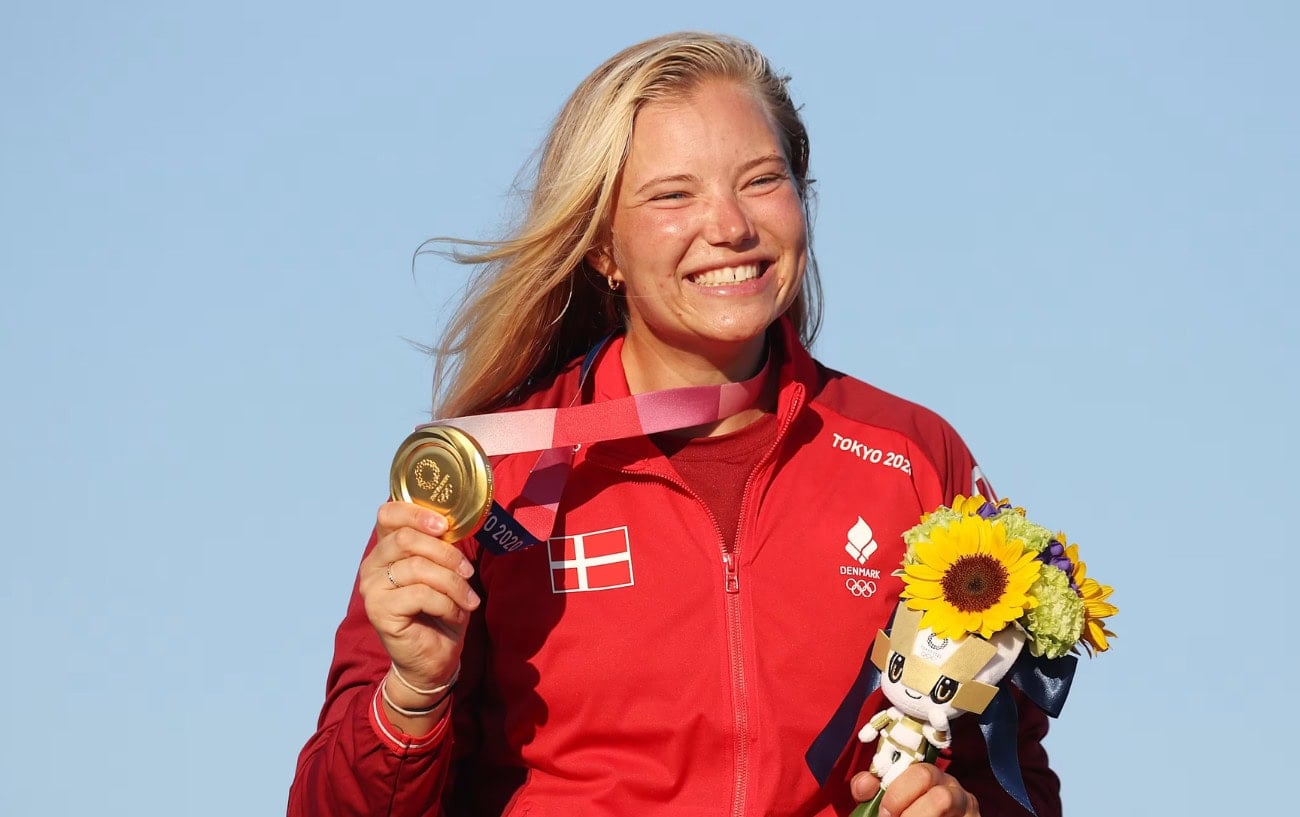
Coventry is a white Zimbabwean, born and raised during the country’s final decades under colonial-era systems of power. She rose to prominence as a world-class Olympic swimmer, winning seven Olympic medals and becoming Zimbabwe’s most decorated athlete. During the Mugabe years, she relocated to the United States as a student-athlete, studying hotel management at Clemson University while competing in the NCAA.
During her swimming career, Coventry sought a role within the IOC, first as an athlete representative on its board of directors. In that role, fellow Olympians accused her of failing to advocate for athletes’ interests, and instead prioritizing loyalty to IOC leadership, particularly outgoing president Thomas Bach, under whom she was seen as a close ally.
Coventry faced scrutiny while still an athlete for aligning herself with Zimbabwe’s ruling party. In 2008, after winning four Olympic medals in Beijing, Coventry accepted $100,000 in cash from then-President Robert Mugabe, reportedly delivered in a briefcase, along with a lifetime diplomatic passport. Zimbabwe was in the grip of hyperinflation estimated at 750%,severe political repression at the time, and Mugabe was widely viewed as a corrupt autocrat. Critics saw her acceptance of personal rewards during this national crisis as troubling, regardless of how they were framed.
After retiring from professional swimming, she was swiftly appointed as Zimbabwe’s Minister of Youth, Sport, Arts and Recreation, despite having no prior experience in governance or public administration. Her connection to Zimbabwe — and to the African continent more broadly — has been viewed by some as at times tenuous and perhaps transactional.
As a government minister under Zimbabwe’s ruling party, she has been criticized for aligning herself with a regime accused of corruption, human rights violations, and authoritarian rule. And her appointment was widely criticized as an attempt by the ruling regime to engage in sport-washing, using her Olympic fame to polish its global image. Coventry has maintained that she took the role to serve as a change agent within her country of birth, rather than sit on the sidelines after her athletic career ended. However, her tenure has been heavily criticized as ineffectual, with some arguing that she lent legitimacy to a regime widely seen as corrupt and repressive.
Whether Coventry has been a political pawn for an authoritarian regime or a willing participant in it is a matter of debate. What is not in dispute is that she chose to serve in a government consistently accused of corruption and human rights abuses. That decision continues to cast a long shadow over her credibility as a leader meant to represent the global Olympic ideal.
Given this history, Coventry is unlikely to become a vocal opponent of authoritarian influence in global sport. Her track record suggests a pragmatic comfort with power, even when it comes from governments with troubling records. As global politics increasingly intersect with elite sport, her stance may become more consequential.
Softening on Russia
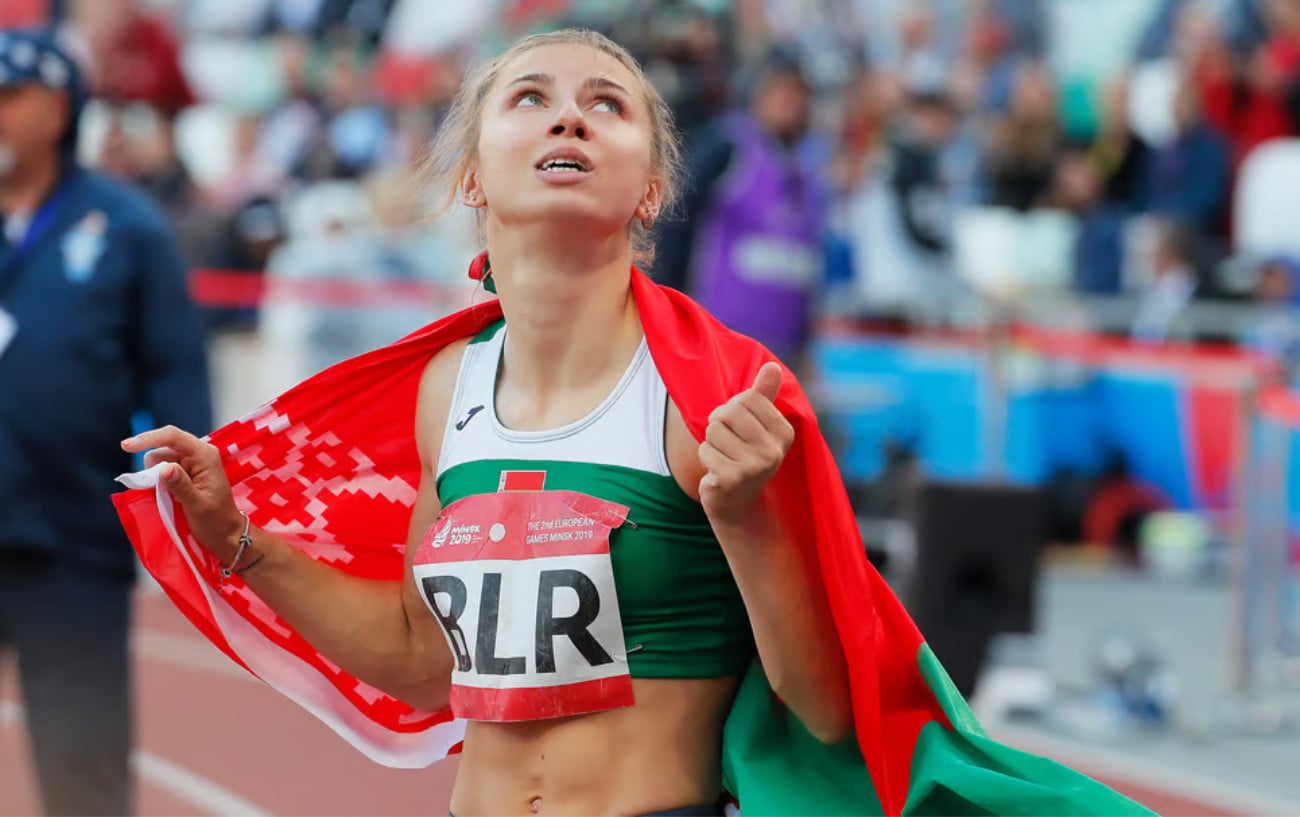
Coventry is also aligned with Bach on another contentious front: the question of Russia. Both have advocated for softening sanctions and reintroducing Russian and Belarusian athletes to international competition, despite Russia’s ongoing war in Ukraine and widespread criticism from Western governments and athlete groups. Their preferred solution—a return under a so-called neutral flag—aligns with the IOC’s long-standing reluctance to let politics interfere with business as usual. — even if it alienates others.
For those hoping for a president who would challenge the IOC’s power structures and modernize the Games, Coventry’s election signaled the opposite: an institutionalist carrying the torch of Olympic conservatism.
What Athletes Were Hoping For
Coventry’s opponent for the presidency, World Athletics president Sebastian Coe, had become a vocal proponent of reform. Under his leadership, World Athletics became the first international federation to offer prize money to Olympic champions — starting with $50,000 to gold medalists in Paris 2024.
Coe’s campaign offered at least the possibility of direct Olympic revenue-sharing with athletes — a concept long resisted by the IOC despite its billions in broadcasting and sponsorship income.
Distance runners in particular have long been caught in the financial squeeze of the amateur ideal. Outside of a handful of well-funded marathoners, most elite runners subsist on modest appearance fees, patchwork sponsorship deals, and the thin promise of Olympic “glory.”
And yet, these are the athletes who form the backbone of the Games. Athletics — which includes track and field, road running, and race walking — is the single biggest and most important component of the Summer Olympics. It commands the largest number of medals, the highest viewership, and some of the most iconic moments in Olympic history. Without it, the Olympic broadcast package would not be nearly as valuable. NBCUniversal has staked billions on that fact: in 2014, it agreed to a $7.65 billion deal to retain U.S. broadcast rights through 2032. And just this year, in 2025, NBC signed another $3 billion extension to hold onto those rights through 2036.
Coventry’s presidency offers little indication that this central role will come with any additional protections or rewards for the athletes who make it possible. If anything, it may cement the current arrangement, in which athletes fuel the Olympic engine but see none of the revenue.
The Private League Disruption
At the same time, the sport around the Olympics is evolving — fast.
Private leagues are emerging to challenge the Olympic monopoly on elite track and field. Grand Slam Track, founded by four-time Olympic gold medalist Michael Johnson, is one of the first serious contenders. Its promise: real pay, streamlined competition, and a professional model that treats athletes as valuable talent rather than interchangeable parts.
These leagues may lack the prestige of the Olympic Games, but they offer something the IOC never has: agency and compensation.
And they’re arriving at a moment when World Athletics, still led by Coe, is facing its own reckoning.
Saudi Investment: A Risky Lifeline
In 2022, World Athletics posted a $17.1 million loss. In recent months, the organization has entered discussions with Saudi Arabia’s Public Investment Fund about a $635 million investment to launch a new commercial entity for the sport.
The money could solve short-term financial problems. But it would come with ethical baggage. Saudi Arabia’s human rights record has already cast a shadow over its growing presence in global sports. For World Athletics to accept this partnership could further entangle the sport with regimes that use athletics to rehabilitate their global image.
It would be a Faustian bargain: fiscal survival in exchange for further distancing the sport from its democratic roots.
Two Paths for the Future of the Sport
All of this points toward a splintered future for track and field. One in which athletes are forced to choose between loyalty to traditional institutions — the IOC, World Championships, the aging Diamond League — or the opportunity and freedom of private leagues.
Coventry’s election won’t halt this shift. If anything, it may accelerate it. The IOC’s resistance to reform and athlete compensation, reinforced by her presidency, may push a generation of athletes to take their talents — and their earning power — elsewhere.
What’s next for Sebastian Coe?
Inside the Election
Coventry’s victory was decisive. According to reporting on the inside campaign, IOC members never seriously considered Coe’s candidacy. Despite his legacy as both a former Olympic champion and head of a major global federation, his push for modernization and direct confrontation of Olympic orthodoxy appeared to cost him politically. The IOC, as ever, chose a loyal insider.
Now, Coe returns to World Athletics — not defeated, but sidelined. It’s a position he’s rarely occupied in a long and decorated career. Whether he will seek re-election in 2027 is an open question. He has already hinted that he’s not done fighting for reform, and there’s reason to believe he could double down on the agenda the IOC just rejected.
Expect more aggressive efforts to professionalize the sport, introduce athlete revenue-sharing mechanisms, and expand private investment. Coe could position World Athletics as a more progressive counterweight to the IOC under Coventry.
He may also continue his strong stance on international accountability. While Coventry and Bach appear eager to readmit Russian and Belarusian athletes to Olympic competition, Coe has kept them banned from World Athletics events. That principled stance could become yet another dividing line between the sport’s governing body and its Olympic overseers.
The Final Lap
Kristy Coventry is not a disruptor. That’s exactly why she was elected. But that same quality may prove a liability in a moment when the sport needs boldness, not bureaucracy.
The Olympic movement, and the institutions it props up, may find that its refusal to evolve has finally caught up with it. The athletes — marathoners, milers, steeplechasers — aren’t waiting anymore. They’re running their own race.
RunClub
Get more running stories — join RunClub
Daily running news, a community of 300,000+ runners, free training plans for every distance, and a daily running game. Free to join — no card.
Already a member? Log in →




Start the conversation