


When Joel Reichow crossed the finish line in Central Park on Sunday, the reaction among American running fans was mostly confusion followed quickly by curiosity.
Who was this unheralded guy from Minnesota who had just finished sixth at the New York City Marathon, and first among all Americans, in 2:09:56?
Reichow’s run was a breakthrough, not just for him but for a corner of American distance running that rarely gets attention.
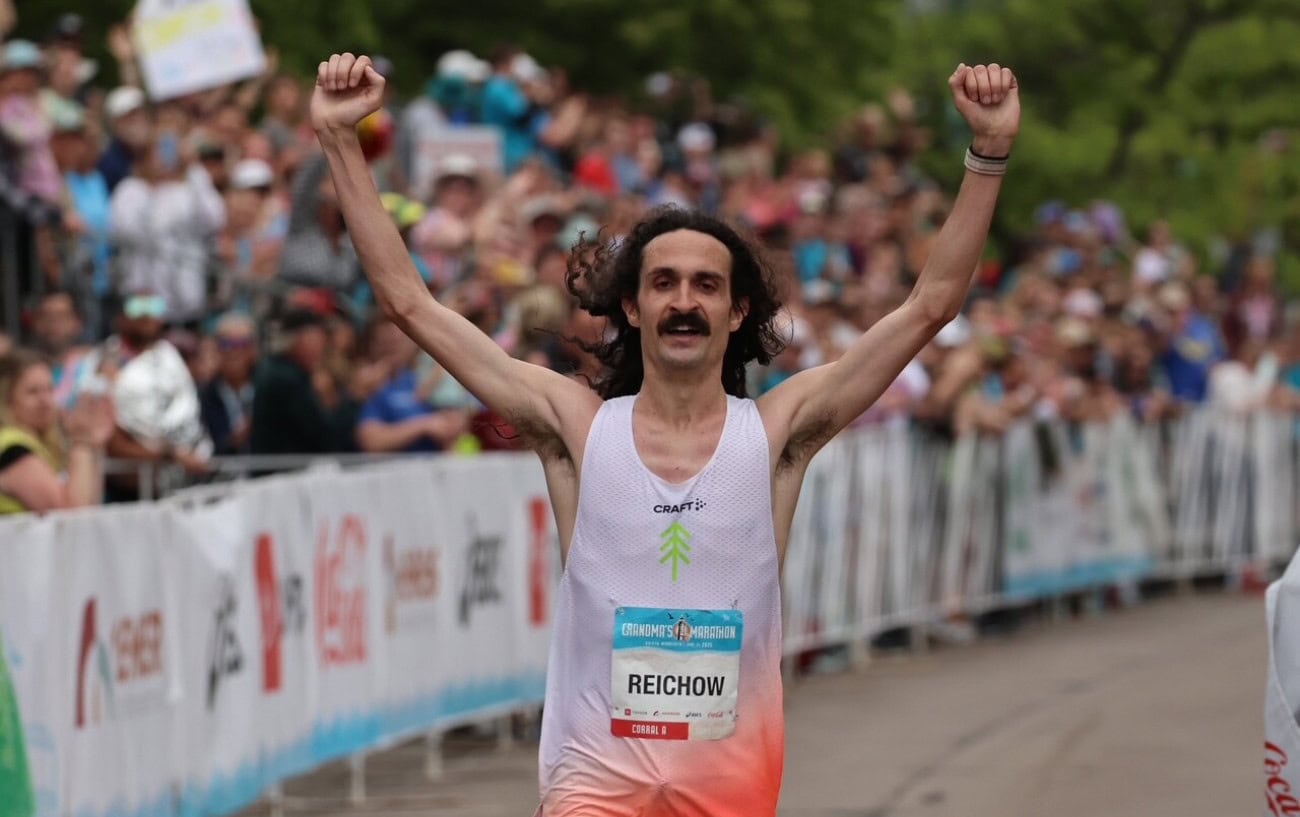
At 32, the Minnesota native has spent years quietly putting together strong but unglamorous results, working full-time while training with Minnesota Distance Elite, a small, athlete-driven group that has produced national-class runners like Annie Frisbie and Elena Hayday. On Sunday, he finally got his moment.
He grew up in White Bear Lake, a suburb northeast of St. Paul, where he was a good but not dominant high school runner, finishing ninth at the Minnesota state cross-country championships and running 4:17 for 1600 meters on the track.
After high school he went to South Dakota State University, where he developed under coach Rod DeHaven, the 2000 U.S. Olympic Trials marathon champion. Reichow became a two-time NCAA All-American, broke several school records, and earned a biology degree, the kind of quiet, hardworking college career that doesn’t make headlines but builds a strong base.
After graduating in 2017, he joined Minnesota Distance Elite, coached by Chris Lundstrom, a longtime advocate for developing post-collegiate runners in the Twin Cities.
The team doesn’t have the funding or visibility of the larger training groups in Boulder or Flagstaff, but it has built a reputation for steady progress and tough racing. Reichow has been part of that culture from the start, slowly chipping away at his times while balancing training with work.
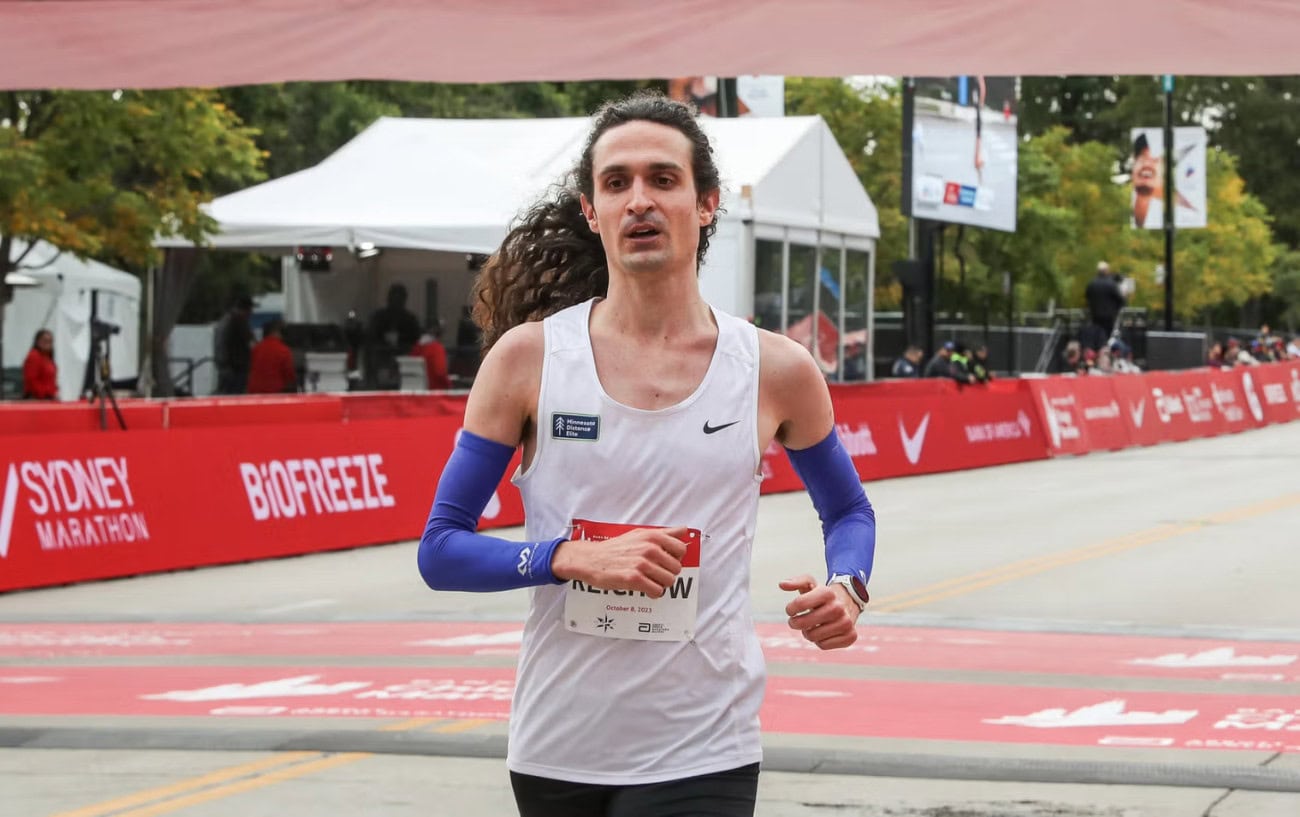
Over the years, his results tell the story of someone steadily moving up the ranks. He was third at the 2022 USATF Marathon Championships, won the 2023 Garry Bjorklund Half Marathon, and took victory at Grandma’s Marathon in 2025, running 2:11:58 in brutal heat to become the first Minnesota man to win in over a decade.
Those races didn’t make him a star, but they hinted at something more.
New York was the payoff.
On a course that punishes impatience, Reichow ran with veteran restraint, hitting halfway in 1:05:21 before closing the second half in 1:04:35, faster than he opened. In the final miles he picked off seasoned pros, finishing just ahead of Charles Hicks, the NCAA champion making his marathon debut, and Joe Klecker, a U.S. Olympian.
“I’d just been convincing myself to stay where we were at,” he told Runner’s World after the race. “Then I realized there was an opportunity, just keep the pressure on and see what you can do.”
It was the best finish by an American man in New York since Conner Mantz in 2024, and one of the day’s most composed performances. Reichow’s even pacing and negative split showed both fitness and experience, qualities that often take years to develop.
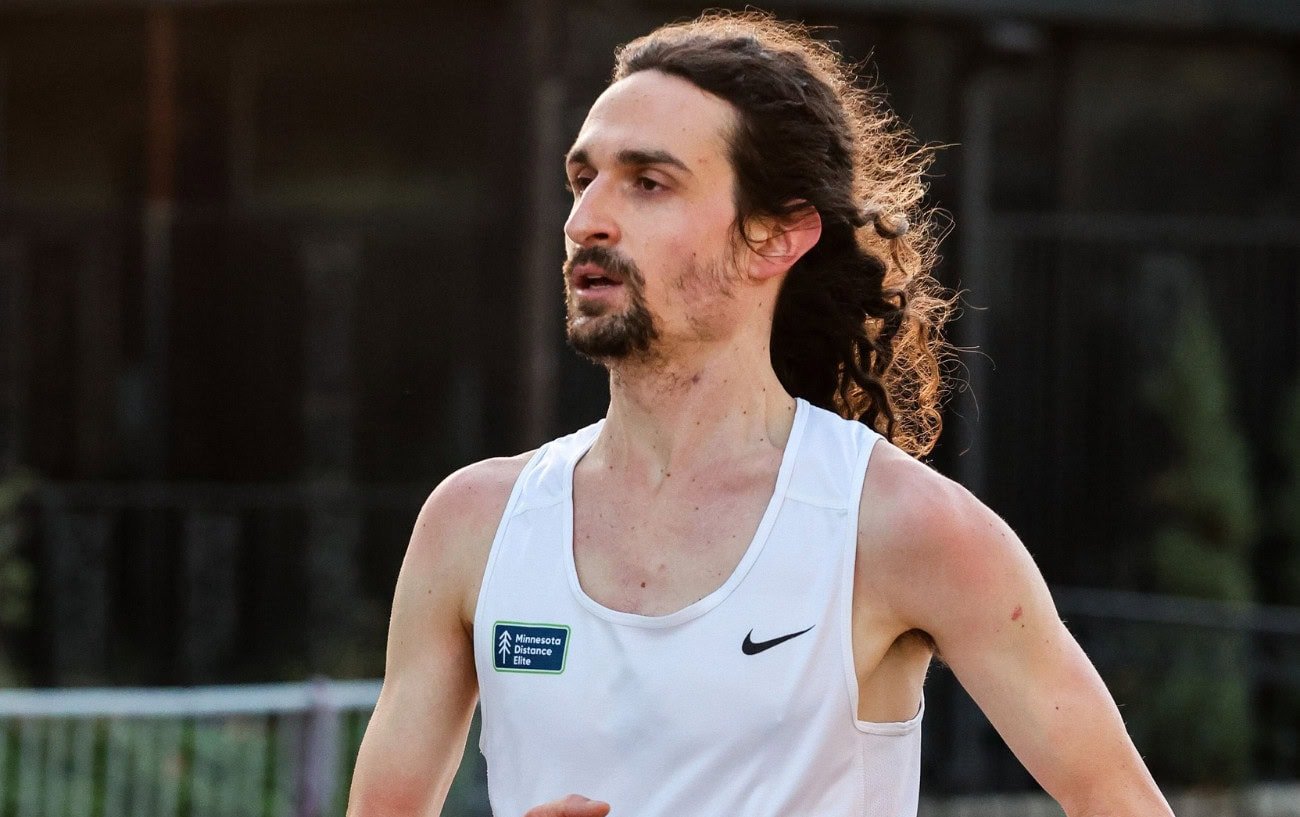
For a runner without a major shoe deal, he raced in a Puma Minnesota Distance Elite singlet and ASICS shoes, the run was a statement that talent and patience can still beat hype.
Reichow’s story also speaks to the strength of the Minnesota running scene, which continues to turn out top-tier results on modest resources. His coach, Lundstrom, has built a small but formidable program around consistency rather than flash, developing runners who grind through winters, hold jobs, and keep showing up.
Now, after nearly a decade of that quiet work, he’s suddenly one of the most relevant names in American marathoning. Whether he signs a professional contract or not, his sixth-place finish in New York marks a turning point.
It’s proof that success in distance running doesn’t have to come from altitude camps, full-time sponsorships, or high-profile training groups. Sometimes it just comes from showing up, year after year, until no one can ignore you anymore.
RunClub
Get more running stories — join RunClub
Daily running news, a community of 300,000+ runners, free training plans for every distance, and a daily running game. Free to join — no card.
Already a member? Log in →







Start the conversation