Fifty-five runners lined up for a marathon last October with no crowds, no daylight, and no real sense of direction beyond the beam of a headlamp. Instead of city streets or scenic countryside, they got rock walls, heavy machinery, and a steady hum echoing through the tunnels of Sweden’s Garpenberg mine.
The catch: the entire race took place 1,140 metres underground.
The event, now officially the deepest marathon ever run, has since been turned into a short documentary released in February 2026 by organizers the International Council on Mining & Metals (ICMM) and BecomingX. Shot by a 17-person crew, the film follows runners through one of the strangest endurance challenges ever staged, all while the mine remained fully operational around them.

This wasn’t just about chasing a Guinness World Record. For ICMM CEO Rohitesh Dhawan and BecomingX co-founder Paul Gurney, the marathon doubled as a way to reshape how people think about modern mining.
“We really wanted people to experience mining in a way most will never get to do,” Dhawan told CIM Magazine.
Mining, after all, doesn’t exactly scream mass appeal. But a marathon in a mine? That’s a hook. The idea was simple: draw people in with something extreme, then quietly challenge their assumptions about an industry often seen as dangerous and outdated. Garpenberg itself was a deliberate choice, operated by Boliden, which has gone 17 years without a fatality across its sites.
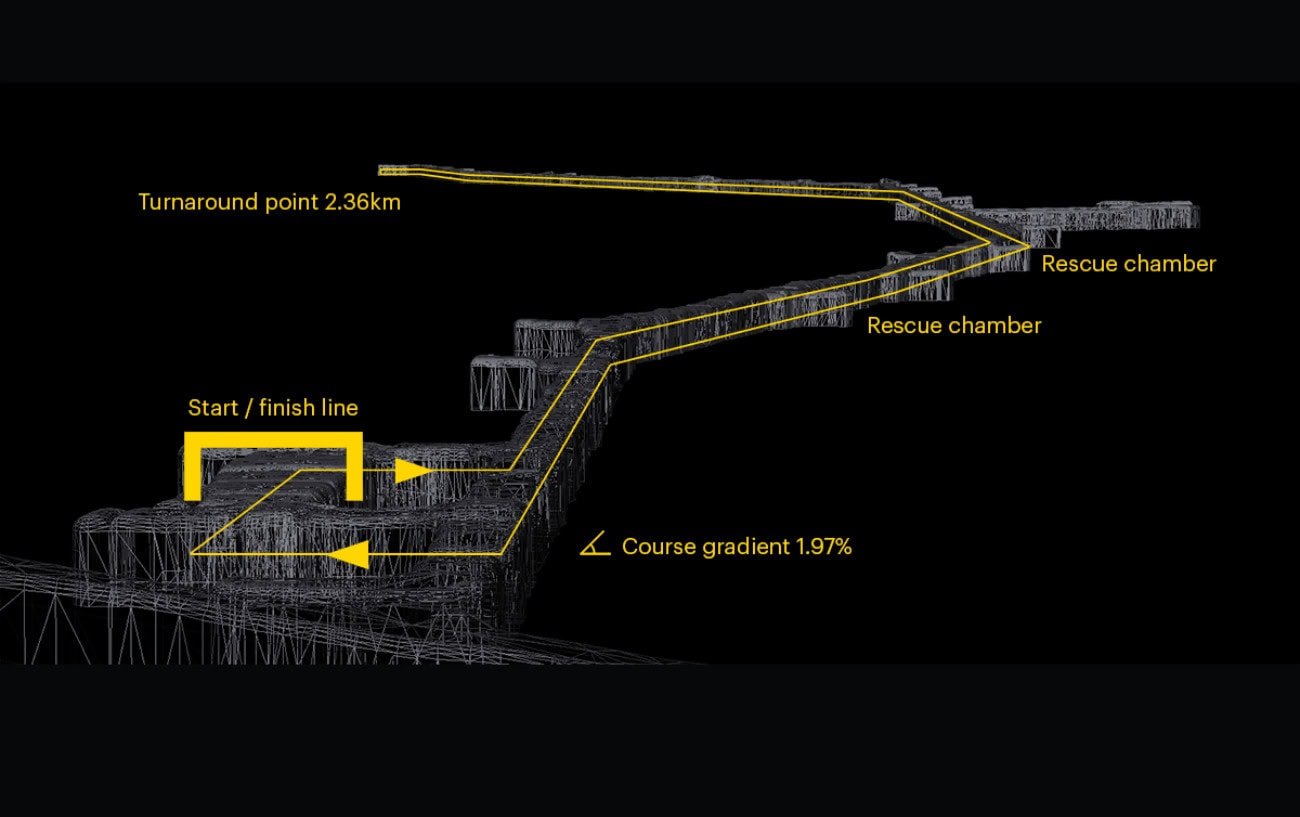
The course was as repetitive as it was surreal. Runners tackled a two-kilometre stretch of tunnel, out and back, 11 times over. One direction climbed at a steady two percent incline, the other offered a slight descent. Temperatures hovered between 27 and 28 degrees Celsius, with humidity sitting at 70 percent.
And visually, there was almost nothing to latch onto.
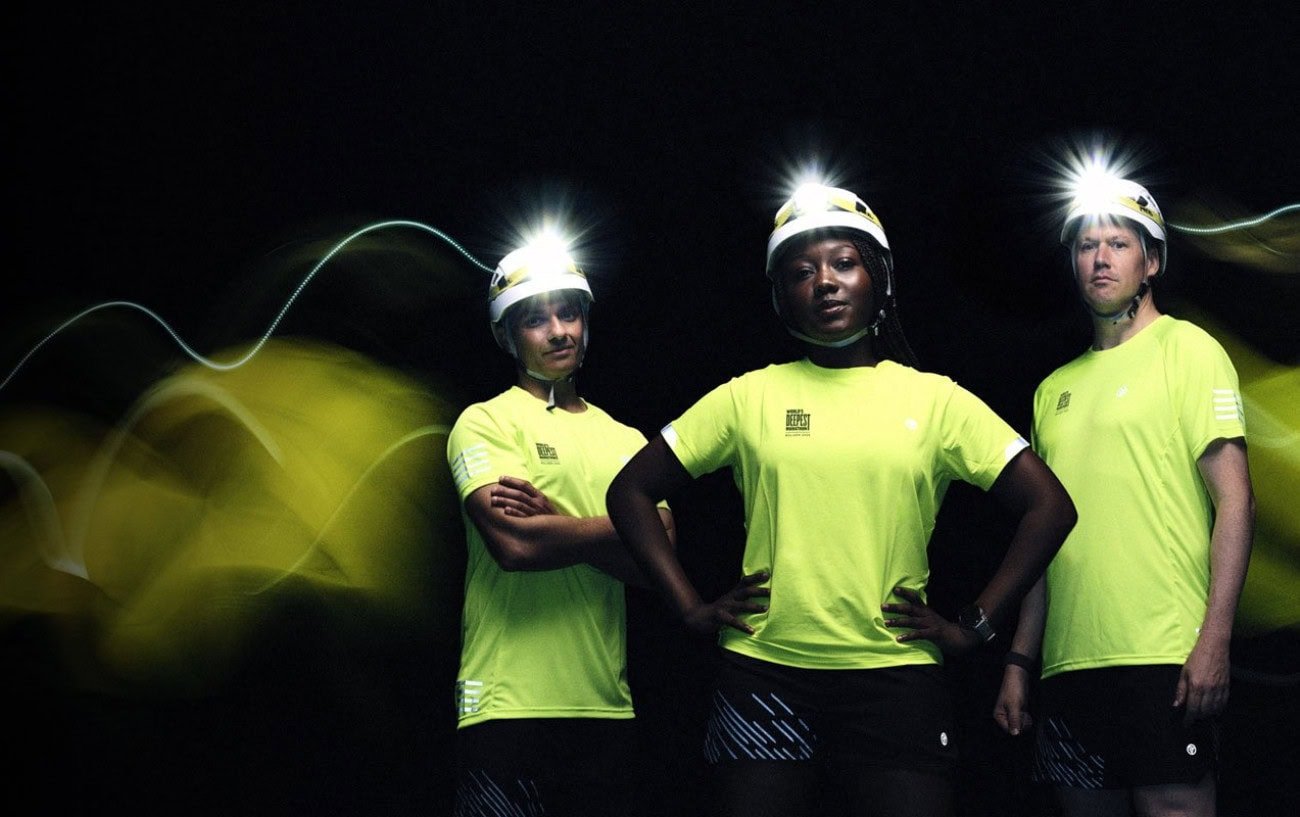
“Normally, when you run a marathon, you can see trees and people… there are people clapping for you,” Dhawan said to CIM. “It was totally dark, which meant you had no visual stimulation.”
Runners wore high-vis gear and lightweight helmets to guard against potential rockfall, with tracking devices mounted on the back. Timing mats kept count of laps, while emergency rescue chambers, stocked with food, water, and air for up to 72 hours, were spaced along the route.
One of the biggest concerns heading in was air quality. Running a marathon underground doesn’t exactly sound breathable. But thanks to the mine’s ventilation system, fresh air was constantly pumped through the tunnels, producing conditions that, somewhat counterintuitively, beat most major city races.
“If you compare the air quality down in the mine… we were breathing significantly cleaner air than if we ran the London Marathon or the New York Marathon,” Dhawan said to CIM.
Clean air, however, didn’t make things easier. Dhawan, who has completed 15 marathons, called it the hardest he’s ever done. The monotony, the heat, the darkness, it all compounded into something far more mentally taxing than a typical road race.
Still, the most memorable moment had nothing to do with depth, data, or difficulty.
Late in the race, one runner was struggling through her final laps. Three runners who had already finished turned around and went back to help pace her in.
“Once you finish, you just want to get out because you’re so tired,” Dhawan said. “And yet those three guys said to CIM, ‘No, we’re going to run with you.’”
It was a small moment, but in a setting that stripped the race down to its bare essentials, it stood out.
The event also raised US$600,000 for charity, split between the BecomingX Foundation, which funds education initiatives in Africa, and the Wild at Heart Foundation, focused on animal welfare.
As for whether the world’s deepest marathon will return, nothing is confirmed. Dhawan suggested it might be a one-off, but didn’t rule out the possibility.
“It was such a special thing to do once,” he said to CIM. “That being said, it feels like it would be a shame not to… repeat the exercise.”
If it does come back, it’s safe to say it won’t look like any other start line in the world.