


Valencia woke up fast on Sunday. Even before sunrise, you could feel it in the cool temperatures, in the clipped confidence as the elites warmed up rhythmically around a parking garage, in the way coaches leaned over barriers as if they already sensed they’d be rewriting something by lunchtime.
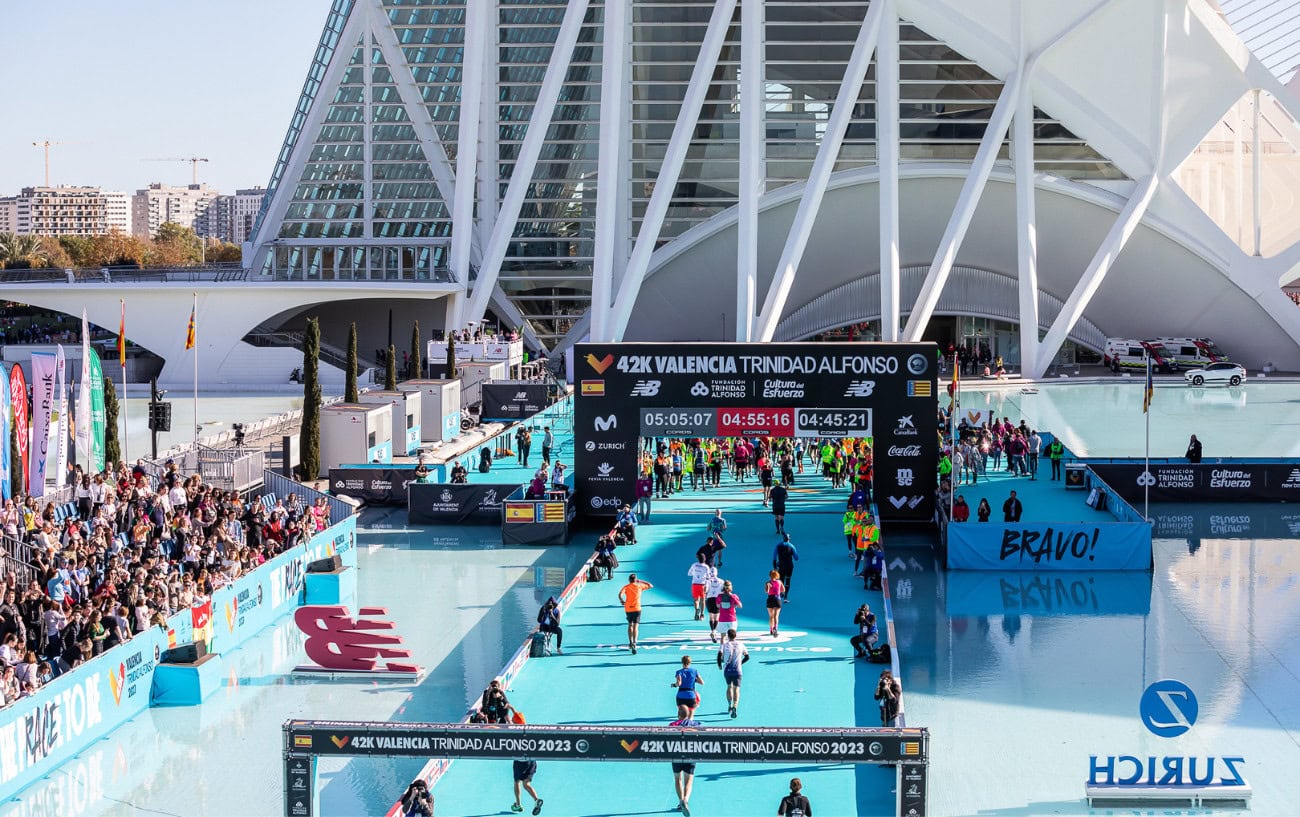
The marathon in the Spanish coastal city has built a reputation for big numbers, but 2025 produced a set of statistics that felt unusually dense, the kind that linger long after the course has emptied.
Here are the facts and stats you may have missed from the 2025 Valencia Marathon.
Headline Performances & Records
- Joyciline Jepkosgei – 2:14:00, fastest of 2025, 4th-fastest in history, course record
- Peres Jepchirchir – 2:14:43, 2nd-fastest of 2025, 6th-fastest in history
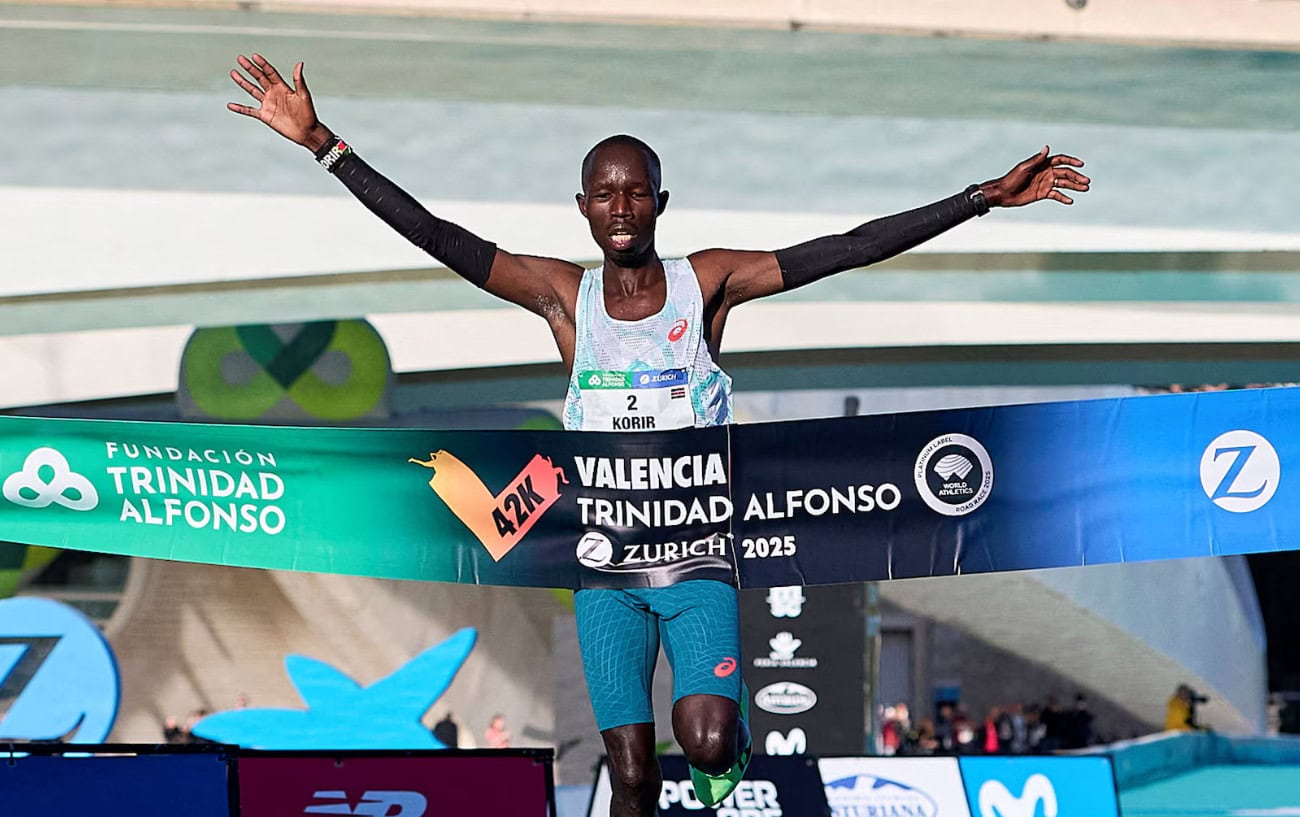
- John Korir – 2:02:24, 8th-fastest in history
- Amanal Petros – 2:04:03, German national record
- Awet Kibrab – 2:04:24, Norwegian national record & fastest European debut
- Suguru Osako – 2:04:55, Japanese national record
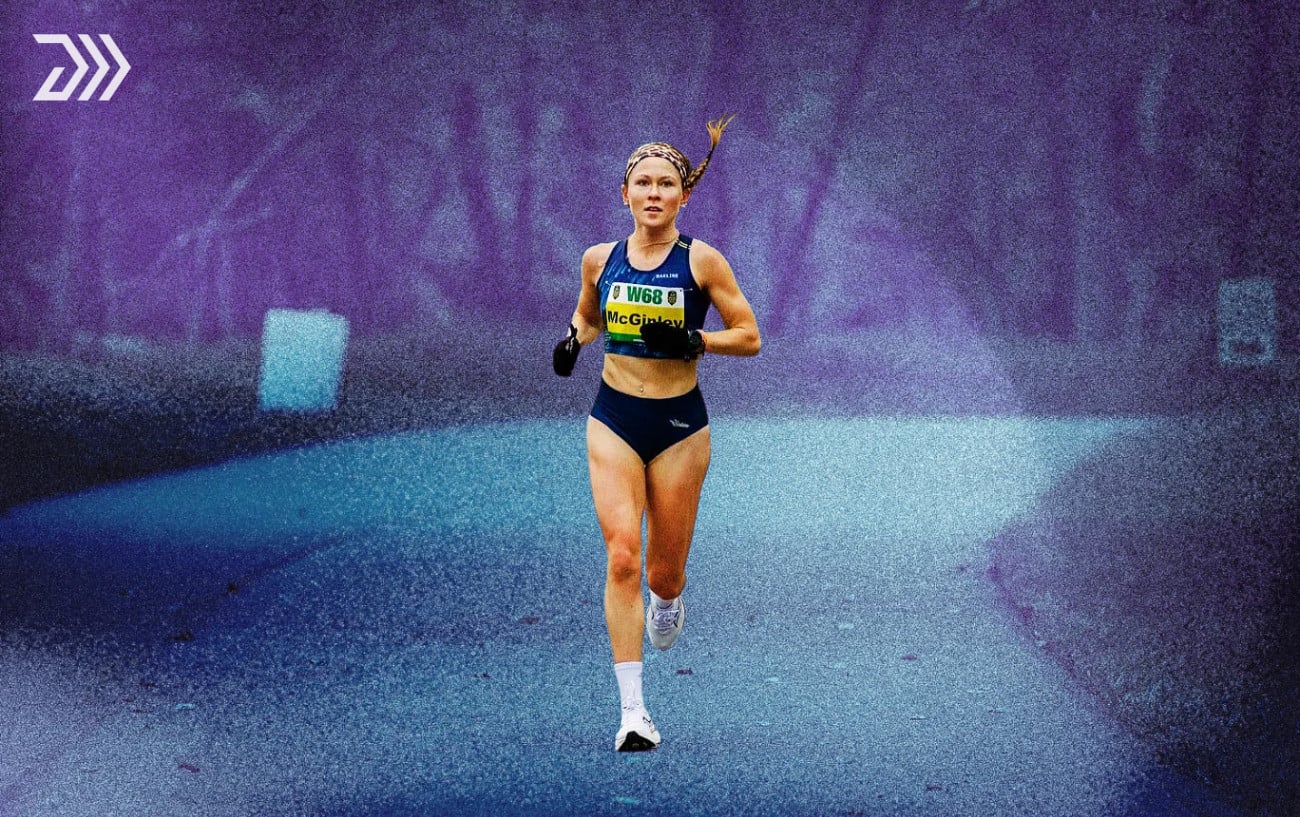
- Chloe Herbiet – 2:20:38, Belgian national record
- Alisa Vainio – 2:20:48, Finnish national record, Nordic record
- Jess Stenson – 2:21:25, Australian national record
- Natasha Wilson – 2:24:22, Welsh national record
Depth & Field Statistics
- 75+ runners under 2:15
- 150+ runners under 2:20
- 500+ runners under 2:30
- 5,500+ runners under 3:00 (18% of finishers)
- 30,523 finishers total
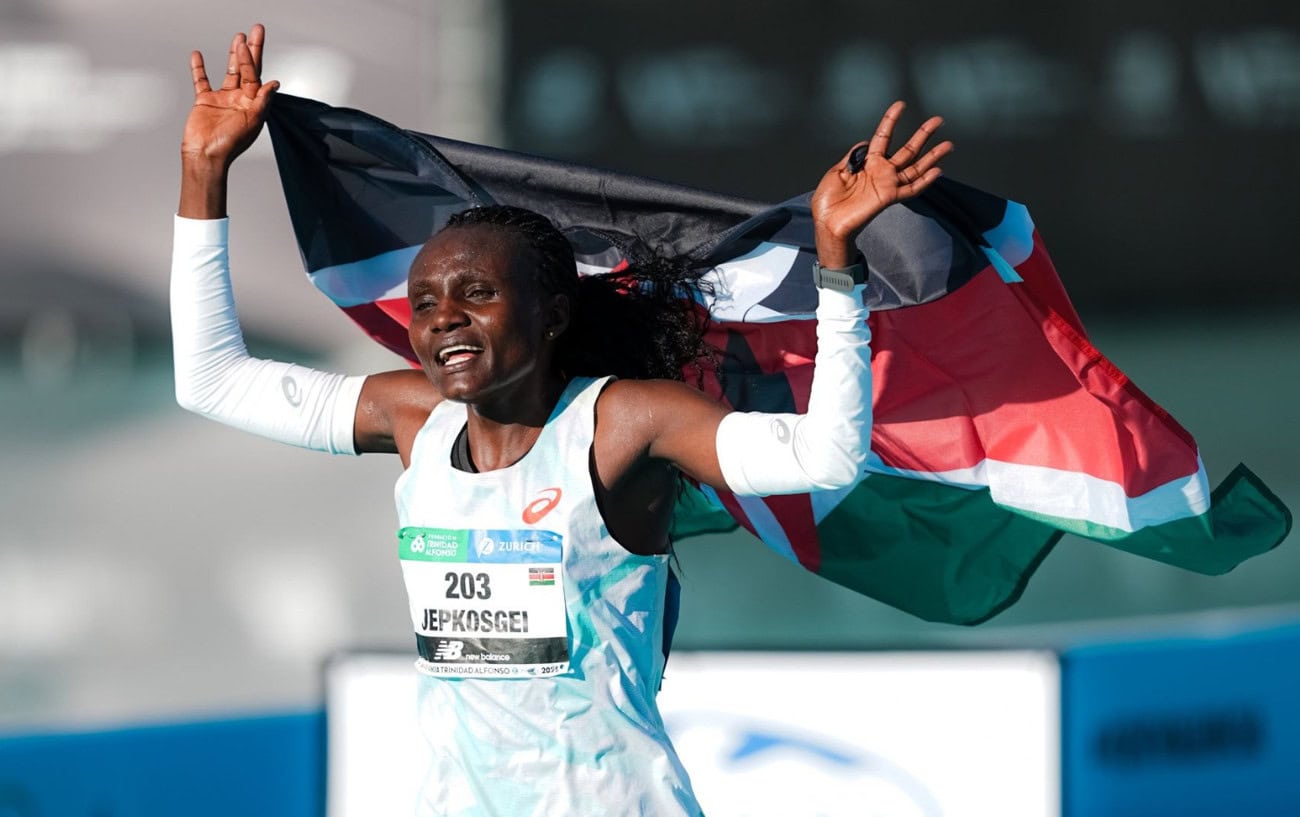
The women’s race set the tone immediately. Jepkosgei looked relaxed even as she moved into territory very few other women have reached. Her 2:14:00 wasn’t dramatic on the surface; it just steadily pulled the field apart until it became obvious she was closing on one of the fastest times in history.
Jepchirchir followed with her own career-defining run, a 2:14:43 that moves her to sixth all-time. Both performances had the same quiet certainty; controlled early, confident late.
Behind them, the national record wave began.
Belgium’s Chloe Herbiet kept her pacing steady through the final kilometers and was rewarded with 2:20:38. Alisa Vainio, somehow deep into her third marathon in twelve weeks, ran another Finnish record, alongside a Nordic record. Her season now reads like an experiment in durability that keeps getting validated.
The men’s race unfolded more slowly. The pack hit halfway in 1:01:38, which felt cautious for Valencia, but the second half belonged entirely to John Korir. His 1:00:45 split was the kind that doesn’t look aggressive until you check the math. The final result, 2:02:24, puts him eighth in history and gives him two big wins for the year.
Amanal Petros continued his rise with a German record in 2:04:03, strong, measured, and very much in line with his Tokyo Worlds silver. Awet Kibrab’s debut was the morning’s cleanest surprise. Debuts usually come with a wobble somewhere after 30 km; his didn’t. He crossed in 2:04:24, setting a Norwegian record and the fastest European debut ever. Suguru Osako added the Japanese record, rounding out a rare morning where major federations collectively moved their standards upward.
The depth numbers made just as much noise as the podium.
Valencia’s reputation has been building for years, but 2025 pushed it further.
More than 5,500 sub-three-hour finishers is a statistic you almost have to read twice. The sub-2:15 and sub-2:20 counts belong more to championship-level fields than open marathons. Valencia’s course and conditions help, but the culture around the race, athletes targeting it months in advance, coaches scripting seasons around it, does just as much.
With over 30,000 finishers, the event now sits among the world’s largest. The 2026 edition moves fully to a ballot system, with guaranteed entry only for this year’s participants. It’s hard to imagine interest slowing after a morning like this.
RunClub
Get more running stories — join RunClub
Daily running news, a community of 300,000+ runners, free training plans for every distance, and a daily running game. Free to join — no card.
Already a member? Log in →



Start the conversation