


Runners entering the 100th Comrades Marathon this week will not be asked for an Athletics South Africa license number, one of several things the national federation used to supply that the race has arranged for itself.
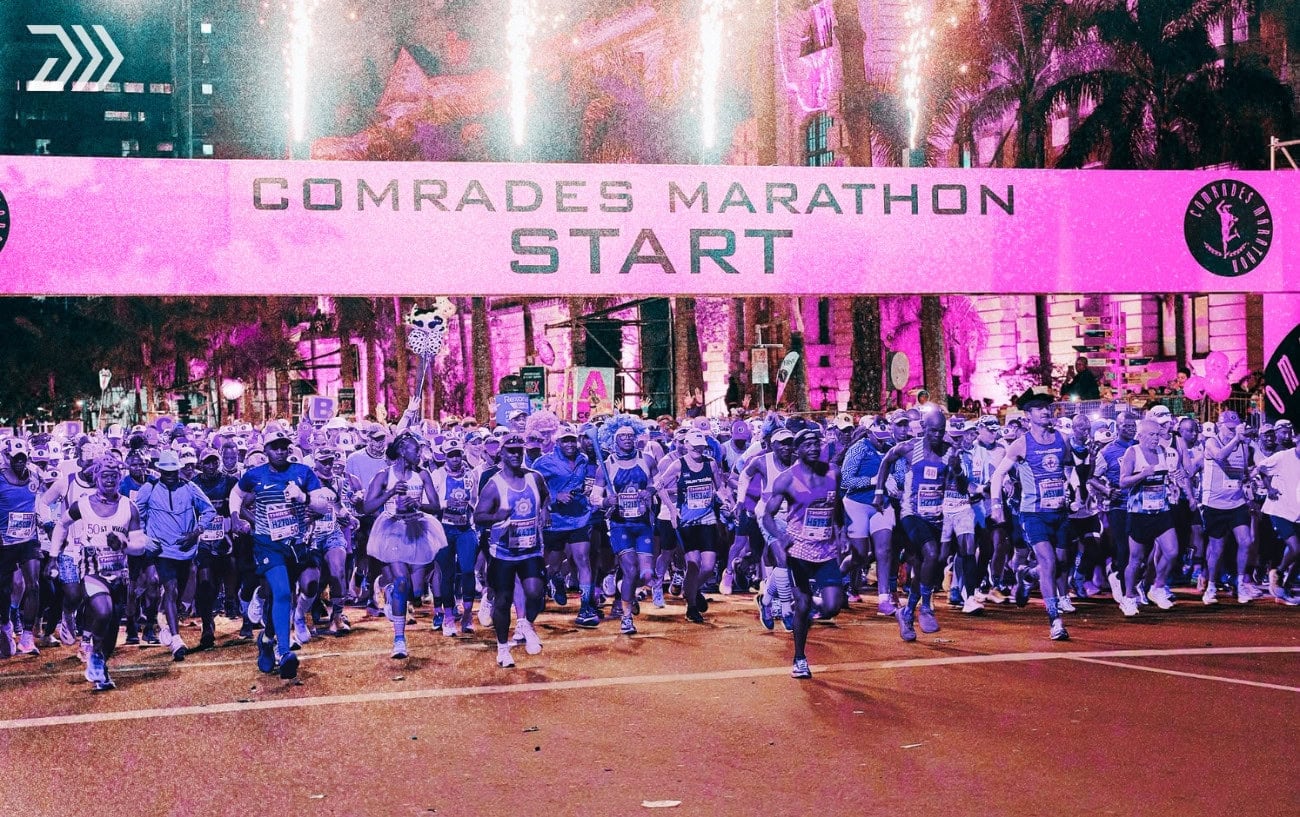
General entries open Wednesday for a field capped at 28,000. The centenary runs on June 13, downhill from Pietermaritzburg to Durban, the 50th down run in the event’s history.
Daily Maverick reported Monday on what the break with the federation has come to mean in practice. The license number is no longer requested at entry. Club colors are encouraged rather than required. Officials are being drawn from a wider pool than the provincial federation used to allocate, and the association has gone directly to the South African Institute for Drug-Free Sport on anti-doping.

The qualifying standard has not moved. Entrants need a marathon of 4:59:59 or faster run between June 15, 2026 and May 3, 2027, and those marathons still sit inside the structure the association walked out of. There were 138 qualifying races last year. “You still have to qualify,” CMA chairperson Mark Leathers told Daily Maverick. “Almost 100% of your qualification marathons are going to remain as sanctioned events by the federations.”
Under provincial rules a runner at a sanctioned race either holds an annual license bought through an affiliated club or buys a temporary one covering that race alone. The requirement has gone from the Comrades entry form and still stands at the race that gets a runner there.
Wesley Botton asked in The Citizen on July 31 whether the institute would agree to test at a race the federation does not recognize. It is now dealing with the race directly. This year’s R8,210,400 (about $513,000) purse was cleared for payment only in late August, once the institute confirmed that every athlete tested after the June race had come back negative, The Witness reported. George Kusche and Gerda Steyn each earned more than R2 million in prize money and incentives.
Where the Governance Fight Stands
Athletics South Africa left the race off its 2027 fixture list on Aug. 18, the day before the centenary launch, citing the organizers’ failure “to recognise and comply with the governance and regulatory framework governing athletics,” TimesLIVE reported. The Soweto Marathon is missing from the same list. In its statement the federation said the 100th Comrades “has not been authorised or sanctioned” through KwaZulu-Natal Athletics.
The association withdrew from KZNA in November 2025 and asked to affiliate to ASA directly, which the federation refused. Members voted 694 to 338 on Aug. 1 against re-affiliating. KZNA says it is still owed more than R4 million (about $250,000) in levies from this year’s race, as Daily Maverick reported. KZNA and ASA have since assembled a team to negotiate with the association. Acting KZNA president Khulezweni Buthelezi said on Aug. 28 that they were planning to meet and hoped to make progress by the end of September. “What we are more interested in is to protect the athletes, the race and institutions,” he told TimesLIVE.
The exposure mediation has not touched belongs to the professionals rather than the 28,000. Botton has argued that without officials recognized by ASA enforcing the rules of the sport, performances “will not be recognised” and will not count when national teams are picked for international ultra-distance championships. He has also noted that South African elites need ASA’s approval to race abroad.
Clubs are the other open question, since the license and the membership come as a pair. Jan Jordaan, president of the Benoni Northerns club, told Daily Maverick that “there might be a few clubs that feel it. If they don’t really offer anything, people might say, ‘Well, we don’t need you any more; we don’t have to be affiliated.'” Leathers said the reasons runners join clubs survive the paperwork. “People want to be part of their clubs, they want to be sociable, they want to be involved,” he said.
None of it has slowed the entries. The 3,500 places held for Green and Yellow Number holders went in three hours when the first window opened on Aug. 25, and 792 of the 1,000 charity places had gone by the next day. The general ballot runs from Wednesday to Sept. 22, and applicants find out on Sept. 23.
RunClub
Get more running stories — join RunClub
Daily running news, a community of 300,000+ runners, free training plans for every distance, and a daily running game. Free to join — no card.
Already a member? Log in →












Join the conversation
On the general ballot entry they did request an ASA license number.