


At 5 a.m. on Monday, several hundred runners will leave Deep Canyon Ranch in Black Canyon City, Arizona, and start moving north. Most of them won’t be done until Wednesday or Thursday. A few will need every minute of the 125-hour cutoff and finish in the last hours before Saturday’s 10 a.m. deadline.
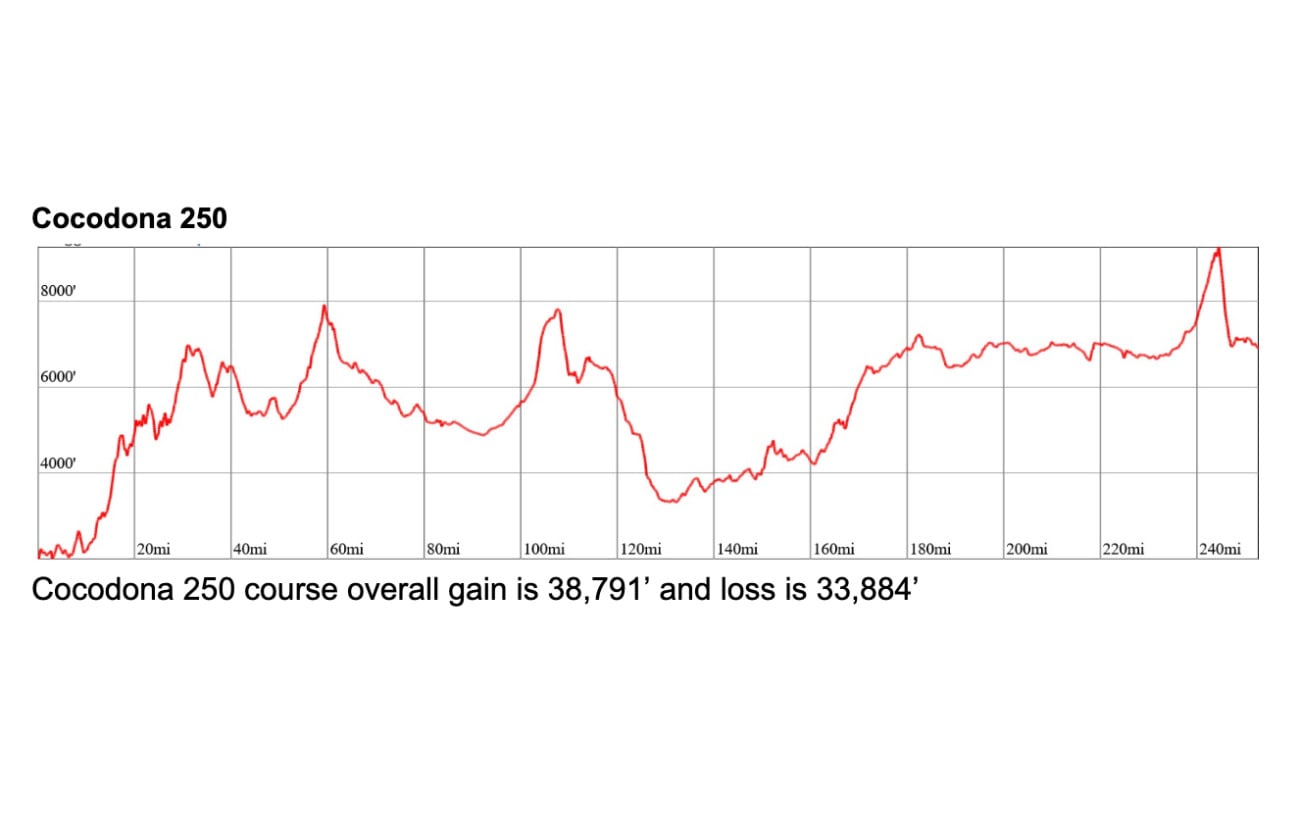
The Cocodona 250, organized by the Arizona race company Aravaipa Running, covers 253.3 miles between the start line and the finish at Heritage Square in downtown Flagstaff. According to Aravaipa’s published 2026 figures, runners will climb 38,791 feet and descend 33,884. The high point on the course is just over 9,000 feet on Mount Elden, the final big climb. The low point sits at 1,996 feet near the start. Forty-five percent of the route is singletrack, 46 percent is double-track, and only 9 percent is pavement.
About The Course
The course threads eight Arizona towns in order: Black Canyon City, Crown King, Prescott, Jerome, Clarkdale, Cottonwood, Sedona and Flagstaff. Runners begin among saguaros and ocotillos on the Black Canyon National Recreation Trail, hit the first crew-accessible aid station around mile 37 at the Crown King Saloon, which Aravaipa says is the oldest continuously operated saloon in Arizona, then climb through the Bradshaw Mountains. Aravaipa stakes a specific claim about that section. “Cocodona is the only trail ultra-marathon to traverse the entire Bradshaw Mountain range,” the race writes on its course description page.
After Prescott and a downtown stretch on Whiskey Row, the route runs north past Watson Lake and the Granite Dells, climbs Mingus Mountain, drops into the old copper-mining town of Jerome at 5,000 feet, crosses the Verde River at the midpoint, and pushes into Sedona’s red rock country. Runners then climb onto the Coconino Plateau, which Aravaipa describes as “the largest contiguous Ponderosa Pine forest in the world,” and follow the Arizona Trail for 11 miles before the final push up Mount Elden.
Aravaipa’s official course description is honest about the last climb. “After the summit, get ready for a quad pounder, as the trail drops nearly 2,000′ in 1.5 miles,” the race writes. “If your legs were not already destroyed…wait, nevermind…everything is destroyed at this point. Your legs will be destroyed-er.”
There are 21 official aid stations on the course and four water-only drops, roughly one stop every 12 miles. All of them stock water, an electrolyte drink, sodas, snacks and fruit. Vegan and vegetarian options are available at every aid station, and gluten-free is available on request. Most stations also serve a hot meal.
The women’s race
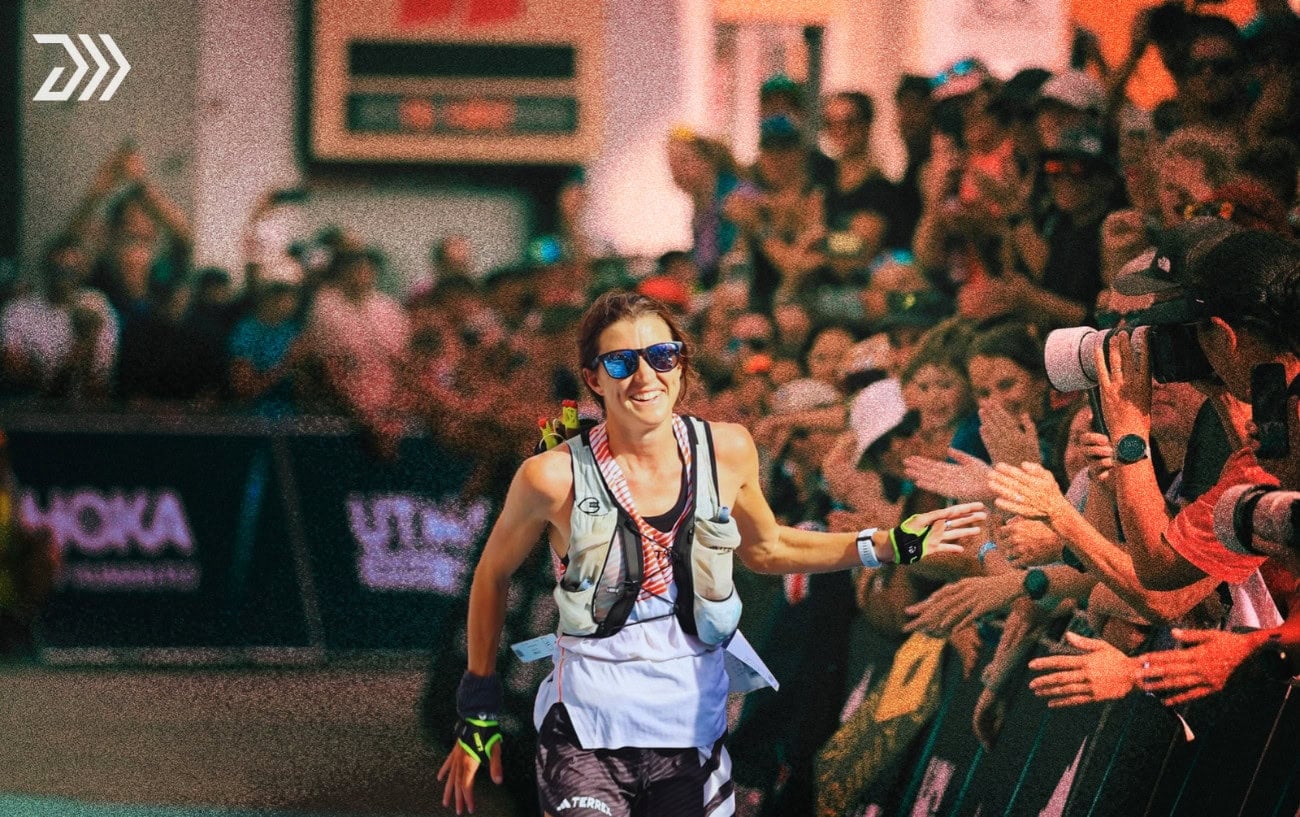
The women’s field is stacked, and the top of the leaderboard is clear before anyone takes a step. According to UltraSignup’s official entrant list, Courtney Dauwalter is the highest-rated woman entered. Rachel Entrekin is the second. The math points to one of them winning.
Dauwalter is the easy favorite if she stays healthy. Her name has been at or near the top of nearly every ultra she has entered for the past several years, and her résumé at distances over 100 miles is the longest in the field. Entrekin has finished on Cocodona’s podium before and brings the kind of trail-specific experience that matters more than raw foot speed at 250 miles.
The next tier is competitive. Lindsey Dwyer, Megan Eckert, Heather Jackson, and Mika Thewes are all within striking distance of a podium spot. Jackson came out of professional triathlon and bike racing before turning to ultras, and the strength carryover has shown up in her recent results. Thewes has built her career at the 200-plus distance, which counts here. Sally McRae is also in the field and has more Cocodona scar tissue than nearly anyone on the women’s side. Tech entrepreneur and ultra convert Randi Zuckerberg is also on the women’s start list.
Our pick: Dauwalter wins, Entrekin second, and the third spot is genuinely a coin flip. Watch Thewes. Runners who specialize in this distance over and over tend to know what their body will do at hour 50, which is a kind of knowledge no ranking percentage measures.
The men’s race
The men’s field is harder to call. The top of the UltraSignup rankings is dominated by younger runners with strong percentages but lighter 200-mile resumes. Ryan Clifford is the highest-ranked entrant in the entire race, men’s or women’s. Adam Kimble and Joe McConaughy come next on the men’s side.
Ranking percentages do not always survive day three of an ultra-ultra, though. The runners we would take seriously for a podium spot usually have two things going for them: prior Cocodona experience, and a deep history at other 200-plus miles.
That list starts with Jeff Browning, the most experienced 200-mile racer among the elite men in the field, and the only one who actually lives at the finish line. Michael Versteeg is the other home pick. Prescott sits roughly 100 miles into the race, and Versteeg knows these trails as well as anyone in the field.
Then come the pure 200-mile specialists.
Max Jolliffe and Kilian Korth both come in off recent wins at races in the 240-mile range. Michael McKnight has racked up more 200-plus wins than nearly anyone in the sport. Jeff Garmire has finished Cocodona several times and tends to gain on fields over the back half of races, which makes him dangerous in any 250.
Our pick: Browning to win. The home-course advantage matters more at this distance than people give it credit for, and he has been on the podium at 200s for years. McConaughy is the wildcard. His fastest-known-time background says he can hold a steady, sustainable pace for absurd lengths of time, and steady is what wins this race. Korth, Jolliffe and McKnight all have credible cases for a top three.
One more name worth tracking at the back of the front group: Cameron Hanes. The bowhunter, author and podcaster is not a category favorite at 50-plus, but he has finished this race in the past and tends to grind out faster results than his age suggests. Watch the under-20 field too: brothers Asher and Elliot Chisholm are both registered, the year after their brother Brody Chisholm finished as the youngest finisher in race history.
The variables that decide it
A few things tend to settle ultra-ultras at this distance, and Cocodona has all of them.
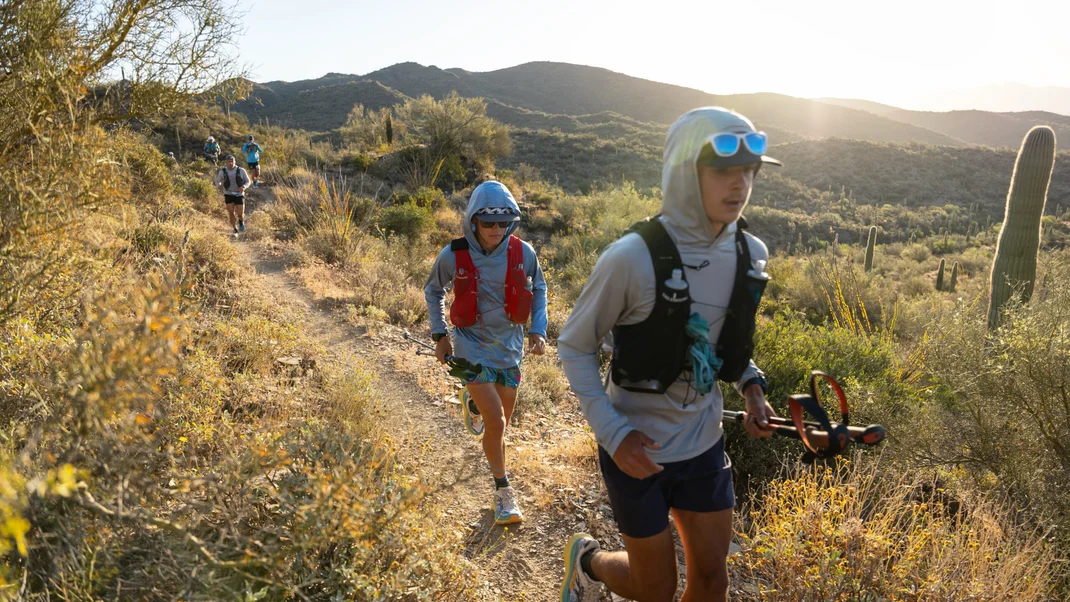
Heat in the first 24 hours is the first one. The Sonoran Desert opening will be hot, and runners who fall behind on hydration on day one rarely catch back up. Cold higher up is the second. Mingus Mountain and Mount Elden are both high enough to invite snow, hail and wind, and Northern Arizona weather in early May is unpredictable. Anyone betting on a runner this year should look at how they handle weather, not just trail.
Sleep is the third variable. With 125 hours to cover the course, the front of the field can theoretically push through on a few short naps. The math gets ugly fast. Past about 36 hours awake, hallucinations and decision errors are common at this distance, and the long, exposed stretch between Jerome and Sedona is where mistakes from earlier in the week come due.
The smart money is on whoever manages all three best, not whoever looks fastest in the data. A 95 percent UltraSignup ranking does not mean much when your stomach quits at mile 160.

How to follow along
Aravaipa’s broadcast partner Mountain Outpost will livestream the race on its YouTube channel throughout the week. Aravaipa also publishes its own live tracking, with every runner required to carry a SPOT satellite tracker handed out at 3:45 a.m. on the morning of the start. There is also a finish-line tradition the race runs for the last official finisher: spectators form what Aravaipa calls a “spirit tunnel,” and the runner receives the DFL award.
The cutoff is 10 a.m. on Saturday. After that, anyone still moving on the course is not an official finisher, no matter how close they get to Heritage Square.
RunClub
Get more running stories — join RunClub
Daily running news, a community of 300,000+ runners, free training plans for every distance, and a daily running game. Free to join — no card.
Already a member? Log in →


Start the conversation