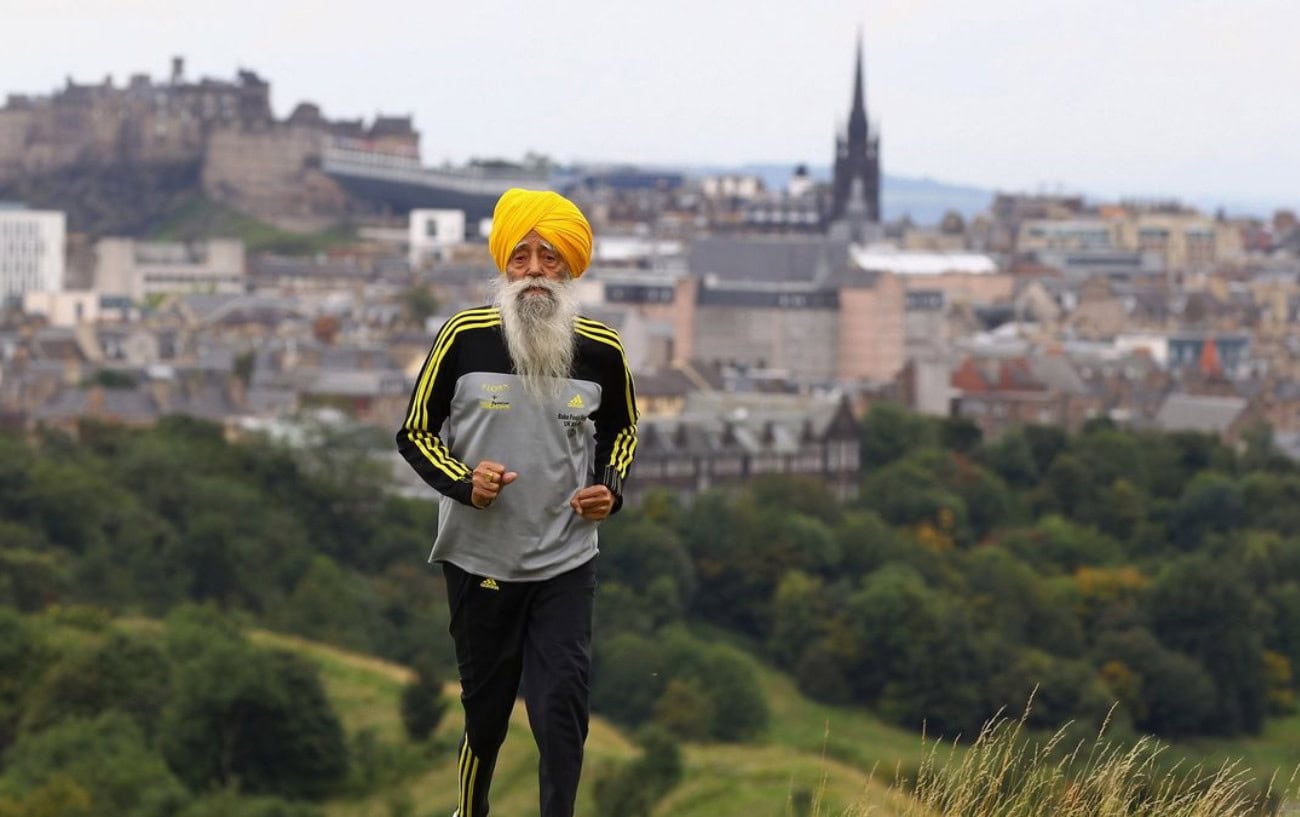
Fauja Singh, the British-Indian runner often called the “Turbaned Tornado”, died Monday afternoon in Punjab after being struck by a speeding vehicle while out on a walk. He was 114.
The incident happened near Beas Pind, Singh’s ancestral village outside Jalandhar, where he had been spending time with family. Police say a white Toyota Fortuner SUV hit him and fled the scene. Singh was taken to a local hospital but died shortly after.
Police later arrested Amritpal Singh Dhillon, a 26-year-old Canada-based man who had recently returned to India. Dhillon told police he panicked after the collision and only realized the identity of the victim after seeing news coverage later that evening.
He has been charged with culpable homicide not amounting to murder and rash driving.
According to police, parts of the vehicle were recovered at the scene and matched with surveillance footage that eventually led them to Dhillon’s family home, where they found the SUV with visible damage.
He had been living in Canada for eight years and was in India on an emergency travel certificate after losing his passport.
Singh’s family said they may have responded differently had the driver stopped to help.
“We would not have pursued a complaint against him had my father survived,” said Harbinder Singh, Fauja’s son. “But he should have stopped. If a mistake had happened, he did not have any enmity with us.”
Singh wasn’t a typical elite runner. Born in 1911, he didn’t begin running until his late 80s, after moving to the UK and coping with the deaths of his wife and younger son. He took up the sport for his mental and physical health, eventually completing nine marathons between 2000 and 2013.
His most widely recognized achievement came in 2011, when he reportedly became the first person over 100 to complete a marathon, finishing the Toronto Waterfront Marathon in just over eight hours.
While Guinness World Records didn’t officially certify the feat due to a lack of a birth certificate, Singh had a British passport listing his birth year as 1911 and had received a letter from the Queen on his 100th birthday.
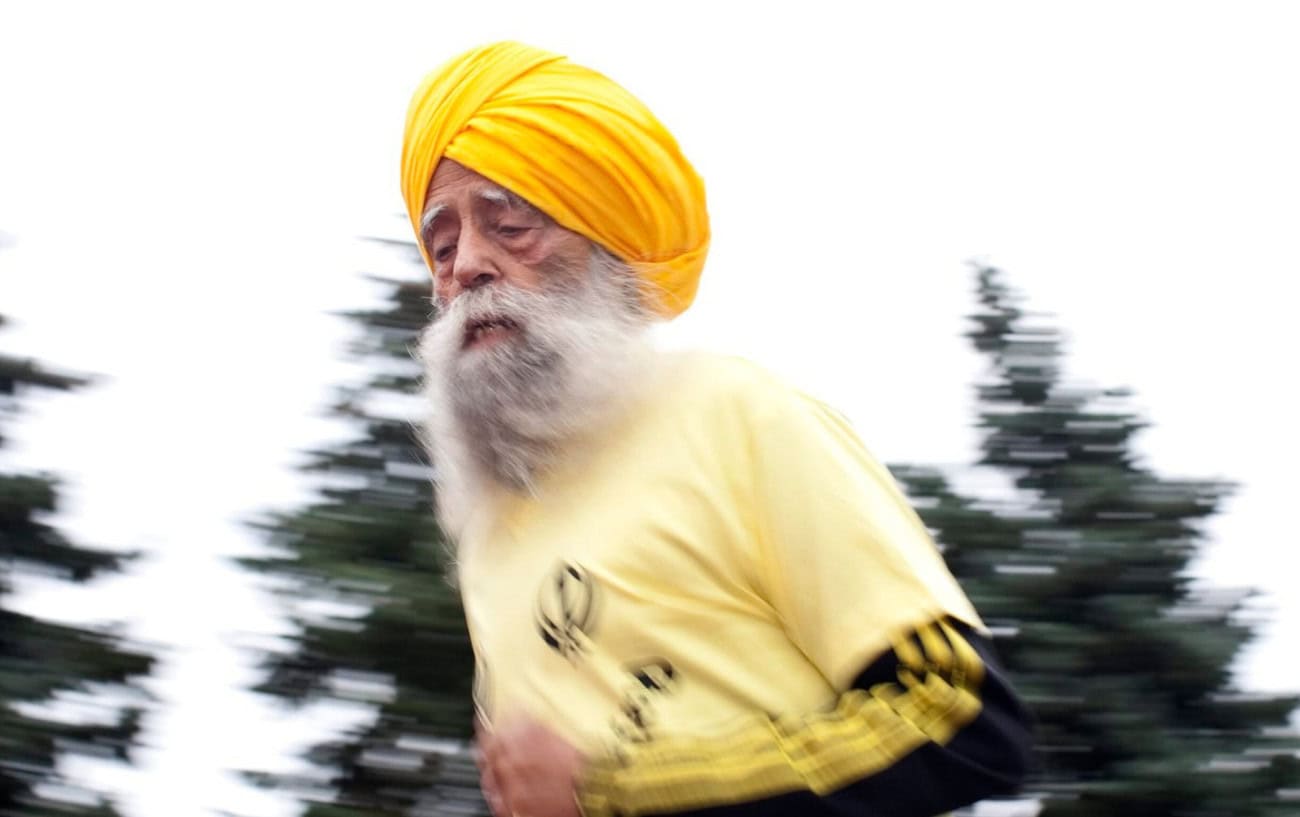
Singh carried the Olympic torch ahead of the London 2012 Games, and was featured in Adidas’s “Impossible is Nothing” campaign, alongside athletes like Muhammad Ali and Zinedine Zidane. His story, beginning as a farmer in rural Punjab and eventually becoming a global figure in masters running, made him a source of inspiration far beyond the running world.
In his later years, Singh lived in Ilford, East London, and stayed active in his community through Sikhs In The City, the running club he helped bring into the spotlight. He officially retired from competitive running in 2013 but continued walking daily and remained involved in events and public appearances.
Singh was a quiet but well-known figure in international running circles, not for fast times but for longevity and perseverance. His death has sparked widespread tributes, including condolences from Prime Minister Narendra Modi, and plans are already underway to honor him at events in London.
While the circumstances surrounding his death have raised questions about road safety and accountability, those who knew Singh say his life, and the way he turned personal loss into a renewed purpose, remain his most enduring legacy.