


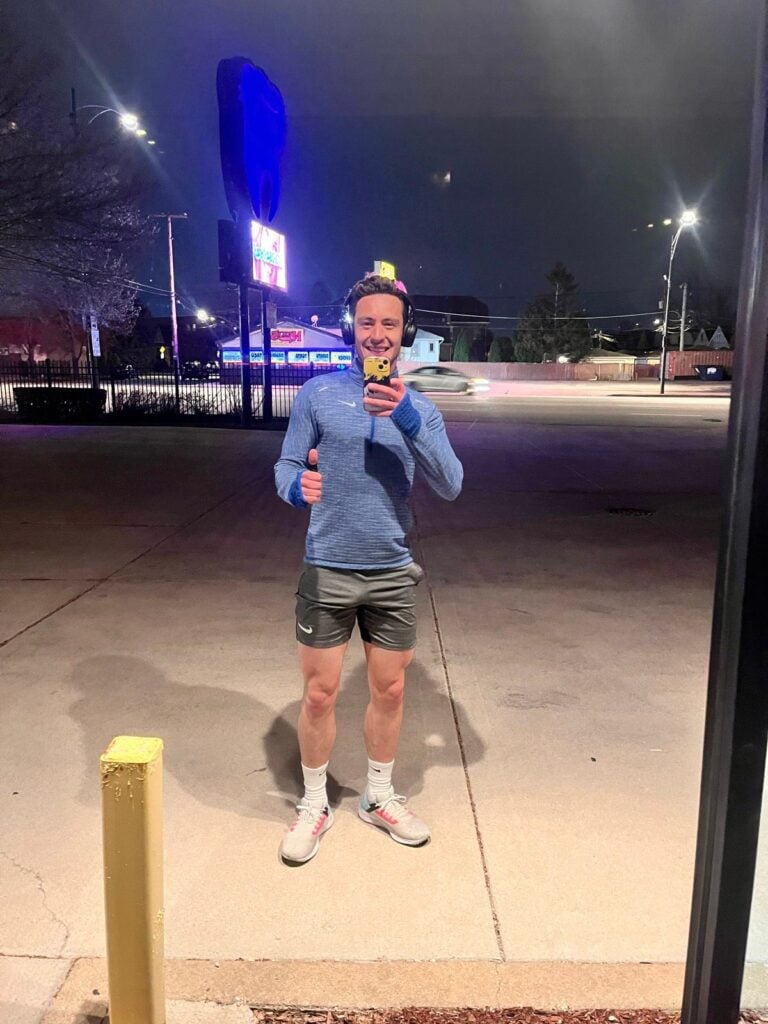
At first glance, Joabe Barbosa might seem like just another endurance runner plodding along Chicago’s sidewalks, weaving between traffic and winter slush with a quiet intensity.
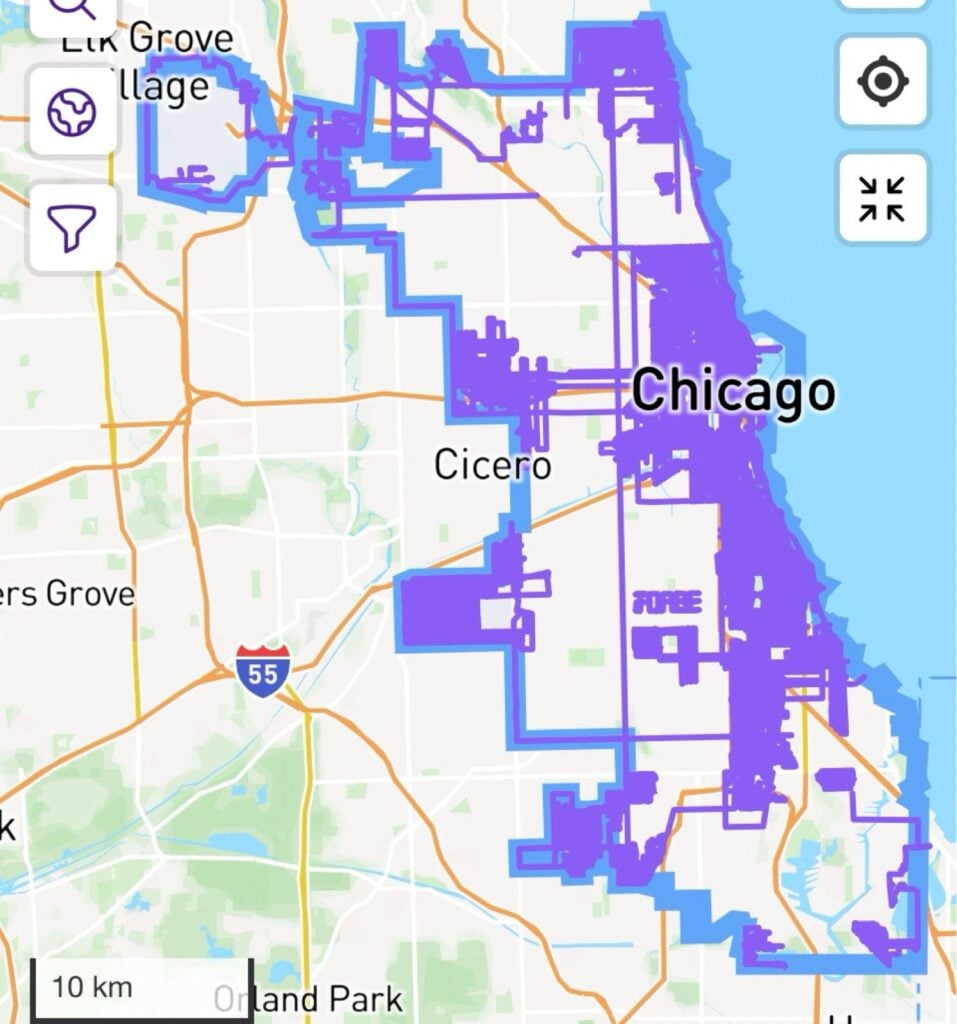
But Barbosa’s mission is anything but ordinary: he’s attempting to run every single street in the city—more than 4,000 miles in total—within a year and a half.
As of March 2025, Barbosa is 40% of the way through this audacious journey, covering an average of 10 miles a day, six days a week.
What makes the feat even more remarkable? He’s doing it all while juggling the rigors of a doctoral program in clinical psychology at Roosevelt University.
“It’s not about fun,” Barbosa says. “It’s about being able to. I’m doing this because I can—and because I almost couldn’t.”

From Near-Death on a Mountain to Mapping a City
The spark for this massive undertaking was lit in March 2024, nearly 1,200 miles away from Chicago’s city grid, atop Mount Washington in New Hampshire. Known for its unpredictable and deadly weather, Mount Washington holds the record for the fastest wind gust ever recorded on the Earth’s surface—231 miles per hour.
Despite clear skies when he began his ascent, Barbosa found himself caught in a violent and unexpected storm near the summit. Winds roared at hurricane strength. Visibility dropped. He fell down part of the mountain and suffered both frostbite and hypothermia.
“I recovered, but I kept thinking—I almost lost my limbs. I almost lost my life,” Barbosa says. “After that, I got into running. With frostbite, getting blood flowing helps recovery. That turned into something bigger.”
What started as rehab became ritual. Running, for Barbosa, is now a physical affirmation of life—of his survival, resilience, and gratitude.
A One-Man Census of Chicago’s Soul
Chicago is a city of neighborhoods—77 officially, with thousands of blocks and thousands more stories. Barbosa is stitching those stories together, one run at a time. With the help of the running app Strava, he maps each route meticulously, carving red lines through neighborhoods like Woodlawn, the far north side, and parts of the West Side.
What he’s encountering along the way isn’t just geography, but sociology—architecture, culture, people.
“I get to see the old and the new. Every neighborhood has a story,” Barbosa told FOX 32. “And every run is different.”
There’s a kind of intimacy to this kind of running—a literal street-level view of the city that most Chicagoans, especially those commuting by car or train, never experience. Barbosa meets people. He smiles, waves, and often receives that signature Chicago warmth in return—even in the biting cold.
Running for the Sake of the Run
While his routes sometimes lead him to the serenity of Lake Michigan’s edge, most of Barbosa’s miles wind through the messy, noisy, chaotic parts of the city. This is intentional.
He runs late at night, when traffic is sparse and sidewalks less crowded. He runs without headphones, choosing awareness over distraction—a necessity in some areas, where safety isn’t guaranteed.
“I’ve had close calls,” he admits. “One time, a ceramic plate fell from an apartment window and smashed in front of me.”
But Barbosa keeps running.
A Record in the Making
If he completes his mission by the end of 2025, Barbosa plans to submit his achievement to Guinness World Records, though it’s unclear whether such a feat has ever been officially recognized. Others, like Rickey Gates, have done similar city-spanning runs—in Gates’ case, every street in San Francisco in 2018—but Chicago, with its far greater sprawl and brutal winters, presents a different beast.
According to the Chicago Department of Transportation, the city has more than 4,000 miles of streets. While no definitive database confirms if anyone has run them all, Barbosa’s effort may well be the most organized and ambitious on record.
The Psychology of Movement
Barbosa’s quest isn’t just about breaking records or exploring cityscapes—it’s also a living thesis on resilience, trauma, and recovery.
As a doctoral student in psychology, his perspective bridges the physical and mental health benefits of long-distance running. Studies consistently show that running can help regulate mood, reduce anxiety, and build cognitive resilience—an idea Barbosa embodies with every step.
He’s not just escaping the trauma of the mountain—he’s metabolizing it.
“I’m not running from something,” he says. “I’m running through it.”
What’s Next?
Barbosa still has hundreds of miles to go, but his story already serves as a powerful reminder of what can happen when movement becomes meaning.
Running Chicago’s every street is a massive physical undertaking, yes—but it’s also a tribute to life, to recovery, and to the human drive to leave a mark. In this case, a footprint on every corner of a city—and perhaps, eventually, in the record books too.
RunClub
Get more running stories — join RunClub
Daily running news, a community of 300,000+ runners, free training plans for every distance, and a daily running game. Free to join — no card.
Already a member? Log in →






Start the conversation