


If you were planning to livestream your next Ironman finish line moment to your followers, we have some bad news. As of March 2, doing so will get you disqualified. Ironman has updated its Global Competition Rules to ban on-course recording outright — phones, GoPros, action cameras, and yes, those Oakley Meta smart glasses that half the endurance world has been spotted wearing on training runs. The rule is blunt: if you point any device at anything during a race, you’re done. No asterisks, no gray area.
The move makes Ironman one of the first major endurance-sports organizations to draw this particular line in the sand. And it has raised a question that the running world has been quietly avoiding: given everything that has happened at road races over the past two years, should the world’s biggest marathons be having this conversation too?

So What Exactly Does the Rule Say?
Ironman’s previous rules, updated in 2017, told athletes they couldn’t use devices in a “distractive manner” during a race. That phrase was doing a lot of heavy lifting. What counts as distractive? A quick glance at your GPS watch? A five-minute FaceTime with your mum at mile 70 of the bike leg? Lawyers and athletes alike would have a field day.
The 2026 update does away with the ambiguity entirely. Section 4.04 of the revised rules now reads:
“Using any device (e.g., including without limitation, cameras, phone cameras, video cameras, glasses, etc.) to capture photographs, video, or other visual images during the Race is prohibited. Athletes using any device in this manner will be disqualified.”
That language, quoted directly from the updated Ironman 2026 Global Competition Rules effective March 2, covers essentially every recording scenario you can think of. No selfies, no GoPro on the bike, no livestreaming, no smart glasses — period.
Phones are not banned altogether. GPS tracking, live location sharing with your support crew, and using your phone as a securely mounted bike computer are all still fine. And if you witness a medical emergency on course, yes, you can call 911 — but you need to stop first. Using a phone while riding or running remains an unsafe and prohibited act regardless.
Ironman says the policy is there to protect athlete safety, competitive fairness, and the integrity of the race. With thousands of athletes on a course, a rider fumbling with a camera mount at 25 mph is a genuine danger to themselves and the people around them. The organization also pointed out that race-day coverage is already handled by its official broadcast crew and accredited media — athletes recording themselves were never really filling a gap.
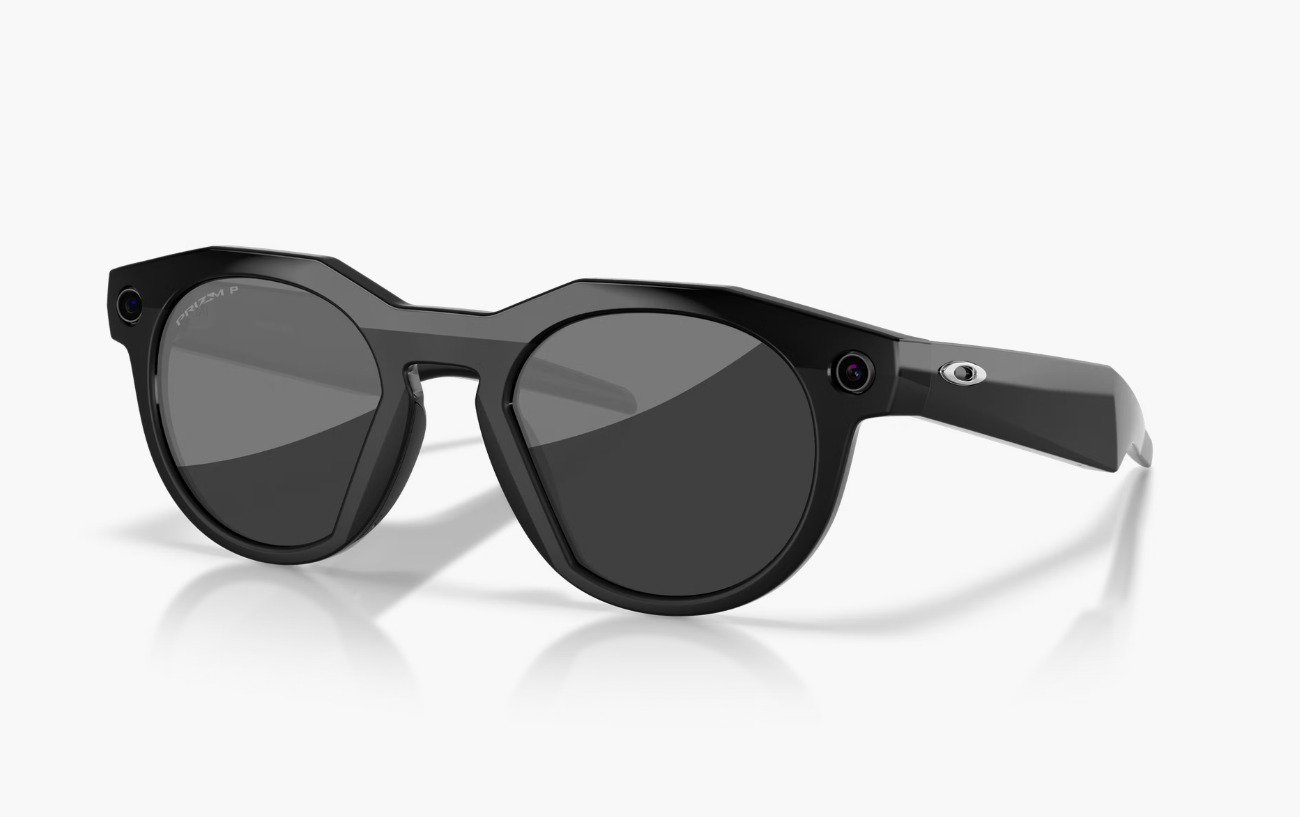
Enter the Oakley Meta Glasses
This rule did not appear out of nowhere. It arrived at the same moment that wearable recording technology became genuinely good. In June 2025, Meta and Oakley launched the Oakley Meta HSTN smart glasses — purpose-built for athletes, with 3K video recording, an eight-hour battery life, and an IPX4 water-resistance rating. They look like sunglasses. They record like a GoPro. And for a while, nobody was quite sure if they were technically allowed at races.
Now they are not. The new Ironman rule’s explicit inclusion of “glasses” in its list of prohibited devices appears to be a direct response to the Meta glasses’ growing popularity among endurance athletes and creators.
Not everyone has welcomed the change. Several professional triathletes posted mixed reactions, with some viewing the ban as a sensible safety measure and others questioning whether recording devices pose any real threat to race integrity when used responsibly.
The broader tension here is not unique to triathlon. Athletes in endurance sports have become their own media channels. Some have more followers than mid-sized sports publications. Telling them to race without creating content is, for some, a genuine professional ask — not just a personal preference.

About That Time a Guy Brought E-Bikes to the New York City Marathon
For marathon organizers, the conversation around cameras and content creators has already had its defining moment. It happened in November 2024, and it involved e-bikes.
Matt Choi is a Texas-based runner and social media creator with over 465,000 TikTok followers. He ran the 2024 TCS New York City Marathon in 2:57:15 — a solid time. He was disqualified the next day. New York Road Runners (NYRR) banned him from all future NYRR events, citing violations of their code of conduct and World Athletics competition rules.
The reason: Choi had run much of the race with two members of his team riding alongside him on electric bicycles, filming the whole thing. The e-bikes blocked other runners at water stations, interfered with personal-best attempts, and created hazards on the course. Choi himself acknowledged this in his public apology on Instagram:
“I was selfish on Sunday to have my brother and my videographer follow me around the course on e-bikes, and it had serious consequences. We endangered other runners, we impacted people going for personal bests, we blocked people from getting water.”
— Matt Choi, via Instagram
Choi’s primary sponsor, the running coaching app Runna, terminated their partnership shortly afterward.
The incident might have been written off as a one-time lapse in judgment, except that investigators at Marathon Investigation later documented what they described as a pattern of behavior: bib misuse at the 2023 Houston Marathon, an unauthorized film crew at other events, and — perhaps most brazenly — a videographer on a one-wheel motorized board spotted near Choi at the 2025 Marquette Marathon.
Marathon Investigation put it plainly: “Road races are not personal film sets. They’re collective athletic events, built on fairness, safety, and community.” This, really, is what good running etiquette comes down to — knowing that the course belongs to everyone on it, not just the person with the biggest following.
NYRR did not introduce a filming ban following the incident. But it drew a clear line: the existing rules, properly enforced, were already enough to disqualify someone. The question is whether those rules are specific enough to prevent the next version of this problem — one that might not involve e-bikes, but a smart pair of glasses and a quietly running livestream.

Where the Major Marathons Stand Right Now
None of the seven Abbott World Marathon Majors — Boston, Tokyo, London, Sydney, Berlin, Chicago, and New York — currently have anything close to the new Ironman policy.
NYRR’s published rules allow general participants to carry a camera no larger than a GoPro, provided it is held in hand or mounted on the head or torso. Selfie sticks, tripods, and drones are prohibited. Elite athletes are held to World Athletics rules, which bar recording devices entirely.
That means right now, a runner lining up for the Chicago or Boston Marathon this spring can legally pin on a chest-mounted GoPro and document every mile. Thousands do exactly that every year, and their race vlogs — gritty, honest, often genuinely moving — are some of the best free advertising these events get.
Race directors are not naive about this. They know that athlete-generated content fills their social feeds, brings in first-timers who want to see what the experience is really like, and extends the life of the event well beyond race weekend. A blanket ban is not something any major would take lightly.

The Case for Bringing the Ban to Marathons
The argument for tougher rules at running races is not really about the runner with a GoPro on their forehead. It is about what happens when the incentives scale up.
An athlete with half a million social media followers has a professional and financial interest in documenting their marathon. Sponsorship deals, coaching revenue, and brand partnerships often depend on consistent, high-quality content. That interest does not always sit comfortably alongside the interests of the other 49,999 runners sharing the course.
There are safety considerations that mirror Ironman’s reasoning. Filming while running divides your attention. In a dense pack — especially at aid stations, on sharp turns, or in the final miles when everyone is running on empty — a runner distracted by a camera creates real collision risk. At the Choi incident, runners were physically obstructed at water stations when they needed hydration most.
Then there is the consent issue, which nobody talks about enough. When a runner livestreams their race to tens of thousands of followers, they are capturing dozens of other competitors in the background — people who are mid-effort, not looking their best, and who never agreed to feature in someone else’s content. Smart glasses make this even less visible. There is no obvious lens to notice, no indicator that the person running next to you is broadcasting live to the internet.
Stripped back to its essentials, the Ironman rule is saying something simple: when you are in a race, race. Everything else is a distraction — literally, by definition. It aligns with what most experienced runners already know from the golden rules of running: respect the space, respect the effort, and respect everyone else on the course.

The Case Against
The strongest counterargument is that a blanket ban punishes the wrong people.
The vast majority of runners who carry a camera during a marathon are not influencers. They are first-timers who want to remember crossing the finish line after six months of training. They are charity runners who promised supporters a video. They are parents who are going to make their kids watch the footage every birthday for the next decade. Taking that away from them to solve a problem created by a much smaller number of bad actors is a rough trade.
There is also a practical problem: enforcement at scale. Ironman events typically host a few thousand athletes on manageable courses. The New York City Marathon has 50,000 runners spread across five boroughs. Uniformly enforcing a recording ban at that scale — without creating a nightmare of inconsistent, selective enforcement — would require infrastructure that no race currently has.
A more surgical approach might work better: clear, specific prohibitions on external camera crews and motorized equipment on the course; stronger restrictions on filming near aid stations or in the final finishing chute; and explicit rules around smart glasses that reflect how that technology actually works. That targets the behavior causing the problems without telling the nervous first-timer they cannot film themselves crossing the finish line.
RunClub — Free
Join 300,000+ runners in RunClub
Free training plans for every distance, a daily running game, exclusive coaching content, and a real community of runners. Create your free account in 20 seconds — no card.
Already a member? Log in →










Start the conversation