


When Christian Longo fell from a third-story balcony in 2021, doctors weren’t talking about marathons.
They were trying to save his life.
He suffered a traumatic brain injury so severe that walking — just walking — was no longer guaranteed.
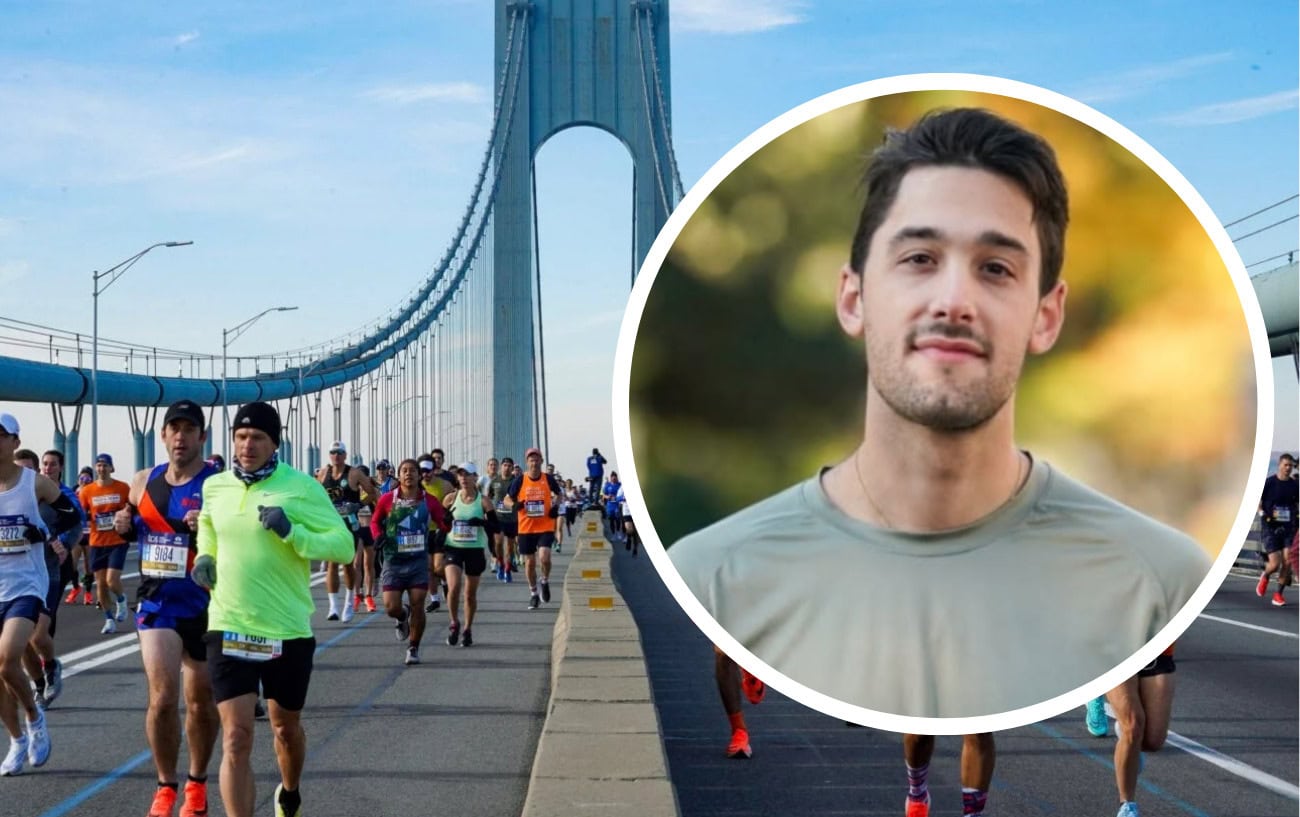
Last year, he crossed the finish line of the New York City Marathon.
“Though I’m doing it, it’s not for me.
It’s for everyone who can’t run a marathon.”
The Injury That Changed Everything
In April 2021, Longo’s fall resulted in a skull fracture and epidural hematoma — a life-threatening brain injury.
Emergency surgery saved him.
But survival was only the beginning.
The injury affected the right side of his brain — responsible for many cognitive functions most of us never think about.
“The injury was on the right side of my head, which is responsible for a lot of your cognitive abilities — like remembering words, what time it is, even what year it is.”
At times, he didn’t fully grasp the extent of what had happened.
“In my mind, I was still operating at 100% while struggling to even speak with my family.”
Imagine believing you’re fine — while your body proves otherwise.

Relearning How to Walk
For many traumatic brain injury survivors, recovery is not linear.
It’s repetitive.
It’s humbling.
It’s exhausting.
Christian had to relearn balance. Relearn endurance. Relearn trust in his own body.
Walking down a hallway became an achievement.
Climbing stairs required concentration.
And it changed how he saw everyday complaints.
“The ability to walk, I find that people take that for granted… we complain about how many flights of stairs we have to climb. You need to be caring that your legs can handle climbing these many stairs.”
That perspective would eventually fuel something bigger.
Why a Marathon?
Most people recovering from catastrophic injury aim to get back to “normal.”
Christian aimed further.
The New York City Marathon became a symbol — not of athletic ambition, but of possibility.
He wasn’t running for time.
He wasn’t chasing a personal best.
He was running for people still in wheelchairs. For survivors still in rehab. For families still hoping.
“Though I’m doing it, it’s not for me… it’s for everyone who can’t run a marathon — anyone who’s had a brain injury that’s left them bound to a wheelchair.”
That’s not a race goal.
That’s a mission.

Crossing the Finish Line
Last year, Christian stood on the starting line in Staten Island.
Four years earlier, he was relearning how to stand steadily.
Twenty-six miles later, he ran through Central Park toward the finish.
No matter the finishing time, the meaning was clear.
He had reclaimed something.
He and his girlfriend ran to benefit the Brain Injury Association of New York State — turning his personal comeback into collective impact.
“God decided to give me a chance to do this. I’m not going to squander it.”
The marathon medal wasn’t the victory.
Movement was.
What His Story Means for Runners Everywhere
You don’t need to survive a traumatic brain injury to feel the weight of Christian’s journey.
Every runner has faced:
- Starting over
- Slow progress
- Frustration
- Doubt
Christian’s story reframes those moments.
Discomfort becomes privilege.
Fatigue becomes gratitude.
Forward becomes enough.
“The ability to walk… people take that for granted.”
– Christian Long
3 Lessons From Christian’s Marathon
1. Progress compounds quietly.
The smallest steps can lead to 26.2 miles.
2. Purpose makes pain lighter.
Running for others changes the meaning of hardship.
3. Finishing is powerful — no matter the pace.
For some runners, 26.2 miles is a PR.
For others, it’s a miracle.
The Finish Line Wasn’t the End
Christian Longo is not defined by the fall that nearly ended his life.
He’s defined by what he did afterward.
Some runners chase speed.
Some chase medals.
Christian chased gratitude — and found it somewhere between relearning how to walk and finishing a marathon.
Forward is forward.
And sometimes, that’s everything.
RunClub — Free
Join 300,000+ runners in RunClub
Free training plans for every distance, a daily running game, exclusive coaching content, and a real community of runners. Create your free account in 20 seconds — no card.
Already a member? Log in →









Start the conversation