


Lucy Gossage reached Edale early on Sept. 8 having run the 268 miles (431 kilometers) of the Pennine Way in 70:47:15, the fastest any woman has covered England’s oldest National Trail and the first sub-three-day crossing on record.
Gossage, a British oncologist and former professional triathlete, left Kirk Yetholm on the Scottish border at 8 a.m. on Sept. 5 and ran north to south. Her time is the women’s supported fastest known time on the route, ahead of Anna Troup’s 72:46:37 from 2021.
Sabrina Verjee held this record before Troup. She ran 74:28:46 from Kirk Yetholm in September 2020, and the woman ahead of her was Jasmin Paris, whose 83:12:23 came in the 2019 Winter Spine, on a course that varies a little from the trail proper. Verjee’s run never made it onto the FKT database’s Pennine Way page, which is why the list there carries only two names. Since Paris the women’s time has come down by more than 12 hours.
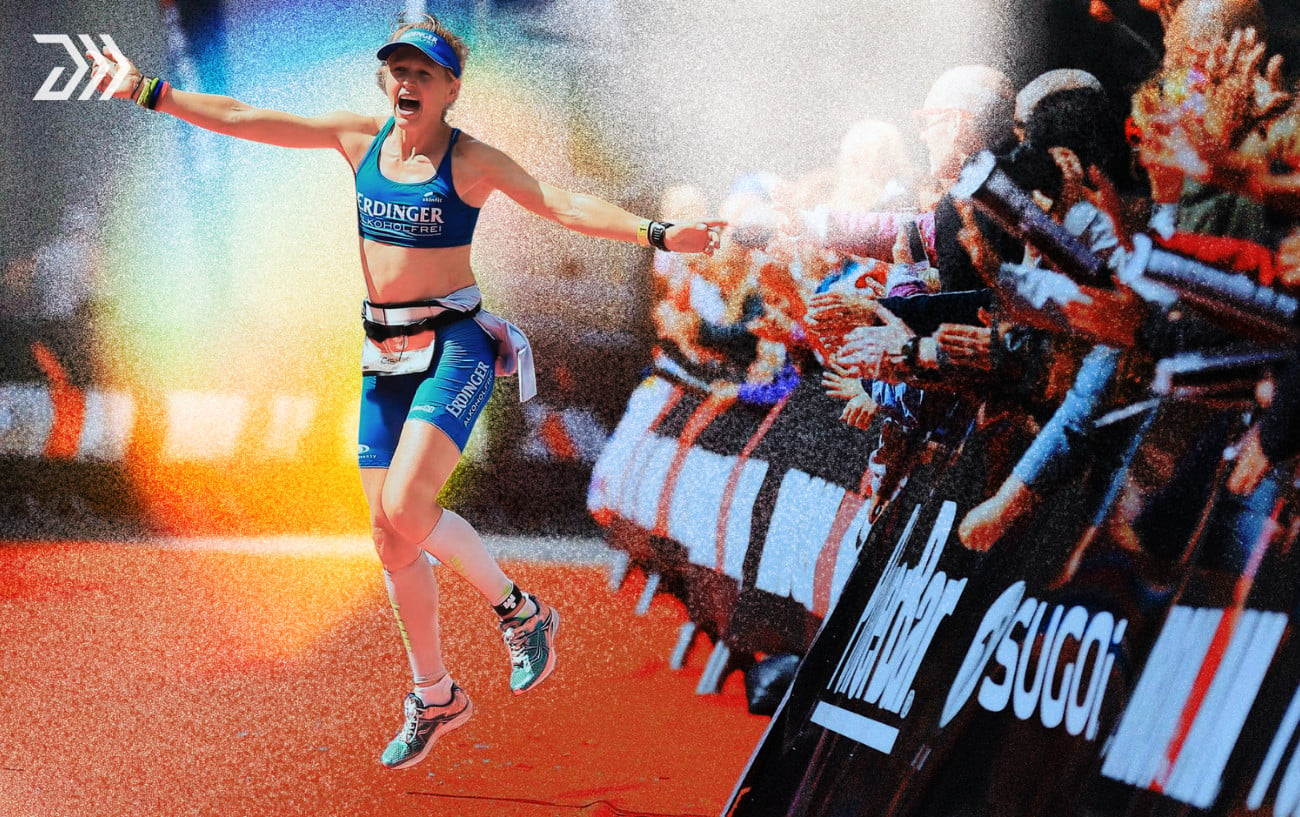
The weather held about a day and a half. In her own report to Fastest Known Time, Gossage described “perfect conditions for the first 36 hrs,” then “rain, wind and zero visibility over Pen Y Ghent and Fountains Fell,” and finally “biblical rain, wind and fog from 8pm on night 3 which made the final 65km pretty tough.” She covered roughly 40 miles alone and had friends pacing her for the rest, with a crew meeting her in a van. Sarah Brady of iRunFar added up the stops on Gossage’s live tracker and put her total downtime at a little over two and a half hours. The clock read 33:52 at the Tan Hill Inn, near halfway. Walkers are advised to allow 16 to 19 days for the same ground.
The men’s record goes back further, and for most of that time it did not move. Mike Hartley ran 65:20:15 in 1989 and nobody got near it for nearly 31 years. Then John Kelly and Damian Hall traded it three times in the space of 10 months, and Kelly’s 58:04:53 from May 2021 has stood ever since. He is still more than 12 hours faster than Gossage.
Gossage has raced this trail as well as run it. She won the Winter Spine in January 2025 in 87:41:38, the third fastest a woman has gone in that race, carrying her own kit the whole way. With a crew and a September forecast she was almost 17 hours quicker. She also went 12 hours inside Paris’s 83:12:23, which was the outright Spine record, quicker than any man had managed, until Jack Scott brought it down to 72:55:05 in 2024, and she is inside Scott by a couple of hours too. The two are not really comparable, a supported FKT against a self-sufficient winter race, but the gap is a decent measure of what a crew and a dry first day and a half are worth out there. Troup, who held the FKT until last week, won this January’s Winter Spine in 106:19:12.
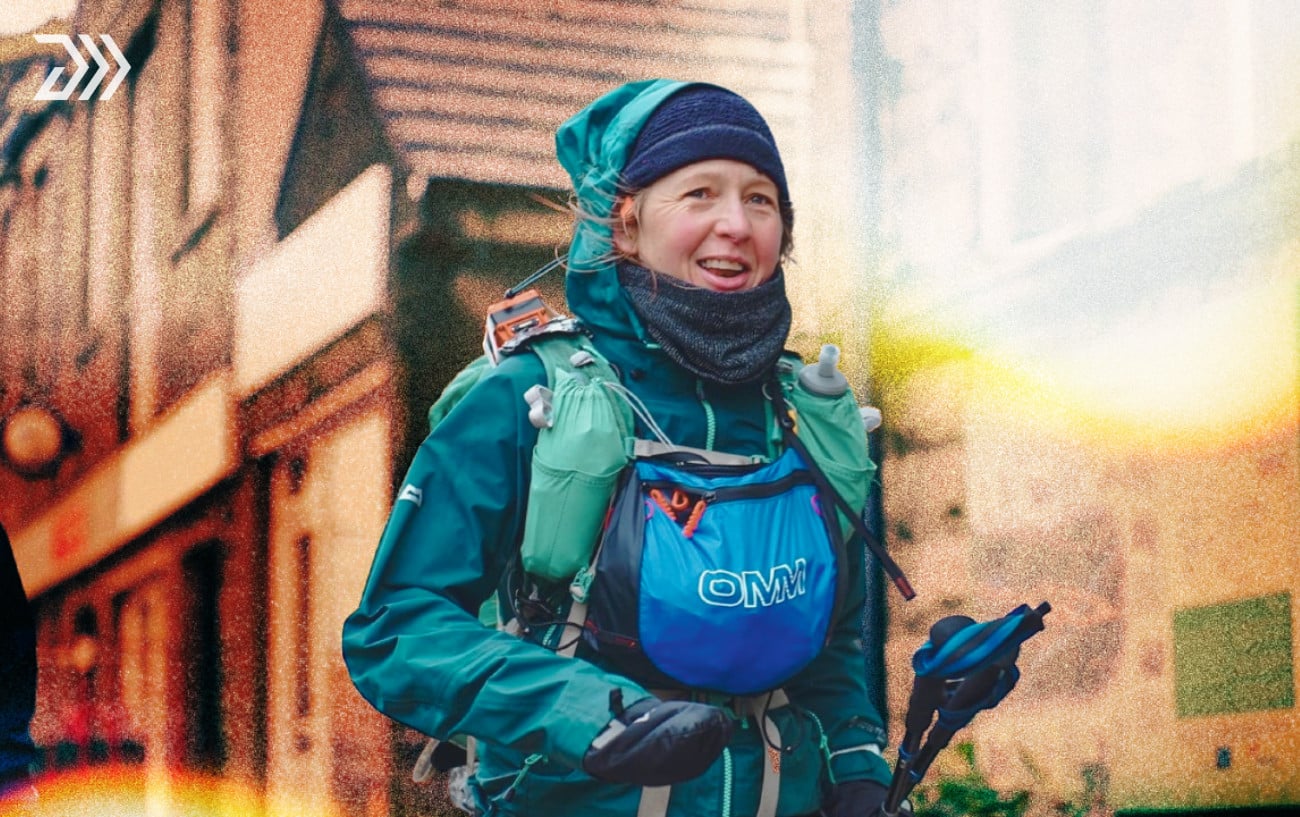
She came to ultrarunning from triathlon, where she won 14 Ironman-distance titles, and the last 18 months have been the best of her running career. In June 2025 she won the South Downs Way 100 in 16:30:35, 19 minutes under Bethan Male’s course record, and that September she spent 11 days, 9 hours and 6 minutes on the 630-mile South West Coast Path without a crew. The Pennine Way had already turned her away once this year: she went at it self-supported in May, and a calf injury stopped her at 100 miles.
September was not the plan. Gossage had an entry for the Northern Traverse, and when that race was called off she went after the Pennine Way record instead. “Seventy-two hours seemed impossible,” she told Brady.
Gossage has big plans up next, which may even make her three days look small. On March 27, 2027, Gossage leaves Edinburgh to run the entire British coastline, roughly 6,000 miles over six months, on a project she has named The Longest Lap. It raises money for Move Against Cancer, the charity she co-founded, with a £50,000 target, and people living with and after cancer will join her for 5K stretches along the way.
RunClub
Get more running stories — join RunClub
Daily running news, a community of 300,000+ runners, free training plans for every distance, and a daily running game. Free to join — no card.
Already a member? Log in →





Start the conversation