


I spent four years racing bikes for a living, and what I remember is not the climbing. It is the hour before the climbing, the fight for position on a road that keeps narrowing, everyone in the group knowing that whoever comes out of the last corner in front will probably decide the race. Matteo Jorgenson described that logic to Cycling Weekly in 2024, when the magazine asked a group of professionals whether their sport had become more dangerous. “We see things are getting dangerous, so we’re all now fighting all the time to be in front,” he said. “It’s kind of a cycle that I see happening, and I don’t see a solution really for it.” Cycling reached that point because the gap between the best rider in a race and the 40th best kept shrinking until fitness stopped deciding anything and position did. Trail running has been heading the same way for a few seasons, and this year’s UTMB is where it has become most obvious.
Three Men Under 19 Hours
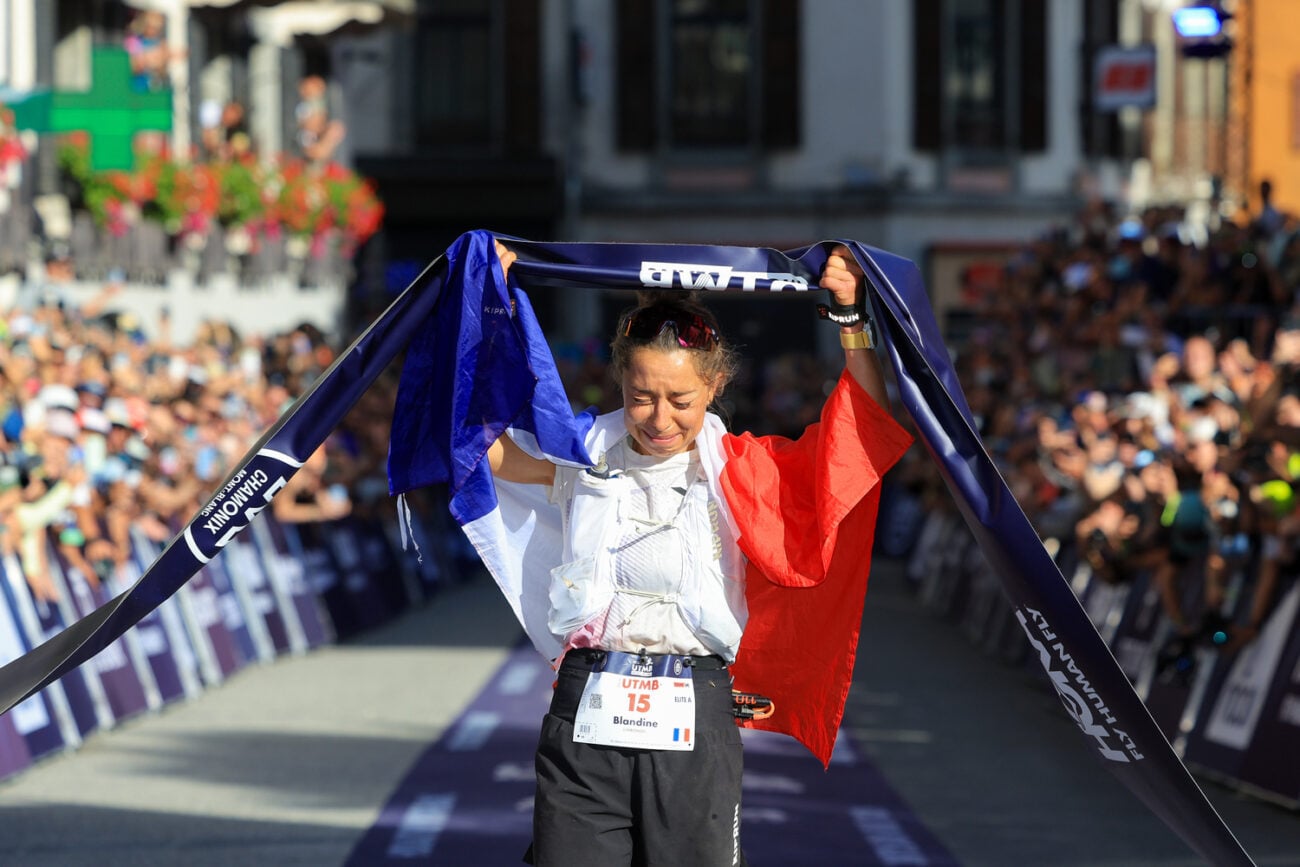
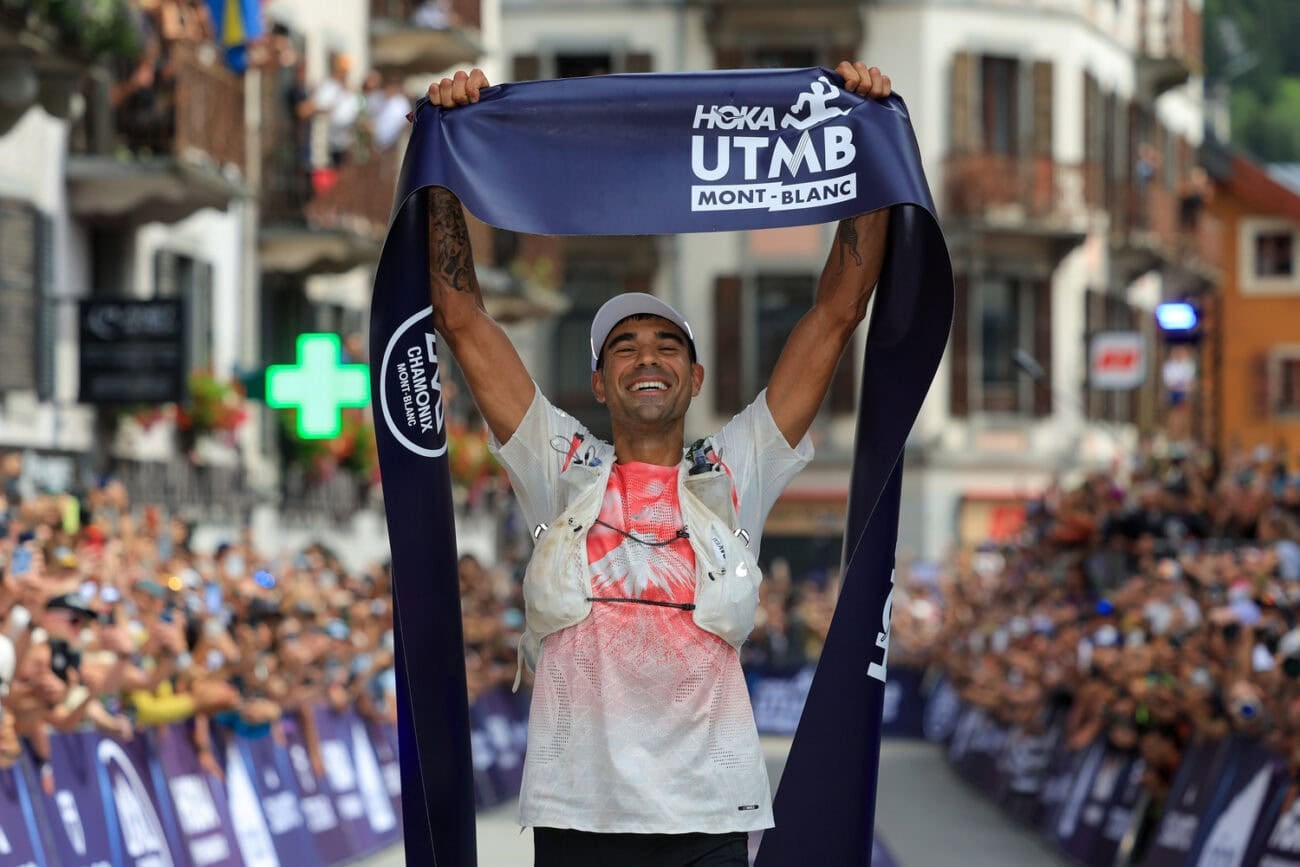
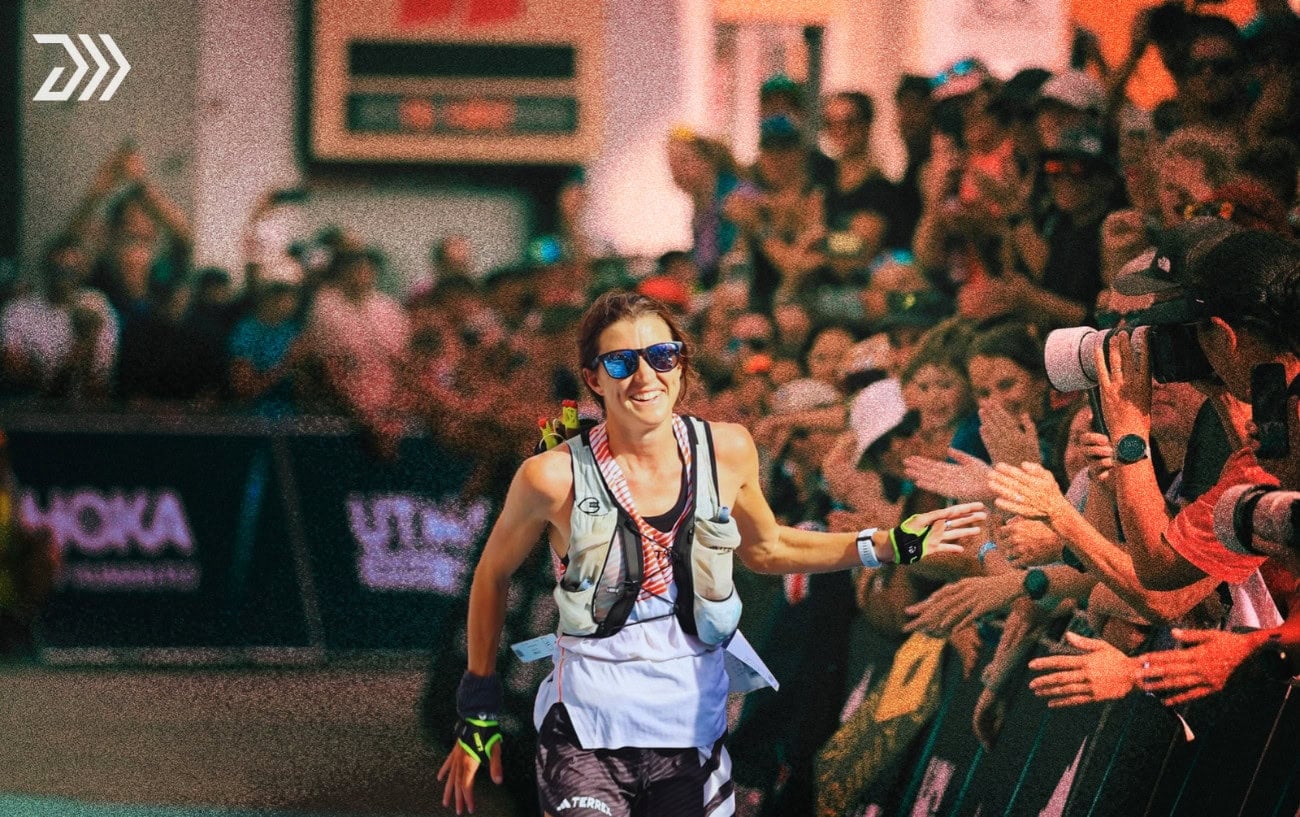
Ben Dhiman won in 18:16:29. No man had ever gone under 19 hours at UTMB, and three of them did it in the same race: Baptiste Chassagne in 18:47:38, Caleb Olson in 18:48:24, the two of them 46 seconds apart at the line after 173 kilometers (107 miles). The men’s top 10 all finished inside 20 hours, down to Jean-Philippe Tschumi in 19:58:24. Blandine L’Hirondel won the women’s race in 21:54:49, the first woman under 22 hours, with Rachel Entrekin and Emily Schmitz behind her separated by 1:34.
A year ago Tom Evans won the same race in 19:18:58. Third place took 20:05:06 and 10th place 21:19:47, which would not have made this year’s top 10. Some of the difference is the course and the weather. Organizers pushed the start back two hours and cut the Pyramides Calcaires section for storm risk, as they had in 2025, which is why neither edition could produce a course record, and once this year’s race got going the weather was nothing like the snow and driving rain of last August. That reroute took out about two kilometers and 200 meters of climbing, which does not account for the 81 minutes between 10th place last year and 10th place this year.
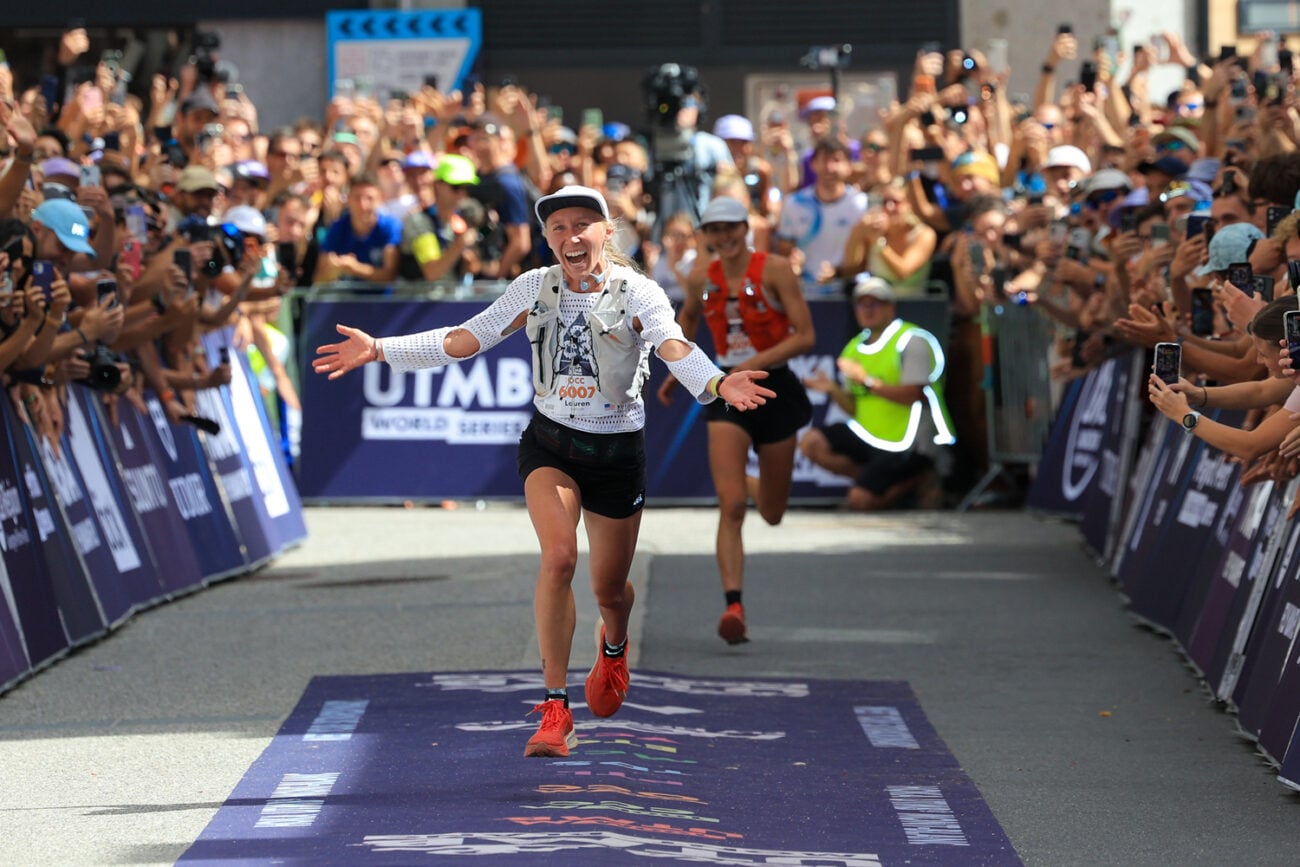
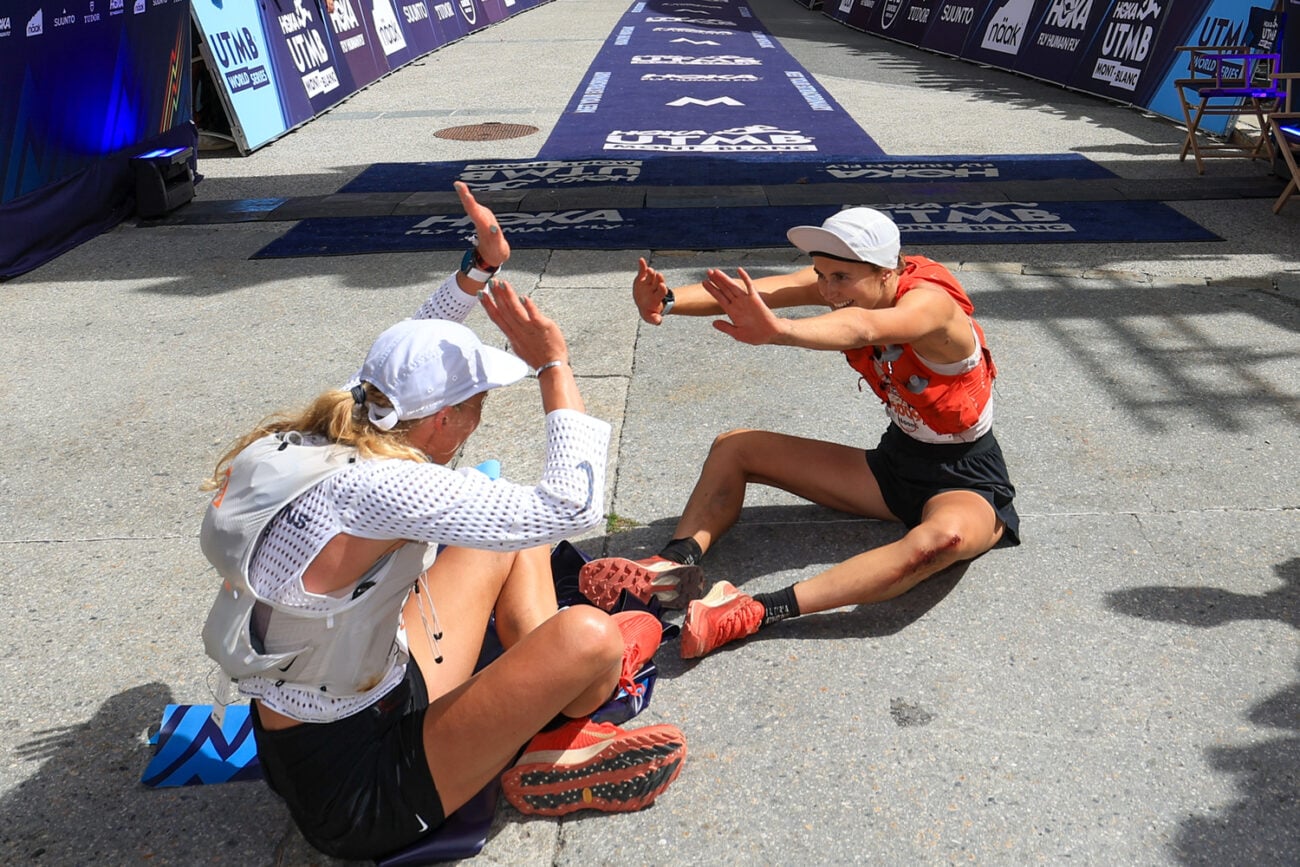
The shorter races are doing the same thing. Lauren Gregory ran Naomi Lang down in the closing kilometers of the OCC and won by three seconds, 6:08:07 to 6:08:10, with Sara Alonso a minute behind them. Doug Stewart of Elite Trail Team has been measuring the finishing gaps at these races as a percentage of the winner’s time, and the trend runs one direction across OCC, CCC and UTMB, most steeply at the short end: fifth place in the 2025 men’s OCC finished 1.75 percent behind the winner.
The Falls
L’Hirondel was 33 minutes clear at the top of La Flégère with 6K left to run, all of it downhill, and she spent a good part of that descent on the ground. Trail Runner‘s live coverage from Chamonix described several falls in the final 5K. Outside France counted three across the race. L’Hirondel herself described two of them in detail the next day, the second putting her leg onto jagged rock and leaving her lying there in shock and pain. “I thought my race was finished,” she told Trail Runner. “I said no, it’s not possible. It was a dream, and my dream is ending just four, five kilometers before the ceremony.” She got up, tried a step and then another, and walked the final bend into Chamonix.
Nobody can tell you the real figure, for her or for anyone else in that race. Trail running keeps no register of falls and no incident log, so the ones on the record are the ones a camera or a reporter happened to catch. Dhiman caught a rock and stumbled about 12K from the finish. Lang went down near Col de Balme and lost the OCC by three seconds. Those came from the front of three races in one week, with thousands of other runners on course during the week.The bigger number is the one for who did not get to the finish. Of the elite men, 25 finished and 25 dropped, and 29 of 50 elite women finished. The list of runners who stopped included Courtney Dauwalter, Vincent Bouillard, who had set the Western States course record in June, Jon Albon, Josh Wade, Fuzhao Xiang, Rod Farvard and Chris Myers. Entrekin, who traded the lead with L’Hirondel through the night and held second on her debut, arrived at Grand Col Ferret 104K in and told Trail Runner‘s live coverage she felt like she had been hit by a bus. She was 13 minutes off the lead at that point and had another 69K to run.
A descent is where climbers get caught and where a thin lead has to be defended, so a descent is where a professional field spends its risk. I cannot tell what L’Hirondel was thinking on that last one, and a 33-minute lead is no reason to chase anything, but elite trail runners now come off the final col meaning to race it, and legs that have absorbed 9,900 meters (32,000 feet) of climbing and as much descending do not always do what they are told.
Where the Money Went
The front of this sport did not get deep by accident. UTMB Group doubled the prize money at its championship races from 2024, and the purse now pays €20,000 to the winner of UTMB Mont-Blanc, the same figure for men and women, and keeps paying down to 10th place. Francesco Puppi of the Pro Trail Runners Association board called it “an important step forward in the professionalization of the sport” in UTMB’s announcement, where Jim Walmsley said the increase “gives incentive for professionals to prioritize these races.” A field that gets paid to 10th races differently from a field that gets paid to third, because eighth place becomes worth taking a chance for. Then there is the equipment, the sponsored teams, the full-time coaching, a runner-up who came to her debut off a Cocodona 250 course record, and a start list deep enough that the pre-race conversation was about who was missing.
What Cycling Already Found Out
The Tour de France has gone faster three times in five editions, from 42.031 km/h in 2022 to 42.849 km/h in 2025 and 43.326 km/h this July. The UCI and SafeR, the safety body the sport set up in 2023 after riders died, counted 497 incidents across the races they monitored in 2024, putting 35 percent down to unprovoked rider error and 13 percent to what they called tactical tension in sprints, on climbs and over cobbles, according to Cyclingnews. Gino Mäder, 26, crashed on the descent of the Albula Pass at the 2023 Tour de Suisse, where riders reach about 100 km/h (62 mph), and died the next day, NPR reported. Muriel Furrer, 18, died in September 2024 after a fall in the junior women’s road race at the World Championships in Zurich, swissinfo reported.
Luis Angel Maté, then riding for Euskaltel-Euskadi, put the responsibility on riders in that same Cycling Weekly piece. “If a bend can be taken at 40km/h, we shouldn’t try to go into it at 50km/h,” he said. “We need to show some good sense and realise that it’s not worth winning at any price.”
Trail running is not bike racing, and I am not going to pretend it is. There is no bunch sprint, no team car, no descent taken at that speed with 150 people inches away, and a fall in the Alps usually costs skin and a result rather than a life. The historic danger in the mountains has been the weather and the exposure, not the person next to you. The race as a whole also recorded its highest ever finish rate, 69.8 percent, so the event is getting better at bringing the field home. The attrition was concentrated at the front.
None of that changes how the front of the race is being run. Cycling’s crash problem was never really about the tarmac, it was about how many riders turned up believing they could win, and trail running now has that at every distance UTMB scores, from the OCC through the CCC to the 100-miler. Cycling took years to respond and responded with a safety body, yellow cards and equipment reviews. The lever UTMB has used so far is the weather one, taking the dangerous ground out of the course, in 2025 and again this year.
L’Hirondel finished on a leg she could not properly weight and became the third runner, after Xavier Thévenard and Ruth Croft, to win all three of the Chamonix races. Her 21:54:49 and Dhiman’s 18:16:29 are the fastest times UTMB has produced, and neither counts as a course record, because the Pyramides Calcaires has been cut for storms two years running. Whenever it comes back, someone will have to run those times over it.
RunClub
Get more running stories — join RunClub
Daily running news, a community of 300,000+ runners, free training plans for every distance, and a daily running game. Free to join — no card.
Already a member? Log in →



Start the conversation