


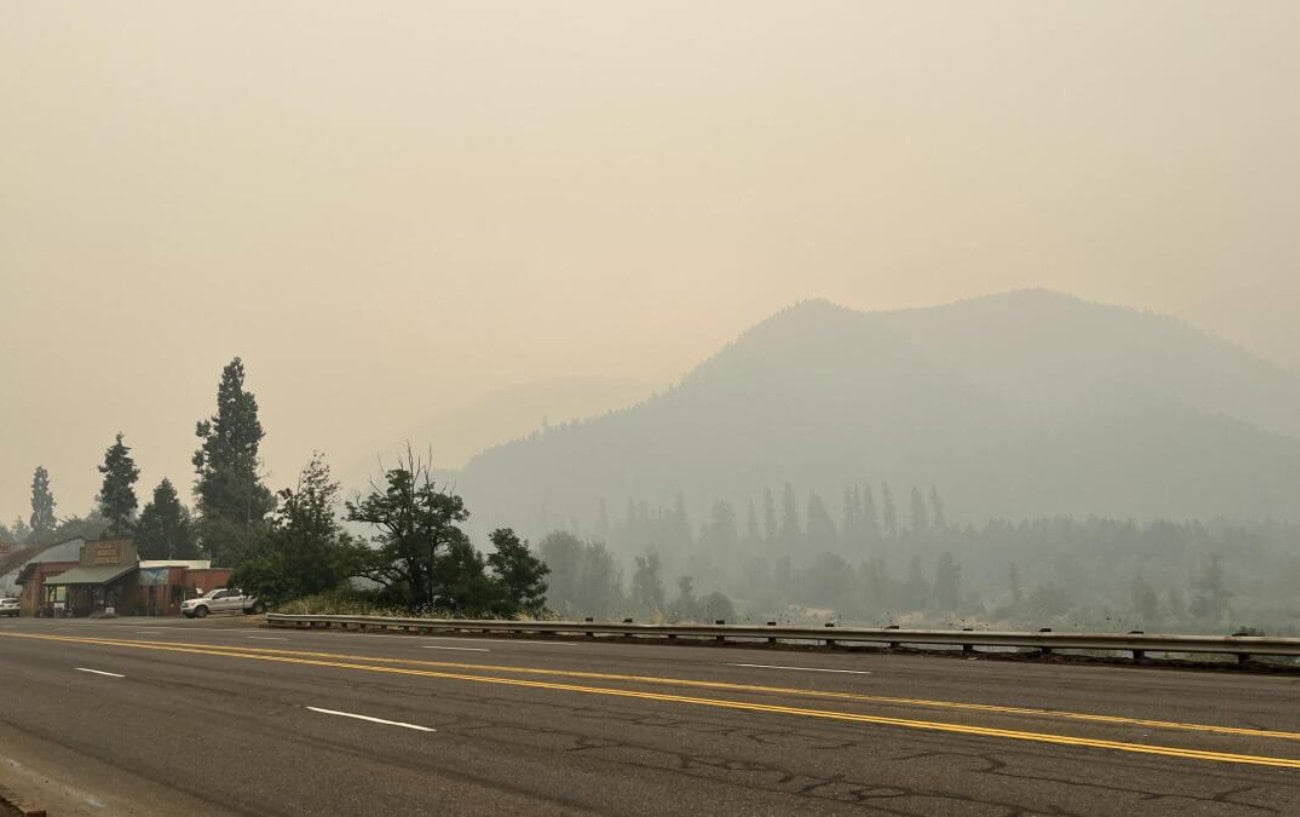
The Oregon Cascades 100-mile ultramarathon was cut short this past weekend after wildfire smoke from the Flat Fire drifted into Central Oregon, pushing the air quality index (AQI) into the “hazardous” range.
For many runners, it was a gutting end to a race that had already demanded months of preparation. For others, it sparked harder questions about the culture of ultrarunning itself.
Three athletes did manage to finish the full 100 miles before the race was stopped: William Conner (17:07:51), Kyle Peterson (19:47:21), and Scott Davis (20:56:09). The 50-mile race was also impacted, though it went ahead earlier in the day under worsening skies.
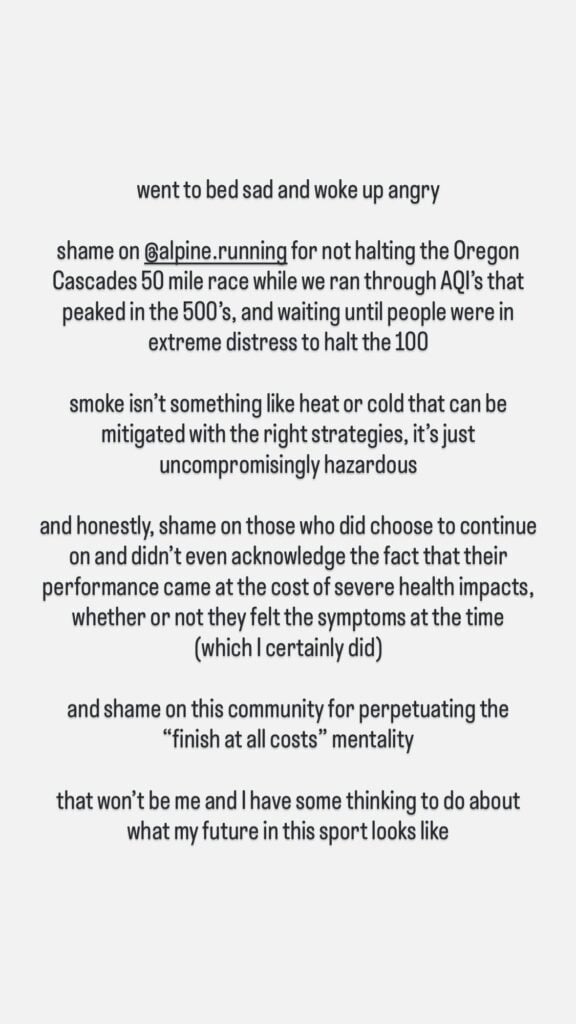
“Went to bed sad and woke up angry”
Ultrarunner Lucie (Hanes) Rathbun gave one of the rawest accounts of the weekend. In an Instagram story she posted hours after the race was called, she lashed out at the event’s organizers and even fellow runners who continued to run: “Shame on Alpine Running for not halting the Oregon Cascades 50 mile race while we ran through AQIs that peaked in the 500’s, and waiting until people were in extreme distress to halt the 100.”
She described running through conditions that felt impossible to rationalize: “Smoke isn’t something like heat or cold that can be mitigated with the right strategies, it’s just uncompromisingly hazardous.”
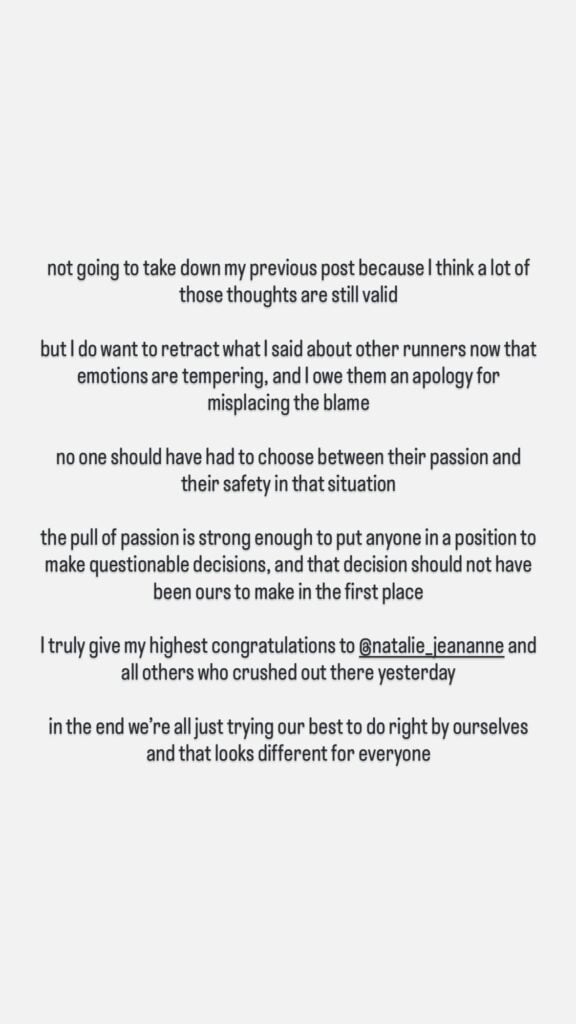
Later, after a night’s sleep and a chance to cool off, Rathbun clarified her feelings. She stood by her criticism of the decision to let the race go forward, but she apologized for singling out other runners who chose to continue.
“No one should have had to choose between their passion and their safety in that situation,” she said, offering congratulations to those who finished despite the conditions.
Her words cut to the core of a dilemma many in the sport recognize: ultrarunning has long glorified the “finish at all costs” mentality. But in the age of megafires and worsening air quality, those costs are no longer measured just in blisters or lost toenails, but in respiratory health and long-term risk.
Why wildfire smoke is different
The science is stark. Wildfire smoke contains fine particulate matter (PM2.5) that penetrates deep into the lungs and bloodstream. The U.S. Environmental Protection Agency’s Air Quality Index tops out at 500, with anything above 300 considered “hazardous” for everyone, not just vulnerable groups.
Exercising hard in such conditions dramatically increases exposure, with athletes inhaling up to 20 times more air per minute than at rest, which means 20 times more smoke particles.
Public health authorities and sport bodies have been urging caution for years. The Road Runners Club of America recommends canceling races once the AQI surpasses 200.
In Oregon, high school athletics already suspend outdoor practices and games when wildfire smoke spikes. By those standards, the AQI readings during the Oregon Cascades 100 were not just red flags, they were stop signs.
A recurring problem for the sport
This is not the first time ultrarunning has collided with wildfire season.
In 2008, the Western States 100 was canceled altogether when smoke from nearby fires made conditions unsafe, a decision that, while painful, was widely accepted as unavoidable. The difference now is that these decisions are becoming less exceptional and more routine as North America faces longer, hotter, and smokier summers.
Oregon’s Department of Environmental Quality has already reported more “unhealthy” air days in Bend and surrounding areas compared to historic averages. Research published in recent years also suggests that wildfire smoke may be more toxic, gram for gram, than pollution from other sources.
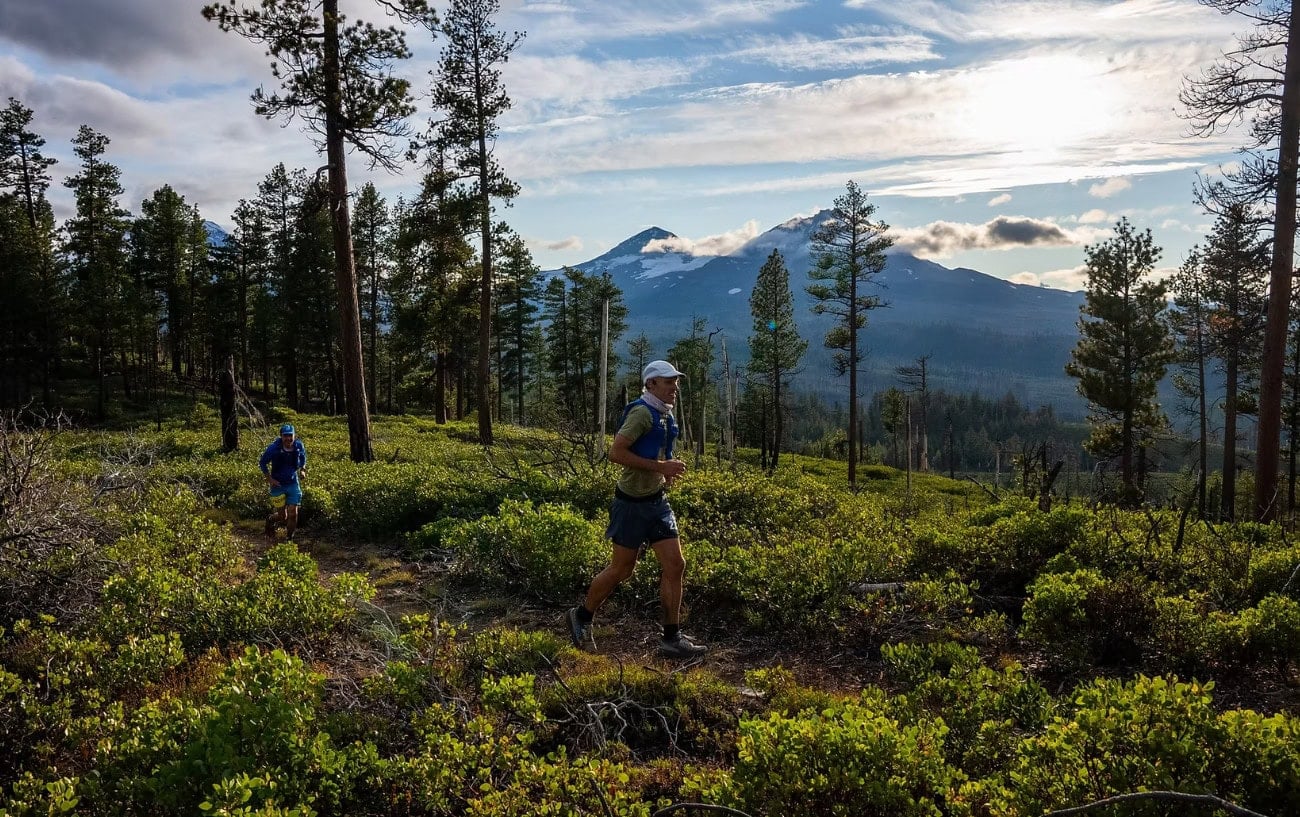
That puts events like the Oregon Cascades 100, which winds over exposed ridgelines and keeps runners outside for 24 hours or more, on the front lines of a growing climate problem.
Where things go from here
The race organizers, Alpine Running, have yet to issue a full debrief on how AQI monitoring and decision-making were handled during the race. Questions remain about what thresholds were used, how information was communicated to aid stations, and at what point the final call was made to stop the race.
For Rathbun, and many others, the lesson is bigger than a single race. It is about whether ultrarunning can adapt its culture and its protocols to a new era where smoke is as much a threat as heat, altitude, or terrain.
“We’re all just trying our best to do right by ourselves,” she wrote, “and that looks different for everyone.”
What is clear is that the sport will need to reconcile its ethos of toughness with the realities of public health. The Oregon Cascades 100 will not be the last event to face this reckoning.
RunClub
Get more running stories — join RunClub
Daily running news, a community of 300,000+ runners, free training plans for every distance, and a daily running game. Free to join — no card.
Already a member? Log in →




Join the conversation
Those 3 did not finish the race. If it was cancelled at 8pm. They were allowed to stay on the race course for 3-7 hours while the rest of us were forced off the course. And then the RD had the nerve to award them the prize money after the race was CANCELLED!