


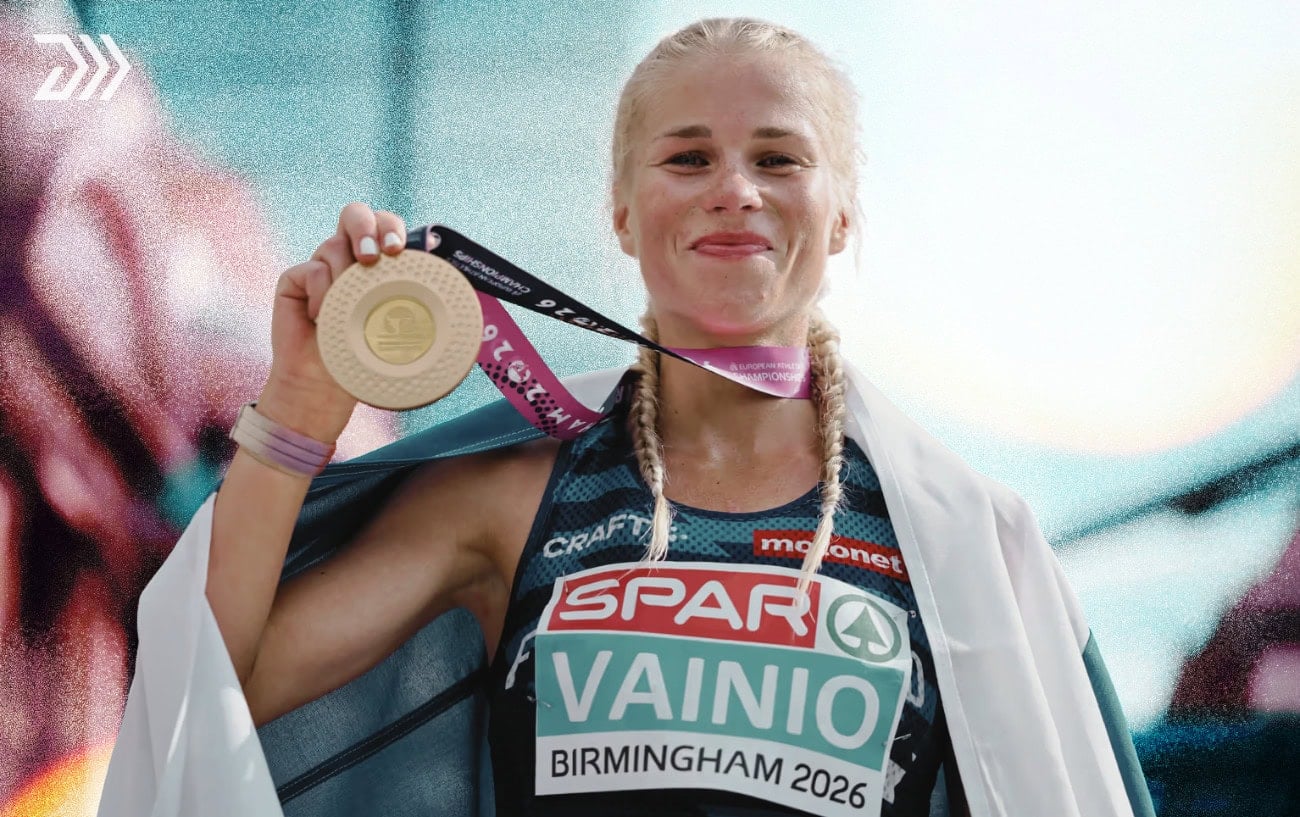
Alisa Vainio won the European marathon title in Birmingham on Sunday in her sixth marathon since September, about three times as many as world-class marathon runners race in their most successful seasons. She ran 2:22:26, a championship record, and won by 4:55, the largest margin the event has produced. She reached halfway in 1:10:40, about three minutes clear of the field.
The sequence began at the World Championships in Tokyo on Sept. 14, 2025. Three weeks later she won the Vantaa Marathon, Finland’s national championship race. Valencia followed nine weeks later, Seville after another 10, Paris after eight, and Birmingham after 18. A 2022 review of world-class distance running found that the marathon runners it studied raced two a year, plus or minus one, at least three months apart, the conventional shape of marathon periodization. It describes the seven to 14 days after a marathon as either no training at all or very little. Vainio’s shortest gap was three weeks.
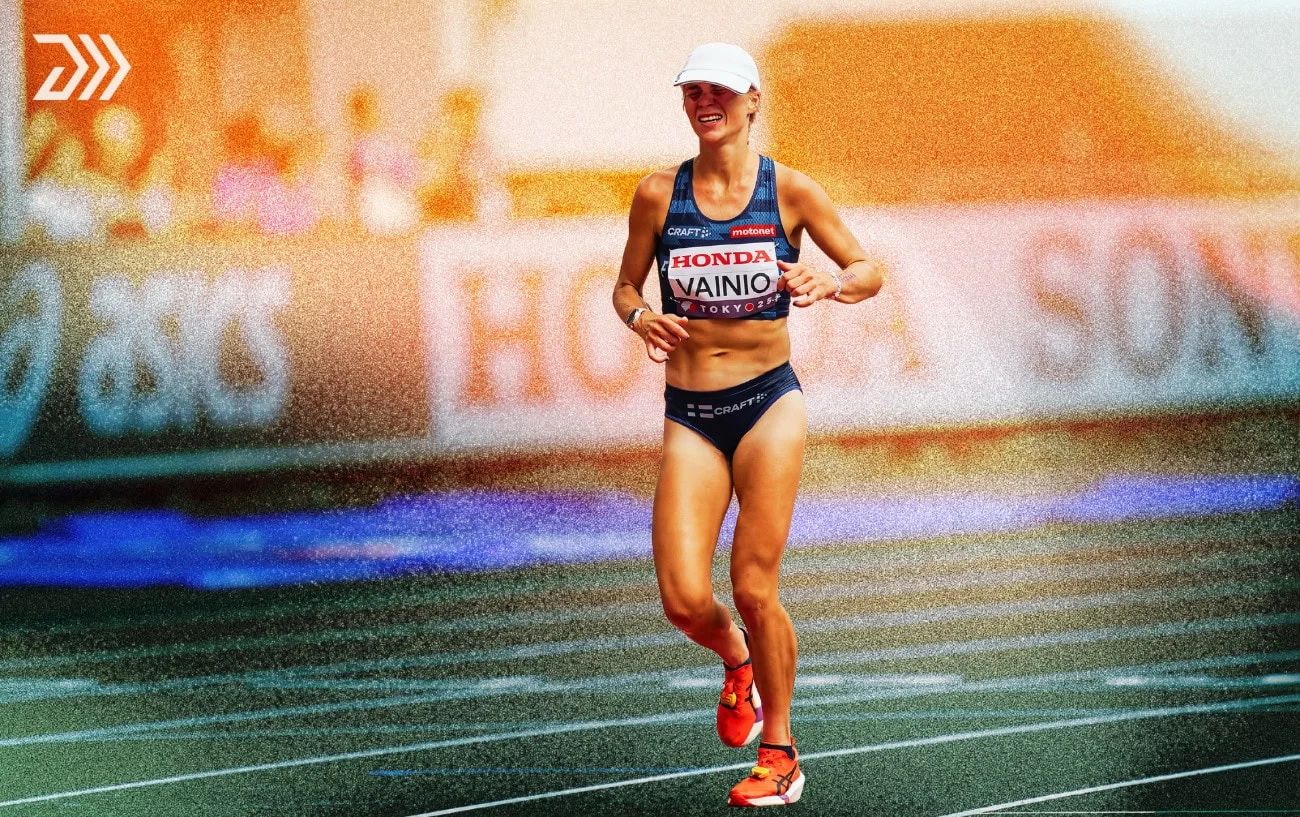
Four of the six are inside 2:23: 2:23:07 at Vantaa, 2:20:48 at Valencia, 2:20:39 at Seville and 2:21:35 at Paris. In Tokyo she was fifth in 2:28:32 in heat and humidity, the best placing by a Finn in a world marathon in 69 years, according to the Finnish athletics federation. Her fastest run of the six came fourth in the order; the two slowest are the two championship races. She ran the sixth one alone from the front. “It was pretty easy but my left leg got sore in the last lap,” she said in the mixed zone afterward, in quotes carried by European Athletics.
A Decade at 2:25, Then Three National Records
Vainio ran 12 marathons between 2015 and 2025 and her best was 2:25:36, at Berlin in 2024. Then came Vantaa, Valencia and Seville: three Finnish records in a little over four months. The previous Finnish record, Camilla Richardsson’s 2:24:38, went by 1:31 at Vantaa alone, according to the federation. From Berlin to Seville is 4:57 off her own best in 16 months. Her national half-marathon record of 1:09:30 dates from September 2024, a year before the marathon sequence began.
What the Sport Treats as Normal
Others at the front of the sport have raced nearly as often. Brigid Kosgei ran four marathons inside 10 months last season, all under 2:19, ending with a course record 2:14:29 at Tokyo in March, two short of Vainio’s six. Yuki Kawauchi ran 13 in 2013 and was the first man inside 2:10 four times in one year. Much of that racing, as the writer Brett Larner has noted, was no faster than the long time trials other Japanese elites run in training. Kawauchi’s best of 2:07:27 came eight years later.
The fixture list has thickened around them: Tokyo last September, Birmingham this month, Beijing in September 2027, then the Los Angeles Olympics in 2028. A marathoner who wants a championship medal and a fast time now schedules against a denser calendar than a decade ago.
The evidence for the cost is thin. In the one study using runners close to elite level, eight highly trained men averaging 2:34:40, jump power was down 13 percent 30 minutes after a race, 18 percent at two days and 12 percent at five. No published study has followed a marathon runner beyond about eight days past the finish, none has measured a subsequent race at any interval, and no governing body publishes a guideline on the interval between marathons.
Her Own Account
Vainio, 28, came to the marathon from the 3,000m steeplechase, and before that from bandy, which is played on ice with skates and a ball, winning two world championship bronzes for Finland. Her coach is Jarmo Viskari, who told LetsRun of her Seville build that “Alisa was in the best shape.”
“This ranks quite high among the marathons I have run. There has been a lot of work behind this,” she told the Finnish broadcaster Yle after Birmingham, in quotes carried by Helsinki Times. Her preparation has stayed in Finland. “I prepared in Finland as I like to train at home very much.”
She has still never started an Olympic marathon. At 17 she ran a debut inside the Rio qualifying standard, but the minimum age for the Olympic marathon was 20, and the Finnish federation decided against seeking an exemption.
The marathon will leave the World Athletics Championships after the 2029 edition. World Athletics announced in April that road running moves out of the championship program and that a standalone World Marathon Championships will be held every year from 2030, women and men racing in alternate years, with Athens the preferred host. That means a women’s world marathon title every second year from 2030.
RunClub
Get more running stories — join RunClub
Daily running news, a community of 300,000+ runners, free training plans for every distance, and a daily running game. Free to join — no card.
Already a member? Log in →



Start the conversation