


Aurélien Sanchez reached the Canadian border on Thursday with the men’s supported fastest known time on the Pacific Crest Trail, ending a chase that came down to a single day after a month and a half of running.
Sanchez, 35, of France, covered the 2,653-mile (4,270-kilometer) route in 45 days, 20 hours, and 15 minutes, according to iRunFar, which tracked the attempt. That lowers the previous men’s supported record of 46 days, 12 hours, and 50 minutes, set by Belgium’s Karel Sabbe in 2023, by roughly 16 and a half hours. Sanchez started from the southern terminus at Campo, California, on June 7 and averaged close to 56 miles (90 kilometers) a day on the way to Manning Park, British Columbia.
The mark he took is one of the most heavily worked records in the sport. Sabbe first set the supported time in 2016, Timothy Olson lowered it in 2021, and Sabbe reclaimed it in 2023 by more than five days. Where Sabbe had cut the record by that wide a margin, Sanchez took less than a day off it, on a trail counted among the longest in the world at more than 400,000 feet of climbing.

A Fast Start That Did Not Hold
Sanchez set out to break Sabbe by force in the desert, sleeping less and covering more ground to try to reach the Sierra Nevada a full day up. It worked briefly. By the end of the third day he was about 22 miles ahead of Sabbe’s 2023 schedule, but wind, heat, cold nights, and fatigue cut the lead to around nine miles by day four. On day 11 he conceded the plan had failed. “I took a gamble, and it didn’t pay off,” he wrote on social media, adding that the trail was “still a long way from over.”
From there he ran almost even with the record. He reached the halfway point on July 2, crossed into Oregon on day 30, and entered Washington on day 38, matching Sabbe’s pace at each step while dealing with scarce water, wildfire smoke, and foot and ankle pain that had him weighing whether to stop. Late in the attempt he spent a night in a hospital being treated for a foot infection, then returned to the trail.

The Edge Was the Route
The difference came in the final days. In 2023, wildfires in Washington forced Sabbe onto a roughly 70-mile (113-kilometer) detour near mile 2,550. Sanchez was able to stay on the direct official line to the border. Seasonal reroutes count as the Pacific Crest Trail for record purposes, which makes shifting fire conditions part of the challenge rather than an asterisk. He closed with about 18 hours of movement on each of two straight days and a final 16-hour push.
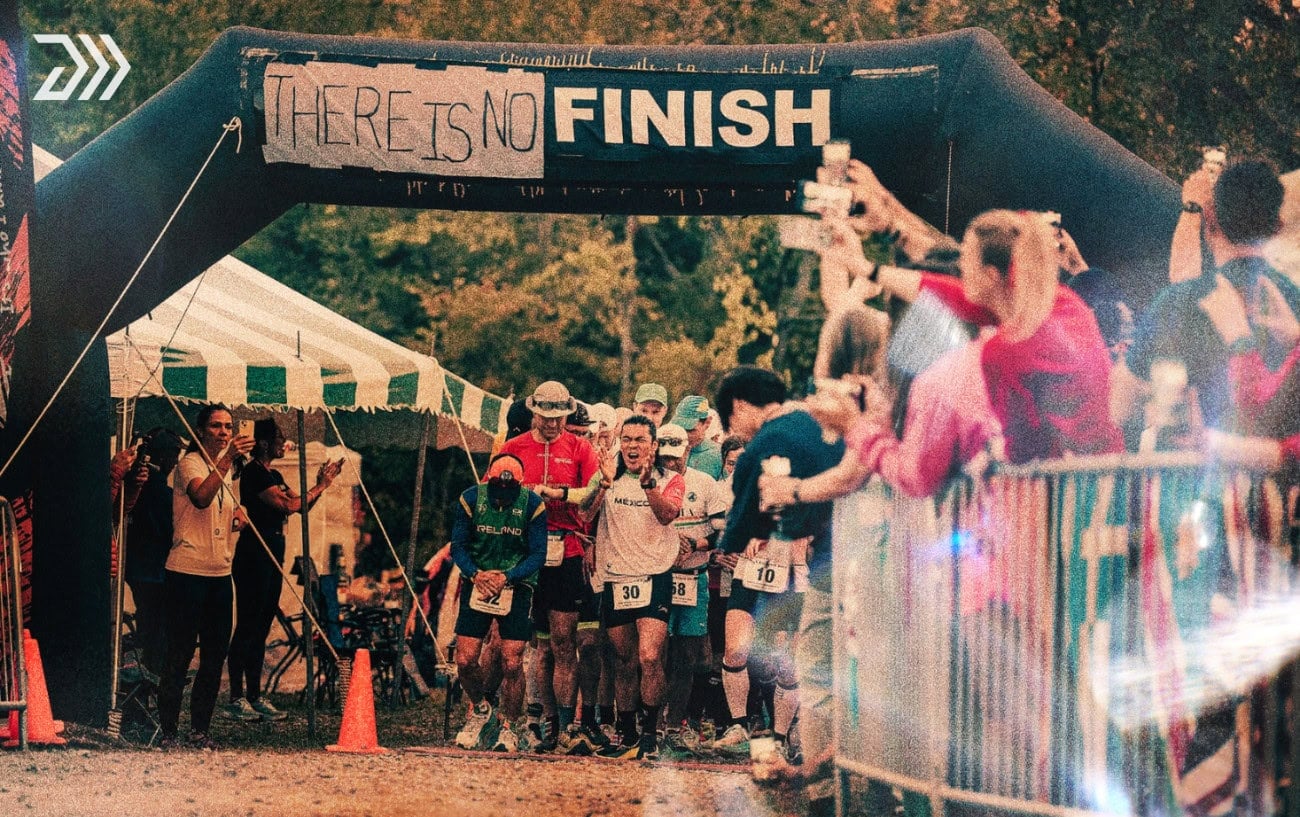
The result tightened a knot among three men who know one another well. Sanchez, Sabbe, and John Kelly were the three finishers of the 2023 Barkley Marathons, only the second time the Tennessee race had produced three finishers in a year. Kelly, a two-time Barkley finisher, joined Sanchez on the trail during the record run. So Sanchez broke a record held by one Barkley classmate while being paced by another. Sabbe, a Belgian dentist, has built a career on this kind of effort, holding trail records from the Appalachian Trail to New Zealand’s Te Araroa; Sanchez came up through the unsupported and ultramarathon world, with a John Muir Trail speed record in 2018 and finishes at Europe’s Tor des Géants and SwissPeaks.
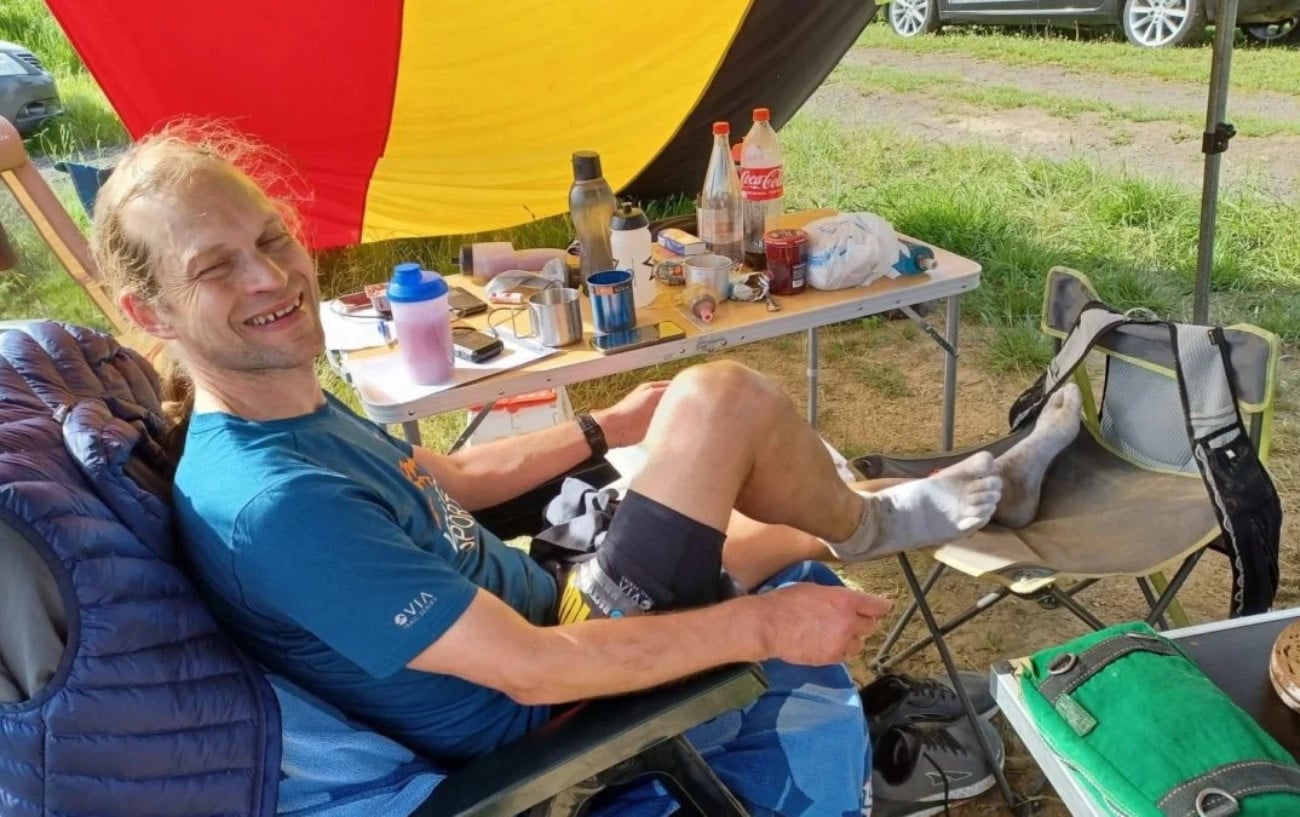
Sanchez was supported mainly by his partner, Lucille Malgouyres, and her cousin, Martin Tullot, with friends and family filling in. Malgouyres, who wrote that she slept 14.5 hours over the first 11 days, documented a crew operation complicated by road closures, detours, and one member’s altitude sickness that delayed a planned meeting in the Sierra.
The record is not yet official. Sanchez must submit GPS data and photographs to FastestKnownTime.com, whose review can take a week or more before the time is certified.
RunClub
Get more running stories — join RunClub
Daily running news, a community of 300,000+ runners, free training plans for every distance, and a daily running game. Free to join — no card.
Already a member? Log in →










Start the conversation