


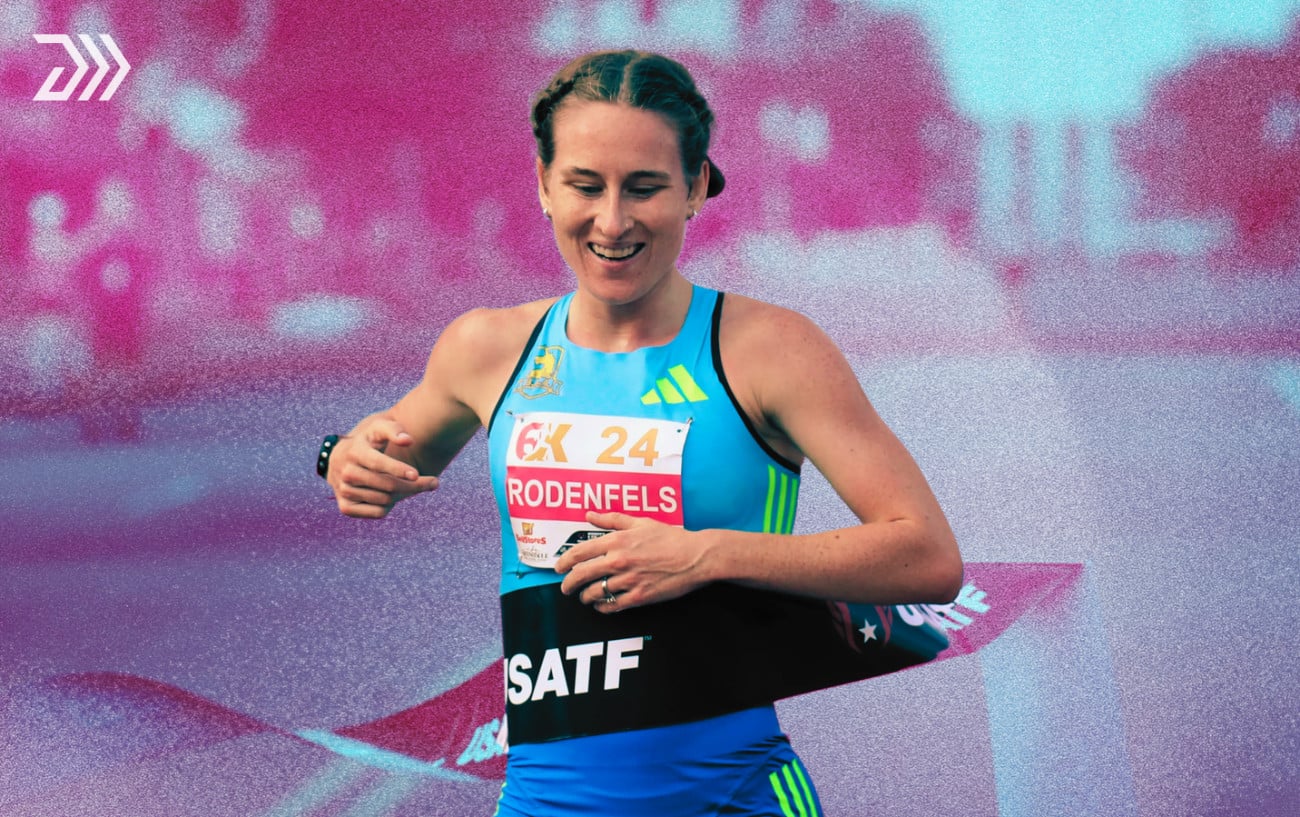
Spencer Friske and Caitlin McGinley both won the Baystate Marathon in Lowell, Mass., on Oct. 18 inside the qualifying standards for the 2028 U.S. Olympic Marathon Trials, and neither time will get them to St. Louis. The race had a certified course but no sanction from USA Track & Field, and the federation’s qualifying rules ask for both. Fast Women first flagged the problem the day after the race.
Friske, a 32-year-old from Boston, ran 2:15:05 and finished 5:38 ahead of Paul Neilan (2:20:43), according to the official results. That was 55 seconds under the men’s standard of 2:16:00 and almost three minutes quicker than the 2:17:57 that put him in the 2024 Trials field. McGinley, 29, from Coatesville, Pa., had missed the women’s standard by only 12 seconds when she won Baystate last year in 2:37:12. This time she ran 2:36:08, 52 seconds inside 2:37:00, and finished 11th overall, with the next woman, Kelsi Chappell, more than 10 minutes behind.

Certification is about the course itself: a measurer checks that the route is the right length, and a certificate goes on file. A sanction covers the event, and it is a separate permit, issued through USATF’s local associations, that binds the race to the federation’s competition rules and safety standards. It comes with a fee, which is lower for races that carry their own insurance. USATF tells athletes to confirm both before they race, and says that organizers who promote Trials qualifying at their events have to meet the requirements as well. Races abroad count if they are sanctioned by any World Athletics member federation.
Anyone who went to Lowell for a Boston time can relax, because the B.A.A.’s rules deal with the course and say nothing about sanctions, so Baystate’s Boston qualifiers stand. That is the race’s main selling point, and its website bills it as one of the top BQ races in the country. Boston times are only lost when the course itself is wrong, as runners found out when the Atlanta Marathon came up 554 feet short.
Baystate’s own results page carries a section titled “Olympic Qualifiers at Baystate,” which lists five women: Meg Boucher and Kristin Johnson in 2018, Katie Edwards and Jordan O’Dea in 2019, and Annie Heffernan, whose 2:34:33 in 2023 put her on the 2024 Trials entry list. Runner’s World checked USATF’s records and found the race last held sanctions from 2017 to 2020, which accounts for the 2018 and 2019 qualifiers. USATF had no answer for the magazine on how Heffernan’s 2023 mark was accepted. Glenn Stewart, the race director, took the blame in an email to Runner’s World: “That responsibility falls on me and me alone.”

Tessa Barrett ran a 2:34 to win last year’s Marine Corps Marathon, breaking a women’s course record that had stood since 1990. That time didn’t count either: the race had not held a USATF sanction since 2015, spokesperson Jay Holder told Running With Rock. Barrett got her qualifier at the California International Marathon that December instead.
Marine Corps has a sanction in place for this year’s race on Oct. 25, according to Runner’s World, and the Bayshore Marathon in Traverse City, Mich., where three runners qualified in 2023, secured one for its May race so that its times would count. In a statement to Runner’s World, Holder said USATF would do more to get the word out to race directors and athletes chasing the Trials, adding: “We do not want to see people’s hard work and accomplishments end in disappointment.”
Neither Friske nor McGinley would talk to the magazine about it, though both thanked Baystate for “putting on a great race,” and there is still plenty of time for them to try again. The marathon window opened on Sept. 1, 2025, and stays open until 45 to 60 days before the Trials on March 25, 2028, which leaves the rest of this fall and all of the next. The nearest sanctioned option is CIM in Sacramento on Dec. 6, where this year’s USATF Marathon Championships will be decided.
RunClub
Get more running stories — join RunClub
Daily running news, a community of 300,000+ runners, free training plans for every distance, and a daily running game. Free to join — no card.
Already a member? Log in →











Start the conversation