


All 853 runners disqualified from the Behobia-San Sebastián on Nov. 8 ran the full 20K from the French border to the seafront in San Sebastián, and according to the Spanish outlet Diario del Triatlón they went home with a finisher’s medal. Their names are just missing from the official results. Spanish coverage of the race, including the report in Mundo Deportivo the following day, points mostly to one rule printed on every bib: you cannot start before your assigned time.
The 61st edition of the race drew 29,301 registrations. By the organizers’ own count, 27,172 runners started in Behobia, 220 dropped out along the way and 26,947 reached the Boulevard in San Sebastián, so the disqualifications come to about 3.2 percent of everyone who finished. The race, first run in 1919 and revived in 1979 by the club C.D. Fortuna with about 1,000 runners, has had around 30,000 entrants a year since 2014. Javi Guerra won the men’s race in 1:01:13 and Katherine Tisalema took the women’s in 1:08:58.
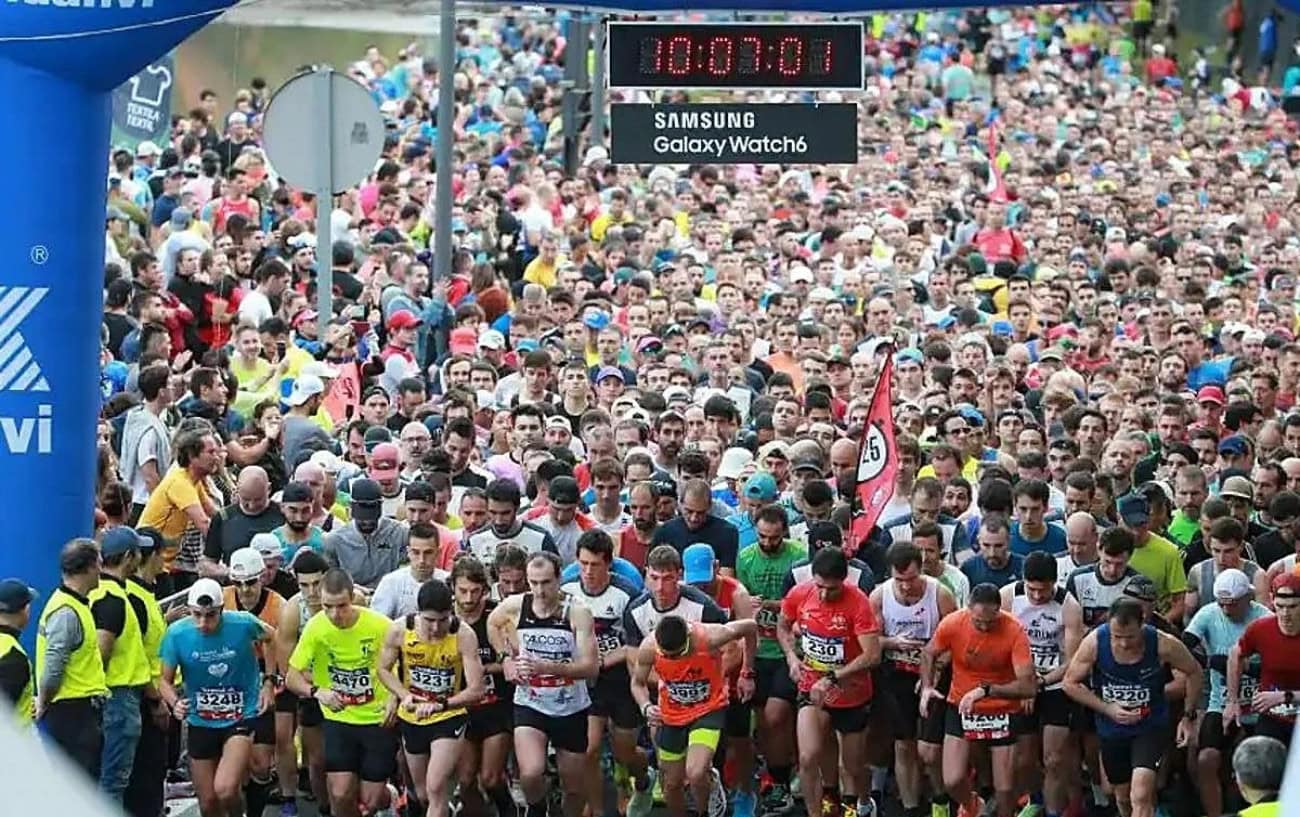
Behobia sends its field away in 19 start groups, seeded on the times runners submit when they enter, and both the group and its start time are printed on the bib. Article 7 of the race regulations leaves very little room for argument: anyone who starts before the time on their bib is disqualified. Starting later carries no penalty, so a runner can drop back to run with a slower friend but cannot move up to a faster one. The MYLAPS chip stuck to each bib is read at the start and again every 5K, and Diario del Triatlón reports that the penalty is applied automatically when the timing data is processed, which is how someone can finish, collect a medal and still be missing from the standings.
The same regulations disqualify anyone who races on a bib registered to someone else without changing the name on the entry, anyone who hands over their bib to be photocopied for somebody else, and anyone guilty of serious misconduct toward other runners or race staff. Those three offenses also wipe the runner from the race’s historical records and bar them from future editions. Transfers were open on the race website from Sept. 1 to Nov. 5, for a €6 ($6.60) fee paid by the buyer. Copied and swapped bibs have caught out runners well beyond the Basque Country this year and last, from the creator who ran the New York City Marathon on a homemade bib to an influencer banned for life in China and four runners disqualified in Hong Kong. Behobia’s published figures give the total and nothing else, so it is impossible to say how many of the 853 started early.
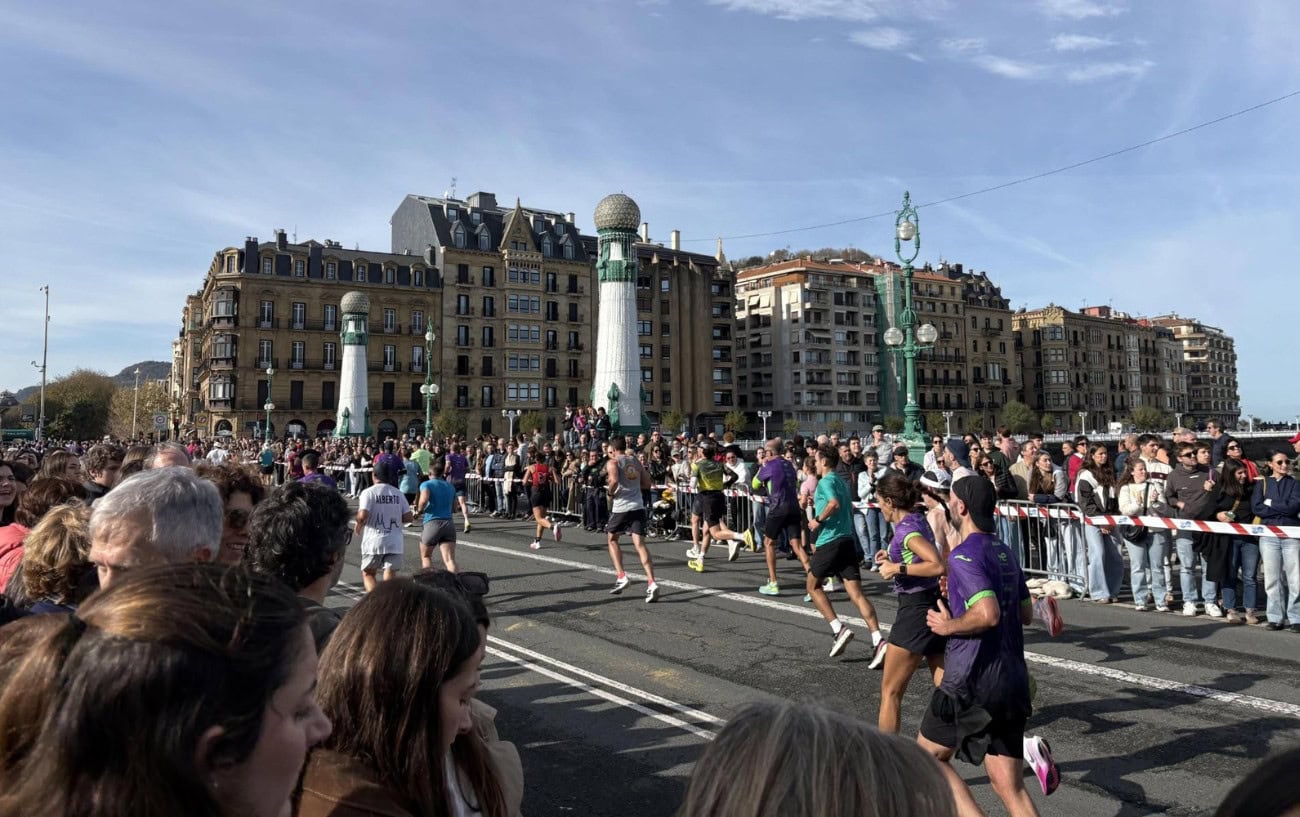
New York Road Runners writes a version of the Behobia start rule into its own start-line guidance, which warns that anyone found to have started in an earlier wave or corral than assigned “may be disqualified and risks suspension from future NYRR races.” In May the rule cost a runner a win at the Bolder Boulder 10K, where Emad Bashir-Mohammed crossed the line first in 29:50 and was disqualified for starting in a faster wave, leaving the title to Nickolas Scudder. A race spokesperson said at the time that hundreds of runners are disqualified there every year for moving up, and the race director later said Bashir-Mohammed had been told at the expo that he could not start in the A wave.
At Behobia the number has come down two years running. Reported totals were 958 in 2024 and 918 in 2025, the year marathons.com reported the organizers’ position that sticking to the start groups is essential for the race to run smoothly. This year’s 853 is the lowest of the three, and it still amounts to about one finisher in 32 crossing the line in San Sebastián without a result to show for it.
RunClub
Get more running stories — join RunClub
Daily running news, a community of 300,000+ runners, free training plans for every distance, and a daily running game. Free to join — no card.
Already a member? Log in →





Start the conversation