

The 2026 race: Sunday, October 11 · Next: October 10, 2027
The Chicago Marathon
Amos Kipruto and Hawi Feysa won the 48th Chicago Marathon in the second-fastest times the race has seen, and a record 54,581 runners crossed the line in Grant Park. Here’s how it went, everything we wrote about it, and how to get into 2027.
From our newsroom
The latest from Chicago
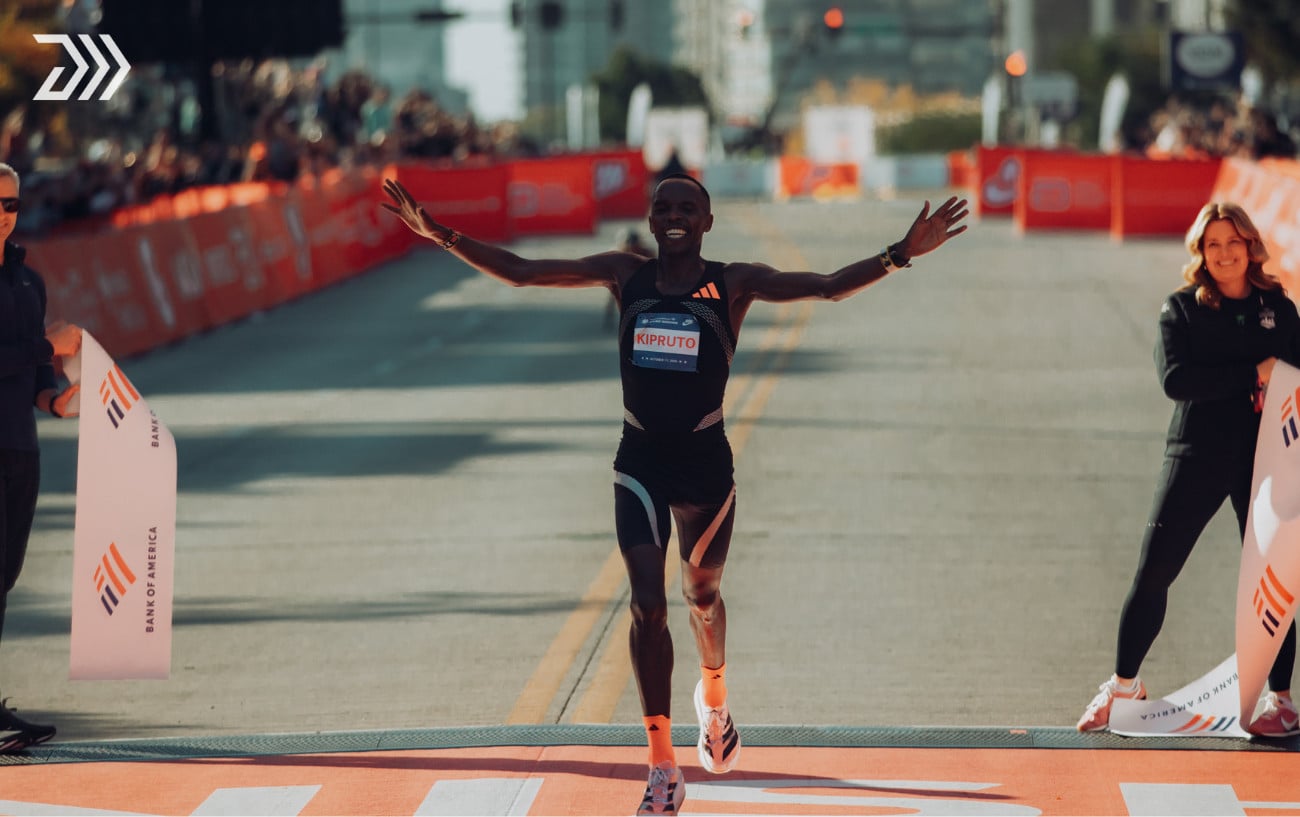
Amos Kipruto Wins the Chicago Marathon On His Third Attempt
The Kenyan ran 2:01:09, the second-fastest winning time in the race’s history, after breaking away from defending champion Jacob Kiplimo between 30K and 35K.
Hawi Feysa Defends Her Chicago Marathon Title
She broke away from Sharon Lokedi in the last 2.2K and won in 2:13:33, a personal best, with Brigid Kosgei third.
2026 Chicago Marathon Full Results
The top 10 men and women, with the American finishers.
The 2026 Chicago Marathon by the Numbers
54,581 finishers on a morning that warmed into the mid-70s, and fewer than one in 10 of them ran a negative split.
Jacob Kiplimo Says a Hamstring Problem Cost Him His Chicago Title
Level with Kipruto on course-record pace at 30K, he ran the last 12K in pain and finished fourth.
The 2026 race
How the 2026 race went
Two fast winners, a defending champion undone after 30K, and the fastest marathon debut ever by an American woman.
Men
| Athlete | Time | |
|---|---|---|
| 1 | Amos Kipruto (KEN) | 2:01:09 |
| 2 | Tadese Takele (ETH) | 2:02:56 |
| 3 | Milkesa Mengesha (ETH) | 2:03:46 |
| 4 | Jacob Kiplimo (UGA) | 2:04:18 |
| 5 | Boki Diriba (ETH) | 2:05:01 |
Women
| Athlete | Time | |
|---|---|---|
| 1 | Hawi Feysa (ETH) | 2:13:33 |
| 2 | Sharon Lokedi (KEN) | 2:14:07 |
| 3 | Brigid Kosgei (KEN) | 2:14:55 |
| 4 | Mary Ngugi-Cooper (KEN) | 2:17:23 |
| 5 | Joan Kilimo (KEN) | 2:18:39 |
Top five. The full top 10s and the Americans.
Kipruto, at the third time of asking
Jacob Kiplimo came in as the man with the fastest personal best ever brought to Chicago, and for 30K he and Amos Kipruto ran together on course-record pace. Then Kipruto went. He was clear by 35K and won in 2:01:09, almost two minutes ahead of Tadese Takele. Only Kelvin Kiptum has run faster on this course.
It was Kipruto’s third Chicago: he was third in 2024 and second last year. Kiplimo said afterwards a hamstring problem had flared just after 30K, and he ran the last 12K in pain to finish fourth in 2:04:18.
ReadHow Kipruto won Where Kiplimo’s race came apart Kiplimo on his hamstring
No record, but a day of big runs
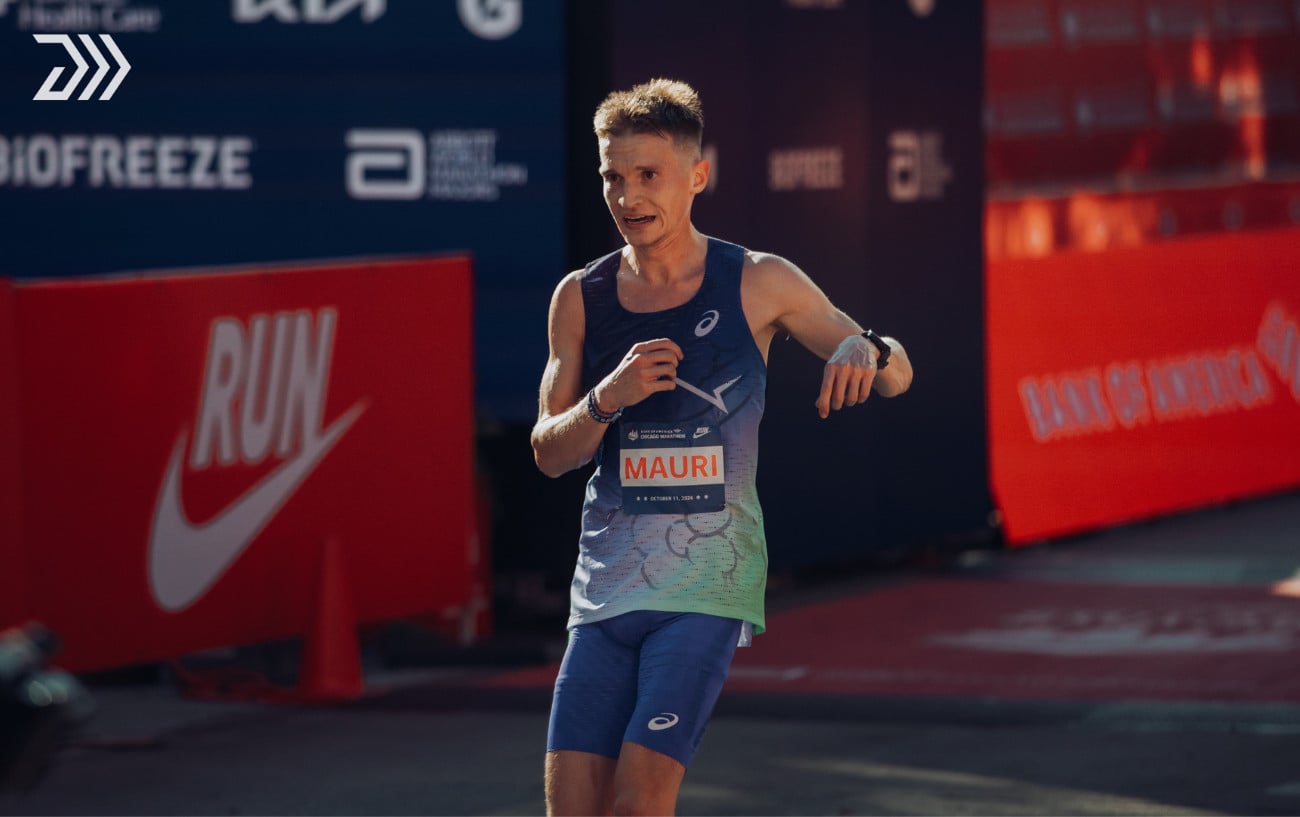
Conner Mantz’s American record of 2:04:43 survived. Vinny Mauri, in only his second marathon, led the American men on record pace until after 35K, then stopped to stretch and finished 10th in 2:06:45. Clayton Young, racing on a torn hamstring tendon, was the first American home in seventh in 2:05:23, more than two and a half minutes faster than his previous best on a record-eligible course. Charles Hicks was eighth in 2:05:35.
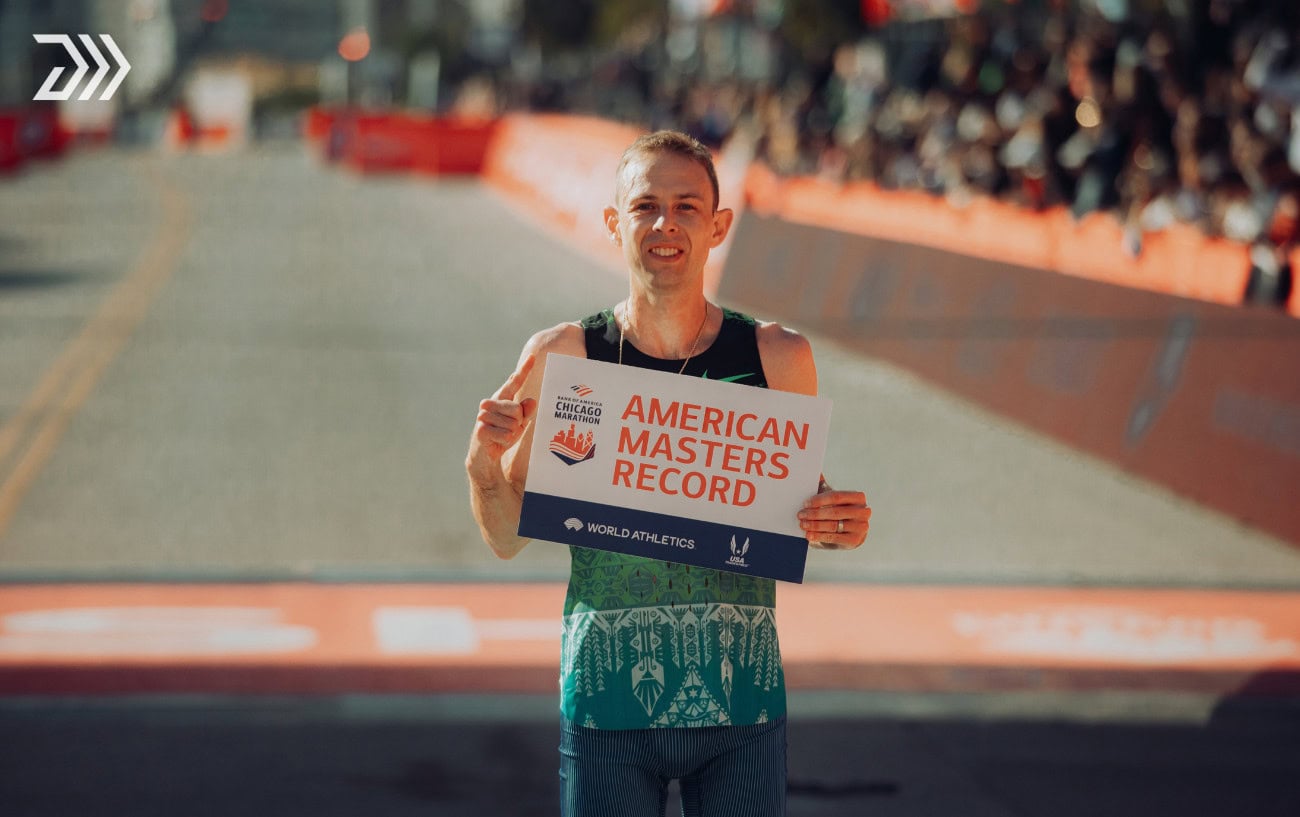
Behind them, Galen Rupp ran 2:06:55 at 40 to take more than three minutes off the American masters record. And in the women’s race, Emma Grace Hurley finished seventh in 2:20:47, the fastest marathon debut by an American woman.
ReadMauri’s 30K on record pace Rupp’s masters record Should you train like Mauri?
Feysa holds off Lokedi
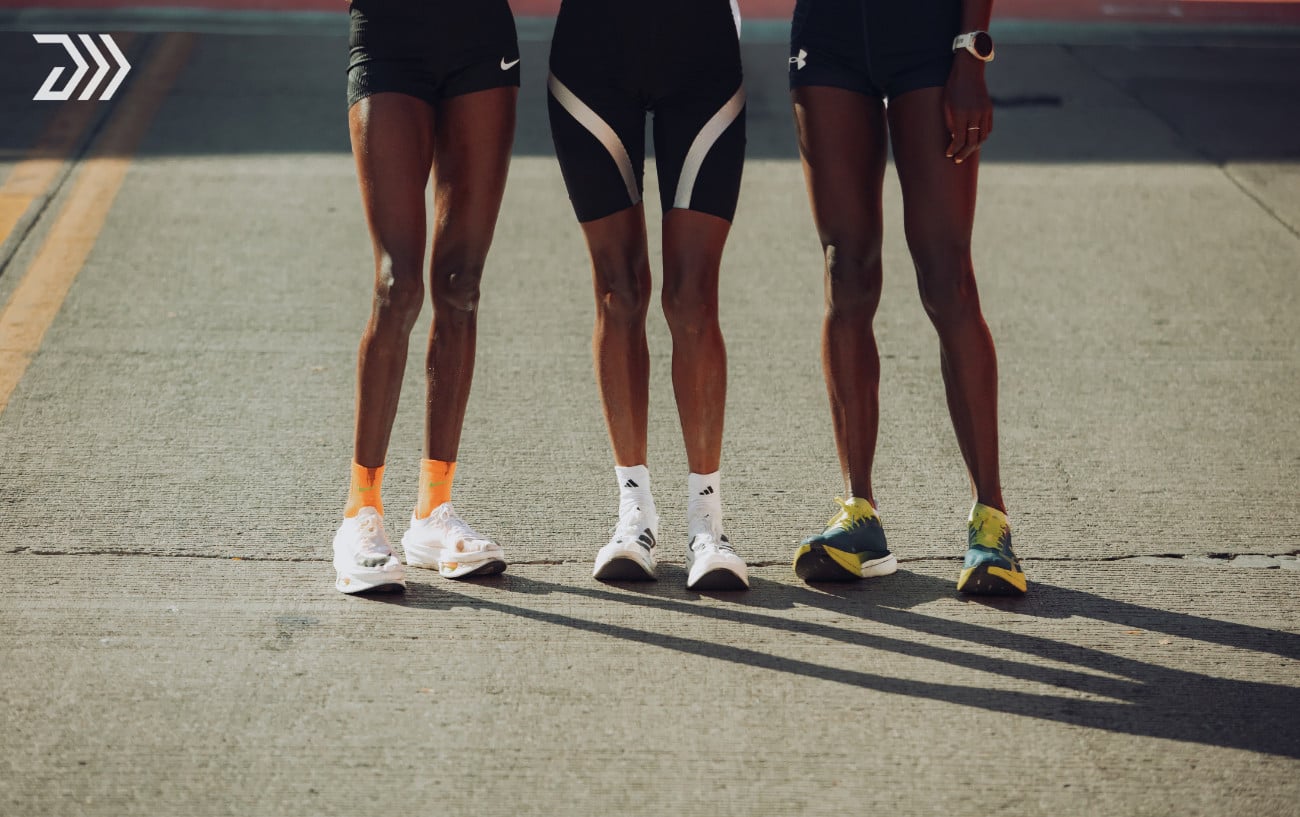
Brigid Kosgei went out hard, through halfway in 65:30, but faded to third in 2:14:55. Hawi Feysa and Sharon Lokedi ran side by side until 40K, when Feysa pulled away over the final 2.2K to win by 34 seconds in 2:13:33, a personal best and the second-fastest winning time in the race’s history.
The morning warmed from about 60°F into the mid-70s, which made the times at the front all the more striking, and made the second half hard for nearly everyone else.
ReadHow Feysa won Kosgei’s 65:30 first half The race by the numbers
Marathon Handbook live
Thanks for coming out, Chicago
Thank you to everyone who ran our shakeout with Zappos and came to Mile Zero on race eve. If you missed the show, it’s up in full.
Watch · Mile Zero by Zappos
Mile Zero: Chicago 2026
With Keira D’Amato and Tanya Hvizdak
Our live show from the eve of the race at Chicago Shakespeare Theater: the elite storylines, our guests, and a lot of hot takes about Sunday.
Watch the full showNext · Sunday, November 1
See you in New York
Shakeout run and Mile Zero, race week
We’re hosting a shakeout run and another Mile Zero in New York for the marathon. Details are coming soon, and RunClub members hear first.
Our New York Marathon guideJoin RunClub to get early access and free Mile Zero tickets.
Running it in 2027
Two things the official guide won’t tell you
There are 20 aid stations, one to two miles apart, with water and Gatorade Endurance in cups. In 2026 Chicago added filtered refill points for your own flask or bottle just before aid stations 4, 7, 12 and 16 — miles 5.7, 10.1, 15.7 and 20.3. Chicago is the first of the majors to do it, and New York follows on November 1. How the refill stations work.
Your watch will lie to you downtown
The opening miles run between tall buildings and, briefly, underground, and GPS struggles with both. Plenty of runners watch their pace readout wander and see their watch click over well before the mile markers. Turn auto-lap off and press lap at each marker, or run off a pace band.
Don’t trust October
Chicago’s reputation is cool, and usually it’s deserved. In 2007 the temperature climbed into the upper 80s, organizers stopped the race about three and a half hours in, and more than 300 runners were taken to hospital. Plan around Friday’s forecast, not the historical average.
The course
Flat, looped, and one hill at the very end
It’s a loop, which makes it easy to watch and hard to get lost on. You start and finish in Grant Park. The first stretch goes north through the Loop and up into Lincoln Park, turns back south and heads west, then swings down through Pilsen and Chinatown before the long run north on Michigan Avenue. Organizers count 29 neighborhoods along the way, and the crowds are deepest in the canyon of the first few miles.
It is genuinely flat — flat enough that the only rise anyone remembers comes in the last half-mile. You turn right off Michigan onto Roosevelt Road for a climb of less than a quarter-mile that runners call Mount Roosevelt. On fresh legs you wouldn’t notice it. At mile 26 it is the only hill in Illinois. Then a left onto Columbus Drive, and the finish is in sight.
One corrective to the “fastest course” reputation: a 2026 study of more than 400,000 marathoners ranked Chicago 24th of 46 courses for typical runners. The speed at the front of the race is real. For everyone else it’s the weather doing the work — the same study found the 50°F morning in 2014 was worth more than six minutes to a three-hour marathoner.
The record book
Seven world records, and two footnotes
Seven marathon world records have been set in Chicago: three men’s and four women’s.
| Year | Athlete | Time | |
|---|---|---|---|
| 1984 | Steve Jones (GBR) | 2:08:05 | Men |
| 1999 | Khalid Khannouchi (MAR) | 2:05:42 | Men |
| 2001 | Catherine Ndereba (KEN) | 2:18:47 | Women |
| 2002 | Paula Radcliffe (GBR) | 2:17:18 | Women |
| 2019 | Brigid Kosgei (KEN) | 2:14:04 | Women |
| 2023 | Kelvin Kiptum (KEN) | 2:00:35 | Men · course record |
| 2024 | Ruth Chepngetich (KEN) | 2:09:56 | Women · current world record, course record |
Kiptum’s 2:00:35 was the men’s world record until April 26, when Sabastian Sawe ran 1:59:30 in London — ratified in July. It is still the Chicago course record. Kiptum died in a road accident in Kenya in February 2024, four months after running it.
Chepngetich’s 2:09:56 is still the women’s world record. She is also serving a three-year ban after testing positive for the diuretic hydrochlorothiazide in March 2025. Because that sample was taken five months after her Chicago run, the Athletics Integrity Unit let results from before it stand.
The American record lives here too: Conner Mantz’s 2:04:43, from 2025.
In 2026 both course records survived: Kipruto’s 2:01:09 is second only to Kiptum, and Feysa’s 2:13:33 is second only to Chepngetich. Galen Rupp set the American masters record here, 2:06:55 at 40.
More: Kiptum’s 2023 run · Chepngetich’s 2024 run · Every current marathon world record
Entry
Getting into 2027
Applications for 2027 are open now and close at 2 p.m. Central on October 29. The 2027 race will also host the U.S. Marathon Championships. Most places go through the drawing, and the odds keep getting longer: more than 200,000 people applied for 2026, for a field of 55,000.
Six ways to skip the drawing
- Charity. Raise at least $2,200. Roughly a third of the field gets in this way.
- Time qualifier. Run the standard for your age on a certified course, or the High Performance mark.
- Legacy. Five or more Chicago finishes in the past ten years.
- The 2026 Distance Series. Finish the Shamrock Shuffle, the Chicago 13.1 and this year’s marathon.
- A tour operator. Through one of the race’s official travel partners.
- A 2026 cancellation. You canceled your entry for this year’s race.
Already thinking about 2028? It’s the 50th running, on October 8, 2028. Finish all three races in the 2027 Distance Series — the Shamrock Shuffle 8K on March 21, the Chicago 13.1 on June 6 and the marathon on October 10 — and your 2028 entry is guaranteed. Right now it’s the only route to that start line you can lock down.
Time-qualifier standards
| Age | Men | Women & non-binary |
|---|---|---|
| 16–34 | 2:55:00 | 3:25:00 |
| 35–39 | 3:00:00 | 3:30:00 |
| 40–44 | 3:05:00 | 3:35:00 |
| 45–49 | 3:15:00 | 3:45:00 |
| 50–54 | 3:20:00 | 3:50:00 |
| 55–59 | 3:30:00 | 4:00:00 |
| 60–64 | 3:45:00 | 4:15:00 |
| 65–69 | 4:00:00 | 4:30:00 |
| 70–74 | 4:15:00 | 4:45:00 |
| 75–79 | 4:30:00 | 5:00:00 |
| 80+ | 4:50:00 | 5:20:00 |
The most recently published standards. Confirm them against the 2027 application before you build a training block around one. Our qualifying guide.
The archive
All our Chicago Marathon coverage
2026 results
- Amos Kipruto Wins the Chicago Marathon On His Third Attempt
- Hawi Feysa Defends Her Chicago Marathon Title
- 2026 Chicago Marathon Full Results
- The 2026 Chicago Marathon by the Numbers
- Jacob Kiplimo Says a Hamstring Problem Cost Him His Chicago Title
- Vinny Mauri Was on American Record Pace for 30K at the Chicago Marathon
- Galen Rupp Breaks the American Masters Marathon Record in Chicago
- The Shoes That Won the 2026 Chicago Marathon
- A Runner’s $5,748 Chicago Marathon Bill Shows the Real Cost of a Major
- Mile Zero by Zappos: Chicago 2026 with Keira D’Amato & Tanya Hvizdak
The 2026 build-up
- The Ultimate Guide To The Chicago Marathon (2026)
- How to Watch the 2026 Chicago Marathon on TV, Online and in Person
- Vinny Mauri Built His Chicago Marathon Fitness on a Planet Fitness Treadmill
- Clayton Young Will Race the Chicago Marathon With a Torn Hamstring Tendon
- Vinny Mauri Signs With ASICS Before the Chicago Marathon
- Chicago Marathon Adds Bashir Abdi as Alex Masai Withdraws
- Clayton Young Will Chase the American Record His Training Partner Set in Chicago
- Chicago Marathon Adopts Water Refill Stations For Runners
- Chicago Marathon Sets a Field Record With More Than 55,000 Runners
- Vinny Mauri, One Marathon Into His Career, Joins a Stacked Chicago Field
- Chicago Just Loaded Up One Of The Deepest Marathon Fields It’s Ever Had
2025, in review
- Jacob Kiplimo Dominates Chicago Marathon — And Flirts With World Record Pace
- Hawi Feysa Gives A Masterclass In Marathoning To Claim The Chicago Crown
- Conner Mantz Destroys American Marathon Record at the 2025 Chicago
- Conner Mantz Gives His Bottle to Rival in Chicago Marathon—and Then Runs an American Record
- Here’s How Much The Top Runners Got Paid In The 2025 Chicago Marathon
- The Shoes That Won The 2025 Chicago Marathon
Records and speed
- It’s Official: Sawe’s Sub-Two And Assefa’s Record Are Now In The Books
- Fastest Marathon Time: World Records + Top Runners
- The Fastest Marathon In The World Isn’t The One You’d Guess
- WATCH: Ruth Chepngetich Sets World Record At Chicago Marathon And Becomes The First Woman To Break 2:10
- Kelvin Kiptum Shatters Marathon World Record at the Chicago Marathon, Only his Third Ever
Getting in
Quick answers
Frequently asked questions
When is the 2027 Chicago Marathon?
Sunday, October 10, 2027. Applications for the drawing close at 2 p.m. Central on October 29, 2026, and results go out on December 8.
Who won the 2026 Chicago Marathon?
Amos Kipruto of Kenya won the men’s race in 2:01:09 and Hawi Feysa of Ethiopia defended her title in 2:13:33. Both were the second-fastest winning times in the race’s history.
How many people run the Chicago Marathon?
More than 55,000 registered for 2026, the largest field in the race’s history, and 54,581 finished on the unofficial results, also a record.
How do I get into the 2027 Chicago Marathon?
Apply between October 8 and October 29, 2026; drawing results go out on December 8. You can skip the drawing with a charity place, a qualifying time, legacy status, the Distance Series, a tour operator or a canceled 2026 entry.
What are the Chicago Marathon qualifying times?
The most recently published standards start at 2:55 for men and 3:25 for women and non-binary runners aged 16–34, and ease with age. The full table is above — confirm it against the 2027 application.
Is Chicago the fastest marathon course?
At the front of the race it’s among the fastest in the world: the men’s world record was set here in 2023 and the current women’s world record in 2024. For typical runners, a 2026 study ranked it 24th of 46 courses. Cool weather does more for your time than the course does.
Does the Chicago Marathon have any hills?
One, and it’s short: the rise on Roosevelt Road with less than half a mile to go, which runners call Mount Roosevelt.
Does Marathon Handbook host events at the Chicago Marathon?
Yes. In 2026 we hosted a shakeout run with Zappos on race eve and our live show, Mile Zero, at Chicago Shakespeare Theater. You can watch Mile Zero in full, and RunClub members hear about next year’s events first.
Where’s the best place to watch?
Because the course is a loop, you can see runners more than once. Lincoln Park in the early miles, Pilsen around mile 19 and Michigan Avenue in the final stretch are all popular. Take the CTA — driving near the course on race morning isn’t worth it.
