


Clayton Young is still going after the American marathon record in Chicago on Oct. 11, even though an MRI has found a tear running 12 centimeters (about 4.7 inches) through one of his hamstring tendons. The 33-year-old told Sarah Wassner Flynn of Outside Run that the scan, taken on Sept. 17, showed a longitudinal split tear in his upper semitendinosus tendon, close to where it attaches at the sit bone. Young said in August that his target in Chicago is the 2:04:43 his BYU training partner Conner Mantz ran on the same course last October.
The hamstring had been troubling him now and then since June, never badly enough to cost him training, until it locked up about 250m from the finish of the Great North Run on Sept. 13, where he eased off and still finished seventh in 1:02:04. He tried running through it for a few days, and when a speed session on Sept. 17 ended after two or so miles, he went for the scan that night.
His doctors initially wanted him out of Chicago altogether, with four weeks off and a platelet-rich plasma (PRP) injection, and one doubted he could race it anywhere near full strength. Young and his medical team chose to see how the leg responded to training instead, and so far it has held up. He has since run 22 miles, gradually working down to 5:00 mile pace, and a double threshold day at 4:30 to 4:40 per mile, only about 10 seconds a mile slower than he would usually run those sessions. Both sessions left the hamstring tight, and they were also his first running quicker than marathon pace since the Great North Run. “I’m not worried about doing lasting damage,” he told Outside Run, adding that a flat course like Chicago’s is kinder to the injury than Boston’s long descents would be.

Where the Tendon Tore
The semitendinosus is one of the three hamstring muscles. At its upper end it shares a tendon with the long head of the biceps femoris, and the two attach together on the ischial tuberosity, the bony point you sit on, as radiologist Michael Stadnick explains. A longitudinal split runs lengthwise through the tendon rather than across it, so the tendon stays in one piece and stays attached to the bone. In a proximal avulsion the tendons tear away from the bone altogether, an injury Stadnick describes as grounds for surgery in a competitive athlete.
Proximal hamstring tendinopathy, an overuse condition of that same upper tendon, is common among distance runners, according to a 2016 clinical review by Tom Goom and colleagues in the Journal of Orthopaedic & Sports Physical Therapy. Much of Young’s treatment lines up with what that review recommends for an irritated tendon.

He has given up hamstring stretching completely and is working through an isometric program, with collagen alongside it, while the hamstring exercises in his twice-weekly gym sessions and any massage or dry needling on the area have been dropped. Goom’s group advises against repeated hamstring stretching early on, because bending at the hip squeezes the tendon against the bone where it attaches, and suggests isometric exercises done in positions that avoid that squeeze as a way to load the tendon and ease the pain.
PRP, the injection Young turned down, did no better than a placebo in a Dutch trial of 80 athletes with acute hamstring injuries published in the British Journal of Sports Medicine in 2015, either on time to return or on reinjuries over the following year, although the injuries in that trial were in the muscle rather than the tendon.
What the Research Says About Tendon Involvement
British Athletics marks hamstring injuries that reach into the tendon with a “c” in its classification system, and its medical staff have produced much of the research on them. In a 2016 study of 65 hamstring injuries in 44 elite British track and field athletes, Noopur Pollock and colleagues found that “c” injuries took significantly longer to get back to full training and came back significantly more often than the rest. Among the 14 athletes with tendon involvement, 57 percent of the moderate injuries and 63 percent of the more severe ones recurred, according to a 2023 review in Sports Medicine Open. Those were mostly muscle injuries that tracked into the tendon running inside the muscle, a different spot from Young’s tear near the bone, and the same group later reported no recurrences at all in 13 tendon injuries treated between 2015 and 2019 after changing its rehab approach.

What He Needs to Run in Chicago
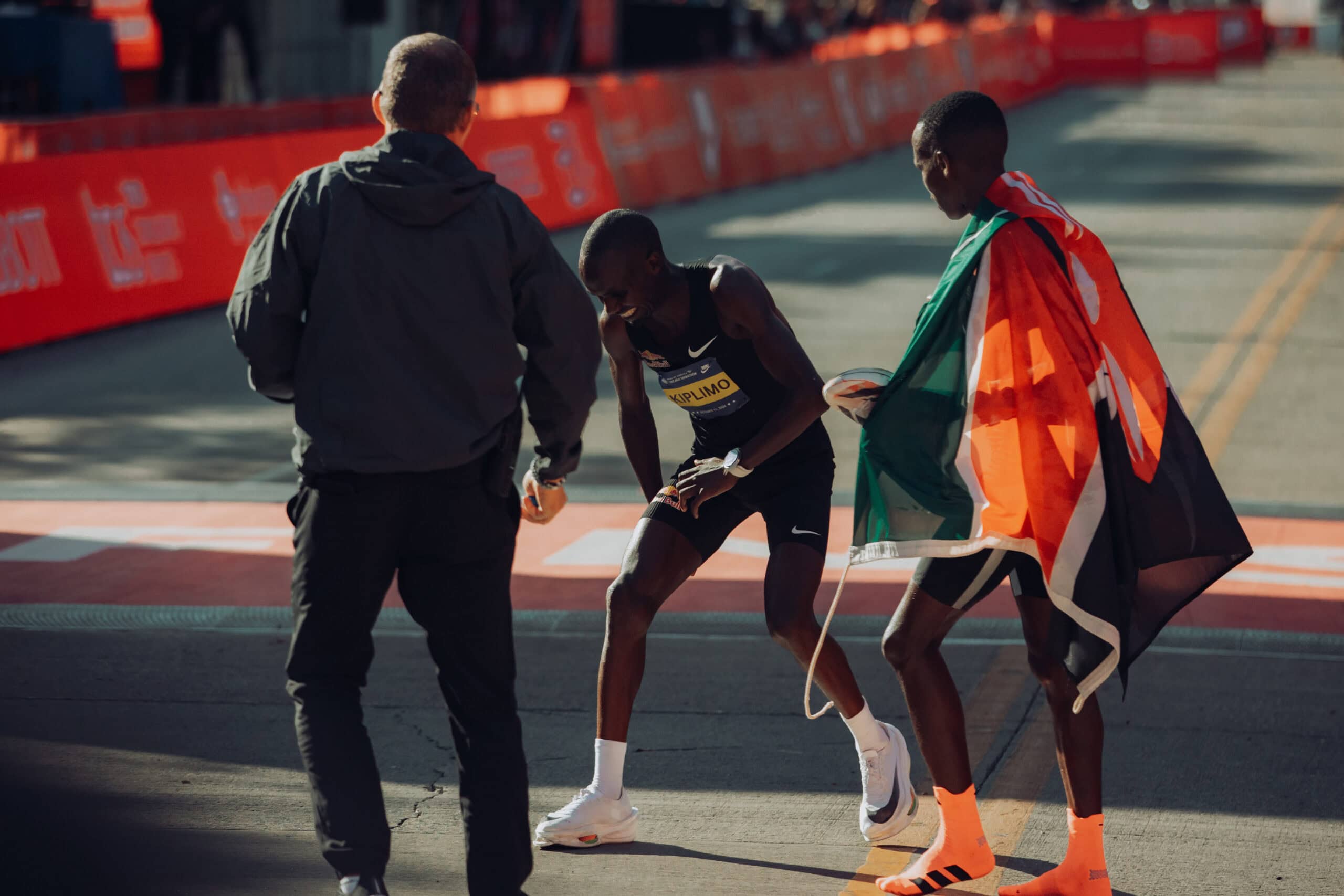
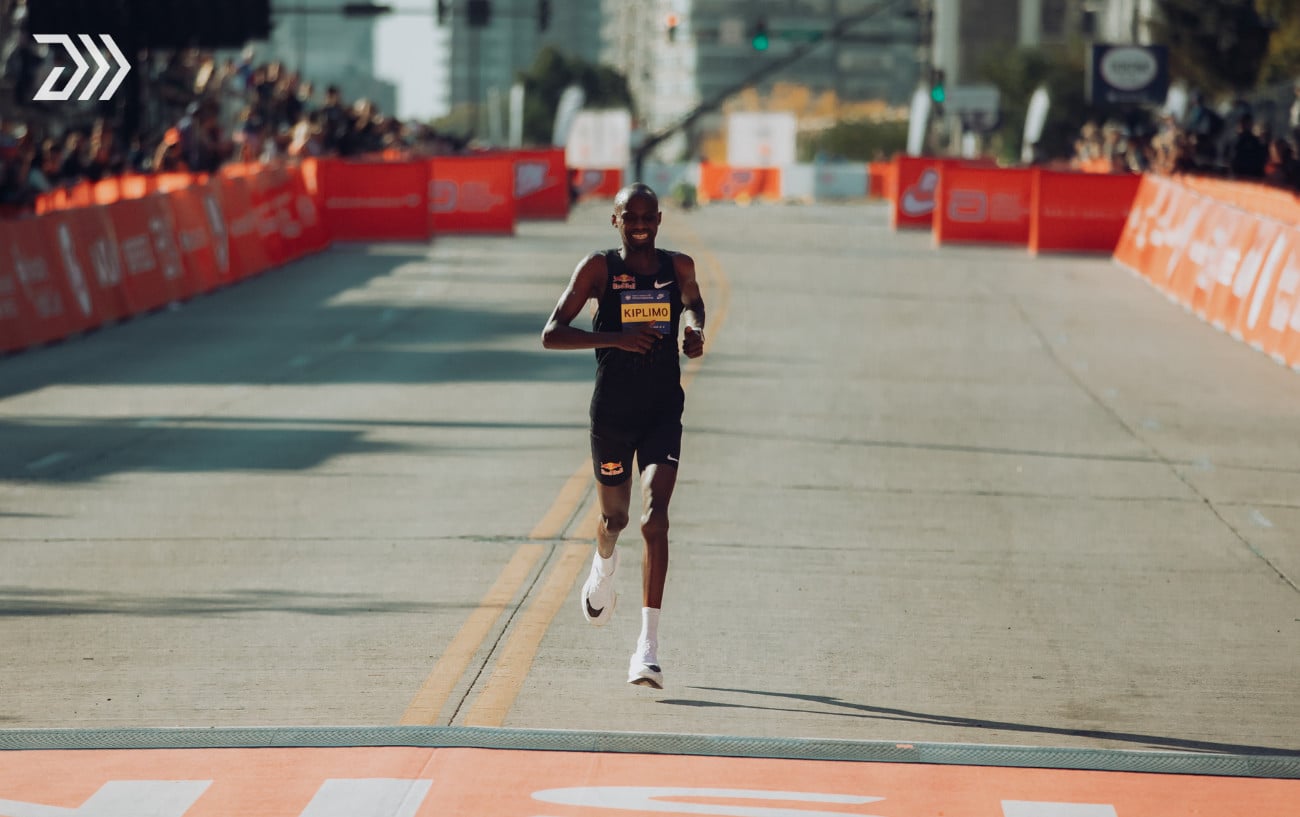
To take the record, Young will need to run more than three minutes faster than he ever has on a record-eligible course. Boston times do not count for records, so his 2:05:41 there in April sits outside the books, and his fastest eligible time is still the 2:08:00 he ran for seventh in Chicago in 2023. Charles Hicks, whose 2:04:35 also came at Boston, and Vinny Mauri, who ran 2:05:54 in his debut in Toledo in April, are both in a field led by defending champion Jacob Kiplimo.
What gives him some pause is the prospect of Chicago coming down to a kick, since the run-in to the finish in South Shields is where the hamstring gave out, and he may have to make his move earlier than usual. “Whereas before, I would have a lot of confidence in my ability to close races, I think I might have to close them further out than what I’m used to,” he said.
Marathon Handbook is covering the race live from Chicago on Sunday, Oct. 11, including Young’s run at the American record. Follow along in our Chicago Marathon live updates.
RunClub
Get more running stories — join RunClub
Daily running news, a community of 300,000+ runners, free training plans for every distance, and a daily running game. Free to join — no card.
Already a member? Log in →







Start the conversation