


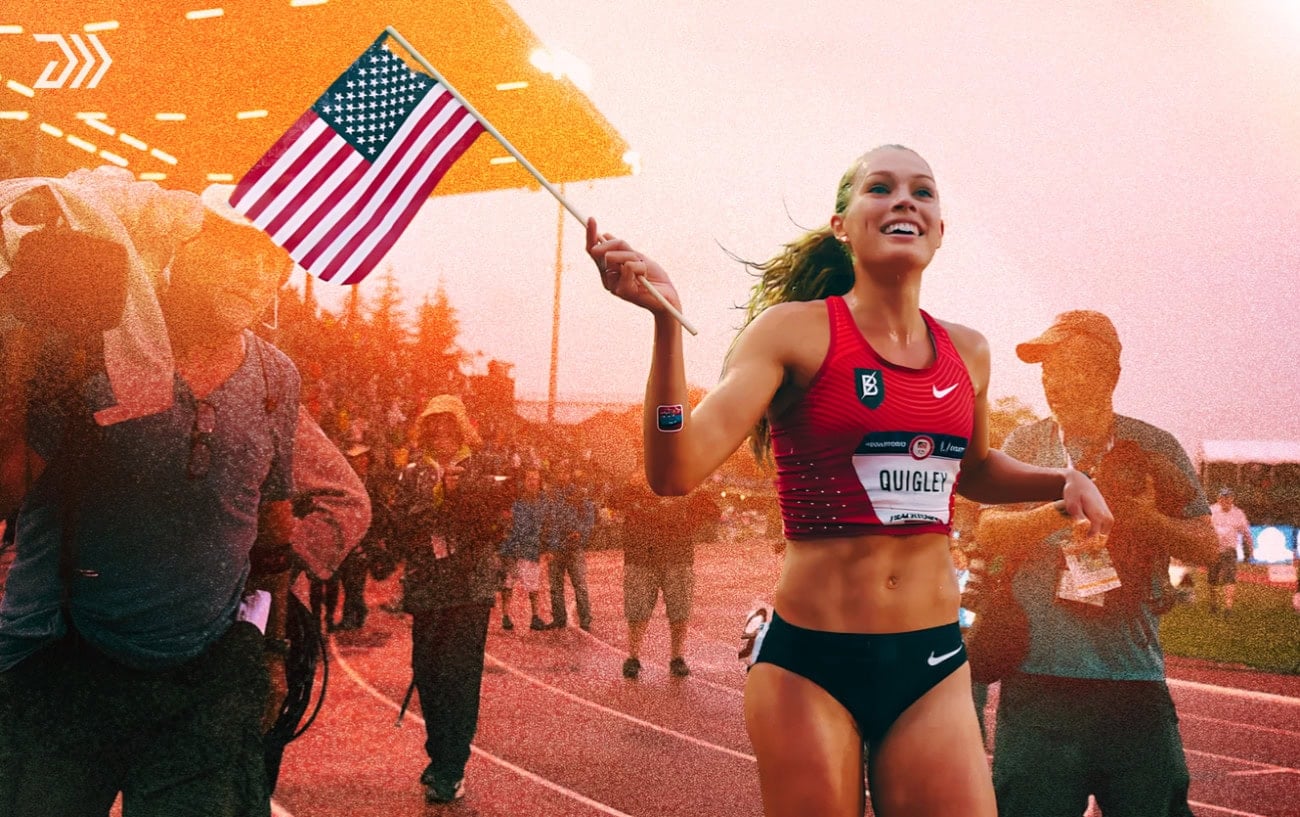
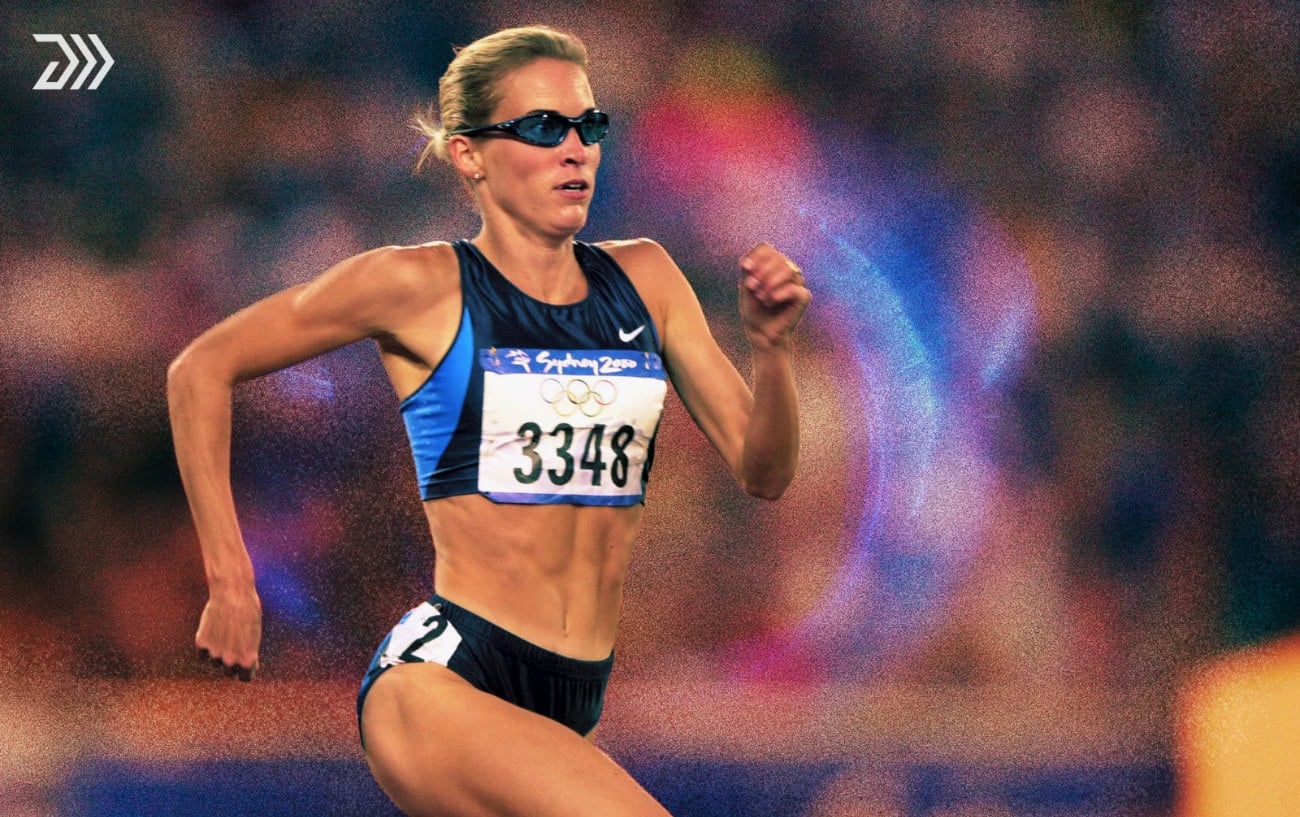
Colleen Quigley went into her first Hyrox on Thursday with an open-division entry, no livestream and a plan to build toward the pro division over time. She came out of it as the winner of the open women’s race in Denver, finishing in 1:08:03 and more than two minutes clear of a field of over 1,500 women.
The 2016 Olympian, eighth in the 3,000m steeplechase in Rio, finished ahead of Rachel Downey (1:10:08) and Lisa Duncan (1:10:15), according to the official results. A Hyrox race is eight 1K runs, each one followed by a workout station, and it was the running that won it for her. Quigley covered the 8K of running in 32:18, an average of 4:02 per kilometer and the fastest running total of any woman in the open division. That alone put her nearly two and a half minutes up on Downey. On the stations, which range from the SkiErg and sled push to burpee broad jumps and a closing set of 100 wall balls, she ranked 16th.
She also made the day harder than it had to be. In an Instagram post after the race, Quigley listed a couple of what she called rookie mistakes. “I did 6 sled pulls instead of 4 (got all turned around…),” she wrote. She added that she had done an unknown number of extra wall balls, because a judge had been discounting reps where she wasn’t squatting low enough, and she hadn’t realized it at the time. Still, she wrote that she loves trying new things, “especially when I’m pretty good at them.”
How Her Time Compares With the Pro Field
The pro women raced the following day, and Rachael Wade won in 1:00:50. Quigley’s time would have placed her ninth in that race, just behind Cassidy Manna (1:07:48) and ahead of Kayla Fenske (1:08:21). It isn’t a like-for-like comparison, though. Pro women push a 152 kg (335 lb.) sled where open racers push 102 kg (225 lb.), throw a 6 kg wall ball rather than a 4 kg one, and carry heavier loads on the sled pull, farmers carry and sandbag lunges.
Building that strength has been Quigley’s main project since the summer. She has been lifting more in the gym and practicing all eight Hyrox stations, and she also ran a pair of trail races of 11K and 26K, according to the newsletter of Meridia, the women-led, athlete-owned track team she co-founded last year.
Her left foot is a large part of why she is here at all. Quigley has had problems with it for years, and on the Hurdle podcast in August she said imaging had at last explained them, showing a long-standing Lisfranc injury along with arthritis in the foot. Having an answer, she said, made it easier to let go of chasing the U.S. trials. In the week before Denver, Meridia’s newsletter said she had stepped away from track racing, without calling it a full retirement, and quoted her on the new approach: “Instead of fitting my life around my training, I’m fitting my training around my life.”
Anyone who has followed the 2015 NCAA steeplechase champion will know she has rarely done things the standard way, from her pre-race routine to the athlete-led team she talked through on the Marathon Handbook podcast.
Quigley, who turns 34 on Friday, said she is editing a recap video of the Denver race for her YouTube channel. Meridia’s plan going in was for her to start in the open division and move up from there, and the step after an open win is the pro race and its heavier weights.
RunClub
Get more running stories — join RunClub
Daily running news, a community of 300,000+ runners, free training plans for every distance, and a daily running game. Free to join — no card.
Already a member? Log in →


Join the conversation
Colleen, you\'re awesome, keep pushing!