


When a marathon winner is banned for doping and the runners behind them each move up a place, the extra prize money does not automatically follow. Under World Athletics’ anti-doping rules, forfeited winnings reach the other athletes only once the banned runner has paid them back, and a race that wants its promoted finishers paid any sooner has to decide to cover it from its own budget.
Patrick Dever finished fourth at the 2025 New York City Marathon in 2:08:58, just a second behind Albert Korir. Korir had given three samples that October that later tested positive for CERA, a blood booster, and in March he was banned for five years with every result from Oct. 3, 2025, onward disqualified, NBC Sports reported. That made the Briton the third-place finisher.
Third place in New York pays $40,000 and fourth pays $25,000. Korir forfeited his money and New York Road Runners paid Dever the $15,000 difference, he told Front Office Sports. The trophy itself was handed to him in Central Park three days before this year’s race, close to a year after he crossed the line. Puma, his sponsor, also paid out the bonus his deal carries for finishing third, and his appearance fee went up. He called it a “pretty good amount of money,” and added: “You want to have that moment on the day, but I guess this is the next best thing.”
The Rules Behind the Wait
Repaid money is shared out in a fixed order under the rules the Athletics Integrity Unit enforces. Any legal costs awarded by the Court of Arbitration for Sport are covered first, then the athletes who should have had the prize money, and the AIU’s own expenses last. If the banned runner never repays, nothing is reallocated to anyone. The AIU can agree an instalment plan, and an athlete who still owes forfeited prize money cannot race internationally until it is settled.
The World Anti-Doping Code, in the current version and in the revision that takes effect on Jan. 1, 2027, asks anti-doping bodies that recover forfeited money to take “reasonable measures” to pass it on to the athletes who would have won it. Its commentary makes clear they are under no obligation to go after the money in the first place.
Races can pay first and chase the cheat afterwards if they choose. World Athletics told the Wall Street Journal in 2024, as Front Office Sports reported, that the Boston Athletic Association was free to pay Buzunesh Deba “on a purely voluntary basis.” Deba had been promoted to the 2014 Boston title after Rita Jeptoo’s EPO ban and was still waiting for her money a decade later, which Marathon Handbook covered at the time. That November, Boston announced it would pay runners moved up by doping cases at its races, including $103,000 to Deba, $6,000 to Shalane Flanagan and $3,200 to Des Linden.
Faith Chepkoech’s case at the Beach to Beacon 10K in Maine shows how quickly it can go when the money is returned. She won on Aug. 3, 2024, passed her post-race test and was later disqualified over a sample taken in Kenya before the race. Her agent, Federico Rosa, sent back the $10,000 first prize, and the race had paid everyone who moved up “by the end of the second week in October, only three weeks after publication of Faith’s disqualification,” race president David Backer told Amby Burfoot for a Marathon Handbook op-ed.
What It Could Mean for Sydney
Ruth Chepngetich kept the $150,000 she earned at the 2024 Chicago Marathon, along with the world record, because her positive test came the following March and only results from then on were wiped when she was banned for three years. The date of the sample decides which prize money is at stake.

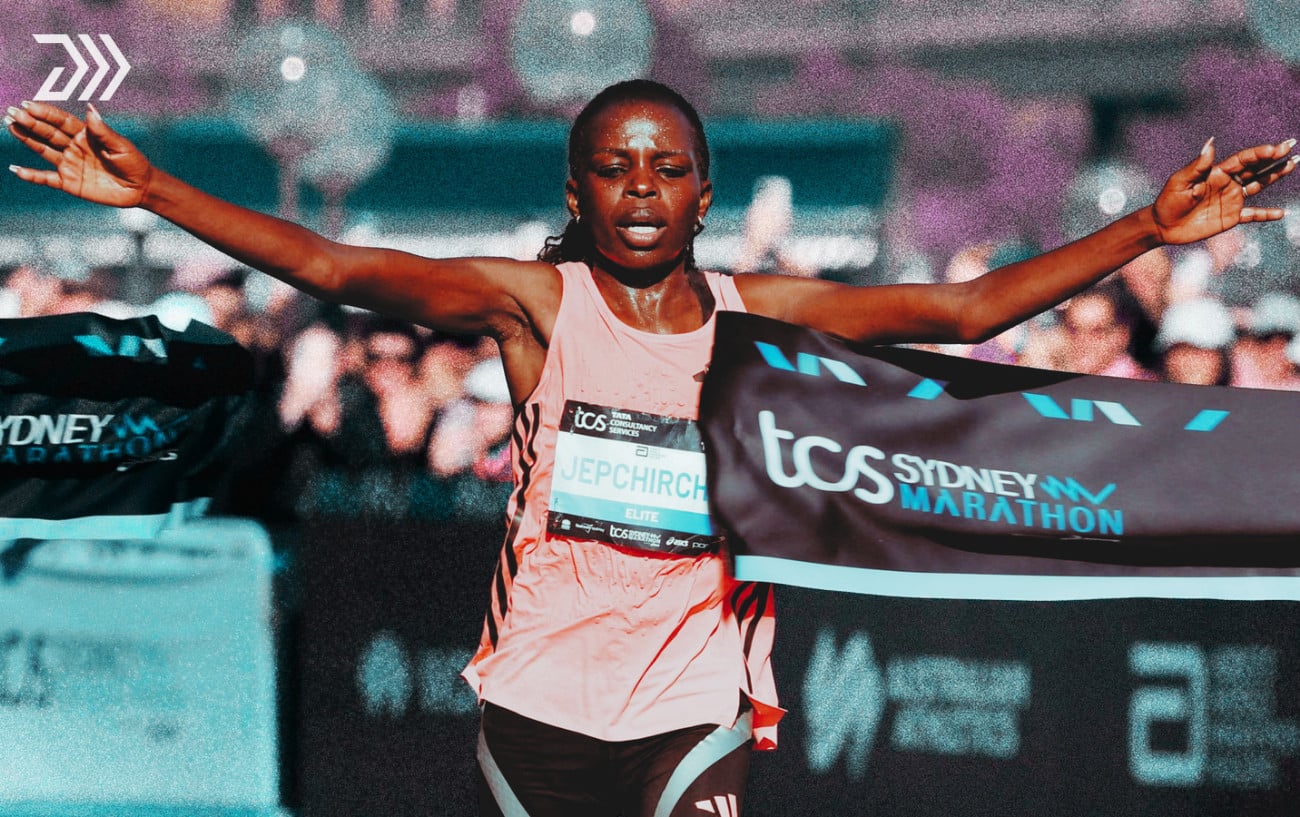
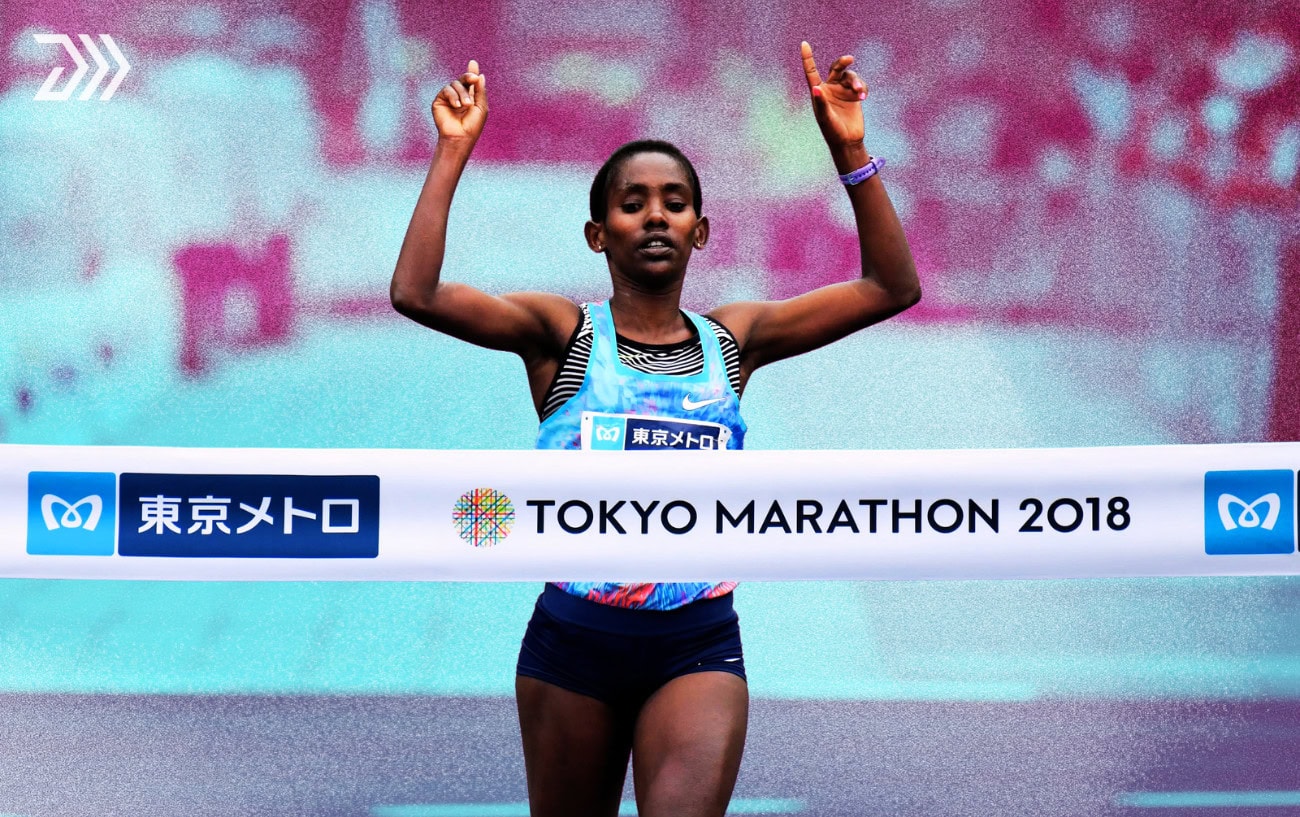
Peres Jepchirchir’s sample came before her race. The world champion was provisionally suspended on Oct. 23 over an EPO finding from a test taken before she won the Sydney Marathon in 2:18:31 on Aug. 30. A provisional suspension is not a sanction, and she is entitled to a hearing. If she is banned and that result goes, Irine Cheptai, second in 2:22:11, would be the winner, and Shure Demise, third in 2:22:33, would move up to second, according to the World Athletics race report. How soon they are paid would depend on whether Sydney does what Boston does, a question Marathon Handbook raised about Cheptai the day after the suspension.
Elite contracts at the World Marathon Majors have for years made payment conditional on staying clean, with the right to suspend payments or demand money back if a result is later nullified. Hellen Obiri, who won New York in 2025, would go further. She told Front Office Sports she supports holding back prize money until the AIU has cleared the athletes, and said: “We need to start testing much earlier before we come to this race.”
RunClub
Get more running stories — join RunClub
Daily running news, a community of 300,000+ runners, free training plans for every distance, and a daily running game. Free to join — no card.
Already a member? Log in →









Start the conversation