


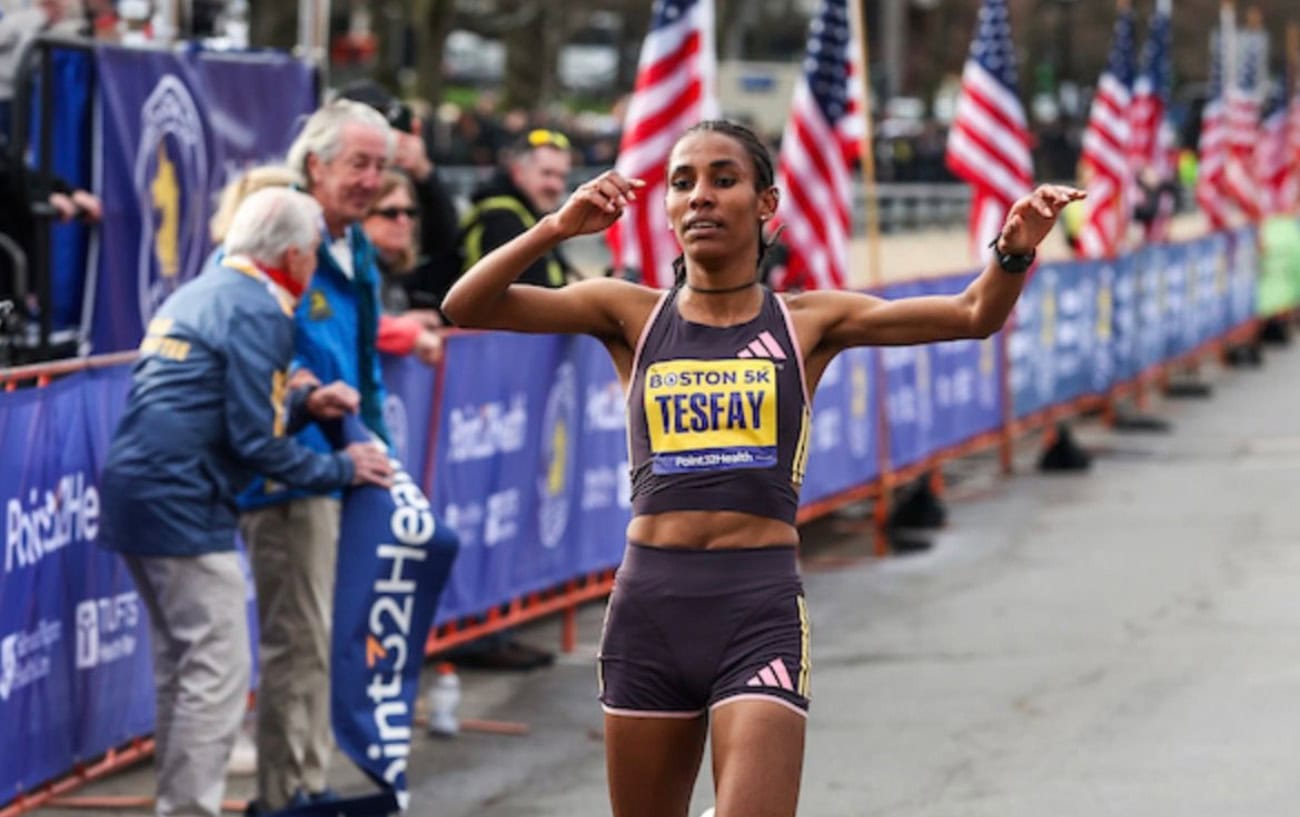
Fotyen Tesfay Haylu had never run more than 21 kilometers in competition before Sunday. She left Barcelona having run the second-fastest women’s marathon in history.
The 2026 Zurich Barcelona Marathon will be remembered as the day a complete unknown announced herself to the world in the most emphatic way possible. Tesfay, an Ethiopian athlete who trains at over 2,000 meters altitude at home, crossed the finish line in 2 hours, 10 minutes and 53 seconds — just 57 seconds behind Ruth Chepngetich’s scrutinized world record of 2:09:56, set in Chicago in 2024.
She also shattered the previous Barcelona course record by nine full minutes.
A Pacemaker Who Needed Pacemakers
Tesfay came into Barcelona with a reputation, just not a marathon one. Her half-marathon times — including a 1:03:21 in Valencia, the third-fastest in history — had the running world curious. Curious, but measured. Half marathons and full marathons are different sports wearing the same shoes.
Nobody told Tesfay that.
She asked her pacemakers to carry her through halfway in 1:06:00 — an already aggressive target. She hit halfway in 1:05:03, a full minute faster than planned. When your pacemakers can’t keep up with you, something has gone sideways — or, in this case, spectacularly right.
Her splits told the story of a runner in another gear entirely. She passed 5km in 16:04, averaging 3:12 per kilometer. By 15km, she was hitting 3:05 per kilometer. Her male pacemakers — marathon runners capable of finishing in 2:12 — were struggling to stay with her. At times, she was pushing them. At kilometer 30, her projected finish time was inside the world record.
In her first marathon.
Then Came Kilometer 35
Every marathon runner reading this knows exactly what happened next. The wall is not a myth, and it does not make exceptions for debut runners with extraordinary half-marathon times.
At 35km, Tesfay’s cadence dropped. Her face, which had been composed for nearly two hours, showed what the effort was actually costing her. The pacemakers stopped chasing and started waiting. Over the final seven kilometers, a minute slipped away — the same minute that separated her from the world record.
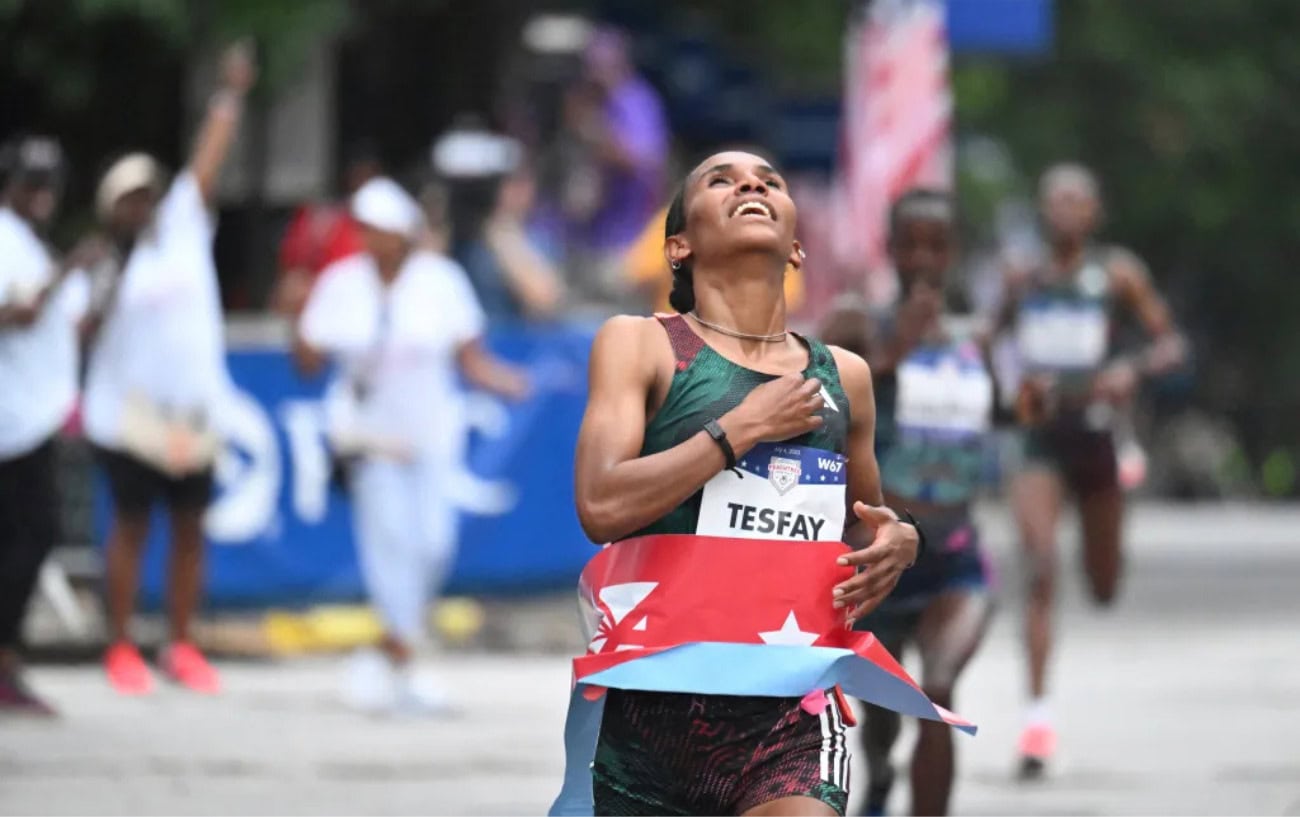
She still finished in 2:10:53. The official, albeit highly controversial, world record is 2:09:56. She was 57 seconds off it, in a race she’d never done before, on a distance she’d never covered. It’s the sort of performance that makes you wonder what happens when she actually knows what she’s doing back there.
It’s also a textbook example of why going out too fast carries a price — even when that price buys you the second-fastest debut in history. Had she run even splits or a slight negative split, a world record was genuinely on the table.
32,000 Witnesses and One Remarkable Men’s Race
The women’s story dominated the day, but the men’s race had its own plot twists. Kenyan Abel Chelangat won in 2:04:57, pulling clear of compatriot Patrick Mosin in the final two kilometers. Nine men finished under 2:07, confirming that Barcelona’s flat, fast course is genuinely elite-friendly.
The race also produced an unlikely subplot. Pacemaker Vincent Kipkorir apparently forgot his job description around kilometer 20 and bolted alone into the lead, building a solo gap before the inevitable collapse around kilometer 32. The favorites caught him, thanked him for his service, and carried on — Chelangat eventually breaking clear to win comfortably.
The day’s record crowd — 32,000 registered runners, the highest in the event’s history — made the whole thing feel appropriately big. In the concurrent Spanish Athletics Championship, Ricardo Rosado took the men’s national title in 2:13:31, while Carolina Robles — also a marathon debutante — won the women’s crown in 2:24:58.
RunClub
Get more running stories — join RunClub
Daily running news, a community of 300,000+ runners, free training plans for every distance, and a daily running game. Free to join — no card.
Already a member? Log in →


Start the conversation