


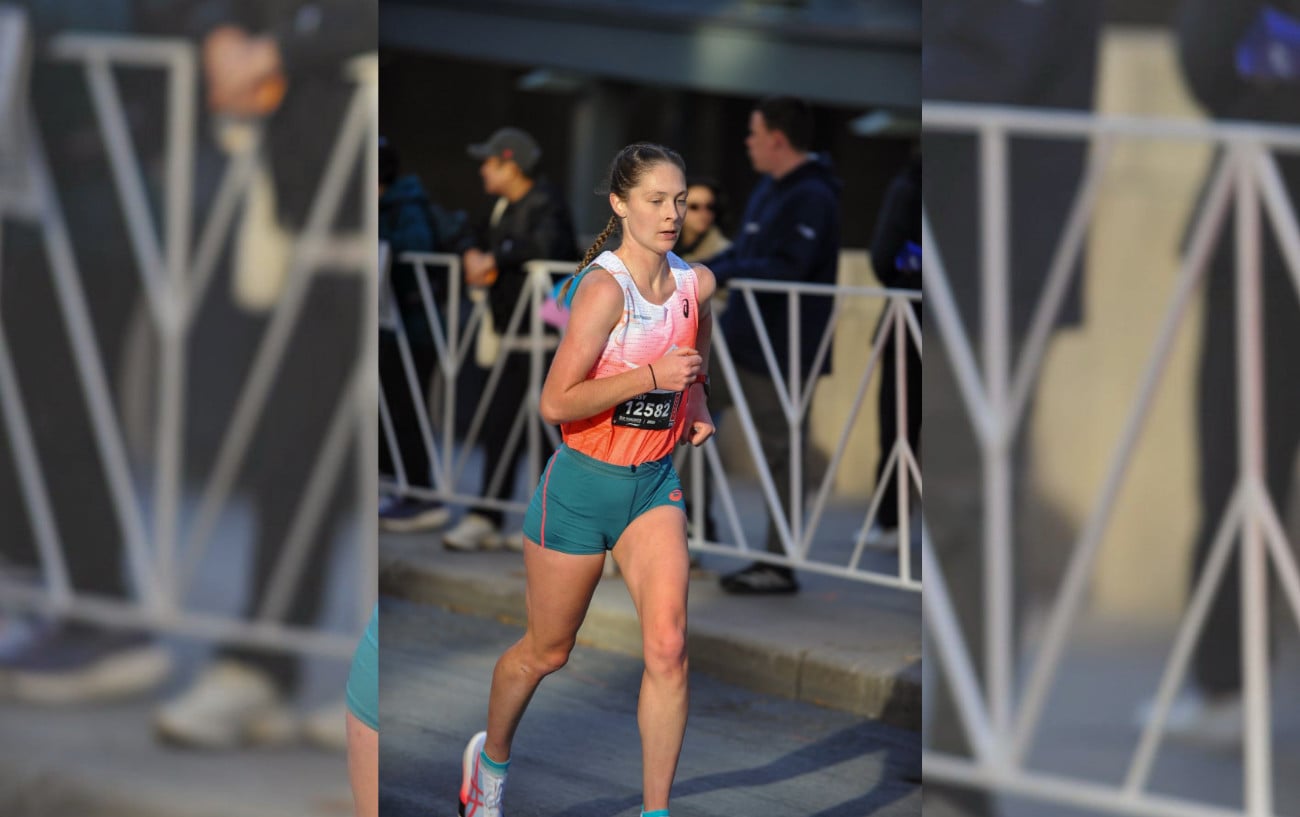
When I crossed the line at the Toronto Waterfront Half-Marathon this month, the clock read 1:22:10. My first half-marathon, in Ghent earlier this year, took me 1:34:43. I went into Toronto with three goals: under 1:30 so I could move up a corral for my marathon debut in Barcelona next March, 1:27 if things went well, and 1:25 if everything went perfectly. I beat the dream goal by almost three minutes.
I didn’t follow a training plan to get there. There was no coach, no spreadsheet and no 16-week block stuck to the fridge. For about eight months I mostly ran when I felt like it, at whatever pace felt right, and I had a lot of fun along the way.
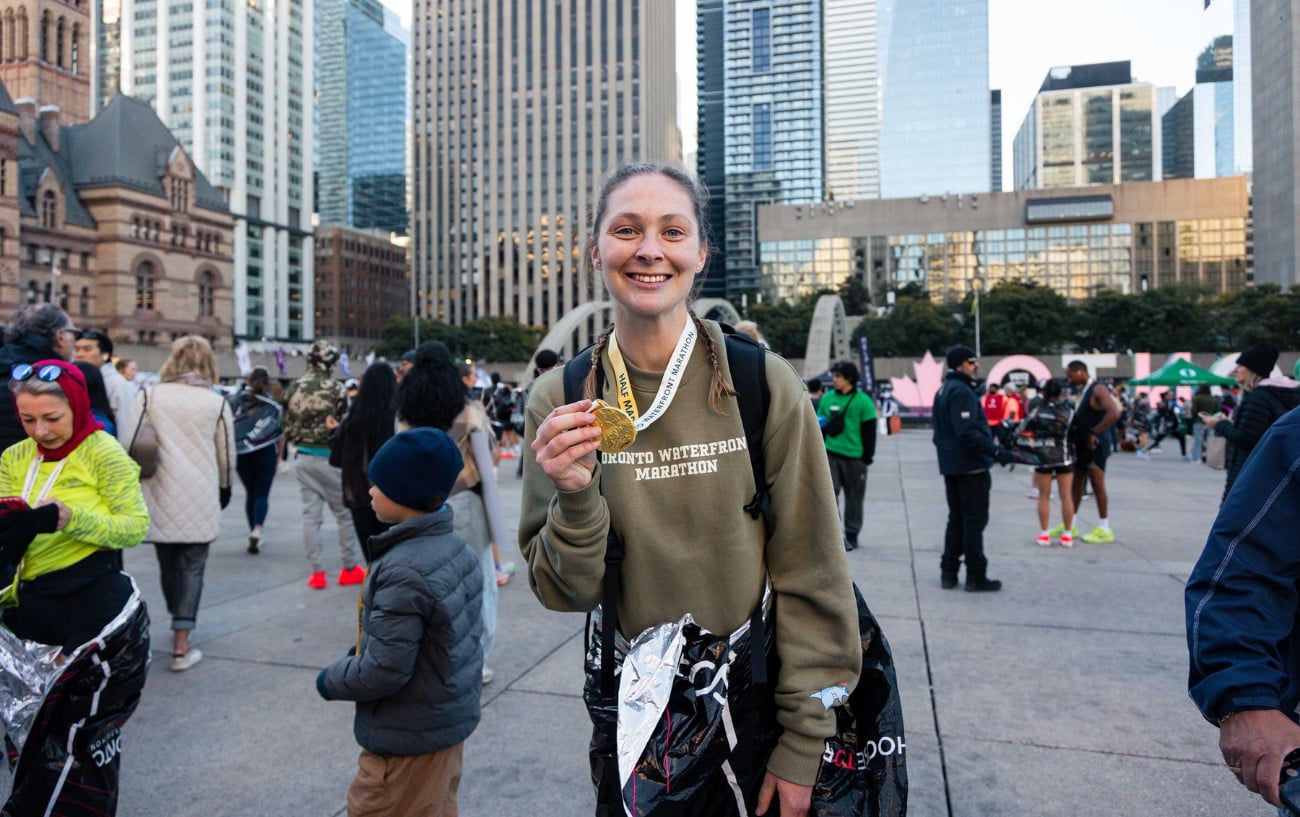
I should be honest about the engine first. Before I came back to running at the start of March, I spent five years as a professional cyclist, and that aerobic base doesn’t disappear when you get off the bike. A good share of what happened in Toronto comes from fitness I built over years. The way I trained this year came out of cycling too, though. Pro cycling is about as structured as sport gets: every ride had a purpose and a power target, and every file got looked at afterward. I’d had enough of that.
Running came with its own baggage. I ran in university and left hating it, worn down by burnout and injury, with the COVID years wiping out much of the racing I’d trained for. When I started again this spring, I made myself one promise. This time I’d run because I enjoyed it, and I’d find out how good I could get doing it my own way.
What I Did Instead of a Training Plan
1. I Ran by Feel and Mostly Ignored My Watch
I wore a watch, but I rarely looked at it mid-run. Easy days went at whatever pace my legs offered that morning, and if a run felt good and I wanted to push the last few kilometers, I pushed them. If I woke up and didn’t want to run at all, I didn’t. I expected that freedom to turn into skipped weeks. It did the opposite: because no session was ever mandatory, I almost always wanted to get out the door.
2. I Built Mileage on Loops I Love
Near home I have a 7K loop and a 9K loop that suit me perfectly, and most of my volume came from stringing them together, two laps of one or a lap of each depending on time and mood. The weekend, when I had more hours, is where my long runs ended up. Over the build my mileage climbed from around 50K a week to a steady 80 to 100K per week (roughly 50 to 62 miles), and I never once set a weekly target. That number is simply what happened when I was enjoying myself.
3. I Let Races Be My Workouts
I did very few interval sessions, and only on days I actually wanted to. I don’t enjoy suffering through repeats on my own. What I do love is a race environment, so between Ghent and Toronto I raced four to six times and treated those as my hard days. I didn’t taper for any of them. I’d turn up on normal training legs, race properly, and go back to easy running the following week. Sometimes three or four weeks passed with nothing hard at all, and I didn’t worry about it.
4. I Kept a Life Outside Running
I ate what I wanted and kept a full life beyond the sport, and I never arranged my week around a session. Running was a big part of my year, but only one part of it. I’m convinced that balance is the main reason I didn’t slide back into the burnout I knew from university. Nothing in the build really went wrong, either, which given my history I don’t take for granted.
5. I Swung Big on Race Day
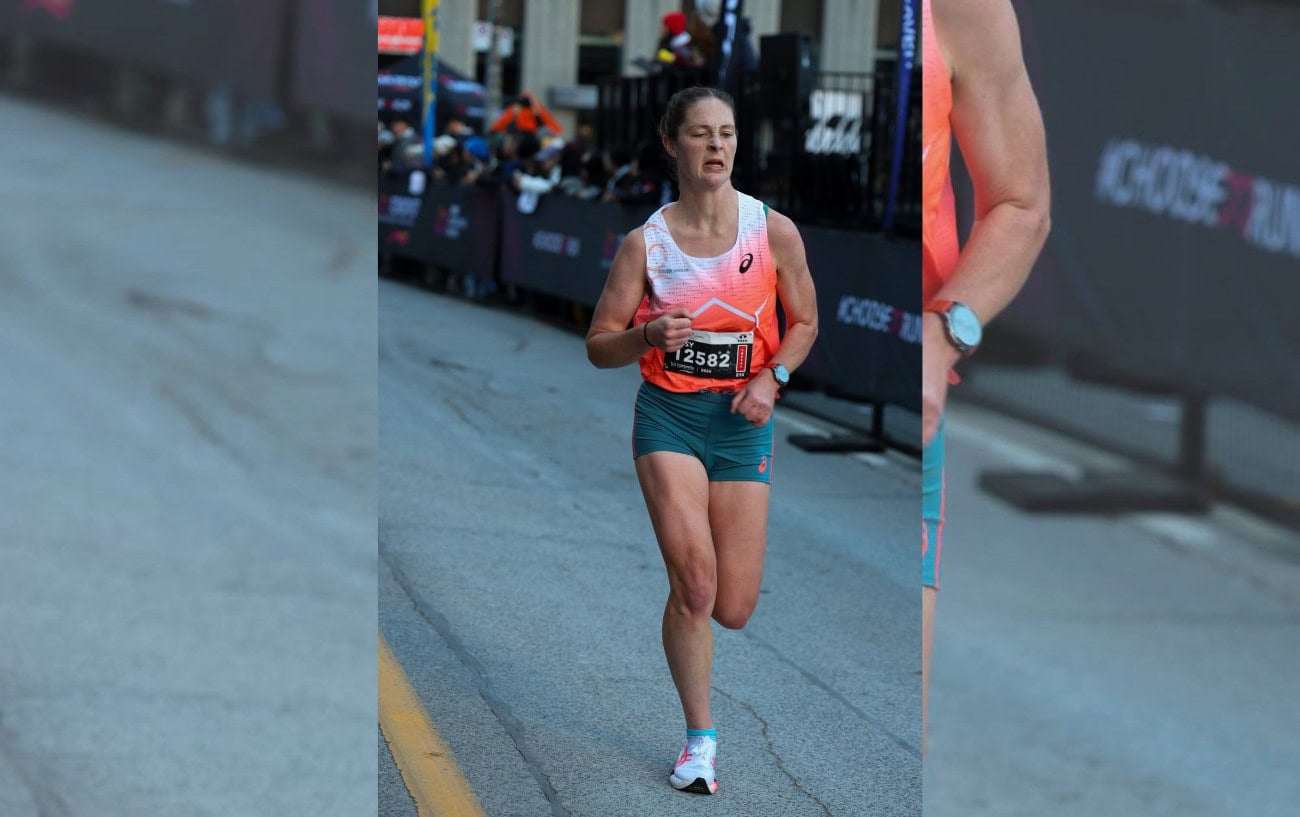
Toronto went the same way my training had. I started out feeling smooth and didn’t glance at my splits until 3K or 4K in, when I realized I was running 10 seconds under my dream-goal pace. A gentle downhill and a flat stretch carried me to 10K still holding it, and that was the decision point. I had already gambled on the first half and I felt good, so I could either ease off and protect a solid time or keep going and see what was there. I kept going, found a runner to hang on to, and held an even pace of about 3:54/km (6:16/mile) to the finish. I’m far happier to have dreamed big and found out than to have held back and spent the next few months wondering.
Who This Works For
This approach suited me because of where I was coming from: a big aerobic base, years of learning how my body handles load, and a real need to enjoy the sport again after it had gone sour once. If you’re newer to endurance training, the guardrails of a plan can do a lot of the work of keeping you healthy. If you already have a base and you’ve lost the joy of running to targets and spreadsheets, it might be worth seeing what happens when you let some of it go.
In March I’ll line up for my first marathon in Barcelona, starting from the first corral.
RunClub
Get more running stories — join RunClub
Daily running news, a community of 300,000+ runners, free training plans for every distance, and a daily running game. Free to join — no card.
Already a member? Log in →
PDF, printable and editable-sheet versions of our Half Marathon Training Plans — plus guidance notes and every other distance — live in the member training-plan library.
Browse the Half Marathon Training Plans →







Start the conversation