


Harry Styles does not talk about running like someone chasing times or medals.
When asked recently about his relationship with the sport, he framed it instead as a mental space, one that mirrors how he experiences music, movement, and performance.
“I think the relationship between that kind of almost spiritual aspect that music can have, the kind of, you know, when you’re dancing, you get into this meditative place,” Styles said on a podcast clip shared to Instagram. “I think there is a lot of synergy there between how you can feel when you’re running sometimes.”
For Styles, running is not a side hobby or a celebrity flex. It has become a practice rooted in focus, presence, and routine, something that has quietly taken on a bigger role in his life over the past year.
‘Clear and present’
In the interview, Styles described running in the same terms he used to explain being fully absorbed in music. He spoke about learning how to access a state where distraction falls away.
“For me, I learned a lot about what allowed me to go to places that don’t feel like, ‘Oh, I’m really just in the music right now,’” he said. “That’s the kind of thing that makes running more enjoyable.”
He returned repeatedly to the idea of being present, doing one thing at a time, without noise around it.
“I think just feeling like clear and present and like doing one thing at a time and just being in it was kind of the goal of both,” Styles said, referring to music and running.
It is language familiar to endurance athletes, many of whom describe running not as escape, but as a way of narrowing attention. For Styles, the overlap appears intentional.
A quiet year of progress
That mindset has coincided with a notable year of running for the 30-year-old singer.
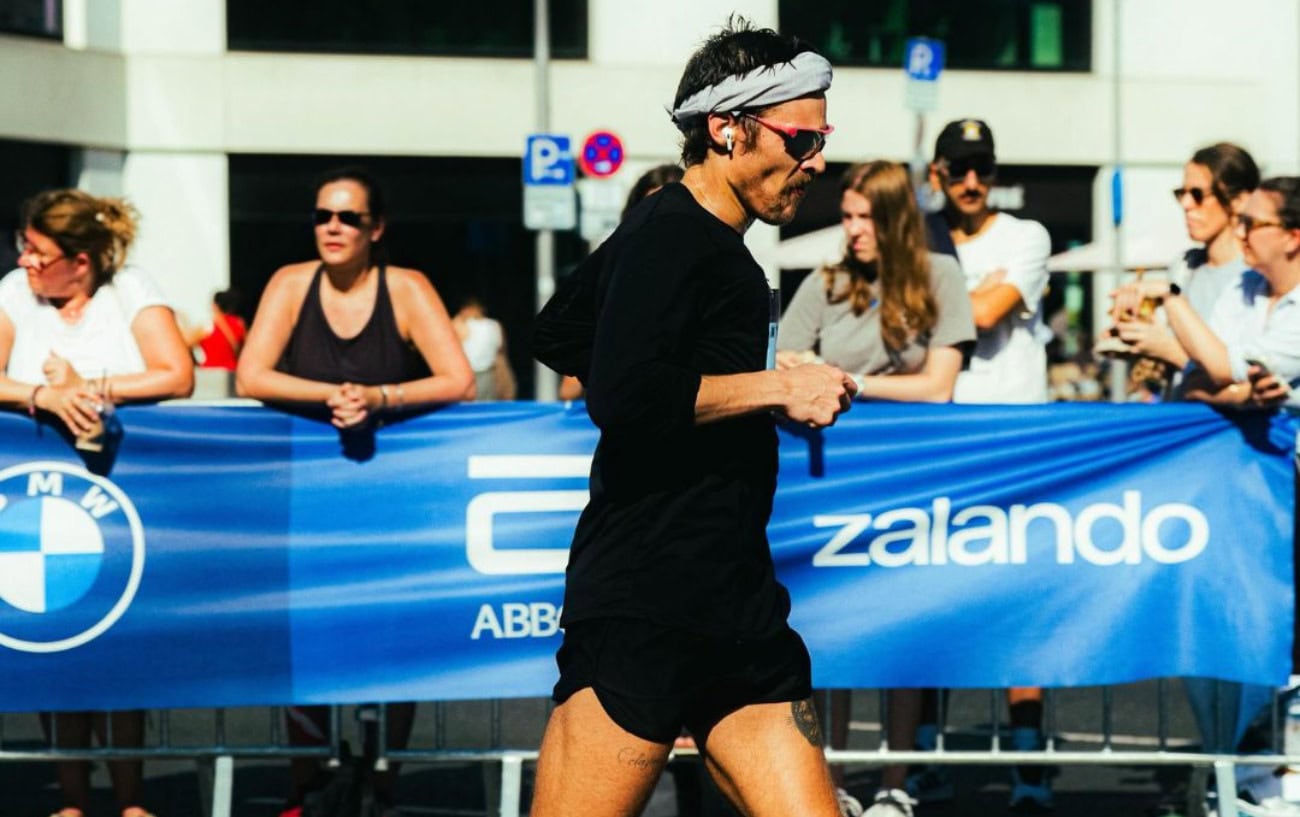
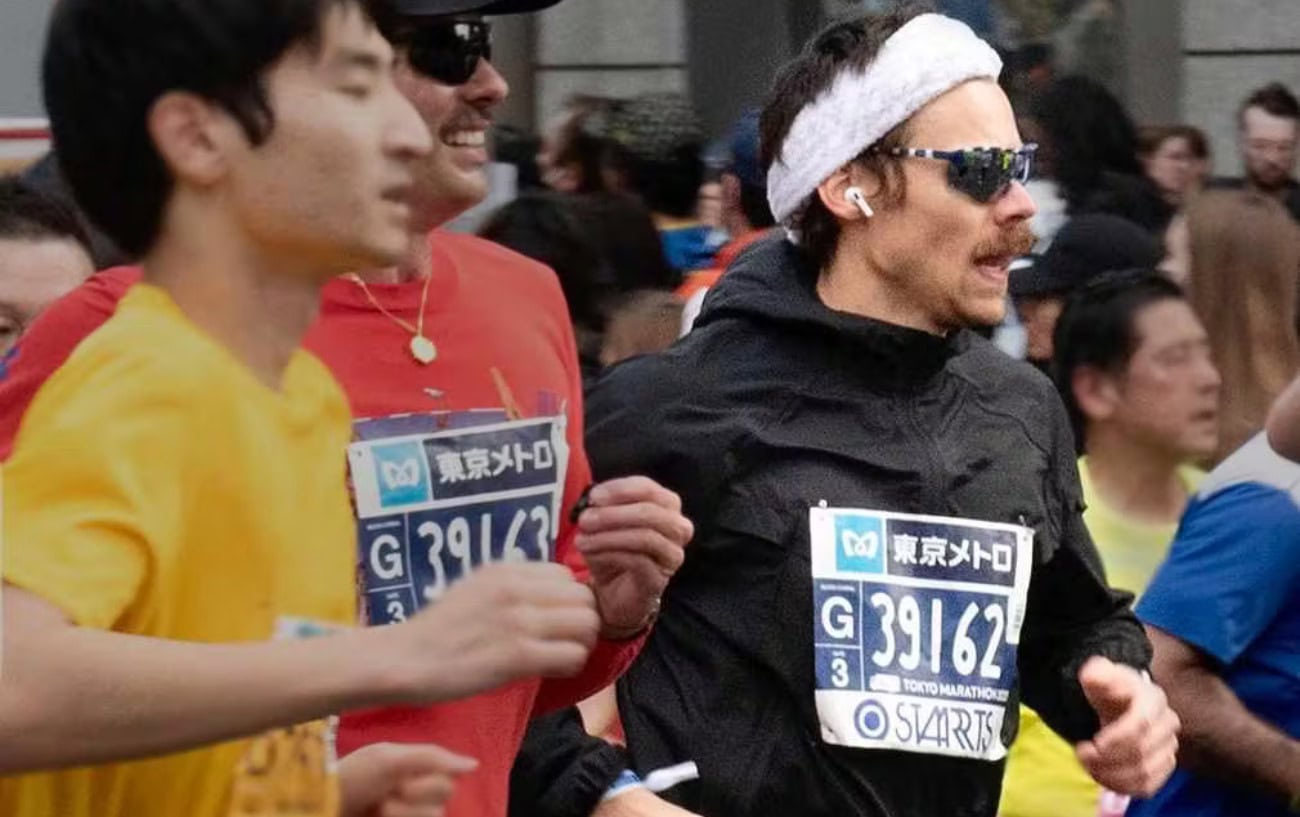
In March of last year, Styles ran the Tokyo Marathon, finishing comfortably in 3:24:07 but without too much fanfare. Later in the year, he gave it another go at the Berlin Marathon, where he improved dramatically, finishing in just under three hours (2:59:13), a benchmark that places him well beyond casual participation and into the realm of serious amateur running.
Styles has never publicly framed those races as goals in themselves. He rarely posts about training and has avoided turning his running into content. Even his race entries have been deliberately low-key, blending into mass fields rather than appearing in VIP settings.
That restraint fits with how he described the sport in the podcast.
“I think all of that stuff feeds each other,” he said, referring to the way music, movement, and running intersect for him.
Running without spectacle
Unlike many celebrities who publicize fitness pursuits, Styles has kept his running largely private. When he does speak about it, the focus is internal rather than performative.
Asked about naming playlists or mantras for races, he brushed it off. “It’s silly really,” he said, laughing.
The understatement is telling. For Styles, running appears to be less about branding or achievement and more about maintaining a mental rhythm during a period of life often defined by noise, crowds and constant movement.
Styles’ comments echo what many marathoners come to understand over time: that running is not always about chasing something new, but about returning to a familiar feeling.
The clarity he describes, being “in it,” fully present, is often what keeps runners lacing up long after goals are met or races are finished.
For Styles, that relationship appears to be still evolving. But his words suggest that running is no longer just something he does between tours or projects. It has become part of how he stays grounded.
And for a global pop star whose life is rarely quiet, that may be the point.
RunClub
Get more running stories — join RunClub
Daily running news, a community of 300,000+ runners, free training plans for every distance, and a daily running game. Free to join — no card.
Already a member? Log in →



Start the conversation