If you’ve ever cut across a junction mid-run to avoid losing momentum, a new study suggests that instinct could be a problem. Self-driving cars, it turns out, weren’t designed with you in mind.
Researchers at the University of Glasgow and KAIST in South Korea used augmented reality headsets to test how 24 participants behaved around a life-sized virtual car while walking or running. The simulated vehicle sometimes stopped, sometimes didn’t — and the differences between the two groups were stark.
Runners took less time to process road conditions, were far less likely to slow or stop at crossings, and in several cases ran ahead of the oncoming car to maintain their pace. Runners were struck by the virtual vehicle three times. Walkers avoided every collision. In two of those incidents, the runner saw a red warning light — and ran in front of the car anyway.

Why Runners Are Different
Researcher Ammar Al-Taie, a runner himself, understands the dynamic from the inside. “I’m much more motivated to keep moving because slowing to let a car pass and accelerating again takes a real physical effort,” he said. “Paired with that is an increased mental effort of trying to process what’s around me as I’m running, and judging whether it’s safe for me to keep going at my current pace.”
The study found that runners are more tolerant of risk when it helps them keep moving — making them, as Al-Taie put it, “a riskier class of road user for self-driving cars to deal with.”
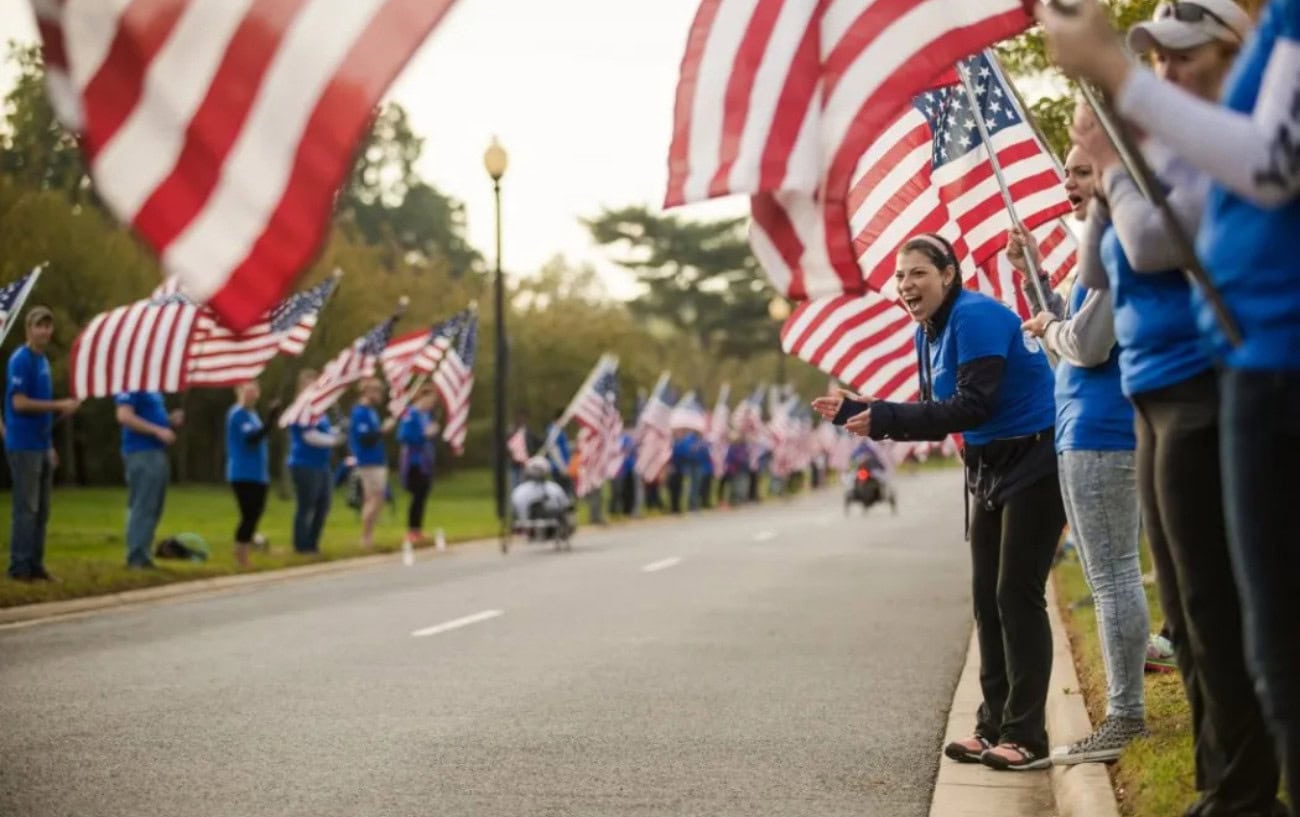
That’s a problem that’s only going to grow. Running is the most popular physical activity on the planet, with an estimated 600 million recreational runners worldwide. At the same time, autonomous vehicle use is surging — there are now more than one million AV trips per month in the United States alone.

The Signal Problem
Human drivers communicate constantly without thinking: a wave, a glance, early braking. Autonomous vehicles can’t do any of that, so researchers are developing exterior light displays — called eHMIs — to signal their intentions to people on the road.
The team tested two designs. LightRing used a simple red-and-green ring of lights. CyanBand used animated patterns to show acceleration or deceleration. Both helped, but runners struggled with CyanBand’s moving animation — they simply didn’t have enough time to process it mid-stride. LightRing’s simpler color scheme worked better for both groups.
The researchers propose a new design called DualBeam: amber lights to signal the car won’t yield, purple to signal it will. Crucially, DualBeam would also send alerts directly to runners’ smartwatches and earbuds as an AV approaches — so you get a heads-up without breaking stride. For runners who listen to music while running, that kind of integration could prove critical.

Why It Matters Now
The UK’s Automated Vehicles Act passed in 2024. Waymo has announced plans to launch a fully driverless taxi service in London as early as September 2026. The roads are changing fast, and this research is a reminder that road safety for runners needs to be part of that conversation.
Professor Stephen Brewster of the University of Glasgow put it plainly: “It will be increasingly important to ensure that runners and AVs can share the roads safely in the years to come.”
For now, the basics still matter: knowing which side of the road to run on, staying visible in low light, and planning routes with safety in mind. Self-driving cars may eventually adapt to runners — but they’re not there yet.