


Jeff Browning has left the hospital in France, nine days after a heart attack during the TDS race at UTMB Mont-Blanc, and said in a video posted to his Instagram account on Thursday that there is a path back to the trails for him.
“The future remains to be seen. But I’m happy to share that there is a path forward and a path to me getting stronger and being back on the trails,” Browning said, filming himself outdoors in France. He said he was moving that day from the hospital into an apartment, after two procedures, a surgery and nine days as an inpatient, and that he expected to stay in France about another week before he could travel home. The caption on the post reads, “Thanks everyone.”
Browning thanked the doctors and staff who treated him, his crew, the trail running community, his children and his wife, and closed with “Giddy up.” “I’m feeling really blessed right now,” he said. “I wouldn’t be here without you all.”
Neither the video nor the statement his family posted to the same account on Aug. 26 sets out what was done in the hospital. The fundraiser opened for his care does. It says three stents were placed in an emergency procedure, and an update posted on Aug. 30 said his condition had proved “more serious than originally expected,” requiring further procedures, hospital transfers and surgery, and lifelong care once he is home.
The fundraiser was created on GoFundMe on Aug. 27 by Kevin Walker, with Jonathan Van Dyke and George Plomarity, and pays out to Browning’s wife, Jennifer Browning. It had raised $292,874 from 2,742 donations against a $350,000 goal by Friday. The page says Browning is self-employed with limited insurance, and itemizes what the money is for: emergency treatment in France, lodging and travel during the hospital stay, the journey home, cardiac rehabilitation in the United States, medication, and household costs while he cannot work. The link sits at the top of his Instagram bio.
What a return to the trails involves for a runner in his position is set out in the cardiology literature. A review of masters endurance athletes after a heart attack, published by the American College of Cardiology, recommends symptom-limited exercise testing within one to two weeks of a stent procedure, and at least three months away from competitive racing before an athlete’s cardiac function is reassessed, with what follows decided by the athlete and the cardiologist together. Cardiac rehabilitation, the program the fundraiser says Browning will begin at home, has been measured across 63 randomized trials and 14,486 patients, and is associated with a 26 percent reduction in cardiovascular deaths and an 18 percent reduction in hospital readmissions.
Cardiac arrests at road races were mostly fatal until fairly recently. The Race Associated Cardiac Event Registry logged 176 of them among 29.3 million marathon and half-marathon finishers in the United States between 2010 and 2023, and two thirds of those runners lived, against fewer than a third in the previous decade. The paper reporting that shift in JAMA puts it down to bystander CPR and defibrillators reaching the runner almost immediately. Coronary artery disease was the most common cause identified, and it fell mostly on older runners. Nobody has assembled the equivalent figures for mountain ultras.
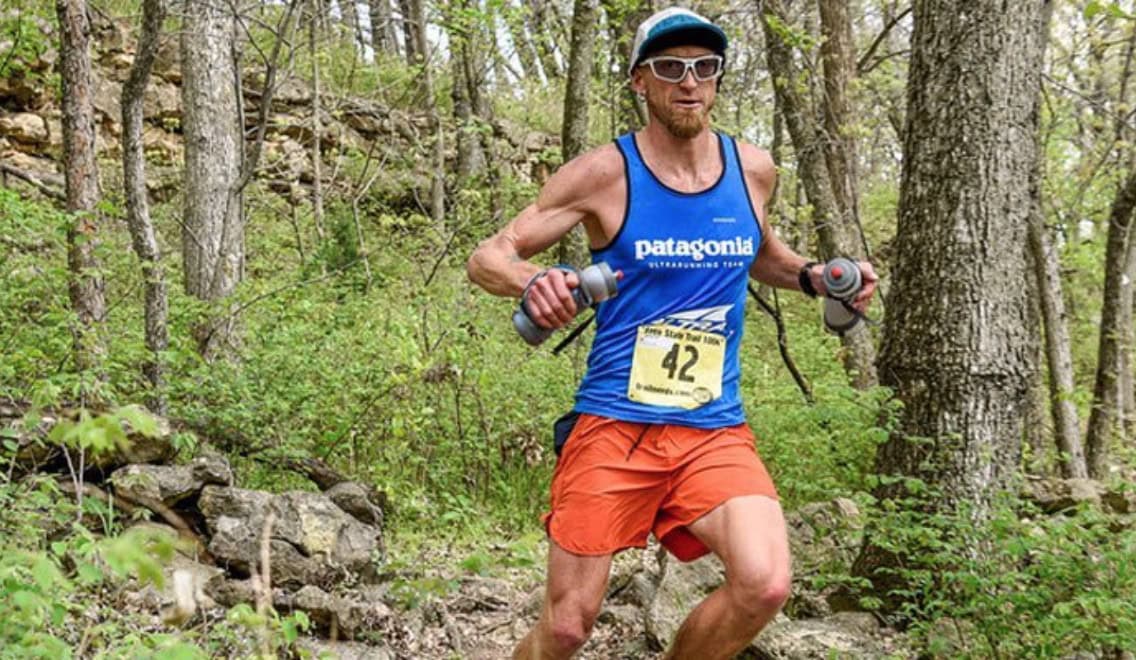
Browning has more than 40 career ultra wins, more than 30 of them at 100 miles, and seven Hardrock 100 finishes including a victory. He finished Western States in 18:03:38 in June for 38th place, eight weeks before he started the TDS, and the Cocodona 250 in 70:56:04 in May. “I’m so happy to be alive,” he said on Thursday.
RunClub
Get more running stories — join RunClub
Daily running news, a community of 300,000+ runners, free training plans for every distance, and a daily running game. Free to join — no card.
Already a member? Log in →






Start the conversation