


The Western States 100 is the oldest and arguably most iconic 100-mile trail race on the planet — and the 2026 edition is shaping up to be one of the most compelling in recent memory. With a stacked elite field, a four-time champion making a comeback, and a spectator-friendly forecast, this year’s race deserves your full attention.
Whether you’re tracking from home, heading to the course in person, or simply want to understand what all the fuss is about, here’s everything you need to know about Western States 2026.
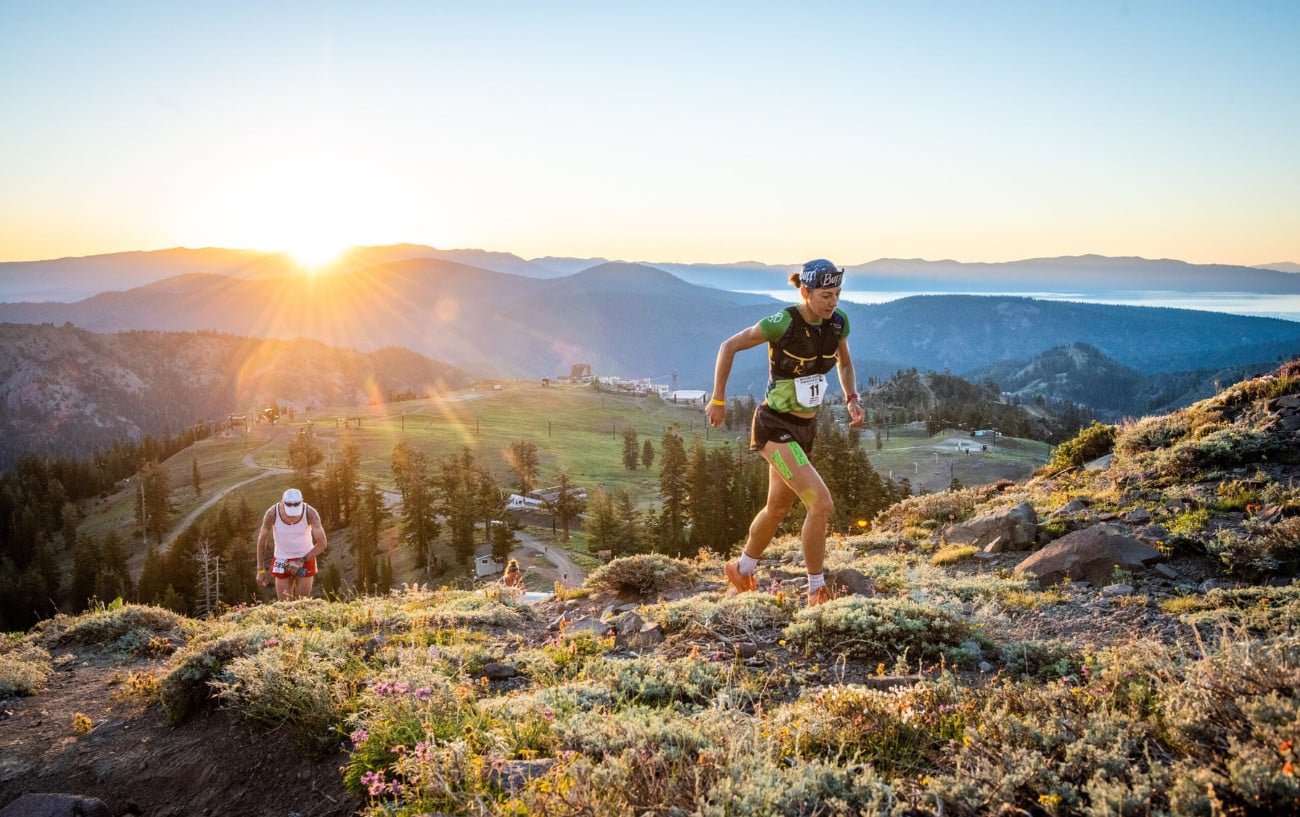
What Is The Western States 100?
The Western States Endurance Run — formally known as the Western States 100-Mile Endurance Run — is a point-to-point ultramarathon held every year on the last weekend of June in California’s Sierra Nevada mountains. It traces the historic Western States Trail from Olympic Valley (near Lake Tahoe) to Auburn, California, covering 100.2 miles of rugged mountain terrain.
It is the oldest 100-mile trail race in the world, and its reputation for competitive depth, stunning scenery, and brutal attrition makes it the benchmark event in ultrarunning. Read our full Western States 100 race profile here.
The race’s origins are beautifully strange. In 1974, a horseman named Gordyn Ainsleigh arrived at the Tevis Cup — a 100-mile horseback endurance ride across the Sierras — only to find his horse was unavailable. Rather than scratch, he ran the course himself, finishing in 23 hours and 42 minutes. By 1977, the first official Western States 100 was held with 16 participants and three finishers. The full story is worth reading.
2026 Race Details
- Date: Saturday, June 27 – Sunday, June 28, 2026
- Start time: 5:00 a.m. PDT, Olympic Valley, California
- Finish: Placer High School track, Auburn, California
- Distance: 100.2 miles
- Cutoff: 10:59:59 a.m. PDT on Sunday, June 28 (a 30-hour window)
- Field size: 370 runners
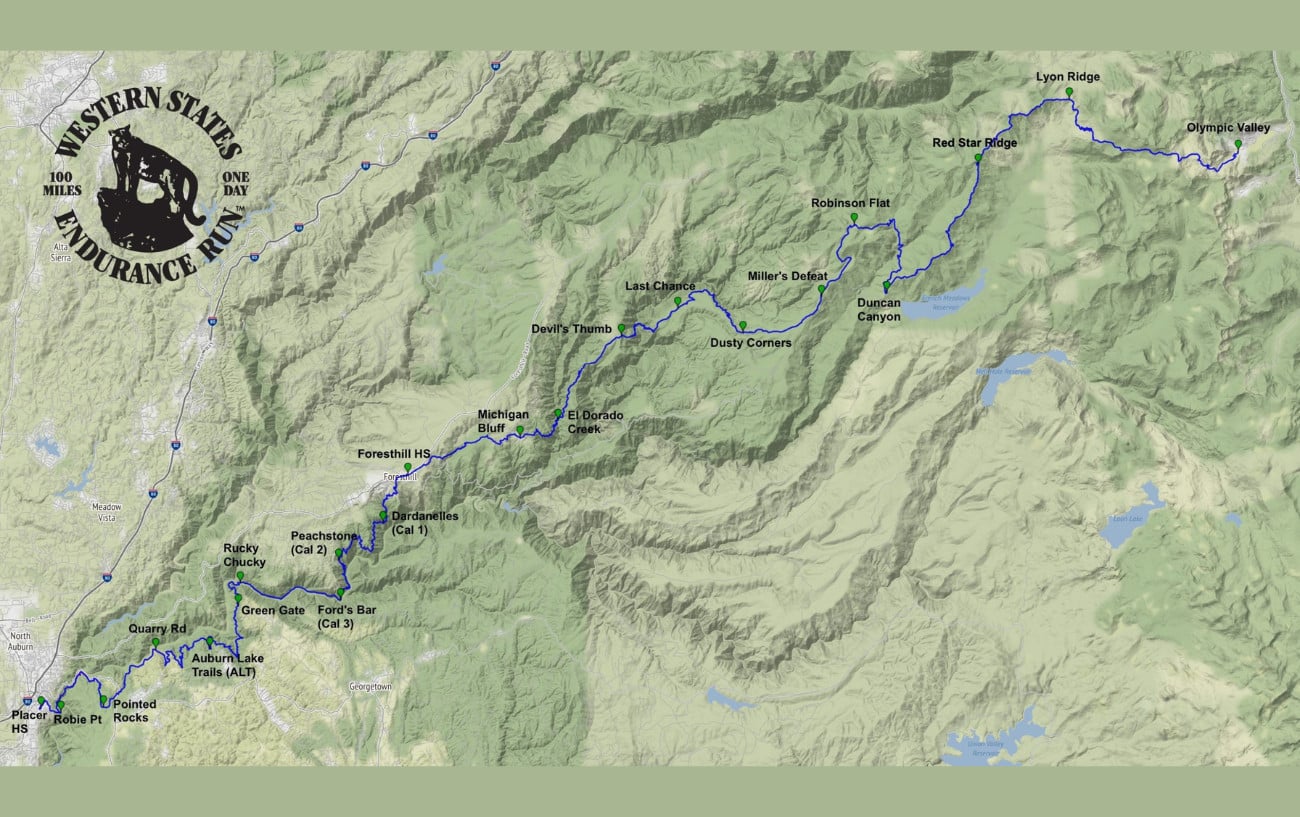
The Course
The Western States Trail climbs more than 18,000 feet and descends nearly 23,000 feet across four distinct terrain zones. It is a net-downhill course — but don’t let that fool you.
High Alpine Country (Miles 0–30)
The race begins at 6,200 feet in Olympic Valley and immediately ascends Emigrant Pass at 8,750 feet. The opening miles traverse the Granite Chief Wilderness, with panoramic views of the High Sierra before runners begin the long descent toward the canyon country. This early section is where runners bank time — the cooler air and rolling trails are as good as it gets all day.
Canyon Country (Miles 30–62)
This is where Western States earns its reputation. The course drops into a series of steep, exposed canyons — Duncan Canyon, Devil’s Thumb, El Dorado Creek — where temperatures can soar and runners are tested to their core. The descent into and climb out of Devil’s Thumb at mile 48 is one of the most feared stretches in ultrarunning. By Foresthill (mile 62), runners have covered the hardest terrain — but still have nearly 40 miles to go.
The Foresthill Divide & River Crossing (Miles 62–80)
From Foresthill, runners drop along the Cal Street section through a series of exposed canyon trails toward the American River. The famous river crossing at Rucky Chucky (mile 78) — waded or roped in high water years — is a beloved spectator spot and a key psychological milestone.
Auburn State Recreation Area (Miles 80–100.2)
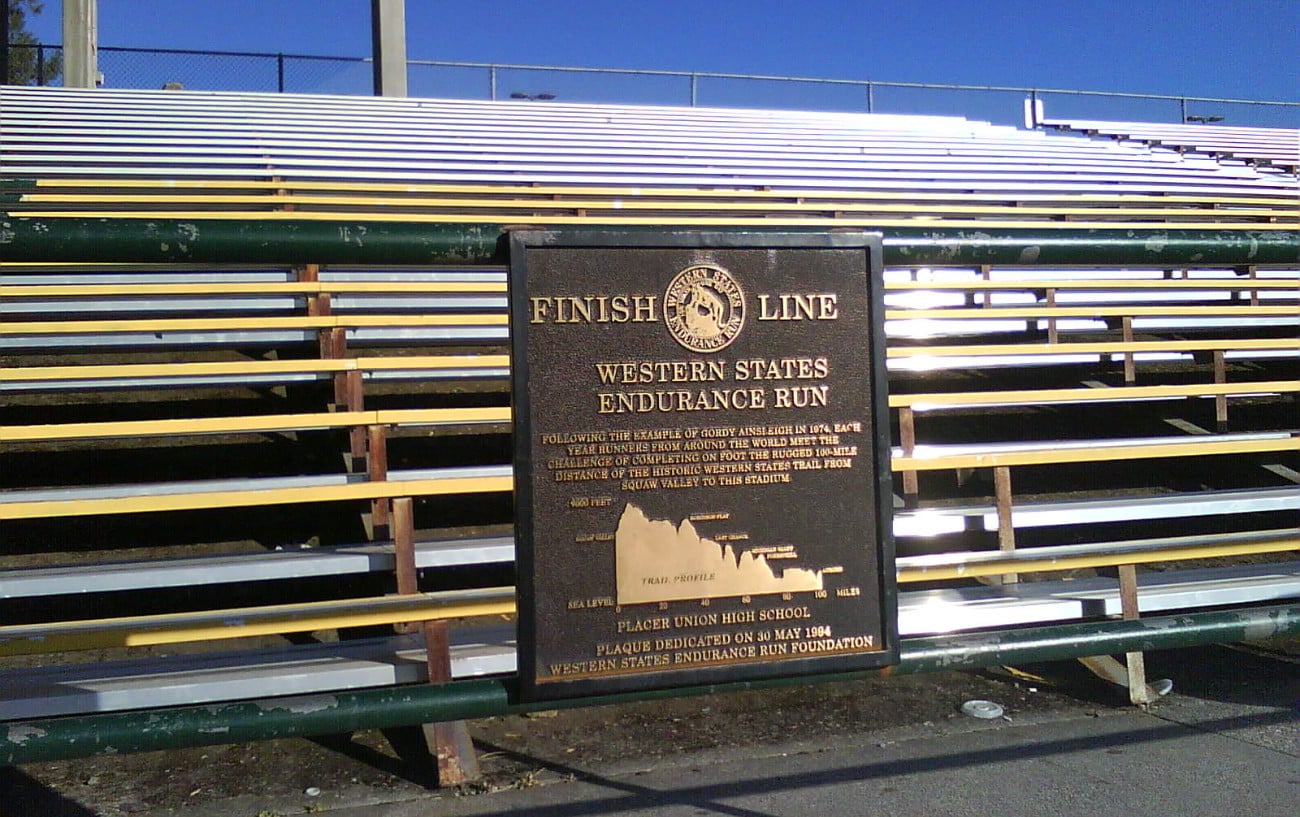
The final 20 miles roll through the Auburn State Recreation Area before a dramatic finish onto the Placer High School track, where runners cross the finish line beneath floodlights at all hours through the night and into Sunday morning.
Elevation At A Glance
- Total ascent: 18,090 feet
- Total descent: 22,970 feet
- Highest point: Emigrant Pass, 8,750 feet
- Net drop: approximately 4,880 feet
Course Records
| Record | Runner | Time | Year |
|---|---|---|---|
| Men’s overall | Jim Walmsley | 14:09:28 | 2019 |
| Women’s overall | Courtney Dauwalter | 15:29:33 | 2023 |
Key Aid Stations
There are 22 aid stations across the course. Key crew-accessible checkpoints — where runners’ support teams can meet them — include:
- Robinson Flat (Mile 30.3) — first major crew point; often the first real check on how a runner is faring
- Michigan Bluff (Mile 55.7) — deep in canyon country; a morale-critical stop
- Foresthill (Mile 62) — the biggest and most accessible crew point on the course
- Rucky Chucky (Mile 78) — the river crossing; crew-accessible and always dramatic
- Auburn Lake Trails (Mile 85.2)
- Robie Point (Mile 98.9) — final crew point before the track finish

The 2026 Elite Field
This year’s field is genuinely stacked — on both the men’s and women’s sides, there are multiple credible winners. Read our news on Walmsley’s return to Western States.
Men’s Race: Runners To Watch
Jim Walmsley is the headline act. The four-time Western States champion (2018, 2019, 2021, 2024) and holder of the men’s course record (14:09:28) missed the 2025 race through injury and has barely raced in 2026. He’s entering on a HOKA sponsor entry rather than a Golden Ticket, which tells you something about his build-up — but Walmsley at Western States is always a storyline.
Kilian Jornet is the race’s most legendary figure and the wildcard of 2026. The Spanish mountain running icon won Western States in 2011 and finished third last year. He arrives nursing a knee injury, with reports of only two weeks of running in his legs since Zegama. He may be racing as a celebration rather than a competition — but Jornet has defied logic before. Full men’s preview via iRunFar.
Hans Troyer is the man to watch as a genuine title contender. The American placed eighth on his Western States debut in 2025, then won the JFK 50 Mile in November, then broke the course record at Black Canyon 100K in February 2026. He is in the form of his life.
Adam Peterman won Western States in 2022 and has been a consistent top-10 finisher. Hayden Hawks — a two-time Western States podium finisher (2nd in 2022, 3rd in 2024) — has never quite broken through for the win, and 2026 could finally be his year. Zach Miller — a cult figure in ultrarunning — makes his Western States debut with serious pedigree. Other credible contenders include Francesco Puppi, David Sinclair, Will Murray, Canyon Woodward, and marathon-speed threat Anthony Costales (2:13 marathon PB).
Women’s Race: Runners To Watch
Abby Hall is the defending champion, having won in 2025 with a 16:37 finish — the fourth-fastest women’s time in race history. She ran from the front through the entire second half, a bold strategy that paid off. No woman has won Western States in back-to-back years since Ellie Greenwood in 2011–2012. Hall is attempting to end that streak. Full women’s preview via iRunFar.
Fuzhao Xiang has finished second at Western States in both 2024 and 2025, and owns one of the fastest women’s times in race history. Two consecutive runner-up finishes give her every motivation to make 2026 her year.
Tara Dower set the Appalachian Trail overall FKT in 2024 and finished third at the 2026 Black Canyon 100K. She arrives with serious momentum. Marianne Hogan (Canada) is a proven podium contender — she finished third at Western States in both 2022 and 2025, making her one of the most consistent performers in the race’s recent history. Fiona Pascall — fifth on her 2025 debut — has had a superb 2026 campaign and should push for the podium.
Jennifer Lichter, based in Missoula, Montana, makes her 100-mile debut after winning Black Canyon in a course record 7:57:05 — her form this year has been extraordinary. And then there’s Molly Seidel — 2020 Olympic marathon bronze medalist — also tackling her first-ever 100-miler. The transition from road marathon to 100-mile trail ultra is enormous, but Seidel is a fierce competitor and her debut will attract attention well beyond the core ultrarunning community.
2026 Weather Forecast
Good news for runners and spectators: the forecast for race weekend is sunny and dry with relatively cool temperatures around 13°C (55°F). That’s a significant contrast to 2025, which saw hot and taxing conditions through the canyons. Cooler weather typically leads to faster times and better finishing rates — setting the stage for an exciting elite race and strong overall numbers.
How To Watch The 2026 Western States 100
Live Stream
The race will be streamed live and free on YouTube at youtube.com/WSER100. Coverage begins at 4:15 a.m. PDT on Saturday, June 27 — before the 5:00 a.m. gun — and runs continuously for approximately 31 hours through to Sunday morning. Commentators are Dylan Bowman and Corrine Malcolm, with on-course reporting from the Mountain Outpost team.
Live Tracker
Follow every runner’s position in real time at ultralive.net/ws100. The tracker updates checkpoint splits as runners reach each aid station — ideal for tracking elite gaps or following a specific runner.
Key Times To Tune In
- ~5:00 a.m. Saturday — Race start, Olympic Valley
- ~10:00 a.m. Saturday — Leaders reach Robinson Flat (mile 30)
- ~2:00–4:00 p.m. Saturday — Canyon country battles; watch the Foresthill checkpoint (mile 62) for elite splits
- ~7:00–9:00 p.m. Saturday — Top men likely finishing; elite women entering the final miles
- ~9:00–11:00 p.m. Saturday — Women’s podium fight resolves
- All night Saturday into Sunday — Age-groupers and non-elites finishing under floodlights
- 10:59:59 a.m. Sunday — Official 30-hour cutoff

How To Spectate In Person
Western States is one of the best ultramarathons in the world for spectating — the 30-hour window means there is always action on the course. Not every section of trail is publicly accessible, but several key spots make for excellent viewing.
Publicly accessible spectator areas include:
- Robinson Flat (Mile 30.3) — scenic high country; arrive early as parking fills up
- Michigan Bluff (Mile 55.7) — watching runners arrive from the deep canyons is unforgettable
- Foresthill (Mile 62) — the biggest and most accessible spectator point; great atmosphere day and night
- Rucky Chucky (Mile 78) — the river crossing is a Western States rite of passage to witness in person
- Placer High School, Auburn (Mile 100.2) — the finish line is open to all, free of charge, 24 hours
For full spectator guidance including parking, check the official WSER spectator FAQ.
How To Enter Western States 100
Getting into Western States is, for most runners, a years-long project. Entry runs through three main routes. Read our full guide to qualifying for Western States.
The Lottery
The vast majority of runners enter via the annual lottery. Applications open in November each year and the draw is held in December. Crucially, lottery tickets accumulate — runners who aren’t selected receive a ticket for the following year’s draw, and so on. Some runners wait a decade or more before their number comes up. For 2027 entries, lottery registration opens November 1, 2026.
HOKA Golden Tickets
Each year, designated qualifying races award the top two finishers an automatic entry to Western States. Winning a Golden Ticket is considered a major achievement in itself. Full qualifying race list here.
Automatic Returns
The top 10 finishers from each year’s race earn an automatic return entry if they choose to use it — which is why so many of the same elite names appear year after year.
RunClub — Free
Join 300,000+ runners in RunClub
Free training plans for every distance, a daily running game, exclusive coaching content, and a real community of runners. Create your free account in 20 seconds — no card.
Already a member? Log in →












Start the conversation