

Free Radicals and Antioxidants
“Everything should be made as simple as possible, but not simpler.”—Albert Einstein
THE TERM “free radicals” typically conjures up different images, depending on your own experience. My wife thinks back nostalgically to her sit-ins in the 1960s when she passionately defended causes now long forgotten. My own memories of radicals go back to the Spanish Civil War when we had an anarchists’ lodge as next-door neighbors. Widely known as bomb-throwers, the inhabitants were actually quite civic-minded: they moved their store of explosives to the far side of the building at my father’s request.
Although the free radicals of today lack the social drama of the 1930s or the revolutionary zeal of the 1960s, their discovery was the basis of a revolution of sorts in our knowledge about the science of aging and physical activity. The following article aims to provide a basic explanation of free radicals and their nemeses, the antioxidants.
WHAT ARE FREE RADICALS?
Free radicals are toxic substances constantly being produced during the body’s normal metabolism. When reacting with various parts of the cells, they can lead to negative health effects. (Surprisingly, however, at the same time, these free radicals are a defense mechanism against the invasion of bacteria and viruses.) During exercise, most of the oxygen we consume is used for energy production. However, a small fraction of the oxygen (between 1 and 3 percent) goes toward making specific kinds of free radicals derived from oxygen—superoxide radical, hydrogen peroxide, and hydroxyl radical—that will attack and damage almost everything found in the human body.
Why are free radicals so damaging? Because they contain one or more unpaired electrons for which they are constantly searching for a match. Much like roaming singles circling a dance hall before closing in on other unattached individuals, free radicals react readily with other molecules to obtain a pairing electron for their outer orbit. If they are not inactivated, they can damage all types of cellular molecules, including proteins, carbohydrates, lipids, and nucleic acids.
The lipids of cell membranes are particularly prone to oxidation, and when they become oxidized, their tightly regulated permeability is undermined, and as a result the damaged cells die. Mitochondria—the cellular structure where energy is generated—are a major source of free radicals. When damaged, cells can become starved for energy. Free radicals attack DNA molecules that constitute chromosomes and can potentially interfere with the normal replication processes.
The “Good” Free Radicals
Despite the deleterious effects of free radicals, ironically, they also play an important part in the mechanism by which engulfed bacteria and fungi are killed and viruses inactivated. Some blood cells produce free radicals, contributing toward a very important defense mechanism. However, our present discussion will deal with only the negative aspects of free radicals.
Oxidative Stress
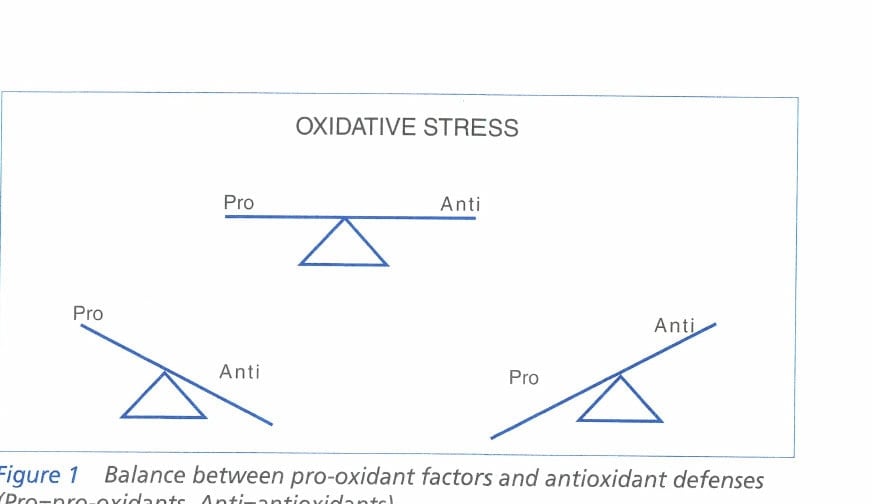
Any condition in which the generation of oxygen free radicals is increased or in which the antioxidant defense is diminished constitutes oxidative stress (see Figure 1). Oxidative stress can result from depletions of antioxidants due to malnutrition or excess production of pro-oxidants—processes or substances that favor oxidation such as hyperthermia, trauma, radiation, smoking, physical exercise, and so on.
Oxidative stress has been implicated in cardiovascular disease, carcinogenesis, neurologic disorders, immune system dysfunction, cataracts, arthritis, and many other conditions. A very suggestive theory is that oxidation, or the combining of oxygen free radicals with other LDL (bad cholesterol) particles, contributes to the formation of atherosclerosis, or clogging of the body’s vessels.
Another theory—the so-called “garbage can” hypothesis—suggests that aging results from the deleterious effects of free radicals on DNA. As we age, our DNA suffers an increasing amount of damage as a result of the generation and accumulation of free radicals. For example, it has been postulated that DNA in each cell is exposed to some 10,000 oxidation “hits” every day (Ames).
Natural Defenses Against Free Radicals
In general, our body is well equipped with defense mechanisms to combat the negative effects of free radicals. As pointed out by Halliwell, when living organisms first appeared on the earth, they did so under an atmosphere containing very little oxygen. They were essentially anaerobes. As the atmospheric oxygen increased, other organisms began the evolutionary process of developing an antioxidant defense system to protect against oxygen toxicity. Now we require oxygen to survive, but at the same time we have inherited defenses to protect ourselves from oxygen toxicity. But these defenses protect us against only 21 percent of oxygen concentrations, since amounts greater than this produce demonstrable injurious effects.
Glossary
- antioxidant: Any substance that protects tissues from oxidative damage.
- lipid peroxidation: Refers to the oxidation of fats, mainly those of plasma membranes affecting the integrity and permeability of the cell.
- low density lipoproteins (LDL): An aggregate of proteins that transport most of the cholesterol to the cells.
- mitochondria: Elements of cells where energy is generated.
- oxidative stress: Any condition in which the generation of oxygen free radicals is increased or the antioxidant defense is diminished.
- pro-oxidant: Processes or substances that favor oxidation.
Combating Free Radical Production
- Exercise. Physical conditioning increases the body’s antioxidant defense systems by increasing circulatory antioxidants.
- Ingest foods rich in antioxidants to counteract sports-induced free radical production.
- Counterattack. If you exercise strenuously and exceed your body’s natural defenses, you can reduce the extent of the damage by taking antioxidant supplements such as vitamins C and E, beta-carotene, zeaxanthin, lutein, lipoic acid, lycopene, and other flavonoids.
- Don’t overdo it. Although there is strong evidence that vitamin E provides protection against exercise-induced oxidative injury, there is still some controversy concerning its dosage.
THE ROLE OF ANTIOXIDANTS
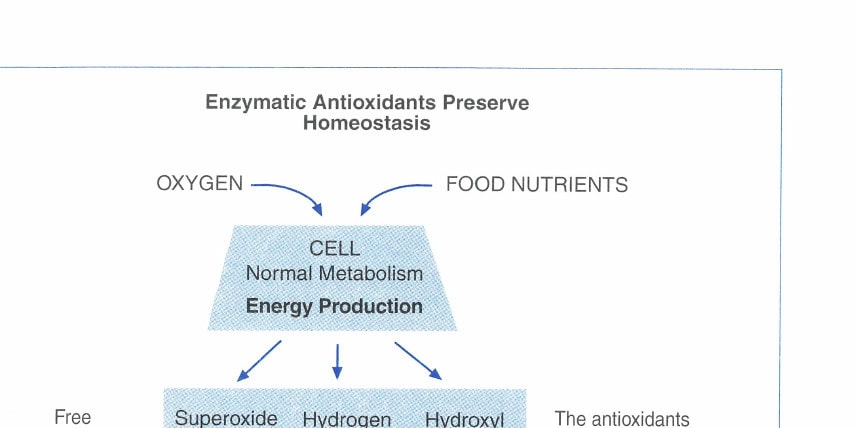
Antioxidants are substances that protect tissues from oxidative damage by scavenging and preventing the formation of free radicals. There are two types of antioxidants: vitaminics and enzymatics. The principal examples of them, together with several pro-oxidants processes, are shown in Table 1.
The mechanism by which vitaminic antioxidants work is not completely understood. Enzymatic antioxidants preserve normal cell function at rest and also, perhaps, during moderate exercise, as shown in the following Figure 2.
TABLE 1 Pro-Oxidants and Antioxidants
| PRO-OXIDANTS | ANTIOXIDANTS — Enzymatic | ANTIOXIDANTS — Vitaminics |
|---|---|---|
| Heat | Superoxide dismutase (SOD) | Vitamin E |
| Traumatisms | Glutathione peroxidase | Vitamin C |
| Ultrasounds | Glutathione reductase | Beta-carotene |
| Infections | Catalase | Thiols and others |
| Radiations | Glutathione transferase | Ubiquinone |
| Physical exercise | ||
| Smoking |
OXIDATIVE STRESS AND PHYSICAL EXERCISE
Although physical exercise may be beneficial for physical and psychological well-being, there is now strong evidence that strenuous exercise produces free radicals that can damage cells, representing, perhaps, the “dark side” of physical activity. However, many believe that the positive effects of exercise outweigh any negative consequences, and the informed athlete can limit the damage of free radicals while maximizing protection from oxidative stress.
The amount of oxygen consumed by your working muscles can increase 100 times or more during exercise. The greater the oxygen consumption, the more free radicals are generated. While you exercise, your blood flow is directed toward the exercising muscles, resulting in a reduced supply of oxygen to other organs. The main organs that suffer lack of oxygen in this situation are your liver, the kidneys, and the intestine. After you’re done exercising, there is an important re-uptake of blood to these organs that undergo reoxygenation and, subsequently, a production of free radicals.
The acute signs of excessive free radical production during exercise are mainly the soreness and fatigue that follow an especially demanding game of tennis, a marathon, or any other exhausting sport activity. However, the effects of free radicals sometimes go unnoticed, with no specific symptoms. Beyond the acute symptoms, the long-term effects of free radicals can contribute to various diseases, each with its specific symptoms.
Detecting Free Radical Production
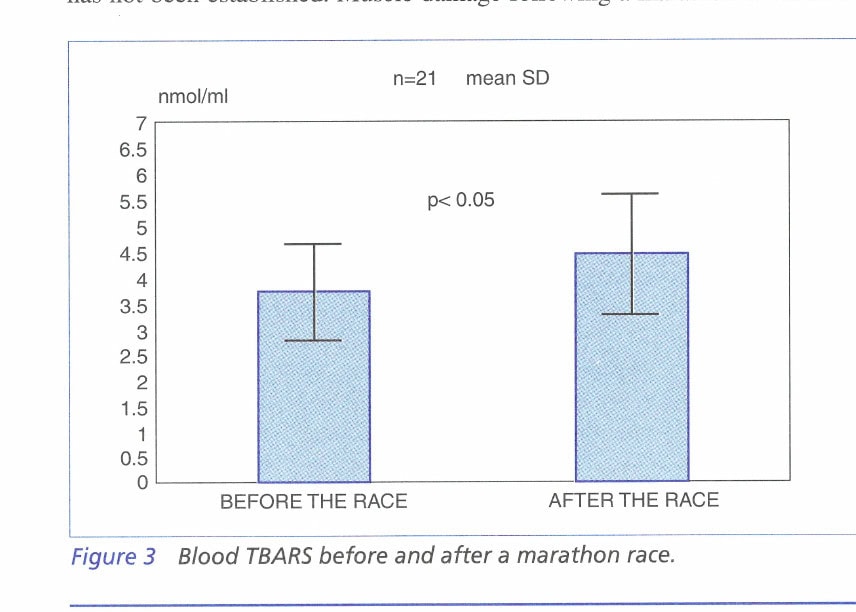
Researchers have used two standard biochemical methods to detect free radicals indirectly: measuring TBARS (thiobarbituric acid reacting substances) in the blood and measuring hydrocarbon gases in expired air. These methods, which do not measure free radicals directly, detect the products that result from the oxidation of fatty acids in cellular membranes, or lipid peroxidation.
Our own study of 21 runners during a marathon race (which took place on the marathon course used in the 1992 Barcelona Olympics) showed a significant increase in lipid peroxidation by the end of the race. In some runners we were able to measure TBARS in blood and pentane in expired air (see Figure 3). These findings were presented at the 3rd IOC World Congress on Sport Sciences, Atlanta, Georgia, September 1995.
Similarly, other researchers have observed an increase in lipid peroxidation markers during both marathon and ultramarathon races and also following exercise on a cycle ergometer at 50 percent of maximal oxygen consumption and higher. However, other authors have not observed any increase in these biomarkers, and one has even found a decrease following a marathon.
Cause or Consequence?
The vast majority of studies seem to demonstrate that there is an association between exercise and oxidative stress. However, a cause-effect relationship has not been established. Muscle damage following a marathon or an ultramarathon has been demonstrated, but the question arises as to whether lipid peroxidation is a cause or a consequence of tissue damage. From the studies reported so far it can be concluded that lipid peroxidation depends on three things: the intensity and duration of the exercise, the state of training of the subjects, and the characteristics of the methods used. There is most probably an intensity threshold above which oxidative stress increases dramatically. This threshold would most likely depend on the level of training as well.
FREE RADICALS AND THE IMMUNE SYSTEM
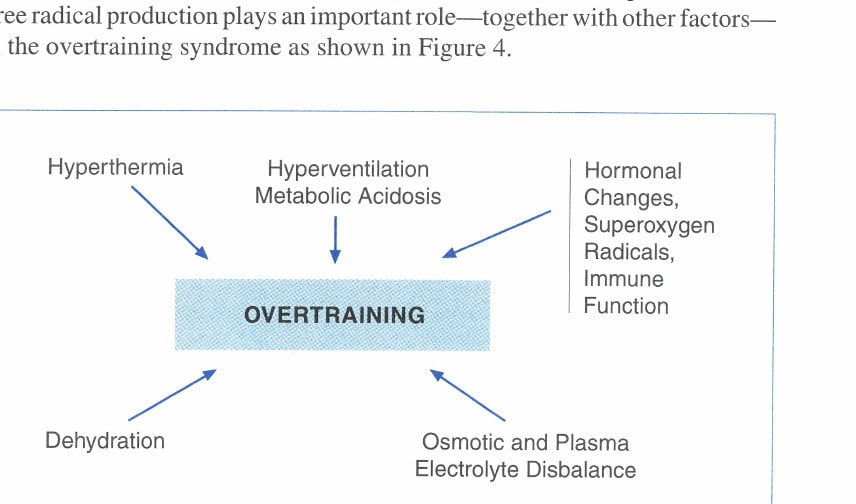
Oxidative stress can also depress your immune system. Whereas regular training and exercise of moderate intensity enhances your immune system and decreases the risk of acquiring a cold or upper respiratory tract infections (URTI), severe exertion can actually depress your immune system. Usually top athletes have high immune defenses at rest, but due to intensive training and competition they suffer temporary depressions of the immune system, which make them prone to URTI. For example, Spanish cyclist A. Olano, World Champion in 1995 and time trial silver medalist in Atlanta ’96, dropped out of the Spanish Tour in 1997 due to a virus infection and immune depression caused by overtraining syndrome. The results of a 1993 study (Peters et al) demonstrated how antioxidants enhance resistance to postrace URTI. In this study, the symptoms of URTI were reduced following a competitive ultramarathon race through the daily supplementation of 600 mg of vitamin C. Free radical production plays an important role—together with other factors—in the overtraining syndrome as shown in Figure 4.
ANTIOXIDANTS: PREVENTION OR PERFORMANCE ENHANCEMENT?
There are many indications that antioxidant supplementation can protect against the deleterious effects of free radicals produced during exhaustive exercise, but its role in performance enhancement is still unclear. Here are the results of several studies in which antioxidation supplements were administered to athletes.
In a 5-month study (Rokitzki et al), a group of 30 cyclists received 330 mg/day of vitamin E and a placebo. The group receiving the vitamin E supplement displayed significantly reduced-serum TBARS. The authors concluded that vitamin E supplementation does protect against oxidative stress induced by strenuous exercise, but it does not improve physical performance.
In another study by the same authors, 24 trained long-distance runners received 400 IU/day of vitamin E and 200 mg/day of vitamin C for 4.5 weeks prior to a marathon race. The results showed decreased oxidative damage to the muscles.
A study undertaken at the University of Ulm in Germany (Hartman et al) explored the impact of exercise-induced oxidative stress on DNA in blood cells. They showed that running until exhaustion produced an increase in DNA strand breakage. When the athletes ingested 800 mg of vitamin E 12 hours before and again 2 hours before the exercise, there was a significantly smaller increase of DNA damage in some subjects. But when 1200 mg/day of vitamin E was given for 14 days prior to the exercise, DNA damage was completely prevented after exhaustive exercise in four out of five subjects.
The above studies clearly support the protective role of antioxidant supplementation. But the question remains as to whether they can enhance performance. We know that endurance training depletes the store of vitamin E that results from a normal diet. And studies in animals have shown that endurance is negatively affected by antioxidant vitamin deficiency (Ji). However, up to the present, carefully controlled studies have failed to support the claims that antioxidant supplementation improves physical performance.
The only study to date that has shown improved physical performance was conducted with German climbers (Simon-Schnass and Pabst). The climbers, who ingested supplements of 400 IU/day of vitamin E, demonstrated improved physical performance and decreased pentane output during prolonged exposure to high altitudes.
Principal Sources of Antioxidants
Three nutrients that have shown promise as protective antioxidants in athletes have been used in the vast majority of studies: vitamin E and beta-carotene
(both lipid soluble) and the water-soluble vitamin C. (The solubility of an antioxidant affects how it is absorbed by the body. Whereas vitamin C can be taken with water, the lipid-soluble substances—vitamin E and beta-carotene—must be ingested with a small amount of fat in order to be absorbed.)
These antioxidants are essential nutrients or precursors of nutrients and are present in significant amounts in body fluids. The term “vitamin E” is a collective name for various compounds called tocopherols and tocotrienols, which share the same biological activity. Vitamin E’s main action takes place in all cellular membranes and protects fatty acids against oxidation. Vitamin C actually reinforces the antioxidant effect of vitamin E by regenerating its chemical structure after it has reacted with the free radicals. Vitamin C, known as ascorbic acid, is one of the most important antioxidants in extra-cellular fluids. Beta-carotene is a precursor of vitamin A, which is not used directly due to its potential toxicity.
In addition to beta-carotene, there are a number of carotenoid substances contained in fruits and vegetables that have been demonstrated to be potent antioxidants. Lycopene, lutein, zeaxanthin, beta-cryptoxanthin, alfa-carotene, among others, seem to be important in the prevention of several diseases, but no data have been published on supplementation and athletic performance. The food sources of these carotenoids are tomatoes for lycopene, dark green leafy vegetables and broccoli for lutein and zeaxanthin, citrus fruits for beta-cryptoxanthin, and carrots for alfa-carotene.
The main sources of antioxidant nutrients are depicted in Table 2.
Estrogen as an Antioxidant
Another intriguing question is whether the effects of estrogens in athletic women have the potential of protecting them from free radical-induced peroxidation and muscle damage. While few studies have been performed in humans, the subject deserves further investigation. In animals, studies have shown that female rats have a greater protection than males against lipid peroxidation and muscle damage resulting from exercise. It has been suggested that their lower susceptibility to exercise-induced oxidative stress may be due primarily to the antioxidant and membrane stabilizing properties of estrogens.
| Beta-carotene | Vitamin C | Vitamin E |
|---|---|---|
| Yellow/orange vegetables Yellow/orange fruits Dark green leafy vegetables Other fruits and vegetables (persimmon, red pepper, tomato, and tomato juice) |
Fruits Vegetables Juices |
Vegetable oils Cold-pressed seed oils Wheat Nuts Seeds Green leafy vegetables Meat, fish, poultry |
DO RUNNERS NEED ANTIOXIDANT SUPPLEMENTATION?
The majority of the currently available data suggests that athletes should first consume a healthy diet with at least five portions a day of fruits and vegetables. This is essential as a basis for obtaining the antioxidants needed for sustained physical exercise. Unfortunately, the diets typically consumed in many parts of the world, including Western Europe and North America, fall far short of this goal. (For example, a 1996 USDA food survey revealed that neither male nor female adults had zinc or magnesium intakes that, on the average, met the RDA. Women’s intakes of iron, vitamin B6, calcium, and vitamin E were also below the RDA.)
Various studies have demonstrated that even athletes have nutrient deficiencies. In a study performed in our Olympic Training Center in Barcelona prior to the ’92 Olympic Games, the dietary intake of 130 athletes from various sports disciplines and 58 sedentary controls were studied. Through computerized nutritional analyses, we found that a high number from both groups, including both men and women, consumed less than two-thirds of the RDA of vitamins. Table 3 summarizes the results, which were published in Sports and Exercise in Midlife, 1992, p. 363–373.
Although this seems to contradict the commonly accepted ideal of the Mediterranean diet, in our opinion the main reason for these results is the proliferation of fast food restaurants—even in Olympic villages!
Vitamin Supplementation: How Much?
The available data suggest that marathon and ultramarathon runners may benefit from vitamin supplementation to avoid muscular damage (although, as stated earlier, the jury is still out regarding supplements for performance enhancement). There is still some controversy about the doses needed for an adequate supplementation, however.
Doses from 200 to 400 mg of vitamin E a day and from 250 to 1000 mg of vitamin C a day have been shown to reduce markers of muscle damage. With dosages of 30 mg beta-carotene, 592 mg alfa tocopherol (vitamin E), and 1000 mg of vitamin C daily for 6 weeks, Kanter et al were able to observe a significant reduction of biomarkers of peroxidation during moderate and heavy exercise. Other authors have observed a decreased pentane production with 600 mg of dl-alfa-tocopherol three times daily for four weeks. Also 300 mg of delta-alpha tocopherol daily for four weeks resulted in a lower exercise-induced increase in plasma peroxidation. Rokitzki et al showed a reduction in blood TBARS in marathon runners after taking 400 IU of vitamin E and 200 mg of vitamin C a day during four and a half weeks.
However, in his book, The Antioxidant Revolution, Kenneth Cooper recommends very high doses of vitamin C for athletes. The need for these higher doses can be questioned since much lower doses have been effective in reducing biomarkers of lipid peroxidation. Moreover, vitamin C can act as a prooxidant, as well as its better known function as an antioxidant, according to the dosage. Vitamin C also enhances iron absorption, and although no important side-effects have been reported with such high doses, iron overload could produce severe damage to many body tissues.
Consistent side effects with high doses of vitamin E have not been observed. However, high intakes may increase the risk of bleeding in patients treated with anticoagulants. So far as is known, beta-carotene is nontoxic. Its conversion to vitamin A is safely regulated. A yellowish tint of the skin, known as hypercarotinemia, can occur but disappears when the dosage is reduced or discontinued.
For serious athletes the option of antioxidant vitamin supplementation to prevent oxidation damage would therefore seem a sensible one. However, a widespread use of supplements by casual exercisers should await a better understanding of the way in which exercise influences oxidative stress. In any case, it is important that those that exercise regularly or occasionally ingest foods rich in antioxidants.
| Athletes (n=130) | Controls (58) | |
|---|---|---|
| Vitamin E (IU) | 40% | 39% |
| Vitamin C (mg) | 1.4% | 17% |
| Vitamin D (IU) | 60% | 8% |
| Vitamin E (mg) | 100% | 58% |
| Vitamin B1 (mg) | 4.9% | 8% |
| Riboflavin (mg) | 0% | 6% |
| Niacin (mg) | 9.8% | 15% |
| Vitamin B6 (mg) | 0% | 43% |
| Vitamin B12 (microgr.) | 0% | 10% |
| Folic acid (microgr.) | 0% | 22% |
| Subjects consuming less than two thirds RDA | ||
This article began with a personal reflection of the past. But what of the future? While scientific research has led to a better understanding of metabolically induced oxidative stress, further investigations in other fields are expanding our awareness of yet other potential dangers. For example, recent findings by Japanese and U.S. physicists show that neutrinos—tiny particles that continually bomb the earth’s surface—actually have mass. Does this mean that neutrinos pose another environmental threat to the long-distance runner, as does ultra-violet radiation? Will runners that train outdoors need protection against neutrinos in the future? These and other questions must be answered by the new generation of sports scientists. In the meantime, anyone interested in investing in anti-neutrino skin block? . . .
REFERENCES
- Ames, B. N. Quoted in “Why do we age?” by Rusting R. L. Scientific American. December 1992, 87–95.
- Cooper, K. H. Dr. Kenneth H. Cooper’s Antioxidant Revolution. Thomas Nelson, 1994.
- Halliwell, B. “Free radical and antioxidants: A personal view.” Nutrition Reviews, vol 52.8.253–265. August 1994.
- Hartman, A., Niess, A. M., Grunertfuchs, M., et al. “Vitamin E prevents exercise-induced DNA damage.” Mutation Res Letters 346 (4) 195–202, 1995.
- Ji, L. L. “Oxidative stress during exercise: implication of antioxidant nutrients.” Free Radical Biology & Medicine 18(6) 1079–1086, 1995.
- Kanter, M. M., Nolte, L. A., Holloszy, J. O. “Effects of an antioxidant vitamin mixture on lipid peroxidation at rest and postexercise.” J. Appl. Physiol. 74 (2) 965–969, 1993.
- Peters M., Goetzsche J. M., Grobbelaar, J., et al: “Vitamin C supplementation reduces the incidence of postrace symptoms of the upper-respiratory-tract infection in ultramarathon runners.” Amer. J. Nutr. 57,170–174, 1993.
- Pujol P., Curco R., Sanchez, E., et al. “Nutritional habits of Spanish athletes, recreational runners and a sedentary population.” Sports and Exercise in Midlife, 363–373, 1993.
- Rokitzki, L., Logemann, E., Huber, G., et al. “Alpha-Tocopherol supplementation in racing cyclists during extreme endurance training.” Int. J. Sport Nutr. 4,253–64, 1994.
- Simon-Schnass, I., Pabst, H. “Influence of vitamin E on physical performance.” Int. J. Vitam. Nutr. Res. 58, 49–54, 1988.
- Verdaguer-Codina, J, Pujol, P., Trullas, C., et al. “Ultraviolet skin exposure and free radical production in marathon runners.” Third IOC World Congress on Sport Sciences (Abstract), Sept 16–22, 211–212, 1995. FACSM, Olympic Training Center (Sant Cugat, Barcelona, Spain).
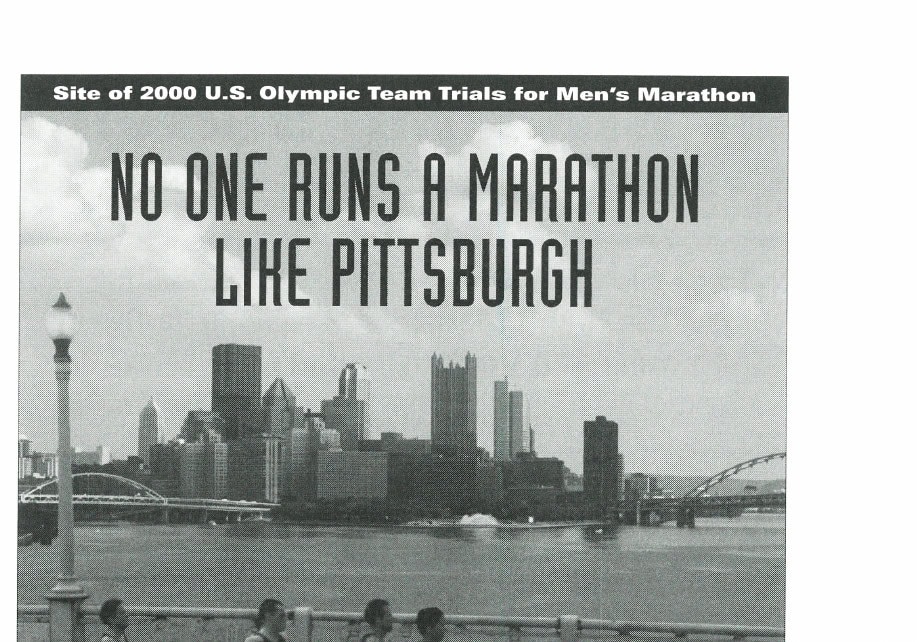
Site of 2000 U.S. Olympic Team Trials for Men’s Marathon
- U.S. Men’s Championship
Bonuses: (U.S. males only)
$25,000 for American course record (2:12:31)
$75,000 for overall course record (2:10:24) - 15th anniversary
- ChampionChip timing
- Neighborhood support ranked in country’s top ten
- Racecourse entertainment
- Marathon and Beyond, November/December ’97 — Grade A ranking
UPMC Health System/City of Pittsburgh Marathon
Marathon, Team Relay, and 5K Run/Walk
(412) 647-RUNN (7866)
www.upmc.edu/pghmarathon
This article originally appeared in Marathon & Beyond, Vol. 2, No. 6 (1998).
← Browse the full M&B ArchiveMore like this
1,000+ stories from 19 years of Marathon & Beyond
The complete archive of the legendary long-distance journal — digitized and free to read.
