

From Moldova And Moscow With Love
It is 6:00 A.M. on an August morning in Chisinau, Moldova. It is day 24 in the inexorable countdown to the Moscow Peace Marathon on September 10. I always get up early on days that I work out with the Dinamo team; I need time for breakfast and coffee and time to let the butterflies come and go. I am always anxious before a workout—fear of underperformance? fear of being pushed too hard? The living room window of my flat faces Kolganiceanu Street, which is one of the main east-west avenues in downtown Chisinau and the main artery through the university area. I hear early-morning traffic, consisting mainly of trolley buses jolting down the uneven street, attached tenuously to electric wires overhead. I like that sound. These old orange buses, with more standing room than seats, are rickety vestiges of the public transport system used during communist times. A ride on one of these buses costs about 6 cents.
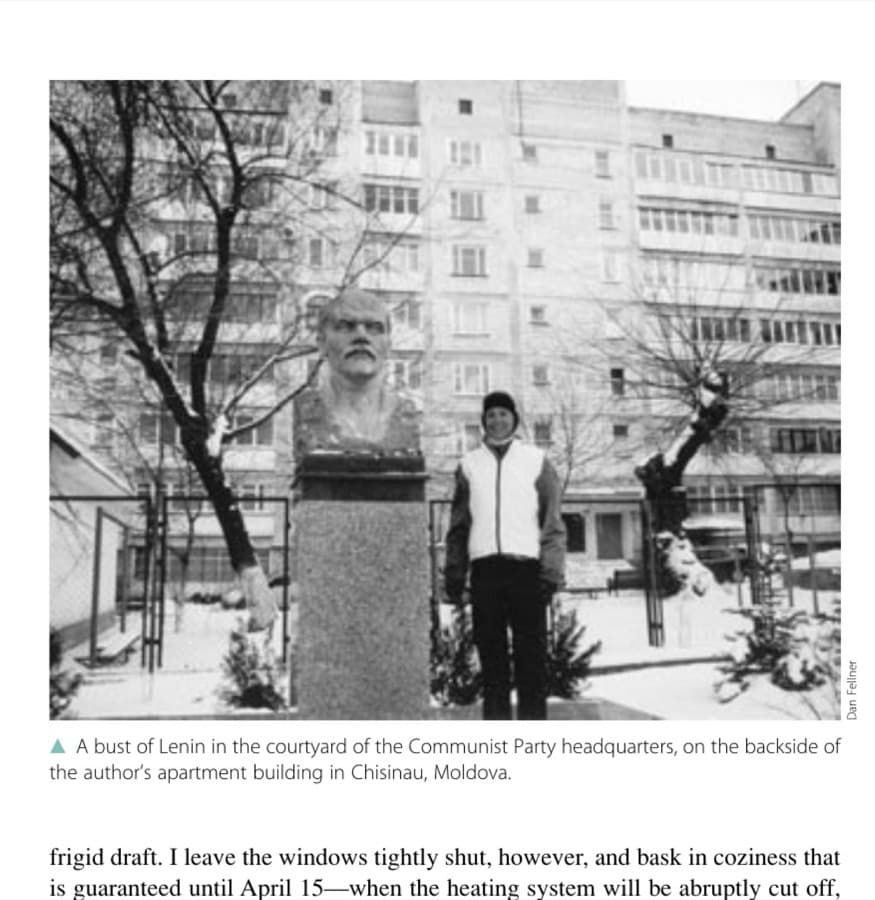
PART I: FROM MOLDOVA Arrival in Chisinau. On January 13, 2006, a Russian-built turboprop Tupolev airplane transported my husband and me from Vienna across the old Iron Curtain to Chisinau, Moldova. Snow and ice covered the ground; Moldova, along with the rest of Eastern Europe, was in the midst of its coldest winter in over a decade. The American Embassy vehicle that met us at the airport cautiously escorted us over frozen roads to our apartment in the city center. The back of the apartment building overlooks the Communist Party headquarters in whose courtyard stands one of the few remaining busts of Lenin. Despite the ice and snow, the fourth-floor flat couldn’t be cozier. All apartments, indeed, most buildings, are still heated by the Soviet-era central-heating system. This central-heating system constitutes a visible maze of ducts all over the city, all of which originate from a central heat-producing generator. In our apartment, the heat from the radiator is more than sufficient, and the only way to adjust the temperature (down) is to open a window and let in a
Dan Fellner
▲ A bust of Lenin in the courtyard of the Communist Party headquarters, on the backside of the author’s apartment building in Chisinau, Moldova.
frigid draft. I leave the windows tightly shut, however, and bask in coziness that is guaranteed until April 15—when the heating system will be abruptly cut off, just as suddenly as it was turned on some fall day last year. Given the state of the roads and sidewalks, I wonder how or when I would be able to run.
My mission in Moldova is a temporary respite from my usual research work in the field of international health and development. I am in Moldova as a Fulbright professor, to teach survey research methods for one semester in the Sociology Department at the Moldova State University. I had been to Moldova on numerous short-term trips the previous year to assist the Ministry of Health in implementing a national demographic and health survey. On these previous visits, I became accustomed to starting the day early by running laps on the track at the national Dinamo Stadium. Luckily, our present flat is only about four blocks from that stadium. The day after we arrived, I clipped on my Yaktrax (metal clip-ons for shoes that provide traction on snow and ice, much like chains on car tires) and went to investigate the state of the track. I was relieved to learn that it was open for business—that is, several lanes had been cleared of snow—to the extent that
Dan Fellner
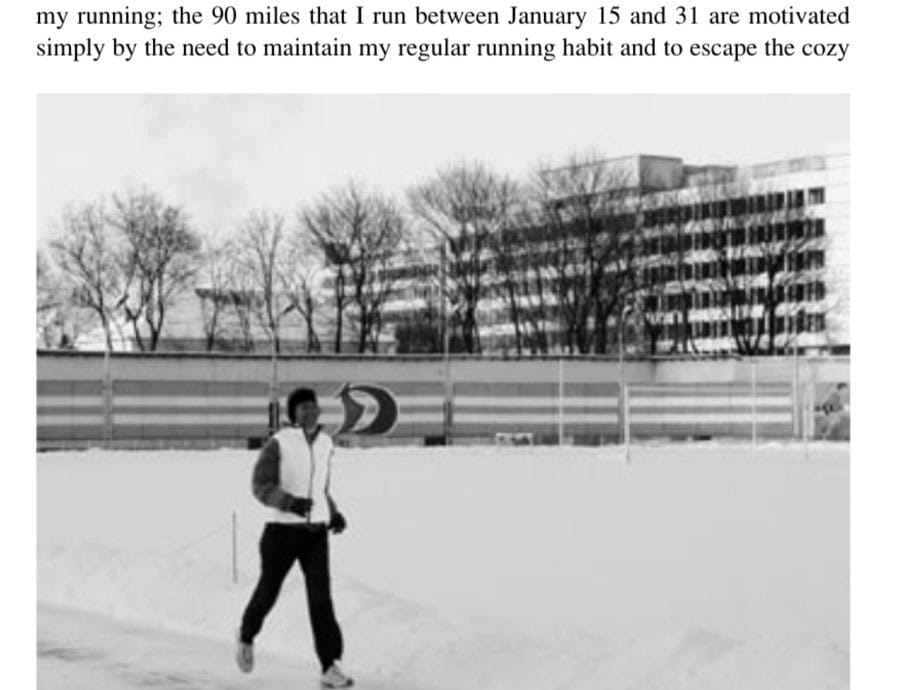
lanes could be cleared with a shovel and some handfuls of dirt tossed over particularly stubborn icy spots. For the remainder of January, I don multiple layers of silk undershirts, running tights, windbreakers, and earmuffs and tread carefully to the stadium. Despite weather conditions in late January being characterized by subzero temperatures, further exacerbated by new snowfalls (which were actually quite lovely!), there is hardly a day when the track is not in running condition. At the stadium, unlike most sidewalks and streets in the city, loyal workers are dedicated to shoveling two to three lanes immediately after a snowfall, sometimes starting to shovel even when snow is still falling. I daresay a few shots of vodka probably mitigated the discomfort of the task more than once. I show my appreciation by frequenting the track regularly, running 70 to 80 minutes around and around almost every afternoon before sunset. On the coldest days, dipping down to minus-18 degrees Celsius, my eyes, tearing from the cold, form ice balls larger than pinheads on my eyelashes. At this time, I have no specific future race in mind as a goal to inspire my running; the 90 miles that I run between January 15 and 31 are motivated simply by the need to maintain my regular running habit and to escape the cozy
▲ The author running chilly laps at Dinamo Stadium in Chisinau, Moldova.
yet confining walls of our flat despite having to confront the most adverse weather I had ever experienced. * * *
Description of Moldova The Republic of Moldova is a landlocked country between Ukraine and Romania, about the size of Maryland. The terrain is also similar to that of Maryland, consisting of rolling steppe sloping gradually south toward the Black Sea. The capital city, Chisinau (formerly Kishinev), is a small, quiet city located at about the same latitude as Montreal, Canada.
Moldova gained its independence from the Soviet Union in August 1991. The Communist Party still holds control in government, but other political parties are becoming more important. The population in the 2004 census was 3.4 million (excluding the breakaway region of Transnistria, which has an estimated 550,000), including 65 percent ethnic Moldovans and the remainder mainly of Russian and Ukrainian descent. Due to massive emigration and low birth rates, there are substantially fewer people today than at the time of independence.
Agriculture is Moldova’s main industry, with wine being the biggest export product and Russia being its biggest market. For those who visit Moldova—and it is worth a visit—one of the major places of interest to see is the Milesti Micii wine cellar. It is one of the largest underground wine cellars in the world, along with Cricova wine cellar, also in Moldova, hewn from natural deposits of limestone. It is featured in the 2005 Guinness Book of World Records as owner of the world’s biggest wine collection. Moldovans are generally bilingual, speaking both Romanian and Russian fluently, and have a high appreciation for education and their European culture. Unfortunately, the economy does not reflect these high standards, and after the collapse of the Soviet Union, Moldova has become the poorest country in Europe. The per capita gross national income averaged only $1,930 in 2004, by far the lowest in Europe and also the lowest among the 15 former Soviet states except for Uzbekistan, Tajikistan, and Kyrgyzstan. * * * I almost always run alone. Other than participating in several 10K races, halfmarathons, and one marathon (2003 Midnight Sun Marathon in Anchorage, Alaska), I have never run competitively or with a team. Whereas in the past I was content with just plain consistency—25 to 40 miles per week, four to six days a week—the next nine months in Moldova would challenge and probably forever change my running habits and my whole outlook on running. Meeting the Dinamo Team On February 10, as the snow is falling, I bundle up in my street clothes and traipse over to the stadium to see if snow had been cleared from the lanes yet. As I cut
across the track, a man under a big, black parka and a black fur shapka approaches me. I had noticed him on previous occasions, shoveling snow and at the same time attentively eyeing anyone running on the track. On this occasion, he introduces himself and invites me to work out with his team. This is Coach Anatolie Buravtev. Despite being a solitary runner, I am intrigued by his invitation and agree to work out once a week with his team of four teenagers. On February 13, I meet Sergiu, Dan, Natasha, and Mihaila, and we have our first workout together.
Coach Anatolie Buravtev works at Dinamo Stadium. He confesses that sports are his life, and his dedication to coaching shows as much. After serving his obligatory two years in the Red Army, participating in the Soviet occupation of Czechoslovakia to block the Czech Spring liberal reform efforts of 1968, he went to Omsk, Russia, for four years of university studies in sports. He has had a successful career, as evidenced by one of his athletes, Valentina Ekati, a Moldovan woman who has won top places in several American and European marathons and ran in the Olympics in Atlanta and Sydney. Coach Anatolie’s own competitive experience is in boxing when he was younger, and he continues to remain in superb shape today through running, strengthening exercises on bars, and a vigilant diet. Unfortunately, during the post-Communist economic transition, the government of Moldova does not have a budget adequate to support its coaches or athletes. Highly qualified coaches like Anatolie and others earn a monthly salary of only about $100.
The Dinamo team members include Sergiu, who is 18 years old. He has trained with the Dinamo team for three years and receives a small monthly stipend. He runs fast and gracefully; with his mature dedication he would be an asset to any international sponsor. The three younger members—Natasha, Mihaila, and Dan—are 15 to 16 years old and in their second year of training at Dinamo. They show great discipline in earning good grades at school as well as consistently attending workout sessions in the afternoons and weekends.
Training for the Moscow Peace Marathon The most important aspect of spring training is transferring our workout location from Dinamo Stadium to the park at Lake Morilor. Once the spring weather arrived in mid-March, the Dinamo Stadium became crowded with other athletes training and with occasional soccer games. I was quite happy to move to the park, as I do not fancy running so much around a track. Spring training, however, came at a price. Lake Morilor is a man-made lake in a basin between 200- to 400-foot hills all around. When the snow and frozen lake began melting, the 2.69K trail around the lake guaranteed that our feet remained sopping wet and muddy for weeks on end. I f
inished my teaching responsibilities at the end of May. While the other Fulbright scholars were preparing to return home, I planned to stay through the
summer and train with the team for the Moscow Peace Marathon on September 10. This was an ideal marathon goal for several reasons: (1) I would have the entire summer free to train; (2) the course is flat and easy, thus providing me the maximum opportunity to run a qualifying time for the Boston Marathon; (3) the Moldovans would not need a visa to travel east to Russia; and (4) Moscow was accessible by train. When my team members’ school year was finished in June, we began more serious workouts: hill training, hill training, and hill training. We also started to work out twice a day, every other day, and every other week. The toughness of the morning workouts was mitigated by the freshness and shadiness of the woods surrounding the lake. Coach Anatolie would have us do a series of hill workouts, running on paths that crisscrossed through the woods surrounding the lake and up and down the steep staircases leading to the lake. In the late afternoon, tired from the morning workout and still in the heat of the day, we would run flat laps around the lake. This training, while we were hot and already physically spent from the morning workout, was excellent for building endurance. While Coach Anatolie aimed to give us stressful workouts to increase our strength, he also emphasized sufficient rest every other day between hard workout days, as well as an easy week following every other hard week of training. Although I was not used to the stress-and-rest routine that he adhered to, I came to believe in his wisdom. In July and August, I averaged 45 to 55 miles a week. The most mileage I ever ran in one week was in July, when I ran 70 miles.1
Death of Lake Morilor Literally translated, Lake Morilor means “Lake of the Dead,” a name probably given in honor of those who died in the Great Patriotic War (World War II). This is the lake and surrounding park where we trained. This magnificent green area that was such a part of my daily life was even more beautiful during Soviet times. Since independence, the following difficult decade of economic transition allowed too few resources for needed maintenance and renovation of public places. The magnificent staircases, lined with decorative pillars, lampposts, and flower gardens, have given way to the ravages of neglect—today they are crumbling, overgrown with weeds, unlit, and devoid of working fountains. My favorite staircase once had a (man-made) cascade down the center of it. I tried to imagine what it must have been like those mornings when I slogged up the steps two at a time, or in the late afternoons when I rested on one of its landings enjoying the view over the lake.
The lake itself has suffered tremendously in the past decade. Despite the economic hardships that most of the population has endured since the early 1990s, a small elite class of people with connections and money has developed. That group desires to build, and the lake is one of the more attractive areas in the city
for real estate. The lake has suffocated, in part from building projects on the hills surrounding the lake. Early one August morning, I went for a run and discovered that the police had posted guards every few meters around the lake. I thought that there might have been some incident the night before, like a drowning, but upon a closer look, I saw close to the banks fish belly up and other fish near the surface of the water gasping for air. By the next day, full damage had been done—dead fish and dead snails were floating on the surface or lying on the banks, and an eerie quietness had replaced the incessant croaking of frogs that had gone on all summer. Ducks and other birds abounded, however. To an outsider, from a distance, the lake appeared a tranquil refuge of life. The birds flying overhead, however, were feasting on an all-you-can-eat fish banquet.
It is hard to say what will happen to the lake. Government officials estimate a half-million dollars to drain and clean it, and they don’t have those funds. The lake area has quickly resurged as the popular place for Moldovans to stroll and run, perhaps for lack of other green spots, but no one swims anymore. Some people believe the lake had been poisoned, but more-likely explanations point to oxygen deficit due to excessive silt build up, exacerbated by building projects and high heat.
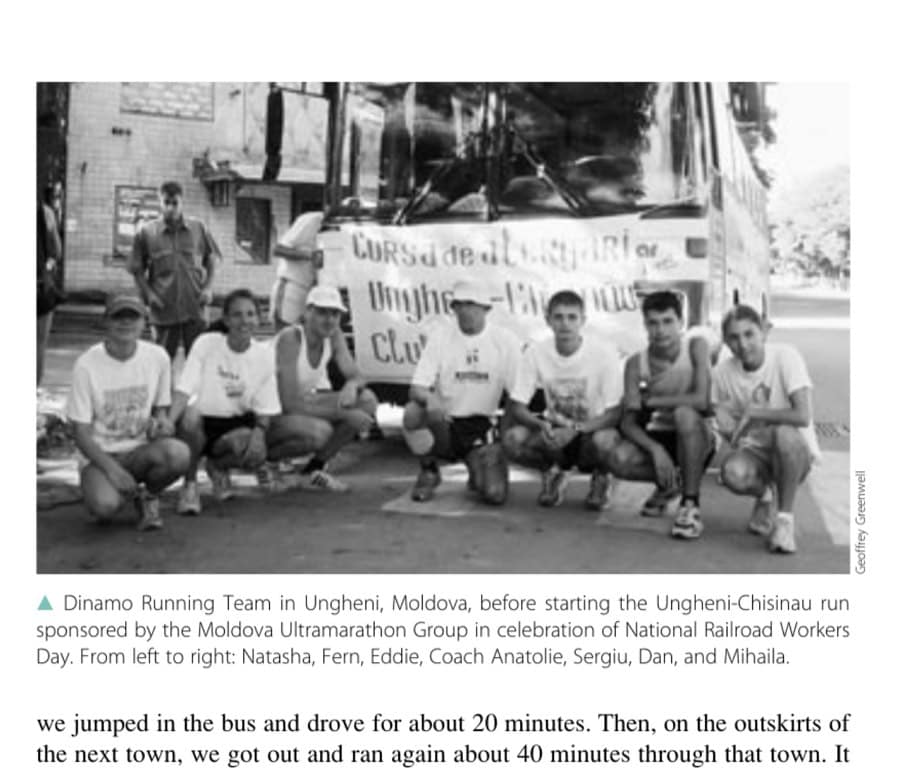
The “Ultramarathon” For one of our training runs, on August 6, we participated in a run organized by the Moldova Ultramarathon Group. The run was to celebrate National Railroad Workers Day, an annual event left over from Soviet times. We on the Dinamo team and about 60 others runners piled in a bus on Sunday morning and followed a police escort about 100 kilometers to the border town of Ungheni. Ungheni is a border crossing for trains traveling in or out of Moldova into neighboring Romania. A telling characteristic at Ungheni, as well as any railway crossing on the former Soviet Union’s border, is that the entire wheel carriage of the train literally has to be changed before the train cars roll from one side of the former border to the other. This was Stalin’s defensive tactic to ensure the Soviet Union would not be invaded by enemies on trains from the West. Today, the whole wheel-replacement process takes about three hours, while passengers sit in their train compartment. First, a crane lifts up the entire wagon, and then it sets the wagon down on a different set of wheels that match the rail width on the other side of the border. It is not a smooth or quiet process, but it works to overcome one of the obstacles between East and West.
Once we arrived and organized ourselves, the mayor of Ungheni gave us a speech to send us on our way back to Chisinau. We were also serenaded by bells at a local Orthodox church, bells that were rung manually by a skilled musician in the bell tower for at least 10 minutes. Finally, we took off and ran for about 40 minutes to the outside of town at a comfortable pace. Once outside of town,
Geoffrey Greenwell
▲ Dinamo Running Team in Ungheni, Moldova, before starting the Ungheni-Chisinau run sponsored by the Moldova Ultramarathon Group in celebration of National Railroad Workers Day. From left to right: Natasha, Fern, Eddie, Coach Anatolie, Sergiu, Dan, and Mihaila.
we jumped in the bus and drove for about 20 minutes. Then, on the outskirts of the next town, we got out and ran again about 40 minutes through that town. It was a very hot day, in the mid-90s, and the bus was not air-conditioned. The only advantage to this was that when we climbed out of the bus to run the next 40-minute leg, the outside air temperature cooled us down. This same pattern continued until lunchtime, where we had a nice outdoor banquet waiting for us. We continued in the same fashion again after lunch, arriving back in Chisinau late in the afternoon where we were greeted by substantial media coverage. All in all, discounting the time spent sweating in the bus, our actual running time was just over four hours, about the equivalent of a marathon. After the media interviews, there was a formal celebration prepared for us where we toasted with pitchers of locally made wine.
Chess and Running Chess is a popular game all over the former Soviet Union. In Moldova, a survey of university students revealed that about one-third of students know how to play chess (37 percent), with more young men likely to know how to play (49 percent) than young women (28 percent). This summer while traveling I had a lot of time to play chess. On one trip to Armenia, the series of games I had played with my husband during our four-day stay at Lake Sevan was fresh on my mind when I went out for my run along that lake. During the run, I contrasted these two
favorite pastimes, running and playing chess. In chess, there is the opening game where the first set of moves is more or less familiar and expected by the players. The opening game is the time for positioning pieces and contemplating strategy. Like setting out on a run, there are few initial surprises during this opening, or warm-up, activity. The middle game in chess is where the strategy is played out: the player attacks, defends, loses, or takes pieces. This is when the player starts beating or takes a beating; it is never a neutral period. The middle run defines the essence of the run: the runner runs long, runs short, fast, or slow. This is when a run is an inspiring run or a draining run.
The game of chess may end quickly, or may enter into a drawn-out end game. This is when the player battles for victory and the effectiveness of strategy is tested. When training for a marathon, it is important to seek out and experience a drawn-out end run, one where the runner experiences intense fatigue and becomes aware of any weak link in the synergy of running. For me, I start experiencing the end run after a couple hours of running. My hamstrings hurt, my blood sugar is low, I am thirsty, and I am fatigued. In terms of marathon training, the end run cannot be simulated and simply must be called up and endured in order to push your limits that much further.
PART II: TO MOSCOW Preparations The XXVI Moscow International Peace Marathon took place on Sunday, September 10, 2006. Our logistical preparations for traveling to Moscow started well in advance of the marathon day, to allow time for potential delays in obtaining official documents. My main challenge as an American was to get a tourist visa from the Russian consulate in Chisinau. I have traveled to many countries where I needed to have a visa, and none have been as difficult as the process to acquire a Russian visa. In order to get a visa, the Russian consulate requires an original “letter of invitation,” not an e-mail or faxed document. The letter I needed was basically an official letter or document from a hotel attesting to prepaid accommodations. The consulate recognized only one travel agent in Chisinau as a valid place for booking a hotel and initiating this letter of invitation. The agency further complicated the situation, however, as it was able to book rooms only at expensive three- to five-star hotels. Accommodations are expensive in Moscow, and there was no way that the Moldovans could afford such high prices. Finally, I found a hostel online, G&R Hostel Asia, that booked us rooms at a reasonable rate and charged about $100 for visa-support services—that is, to send me an original letter with an official stamp attesting to paid reservations.
The Moldovans did not need a visa to enter Russia, but teenagers under 18 years old needed a notarized letter from a parent permitting them to travel with
an adult chaperone. In addition to their international passports, they also needed proof of travel health insurance, which they purchased from a vendor in Chisinau. Finally—a detail that I was not aware of until departure day and very much to my surprise—the Moldovans packed five day’s worth of food so they did not have to purchase anything in Moscow, a notoriously overpriced city by any standard and especially compared with prices in Moldova.
Moldova to Moscow Train Ride We departed Chisinau on Thursday, September 7, at 11:40 A.M. Spirits were high when we met that warm, sunny morning in front of the train station. I had packed several peanut butter sandwiches and some fruit to eat along the way. We settled into our two second-class train compartments, which each included four sleeping berths. Fresh starched linens were provided by the wagon attendant, and hot water was readily available for tea and coffee. It was a comfortable, safe journey of 34 hours. It was relatively private except for the hawkers who jumped on at every stop and paraded through the narrow corridor of the wagon to sell snacks, drinks, toys and trinkets, reading materials, dishes, jewelry, medicines, and more. The atmosphere was one of excitement for all of us—the teenagers had never been on an overnight train, and they had never been to Moscow, their former capital when Moldova was part of the Soviet Union. It was also an opportunity for us to get to know each other outside the context of training. We poured over Coach Anatolie’s 1996 edition of a runner’s magazine featuring Uta Pippig as the third-time winner of the Boston Marathon; we challenged each other with English, Romanian, and Russian vocabulary; and we drank tea and ate sandwiches, cookies, and candy. We arrived in Moscow, on Friday, September 8, at 7:45 P.M. and took the metro to our hotel. We surfaced into a dark and rainy evening.
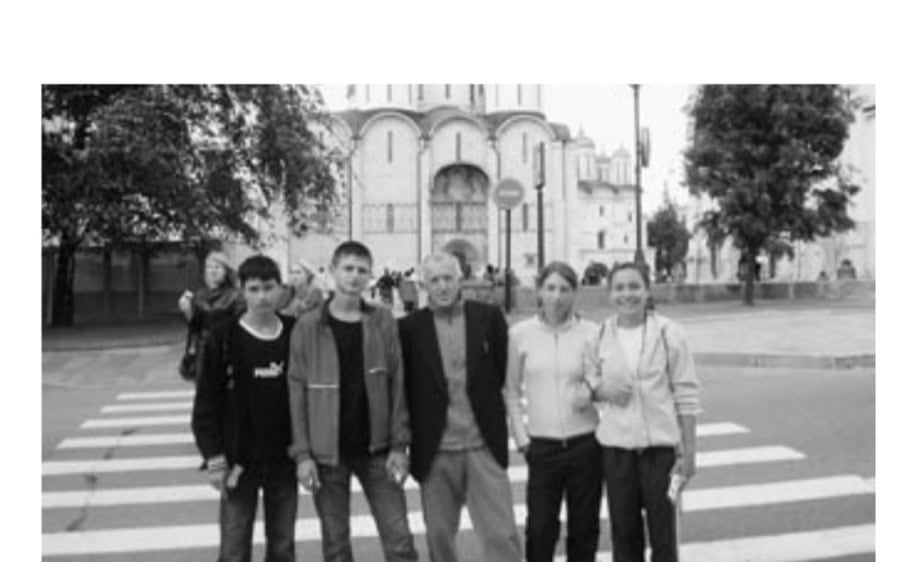
RACE-REGISTRATION DAY Coach Anatolie knocked on my room door early Saturday morning for a warm-up run. We ran for 35 minutes around the quiet streets and parks where early risers were walking their dogs. Then, after lots of stretching, we were all looking forward to a good breakfast. Much to our disappointment, however, the breakfast provided as part of our stay in the hostel was hardly fit for athletes. The entrée was a bowl of lukewarm milk with a countable number of mealy cornflakes floating listlessly on top, followed by a Twinkie-type bun with cream inside, a small container of sweet flavored yogurt, and a cup of black tea. We used this fuel the rest of the morning walking around Red Square and touring the Kremlin. Race registration took place in the afternoon at the Moscow Olympic Complex swimming pool. In previous years, the marathon headquarters was housed in Hotel Rossiya, a very spacious, convenient place of operations next to the start line on Red Square. This
Fern Greenwell
▲ Dinamo Running Team in Moscow, Russia, sightseeing inside the Kremlin walls the day before the Moscow Peace Marathon. From left to right: Dan, Sergiu, Coach Anatolie, Mihaila, and Natasha.
hotel was undergoing major renovations and was not open for business. Registration at the Olympic Complex was well organized, especially for the foreigners who had to register separately from the Russians; the Moldovans, although technically foreigners, registered with the Russians. The registration procedures I experienced were much like registering for a typical race in the United States: I filled out a biographical data form (which was simultaneously transcribed into Cyrillic script), paid a fee of $35, and I received a T-shirt, an electronic ChampionChip with detailed instructions on how to attach it to my shoe, and an invitation to the pasta show that evening. I was finished registering before my Moldovan teammates registered for their 10K. The prerace expo was modest. The race was sponsored by ASICS, and only this company and maybe one or two others were displaying their products, mainly running shoes, for sale.
We forwent the pasta show that evening and returned to our hotel to eat and rest. I had not felt nervous at all about the marathon until this night before the race. The confines that the train cabin imposed had been physically and mentally relaxing, and the fun with the kids had kept me from thinking of some of the harsher realities of the marathon. Now, alone in my hotel room, I felt like I was in a holding cell. Outside was dark and rainy, and big puddles had formed on the empty parking lot I looked down on. I worried about the weather for the next day, and I was anxious
whether my prerace dinner was sufficient—a boiled egg, a peanut butter sandwich from my original stash, a tomato, cookies, and lots of tea. I couldn’t go to sleep and wrote in my journal: “The moment that I’ve anticipated for so long has arrived, but what to do with it? How did I work so hard and all of a sudden I’m not ready?” The rain still came down, and I finally drifted off in a state of despair.
Race Day I was even more nervous in the morning. It was still pouring down rain, and Coach Anatolie had gone out early in the morning without telling any of us. Start time was noon. We had breakfast at 10:00 A.M., and I ate another peanut butter sandwich. It was terribly difficult to eat. Finally, at around 10:30, the coach returned from his early-morning errand, and we took the metro to Red Square.
A start time any earlier than noon would have been dreadfully wet and uncomfortable. However, by the time we arrived at the start, the rain had stopped, and only low gray clouds remained. This close to race time, my nervousness dissipated and I felt excited. I jumped in line for the porta-potty and for a moment thought that I was in a men’s queue. I looked for a queue of women before I realized that the race was simply dominated by male participants. Although it was still very cool and damp, in the last few minutes before the noon start time I stripped down to shorts and a sleeveless running top. Eyeing the menacing clouds still hanging over my shoulders, I decided to tie my long-sleeved Hydromove shirt around my waist. Finally, gathering behind the official start line, the relatively small pack of runners watched the large clock on Red Square, next to the colorful St. Basil’s Cathedral. With both clock hands pointing exactly up, the pack took off down Vasilievsky Slope (the site of Moscow’s original settlement in the 12th century and the highest point in the course at 135 meters) and across Moskvoretskiy Bridge.
I started off faster than I planned, catching up to my Moldovan team members who were running the 10K. Sergiu finished the 10K in 37 minutes, Dan in 42 minutes, me in 44 minutes, Natasha in 45 minutes, and Mihaila in 47 minutes. Passing the 10K finish line drastically reduced the stream of runners, especially the women who were already the scarcer sex. I held my pace reasonably easily the first half or so of the marathon, concentrating on “sinking into my hips,” as Kathrine Switzer eloquently described in her article.2 I had planned to time my kilometers but did not see the distance markers—I was not even sure exactly where the halfway point was, although looking back, I figure it must have been under the bridge where several water volunteers were shouting encouragement in Russian. It is possible the course was marked better than I remember, and I simply did not pay attention to my surroundings. I remember best seeing the black, wet pavement in front of my feet and runners who were either meters ahead of me or, later in the race, runners facing me as they returned on the same loop.
The course consisted of three loops along the banks of the Moscow River: a 10K loop and two 10-mile loops. I had previously read several remarks by former participants who said the course is one of the most picturesque, taking the runner through the heart of Moscow past the Kremlin Wall towers, the Cathedral of Christ the Savior (home of the Russian Orthodox patriarch), and the monument of Peter the Great, founder of the Russian fleet. Other former participants described it as dull, with three tedious laps on a flat highway. Although I find Moscow a historically fascinating city to tour, my concentration on keeping up my pace precluded the luxury of noticing the beautiful cupolas and other notable surroundings. I will say, however, that passing the finish line five times before finally crossing it was not interesting.
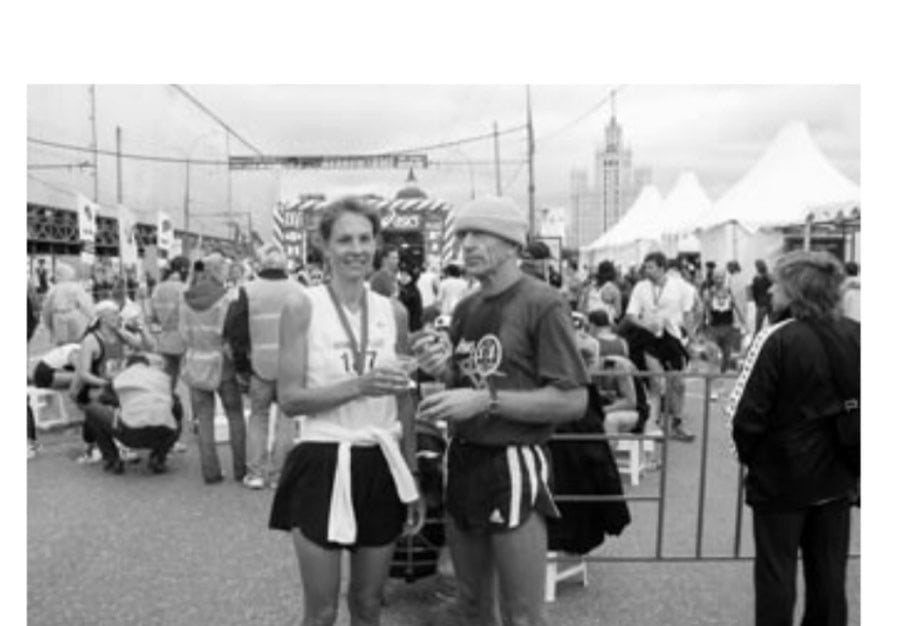
I don’t have much experience to judge the organization of a race, but it seemed to me that water stations were placed at appropriate distances. In addition to plastic cups of water filled only about a quarter full, warm, sweet tea was another beverage alternative. The latter did not appeal to me, nor did the energy-inducing bite-size squares of salty bread. Both, however, were also available after the race and provided a nice postrace replenishment.
Somewhere around 25K I could feel my pace was beginning to lag. I felt general fatigue, perhaps a touch of boredom, but no particular aches or pains. Around 30K, Coach Anatolie jumped in as my pacing bandit in a wool cap. He inspired me greatly with his fresh enthusiasm and even came in handy as a wind barrier when I drafted him on a couple of windier sections. He sent me off alone to finish the last 50 meters, when the finish line was in sight for the sixth (!) time. I discovered I still had a kick left in me and let it carry me across the finish at 3 hours, 29 minutes—cutting 41 minutes off my previous marathon time in Anchorage, Alaska, in 2003 and qualifying me to run in the Boston Marathon next year. I was elated!
It felt odd to stop running so suddenly. I felt my spirit fly several meters ahead and leave my body behind, walking in a daze on the other side of the finish. Seconds later we caught up with each other on a postrace chair where I untied from my shoe the electronic ChampionChip timing device. Then, together, we groaned at having to stand up again. I was tired!
Spirits were high after the race. On the way back to the hostel, we stopped at the market and picked up two plump roasted chickens on skewers—a welcome respite from peanut butter sandwiches! Late that afternoon we picnicked for the last time together in our hostel room, then prepared to catch the 11:20 P.M. train back to Moldova that night. It was a quiet, peaceful 36-hour ride home, with lots of naps, games of chess, and little chatter. The only injury I nursed in the week following the marathon was a bedsore the size of a quarter that had developed on my tailbone during the long ride from Moscow . . . back to Moldova.
Sergiu Triboi
▲ The author and Coach Anatolie celebrating her Boston-qualifying time, with sweet tea and salty bread, after the Moscow Peace Marathon.
Endnote Individual race results, except for the top 10 male and female top finishers, are not posted on the official website [http://www.marafon.msk.ru]. Because of this, it was difficult for Boston Marathon officials to verify my qualifying race time on my application. Fortunately, the Moscow race organizer had sent me the recorded results by e-mail soon after the marathon date, which I forwarded as evidence and also asked the Moscow race organizer to verify them with an e-mail to the Boston organizer.
FOOTNOTES In the September/October 2005 issue (Volume 9, Number 5) of M&B, James Bates, in his article titled “The Lifetime Running Profile,” inspired me to start keeping a running log. Since October 1, 2005, I have kept track of mileage on a daily basis, according to the method he described. 2 Kathrine Switzer, “Fast Women: From Out of the Bushes to the Lead Pack: A History.” Adidas presents Boston Marathon & Beyond 2006. 1
This article originally appeared in Marathon & Beyond, Vol. 11, No. 4 (2007).
← Browse the full M&B ArchiveMore like this
1,000+ stories from 19 years of Marathon & Beyond
The complete archive of the legendary long-distance journal — digitized and free to read.
