

Large is Marvelous
When it comes to defining the perfect dimensions of a marathon, a large race (2,000 to 10,000 runners) has everything going for it and very little going against it. A large marathon is not so big that it’s impersonal and not so small that once the race starts runners feel lost in the empty spaces between themselves and the next runner.
If we consider the roster of U.S. marathons, there are only five that can be considered mega: Honolulu, New York, Los Angeles, Marine Corps, and for 1996 and perhaps 1997, Boston. There are 17 other marathons that would, under our definition, be considered “large,” and to my way of thinking, these 17 marathons constitute the backbone of marathoning in this country.
Consider for a moment the roll call: Chicago, Orlando (Walt Disney World), Minneapolis-St. Paul (Twin Cities), Duluth (Grandma’s), Portland (Ore.), Columbus (Ohio), Houston, St. George (Utah), Sacramento (California International), San Francisco, Dallas, Seattle, Las Vegas, Carmel (Big Sur), Philadelphia, Detroit, and Pittsburgh. Except for St. George, which is oversubscribed because of its extreme altitude drop over 26.2 miles, and Big Sur, which is oversubscribed because of its scenic extravagance, each marathon on this list offers a solid, well-run race in a city with generally adequate hotel and restaurant facilities, cultural and entertainment diversions, solid runner support, and local business and volunteer support for the race.
Each race has grown to its current size because it offers a good course, good scenery, plentiful amenities, and good organization. Each race also keeps close tabs on just how many runners would be too many for the organization to handle well.
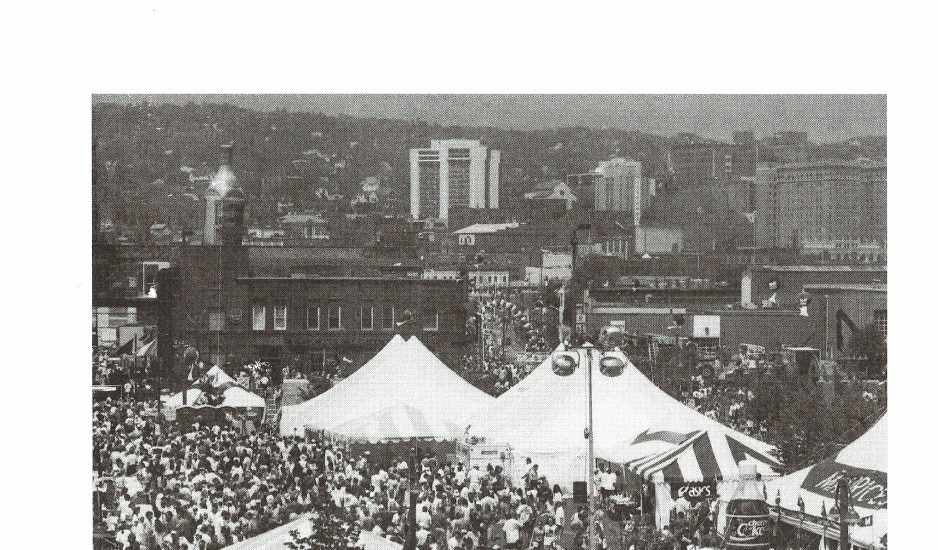
Most of my personal experience is with Grandma’s Marathon, which I’ve had the privilege of being race director of for 20 years. Dennis Craythorn and Rich Hanna say this about our race in their recently-published book, The Ultimate Guide to Marathons: “Grandma’s has earned a reputation as fast, exceptionally well organized, and a celebration. The race has attained cult-like status among marathon runners, possibly because of the odd name [It was originally sponsored by Grandma’s Saloon and Deli.] and Duluth location. The community really gets behind the race making Grandma’s a BIG DEAL.”
A BALANCING ACT
From an organizational standpoint, a large marathon is a balancing act. The host city is capable of accommodating a race of a certain size and no larger; to go beyond that size field would strain the city’s resources and turn the race into a burden and compromise the “personal” feel from the runner’s standpoint. Keep the race at a size the city, the race committee, and the available volunteers can handle, and even at 7,000 participants, the individual runner feels personally cared for.
Anyone can create a marathon. (Grandma’s started with 150 entrants in 1977.) The trick is to “grow” the race to its maximum level and then maintain it there. To raise a marathon to the status of a citywide “event,” it must gain community acceptance—from city officials, sponsors, volunteers, media, and the majority of the citizens in the area. Over the past decade, our race has held steady at the 7,000-entrant range. Our race committee, in conjunction with the other entities with whom we work, has set a 7,000, top-end limit on the race. We have determined that anything much over 7,000 runners could diminish the race for everyone involved.
It would be easy to write about the greatness of the large marathon based on purely emotional issues, but I’ll let runners who’ve done our race, Twin Cities, Columbus, or Seattle fill the “Letters” column with their feelings. Instead, let me concentrate on five areas I feel are important from an organizational standpoint at the large marathon level:
- Build strong relationships with the community, sponsors, and volunteers.
- Establish the race as a “runner’s race.”
- Keep the race manageable and safe.
- Reach and then maintain financial stability.
- Gain credibility and respect in the world of road racing.
BUILD STRONG RELATIONSHIPS
Community acceptance is vital to the success of any special event. Since I know Grandma’s Marathon so intimately, I will use it as my case study here, but having worked with other race directors of larger races, much of what we discuss here would, I’m certain, be echoed by those race directors. While some race directors have to fight city hall to conduct an event in certain cities, the city of Duluth actually embraces Grandma’s Marathon and is, in fact, a major sponsor, providing the race organization with cash and in-kind support to hold the race. This is a perfect example of a forward-thinking city that recognizes the marathon as a major economic boost for the community, and this community-wide attitude very much comes across to runners who come to town for the weekend. Our race brings in roughly 6 million dollars to the local economy each year and has paved the way over the past 20 years for the development of other major special events.
The size of our race enables us to build excellent one-on-one relationships with our sponsors. Unlike megamarathons, which must be fed by large sponsorships because of their size, our sponsorships are individualized, and we are open to sponsorships from anyone, big or small. We work hard at catering sponsorships to fit with particular businesses. Our attitude is that if someone gives us 30 cents, we’ll spend 32 cents to send the person a personal thank you.
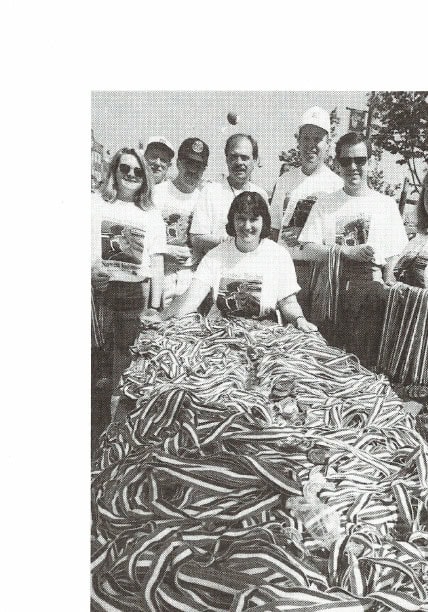
Our size also allows organizers to deal personally with many of the 3,500 volunteers who help put on the race. We have key volunteer captains who have been working with us for 20 years, and we listen to their feedback and their suggestions, and that directly impacts our runners. We look at it as spreading ownership of the race to each of our volunteers. Excellent, experienced, long-running volunteers mean that our runners come out as the real winners.
ESTABLISH THE RACE AS A RUNNER’S RACE
A relatively large race like Grandma’s, Twin Cities, or Pittsburgh is still small enough to maintain its reputation as a runner’s race. A runner’s race caters to the needs of the individual runner and anticipates and makes provisions for the runner’s needs before the runner actually realizes there is a need. We hear from numerous runners each year who appreciate this “personalized” approach and who come back to our race year after year because of this personal touch.
We focus on the needs of all of our runners, from the back-of-the-pack to the elite. Duluth is a relatively small city, and as a result we are able to share our hometown atmosphere with all participants. We give roses to each woman finisher and offer a
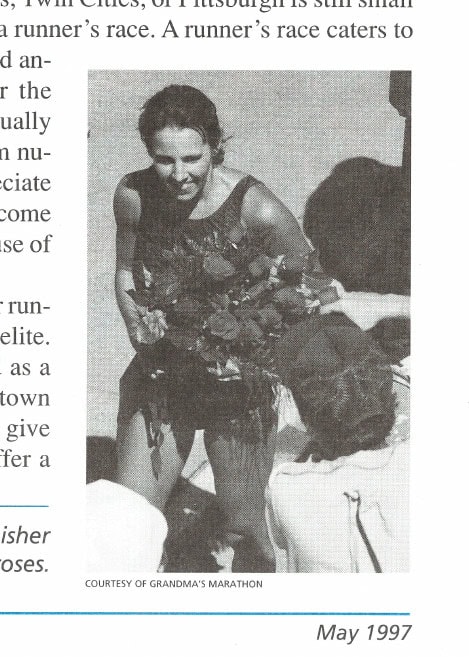
smorgasbord of free food in our runner recovery area. If runners are not able to pick up their sweat bags after the race, we mail them. People remember these considerations long after they’ve crossed the finish line. We also attempt to keep our entry fee as low as we can possibly afford.
KEEP THE RACE MANAGEABLE AND SAFE
Each race has a size that is perfect for that race and only that race. If the race grows beyond that point, everyone suffers. Our foremost concern is the safety of our runners. Safety extends beyond the runners to the volunteers and spectators. When the race is a point-to-point course, it becomes a challenging task to secure all 26.2 miles and all gathering areas. Large races tend to fulfill this commitment very well.
A large race must also consider how manageable the race can be kept. There are some practical aspects to consider. Since we bus our runners to the start, we cannot expand beyond the number of buses available in the greater Duluth area. We also feel we cannot compromise the staffing and efficiency of our aid stations.
A large marathon is perfect for the first-time marathoner. There are plenty of other runners in the race to keep the first-timer company, but the runner is not being overwhelmed or intimidated by a mega-field. On the other extreme, the first-time marathoner will not end up running alone and lonely as the runners get strung out in small marathons.
A large marathon offers a positive and memorable first-marathon experience for many runners, which contributes to our very high number of returning marathoners. For many who became marathoners at Duluth, each year is like returning to a special place in their athletic hearts. This feeling would be difficult to pull off at a megamarathon.
ESTABLISH FINANCIAL SECURITY
The fact that our race has settled in at approximately 7,000 runners allows our race committee to feel a certain financial stability, which lets us plan months and years in advance. If we were much smaller, we would not have the consistent revenue source from which to build our event. As a result of this consistent field of runners, we are able to afford year-round, full-time staff. This results in better service to our runners and offers the ability to expand our weekend of events even further.
In 1991 we added to our lineup the Garry Bjorklund Half-Marathon and in 1994 the William A. Irvin 5K, as well as the Health and Fitness Expo in 1996. All these events make our marathon a well-rounded, extremely exciting weekend. There’s something for everybody, with the marathon as the centerpiece.
Contributing to our financial stability is that we have a mix of many sponsors rather than one major sponsor. If one or two sponsors are no longer able to support us, we are not in jeopardy of going under, which is a luxury many smaller or mega races do not enjoy.
BUILD CREDIBILITY AND RESPECT
A large marathon has a foot up on gaining respect in the world of road racing because the race is neither so large that it is looked upon as merely an “event” nor so small that it cannot bring in top runners.
For example, Grandma’s has been chosen three times (1987, 1990, and 1994) as the Women’s National Marathon Championships. It is also considered by many to be one of the top 10 marathons in the country. Along with those designations comes the ability to recruit elite runners from all over the world, even though we are not able to offer the huge prize money some races can. Our size also enables us to receive a large amount of attention from the local and regional media, as well as a fair amount of national and even international coverage.
THE DOWNSIDE
I see very few disadvantages to a large marathon. There are a few negatives, however, which in our case, are due simply to the challenges of dealing with an event of this magnitude in a city of 86,000. As mentioned earlier, the size of our city and the surrounding area limits the number of buses to transport runners to the start. Our busing system has just about reached its limits, and we really can’t expand the race much more and still offer the quality service we currently enjoy. We also have a relatively small number of hotels/motels available for visiting runners. Because of the laws of supply and demand, because of the limited number of rooms available, local hotels can demand the premium rate. This is something that is beyond the race committee’s control. Over race weekend, every motel, hotel, bed and breakfast, campground, and even dormitory space at the University of Minnesota-Duluth is filled. There isn’t a bed to be had within 100 miles of Duluth. Race directors of other large marathons in medium-sized cities with whom I’ve commiserated face the same problems. The situation is even worse for some small-sized marathons, especially those out of the mainstream.
A LARGE MARATHON MAY BE FOR YOU
Thank goodness not all marathons have tried to become as big as they could possibly be. Even the megamarathons have had to place limits on their growth because of many of the same limiting factors we face. This restraint is good for the runner. A marathon weekend should be a positive, uplifting experience, where the challenge comes from covering 26.2 miles as quickly and efficiently as possible, not from hassling to find a room, getting stepped on at the expo, or being unable to find the starting line somewhere in the middle of the wilderness.
Each race ultimately finds its own personality—a personality set by the race committee, the environment in which the race is run, and by the citizens through whose lives the race passes. Most large-sized marathons are not as glamorous and as high profile as the megamarathons, but they form a solid backbone as far as marathon racing in this country goes, and in the process many of them have been able to really shine and become favorite destination marathons for many first-time as well as veteran marathoners.
This article originally appeared in Marathon & Beyond, Vol. 1, No. 3 (1997).
← Browse the full M&B ArchiveMore like this
1,000+ stories from 19 years of Marathon & Beyond
The complete archive of the legendary long-distance journal — digitized and free to read.
