

Marathon Lessons from the “King of the Roads”
WELL, IT’S early Sunday morning, and here I am back out on the roads. There are those who view Sunday mornings as a sacred time of worship in a godly sense, yet to a runner, Sundays may also provide another form of special—even spiritual—meaning. For this is the day of the week on which many true believers can be found out there sacrificing their bodies and souls on the road-racing scene. Others are cruising the streets on their weekly long runs in preparation for their next 26-miler.
Speaking of marathons, as an employee of Bill Rodgers Running Center, I have frequent opportunities to bounce the greater meaning of our sport off one of the world’s most famous marathoners, Bill Rodgers, to ask him to reflect upon some of the memorable experiences of his brilliant running career so we can theoretically apply them to today’s runners and their goals. Certainly, we can learn something about long-distance road racing from the valuable insights of this great champion, aka the “King of the Roads.”
IN THE BEGINNING . . .
“Long runs began when I was a collegiate runner at Wesleyan University [1966-70] when I ran with Amby Burfoot and Jeff Galloway,” Bill recalled. “At that time I never envisioned running the marathon distance. Amby took me on my first long run, a 13-miler, as an 18-year-old freshman. As a sophomore, I can also remember a 25-miler I ran with him. I felt fine for 23 miles, then he quickly dropped me over the last two miles. Two months later Amby went on to win the 1968 Boston Marathon as a senior. To this day, I still enjoy doing long runs with my friends.”
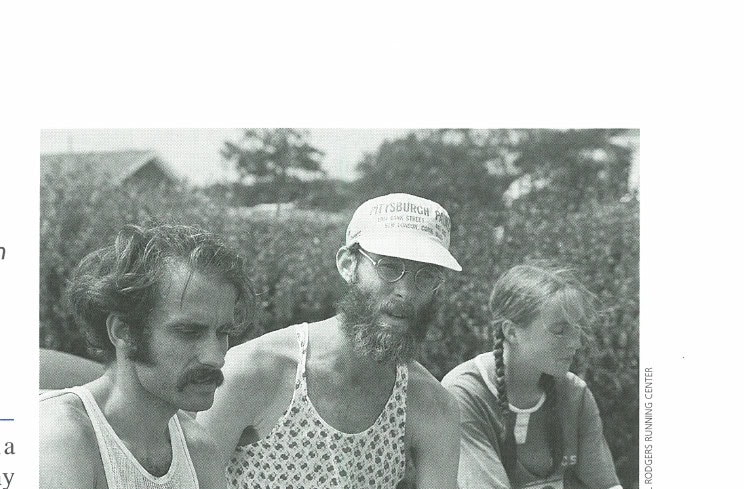
Having been a runner for many years, I have seen and continue to see this theme play itself out, over and over again. Runners inspiring others to take on the challenge of the marathon. One might say that in many instances the population of runners in training for the marathon is like a brotherhood. In fact, it wasn’t until a group of guys from a local running club talked me into joining them for their Sunday morning long runs that I became seriously interested in racing the marathon. The ease with which we covered distances of 15 to 20 miles each week, when compared to my previous efforts to complete runs of this distance solo, was a revelation for me. Our runs were high quality, very enjoyable, and time just flew by. Many words of inspiration were freely given and gratefully received along the way. We fed off each other physically and mentally. And we communed with the world around us in a way that driving through it while encased in the steel body of a car never offers.
At Bill’s store, it’s quite common for customers to mention their lifelong dream to run in the Boston Marathon. My response to this statement is that although a runner may be quite understandably intimidated by the prospect of running a marathon, the fact of the matter is that the Boston Marathon is filled with regular people, just like you and me. Provided that you do the required training, you can do it too. Take on the challenge of the marathon by recognizing the rewards of training with others toward your goal. There is strength in numbers.
THE SWEET SMELL OF SUCCESS
Whether you achieve your goal or fail in a particular effort, those first few days of training after such a race are always a time for reflection. Your brain can get jammed in an instant replay mode. That newly born memory can keep skipping and playing itself over and over in your head, like a broken record. (Does anyone remember what broken records are these days? Okay, how about a scratched CD?) I asked Bill to describe how he felt immediately following one of his great marathon performances. “The degree of elation after achieving success in a big marathon is like an aphrodisiac,” he admitted. “You crave more of it again and again. That potent feeling which results stays with me for weeks, until I begin to focus in on the next big challenge. Even now, I can still remember both my successful as well as my unsuccessful races as clear as can be.”
Success is indeed a powerful, addictive force. The satisfaction and surge of motivation that result from accomplishing what you set out to do, particularly over a challenging, long-distance race such as the marathon, definitely makes it all worthwhile. For some, a goal as modest as just covering the distance yields the most satisfying moments of a lifetime. Those hard training miles month after month out there in the dead of winter and in the heat of the summer are worth it. Savor those minutes, hours, and days while memories are fresh. Use your success as motivating fuel for taking on the challenges of new goals. The power of positive visualization is unquestionable.
THE LEARNING EXPERIENCE
While success in competition is the goal of every competitive runner, over the course of their running career even great champions experience times when things don’t go as well as they had hoped or expected. I asked Bill to tell me about such an experience.
“The worst situation was in the 1976 Olympic Marathon when I finished 40th after being the prerace favorite, ranked number one in the world the year before,” he related. “I can remember the feeling of legs cramping and falling behind the leaders, everyone passing me in the last half of the race. It was a very tough time for me, and the disappointment has never really completely gone away. The effects of my frustrating performance were diminished when Fred Lebow invited me to run with the 1972 Olympic gold and 1976 silver medalist Frank Shorter in the first five-borough New York City Marathon [in fall 1976].”
Bill went on to win the New York City Marathon from 1976 through 1979 and the Boston Marathon from 1978 through 1980, having previously won Boston in 1975, among other notable accomplishments on the roads.
It is always important to remember that every time you put on those racing shoes, many variables come into play. Some you can influence, but others are beyond your control. Your training in recent weeks, health, diet, weather conditions, and hydration along the way are factors that will most certainly affect your chances for success over the long run. Juggling these factors successfully when racing over distances of 26 miles or more can certainly be a challenging
task. There will be days when things go well and you achieve success, and there will be other days when things unravel and fall apart. What a runner learns from a disappointing performance and accomplishes in the future is the true measure of character. If you have a bad race, try to be rational in your analysis of what went wrong. Learn from your experience, be positive, and move on from there to your next race.
THE STRATEGIC SIDE OF RACING
When it comes to racing, both the strategy that you employ and your response to the strategy of others will significantly influence your results.
Not running your own race and drafting off others who are running faster than your planned race pace, or making too many energy-draining surges are common examples of tactics that can destroy your chances of success. There are those who prefer to go out hard in the marathon, hitting the halfway point with a cushion, gambling they can get a PR by holding on to the finish line. Others take the more moderate approach, believing that conservatism and negative splits will yield the surest path to their goal.
In that twilight zone world of marathon racing, there are times when you may be lucky enough to be running with your friends or teammates, totally under control. Other times you’re in the company of strangers. There will be days when you end up being the stalker, methodically picking off others who went out too fast and thus crashed and burned. Other days you may be the one being stalked. Know thyself. Learn through experience what your tactical strengths and weaknesses are. Use this knowledge to your advantage by implementing your strategy accordingly.
Bill traditionally liked to lead in a race. From the front he could control the pace and intimidate other racers. But Bill did not run his best in hot weather, and he knew it. In the 1979 New York City Marathon, it was very hot, and the leaders never saw Bill because he stayed back, under control, running his race until the final miles, when the heat had wilted everyone else, and he cruised to the front as the race ran through Central Park on its way to the finish.
I asked Bill to comment on the unpredictable, strategic side to racing. “In my early days I had races which I thought I’d win and ended up being the runner-up,” he said. “Once at the national 20K in Gardner, Massachusetts, I had expected to win, but surprisingly ended up in second place. I was really disappointed.
“I had a similar experience in the Manchester, Connecticut, Thanksgiving Day race. These races taught me that you must always try to keep calm and accept defeat or a poor performance gracefully. After a race it is time to compliment others on their fine efforts. If you have a bad race and get beaten,
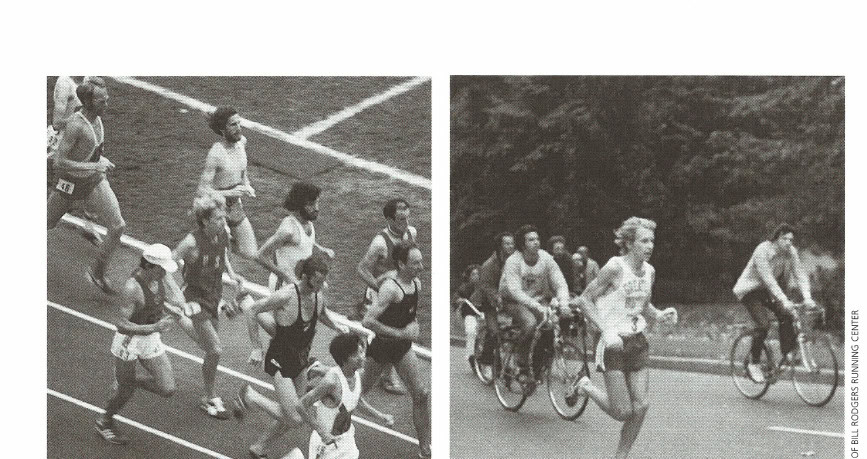
remember that things may well be reversed on another day.”
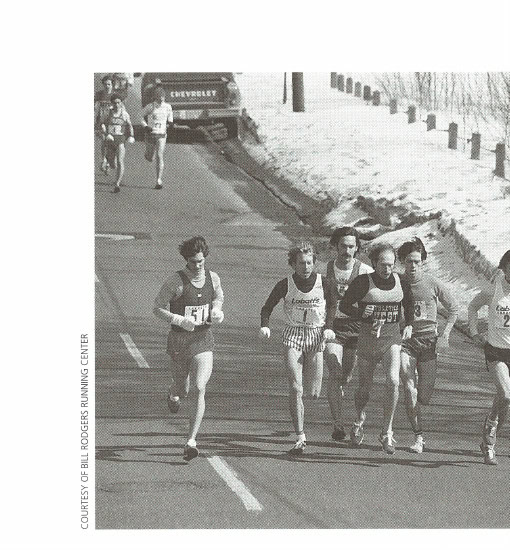
You need only look beyond these early days to the many duels that Bill had with such marathon greats as Toshihiko Seko in the 1979 Boston Marathon to see that Bill Rodgers was to become a master strategist who certainly earned his title “King of the Roads.”
Don’t take things too seriously. Keep calm and accept the unpredictable strategic side of long-distance racing. Remember, it’s only one race.
LIFETIME RUNNER
Although some runners might enjoy repeated success in their racing exploits, the majority of us achieve exceptional performances with much less frequency, particularly as we get older. But, regardless of your rate of success, somehow it must be worth it, or you wouldn’t have stuck with it all these years.
Above and beyond your age, fitness, or level of ability, you just never know when you’re going to have one of those special days where everything falls into place—days when you run the race of your life, exceed your expectations by a long shot, and everything seems so effortless. Although days such as these may occur with less frequency than you desire, the satisfaction that comes from such experiences just may be enough to make it all worthwhile.
Bill’s comments certainly sum things up: “Older folks who retire early can escape the situation of facing a poor race. But for myself, I’d rather be a lifetime runner, living by Teddy Roosevelt’s comments about the man or woman who is willing to risk failure.”
Be a lifetime runner. Make your running life a marathon—and pace yourself accordingly so you fully enjoy the long run that is your life.
The 2nd Annual Oklahoma City Memorial Marathon
Sunday, April 28th, 2002
Oklahoma City, Oklahoma
(405) 525-4242
This article originally appeared in Marathon & Beyond, Vol. 6, No. 2 (2002).
← Browse the full M&B ArchiveMore like this
1,000+ stories from 19 years of Marathon & Beyond
The complete archive of the legendary long-distance journal — digitized and free to read.
