

On the Road
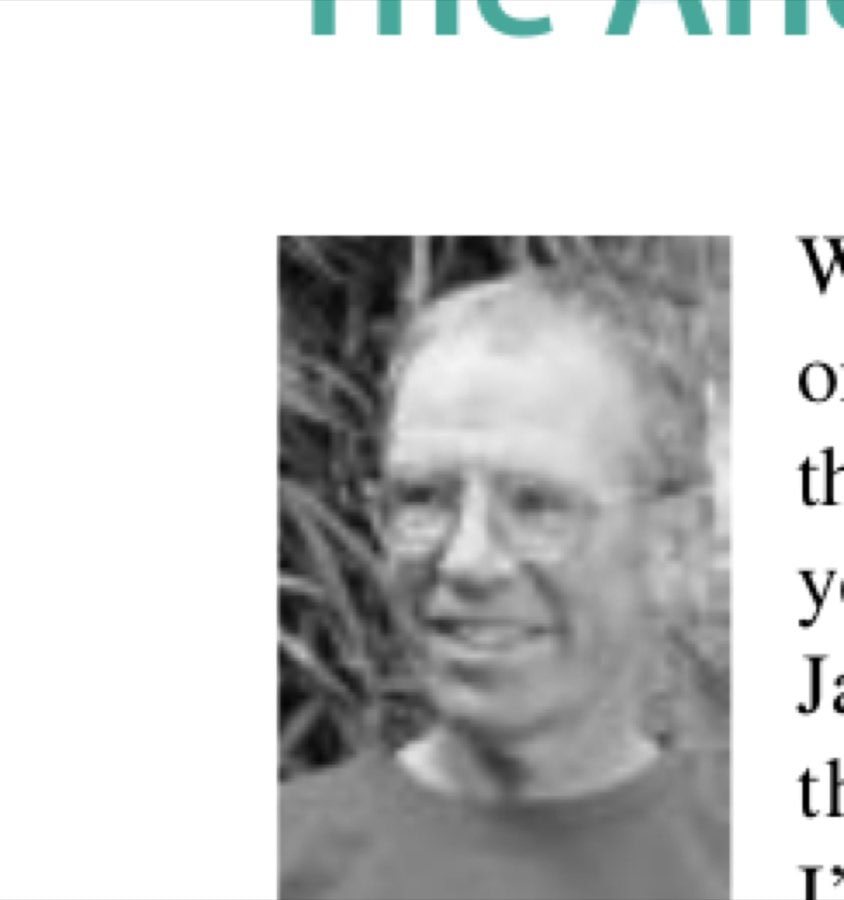
The Ancient Marathoner We met in person only once, and then for less than an hour almost 30 years ago. Yet I count Jack Foster as one of the greatest friends I’ve ever had. Like all the great ones, he has never stopped giving. Measured by the most said in the least words, one of the best books ever written about running was really just booklet length—Foster’s Tale of the Ancient Marathoner. Its first words, and far from its best, aren’t his but mine that introduce him to readers. “If a friendship can be measured by the number of letters two people exchange,” I wrote in the foreword, “then I can count Jack Foster among my best friends. On my desk here now is an inch-thick folder of lightweight blue aerogrammes postmarked ‘Rotorua, New Zealand.’ I feel I know Foster about as well as I know any runner.” At the time we hadn’t yet met. We tried at the Munich Olympics before the marathon he ran there at age 40. I wormed my way into the Olympic Village, found the New Zealand compound, and knocked on the door that I’d learned was his. No one answered. Oh, well, I thought at the time, I’ll try again later in the Games. But a few days later, everything changed for that Olympics and for all to follow. No intruder sneaked into the Village again.
Our writing back and forth continued, peaking during his writing of that wonderful little booklet (which I edited for publication in 1974). He handwrote it in tiny script across almost 100 pages of aerogrammes. By then the sport knew him as the world masters marathon record holder. His mark of 2:11:19, set at age 41 while silver-medaling at the 1974 Commonwealth Games, would stand until 1990. We finally did meet, briefly, at the Boston Marathon in 1976. The meeting was awkward, as we tried to reconcile the person imagined from written words with the one now standing before us, speaking. Though his measurements (about 5 feet, 8 inches and weighing in the 130s) were known to me, I was surprised by how small he looked. We expect people who have done big things to be bigger than life. Jack and I didn’t say much that night, at least not to each other. We stood together at a question-and-answer clinic, where he wowed the crowd with his simple wisdom. He did the same for me as he now gave voice to what he had told me by letter over the years. Though we never talked again, I would never stop repeating his words. Other runners feel that way, too. Jack’s booklet was a treasure when published 30 years ago and is much
more so now. Originally priced at $1.50, a copy sold recently on eBay for more than $100. I wouldn’t part with my one tattered copy for 100 times more.
WHERE HE CAME FROM Running humbled Jack at first, which might be why he retained humility about his later successes in the sport. He remembered where he came from and that by not running he would soon return there. His first sport was bicycling. After taking long, hard rides with friends in his native England, Jack “drifted into racing” on the bike. This continued through most of his 20s, until he settled into family and working life in New Zealand. Biking only to work and back and playing some soccer, he imagined himself to be fairly fit at almost 33. “Surely a half-hour run would be no trouble,” he said of his first try. After going what seemed to be several miles, Jack arrived back where he’d left his wife, Belle. “What’s wrong, have you forgotten something?” she asked. “You’ve only been gone for seven minutes.” “Impossible,” Jack recalled in his booklet. “I was sure I’d run at least six or seven miles. I was soaked in perspiration and felt tired. “Now I was worried. If I felt like this at 33, how would I be when I was 40?” We now know that by 40 he was an Olympian, with his best marathon time still to come. But he couldn’t have known that when he began run14 l MARATHON & BEYOND l NOV/DEC 2004
ning “only every second day, and I was working to maintain that 20-minute jog even on alternate days. “I kept at it. I liked the feeling after the run, feeling the glow which comes after exercise. Sometimes the glow was a whole fire, in fact a real burnt-out feeling!” Running led to racing. “I noticed I was still very competitive,” he wrote. “A hangover from my cycling days perhaps, or maybe my nature. “My competitiveness might better be described as a desire to excel, for I have no ‘killer instinct’ at all, no real will to ‘win at all costs.’ Getting my times down was the motivation to do more and more running.” Better times led to more training, to better times and . . . you now know where the repeated cycles led. Other runners have climbed this high, but none was a later starter. Jack Foster wasn’t like the young superstars who seemed to drop in from another planet, bringing with them apparent immunity to the limitations imposed on us mere mortals. He was more like one of us, one who made very good. He ran while raising four children and working full-time. He knew the feeling of starting to run as an adult and of recovering from hard runs slower than the kids of the sport did. He wrote for us. We lacked his late-blooming running talent. (His son Jackson, himself a competitive bicyclist, called Jack “a white Kenyan—an oxygen-processing unit on legs.”) But he spoke a language that any older, parttime runner could understand.
WHAT HE TAUGHT The highest form of flattery for a writer isn’t imitation. It’s repetition—quoting the writer’s words as better than any you could make up, or better yet adopting the writer’s recommended practices as your own.
Jack left me with three lasting lessons for enjoying a long and happy running life. I’ve repeated them often in writing and speaking and practiced all three myself. 1. The one-day-per-mile rule. Jack could race as hard and fast as runners little more than half his age. He just couldn’t race that way as often as those that much younger. Watch time doesn’t necessarily slow with age, he said, but recovery time usually does. He outlined his recovery needs in Tale of the Ancient Marathoner: “The after-effects [of a hard race] vary, with me anyway. Sometimes I feel fully recovered in two or three days. Other times I have a drained feeling for as long as three weeks. “My method is roughly to have a day off racing for every mile I raced. If I’ve run a hard 26-mile road race, then I don’t race hard again for at least 26 days. I’ll go for daily runs okay but no really hard effort.” One easy day per racing mile. That’s the Jack Foster rule—my term, not his. 2. Not training. “A reporter once asked about the training I did,” wrote Jack. “I told him I didn’t train. “The word ‘training’ conjures up in my mind grinding out 200- and 400meter intervals. I refuse to do this.”
Nor did he run “the 150 miles a week that some of the top marathoners are doing. I rarely did more than half that. I believe it is possible to achieve results in a less soul-destroying way.” He concluded, “I don’t train; never
have. I don’t think of running as ‘training.’ I just go out and run each day and let the racing take care of itself. “It has to be a pleasure to go for a run, looked forward to while I’m at work. Otherwise no dice. This fact, that I’m
not prepared to let running be anything but one of the pleasures of my life, is the reason I fail by just so much.” 3. Timeless racing. Jack added to the paragraph above that “failing” didn’t bother him. Nor did “the prospect of running 2:30 or even 2:50 marathons in the future.” This would have been almost unthinkably slow to him at the time he penned this line, but “slow” is a relative term. Jack’s times would slip to levels that were slow only to him—a 2:20 marathon at 50 and to six-minute miles for 10Ks in his 60s. He claimed not to let the old times haunt him. “The drop-off in racing performances with age manifests itself only on timekeepers’ watches,” he wrote. “The running action, the breathing and other experiences of racing all feel the same. Only the watch shows otherwise.” Jack chose to define a good race by the effort, not by the numbers of a watch. He said, “All the other experiences of racing that attracted me initially are the same as they have always been, and they still appeal to me.”
AFTER THE FAME A fourth tip, one I often quote and always follow, almost went unrecalled here. It deals with wearing the least shoe we can tolerate, not the most we can carry (or afford). Jack Foster wrote, “I was introduced to running over farmlands, where the underfoot conditions were soft and yielding, developing good foot strength and flexibility. I ran first in light tennis shoes because there were no suitable training flats in those days.” Jack believed that those shoes forced him to learn proper running style. “We ran in those flimsy, light shoes and developed a ‘feel’ for the ground,” he said. “We learned to land properly or got sore legs, since we couldn’t rely on the shoes to absorb any shock. “We got into a light-footed gait that moved us over hill and dale very effectively. I’m certain this [style] helped me stay injury free.” Even after he set world records and ran in the Olympic Marathon as a master, and shoe companies begged him to wear their latest high-tech training models, he remained a minimalist. He ran daily “in shoes most people consider too light even for racing.” This preference would clash with the onrushing trends in making running shoes bulkier and better cushioned or more supportive. The clash would affect him personally, but not for long. Jack’s successes led to a job with Nike. The company moved him to Oregon, where he knew right away that he didn’t fit in.
He didn’t like having to wear the latest high-tech shoes. He didn’t like running on suburban streets instead of his beloved sheep lands. Most of all he didn’t like acting the role of hired celebrity, Jack Foster, world record
holder, Mr. Masters 2:11. Jack had lived too long as a normal adult to believe he was as famous as others made him out to be. He had written years earlier: “People tend to think success in some field or other changes a person. In some cases this is true, but more often it is the other person’s attitude toward the successful one that changes. Before success, no one knows him. After success, everyone wants to. “Our sense of values is quite lopsided. Music stars, film stars and to a lesser degree sports stars all get media coverage, public acclaim and, for professionals, remuneration out of proportion to what they contribute to society.” Our brief stays with Nike (mine with its short-lived magazine, Running) almost overlapped. Just before I arrived in Oregon, he left, fleeing in joy and relief back to New Zealand. Our letters after that were few. One came in the mid-1990s, when I asked for his contribution to my book Road Racers and Their Training. Then 63, he spoke apologetically of his running. “I feel like a fraud completing your questionnaire,” he wrote. “But I do run some, so I’ll answer it.” He told of choosing what he liked best from his past program and discard-
ing all else. His favorite: a run as long as 1 1/2 hours over hilly countryside, taken two or three times a week. He wasn’t training for anything, just running. Jack told of “indulging in a fun race now and then, but at about half throttle while finding someone to chat with.” He didn’t pay much attention to the watch time, so neither will I. I would rather recall his words than his numbers. The last lines of his booklet read, “Perhaps what I’ve achieved as a runner may have inspired other 35-year-plus men to get up and have a go. I’d like to think so.” I know so.
FRIEND TO THE END Bicycling was Jack Foster’s first sport, and his last. He was struck and killed by a car in early June 2004 while riding near his home in Rotorua, New Zealand—the same place he had started to run almost 40 years earlier. He was 72.
He wasn’t the first friend I’ve lost to a bike accident. It’s a riskier sport than running. But Jack wouldn’t have wanted anyone to speak ill now of his favorite sport anymore than Jim Fixx would have wanted to tarnish running by dying of a heart attack on the run. Anyway, I’m not a runner-biker, so it’s better to let one of them speak here. Steve Goldberg, a law professor at Northwestern University, writes, “I was shocked and saddened by the news of Jack Foster’s death. I never met Jack,
but we were the same age, and his successes were both an inspiration and a challenge. They also served to keep my own successes in perspective.” He recalls telling a friend in 1974 how proud he was of running a 2:31 marathon at age 41. The friend responded as only a good one can, “Congratulations. You’re only 20 minutes off your age-group record.” Goldberg says, “The fact of Jack’s death while bicycling was also sobering since, with a decreasing amount of cartilage, I have increased the amount of time I spend on a bike. Riding with the traffic, not against as I do when
running, has always created a sense of vulnerability, and that is increased by this news. “I have no intention of stopping, however. What will be, will be.” Jack Foster went quickly, doing what he loved. That’s not all bad.
It’s worst for his family, of course, and bad for his friends near and distant. The day after hearing about his accident, I quoted advice from Jack in my talk at Dick Beardsley’s Marathon Running Camp in Minnesota.
This wasn’t a memorial tribute. I’d already planned to borrow words from Jack, as I nearly always did in talks and books, and will keep doing. Friends keep giving long after they’re gone. You can contact Joe and read other columns from him on his Web site: www.joehenderson.com.
This article originally appeared in Marathon & Beyond, Vol. 8, No. 6 (2004).
← Browse the full M&B ArchiveMore like this
1,000+ stories from 19 years of Marathon & Beyond
The complete archive of the legendary long-distance journal — digitized and free to read.
