

The 10 Most Important Ultrarunners in History
Any top 10 list is potentially controversial, which of course is part of the fun. This assignment was to come up with the 10 most important ultrarunners, not just the 10 with the fastest times or deepest resumes. So, in addition to performance excellence, we’ve added a difficult-to-define factor that measures their influence—the degree to which they have helped shape the sport of ultrarunning and the culture around it. I’m not even going to attempt to list them in order of importance—they are listed in more-or-less chronological order. Let the arguments begin!
Edward Payson Weston
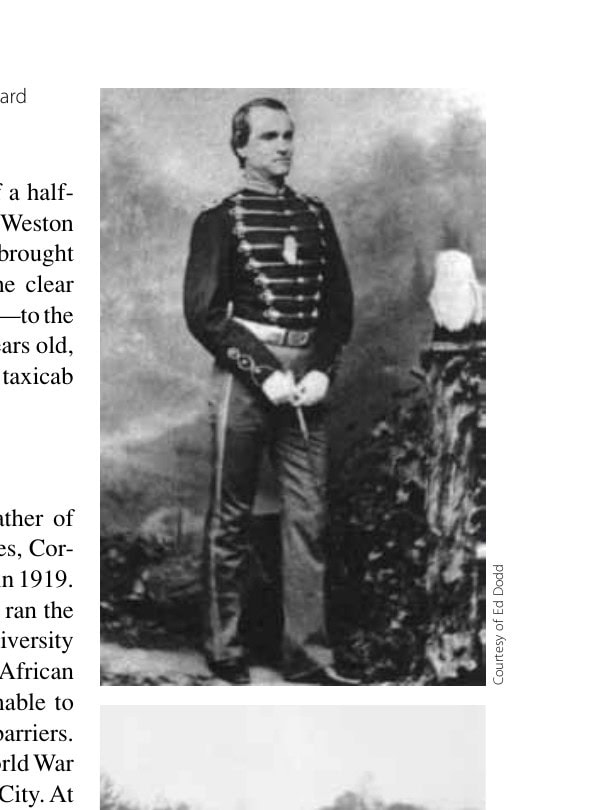
In many respects, the origin of the sport of ultrarunning can be traced to the pedestrian competitions of the 19th century, and by far the most famed pedestrian of that era is Edward Payson Weston. His pedestrian career started when he lost a bet over the 1860 presidential election and walked the 479 miles from his Boston home to Washington, DC, for Lincoln’s inauguration. At first, he walked. But as competitions began to arise, he found he needed to run in order to win. And so he did, and he recorded 550 miles in a six-day competition in London in 1879—a total that would put him among the world’s elite even today. By all accounts, Weston was a flamboyant man with a keen gift for self-promotion. He became friends with P. T. Barnum, who helped promote his events. He was an inveterate gambler, a womanizer, and constantly in debt. He was also a teetotaler and a vegetarian and spent considerable effort promoting a healthy lifestyle. In 1910, at the age of 71, he walked from San Francisco to New York City in 87 days and was greeted by a crowd of a half-million people on Broadway. Weston was a showboat at heart and brought the sport of pedestrianism—the clear forerunner of ultramarathoning—to the public eye. He lived to be 90 years old, even surviving being struck by a taxicab when he was 88.
Ted Corbitt
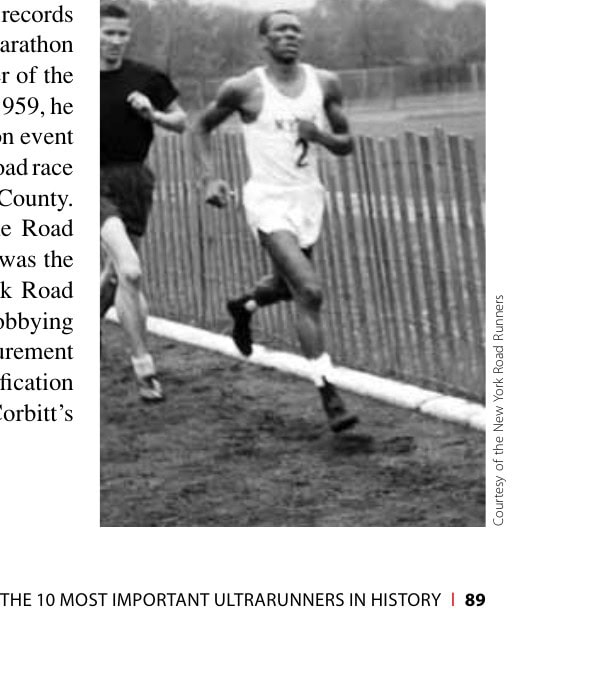
Frequently described as the father of ultrarunning in the United States, Corbitt was born in South Carolina in 1919. After moving to Cincinnati, he ran the mile in high school and at the University of Cincinnati but as a young African American athlete was often unable to compete in events due to racial barriers. After serving in the Army in World War II, Corbitt moved to New York City. At various times, he held American records at distances ranging from the marathon to 100 miles and was a member of the US Olympic Team in 1952. In 1959, he organized the first ultramarathon event in the United States, a 30-mile road race in the Bronx and Westchester County. Corbitt was a cofounder of the Road Runners Club of America and was the first president of the New York Road Runners Club. His constant lobbying for accurate road-course measurement led to official road-course certification standards, set by the AAU. Corbitt’s training regimen was legendary—he would often run more than 200 miles a week. But perhaps as important as his illustrious career as an athlete and administrator was his approach to others. A quiet man with a calm demeanor, Corbitt set the cultural tone for the sport with his graceful encouragement of others. “Plan carefully, then go do it,” he would say, and he was as interested and concerned with slow runners as he was with the elite. His egalitarian approach has become the benchmark for the sport of ultrarunning.
Gordy Ainsleigh
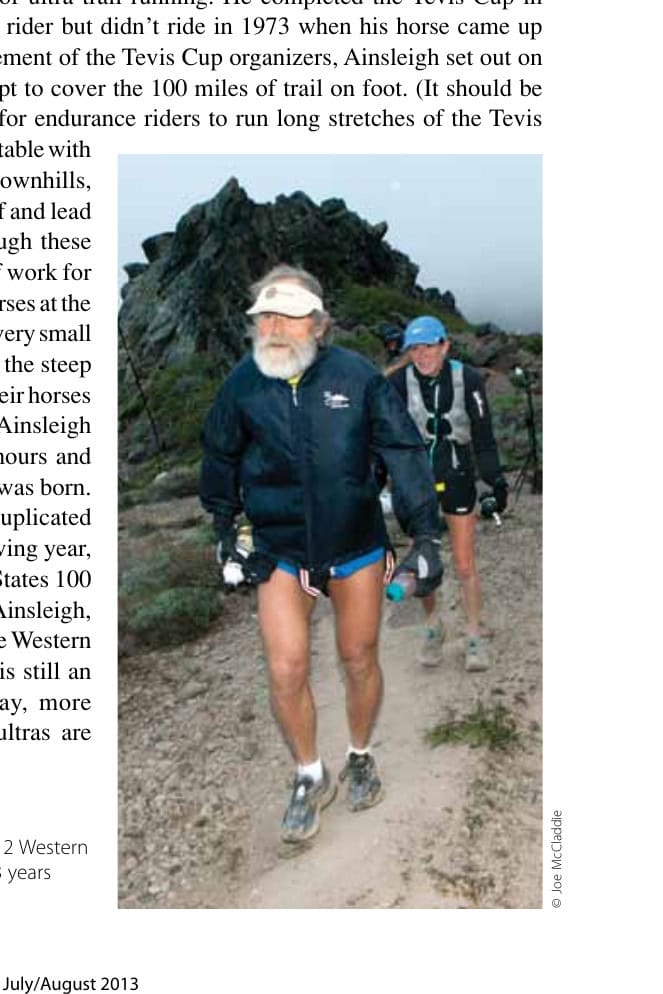
Ainsleigh, with his seminal run at the 1974 Tevis Cup Endurance Ride, is widely regarded as the founder of ultra trail running. He completed the Tevis Cup in both 1971 and 1972 as a rider but didn’t ride in 1973 when his horse came up lame. With the encouragement of the Tevis Cup organizers, Ainsleigh set out on August 3, 1974, to attempt to cover the 100 miles of trail on foot. (It should be noted that it is common for endurance riders to run long stretches of the Tevis Cup. Horses are uncomfortable with the many steep, rocky downhills, and riders typically get off and lead their horses on foot through these stretches. And it is a lot of work for a horse—almost all the horses at the Tevis Cup are Arabians, a very small breed—to haul a rider up the steep climbs, so riders follow their horses on foot on the uphills.) Ainsleigh finished the route in 23 hours and 32 minutes—and a sport was born. Ken “Cowman” Shirk duplicated Ainsleigh’s run the following year, and in 1977 the Western States 100 became an official event. Ainsleigh, now 65, has completed the Western States 100 22 times and is still an active trail runner. Today, more than 90 percent of US ultras are run on trails.
Bruce Fordyce
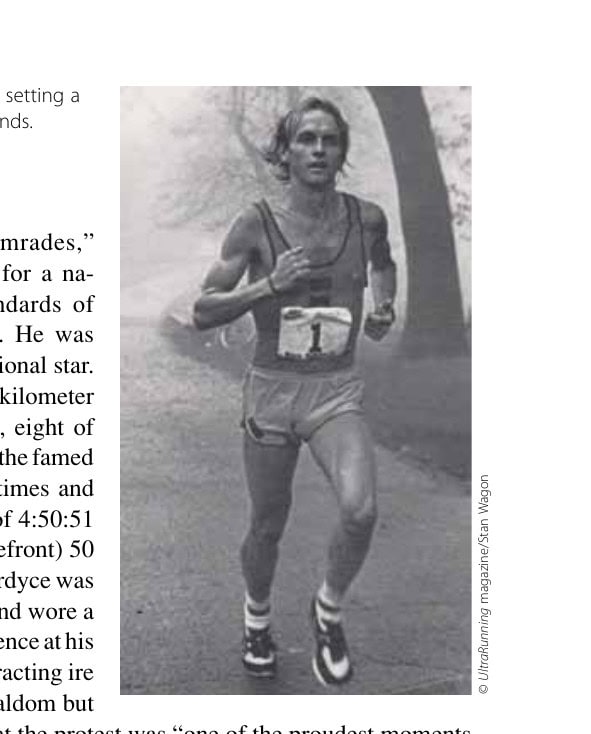
Often referred to as “Mr. Comrades,” Fordyce was the face of pride for a nation under duress and set standards of excellence on three continents. He was ultrarunning’s first truly international star. The South African won the 89-kilometer Comrades Marathon nine times, eight of them consecutively. He also won the famed London-to-Brighton race three times and set a world record for 50 miles of 4:50:51 at the AMJA (now Chicago Lakefront) 50 in 1984 that still stands today. Fordyce was an early opponent of apartheid and wore a black armband to protest its existence at his first Comrades win in 1981—attracting ire from South African sports officialdom but plaudits abroad. He later said that the protest was “one of the proudest moments of my life” and quipped about “putting the word ‘comrade’ back in Comrades Marathon.”
David Horton
The Virginia athlete has set speed records for both the Appalachian and Pacific Crest Trails, completed the Trans America Run, won the brutally tough Hardrock 100, and is one of only a dozen runners to complete the 100-mile Barkley Marathon. A professor of exercise science at Liberty University, he has mentored dozens of ultrarunners, many of them elite. But his selection here is as much for his defining role as a race organizer as for his high-quality racing career. Horton is the
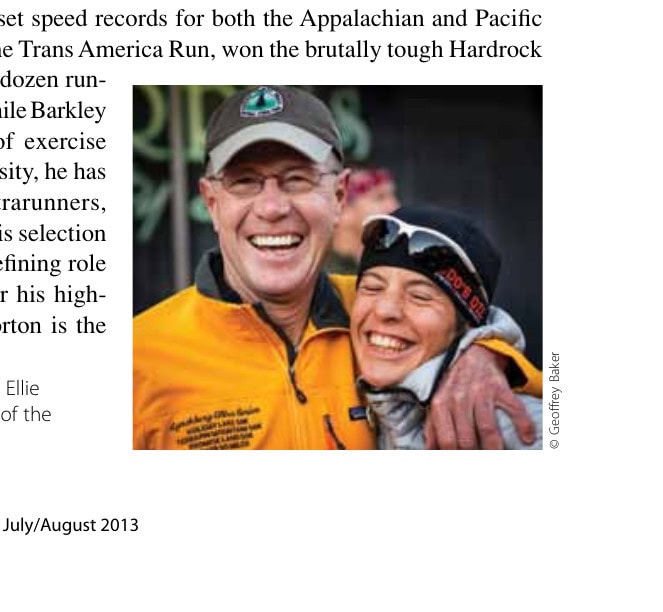
father of East Coast trail running and founder of many of the top ultra trail runs in Virginia, including Mountain Masochist 50 Mile, Promise Land 50K, Holiday Lake 50K, and Hellgate 100K. As a race organizer, he unfailingly gave back to his sport without any expectation of financial reward, a model that many (including this author) have copied over the years. Today, for-profit race organizers are becoming more common—it’s hard not to look at the explosive growth in ultra participation without seeing a commercial opportunity—but most events remain organized by volunteers. Volunteerism is alive and well in the sport, and for that we have the early race organizers to thank.
Yiannis Kouros and Ann Trason
These two living legends belong on any 10-best ultra list for sheer brilliance alone. Both have set innumerable records, and those records have stood the test of time.
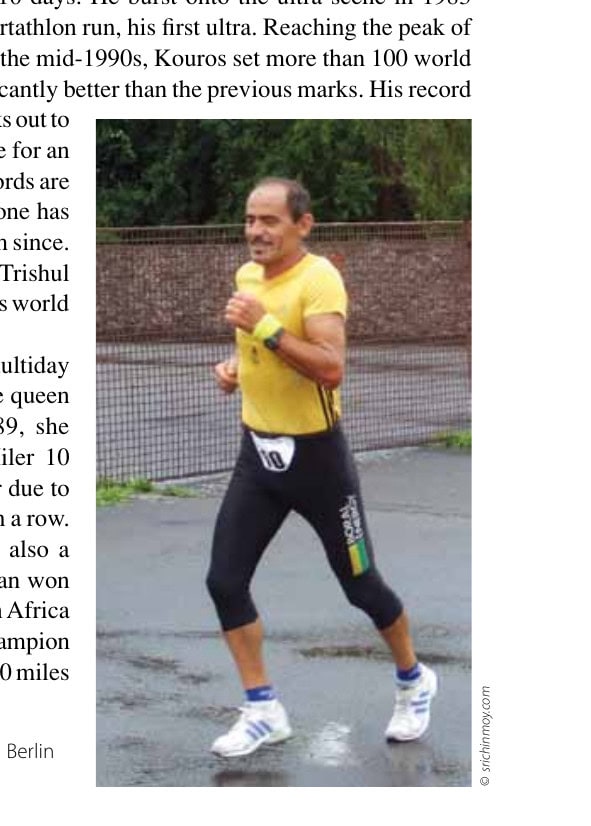
Kouros, born in Greece in 1956 and now living in Australia, holds every world record from 12 hours to 10 days. He burst onto the ultra scene in 1983 with a victory at the 250-km Spartathlon run, his first ultra. Reaching the peak of his career from the late 1980s to the mid-1990s, Kouros set more than 100 world bests, most of which were significantly better than the previous marks. His record of 188.589 miles in 24 hours works out to an astonishing 7:38 per mile pace for an entire day! Most of Kouros’s records are more than 15 years old, and no one has even come close to breaking them since. As noted runner and historian Trishul Cherns said, “There’s elite, there’s world class, and then there’s Yiannis.”
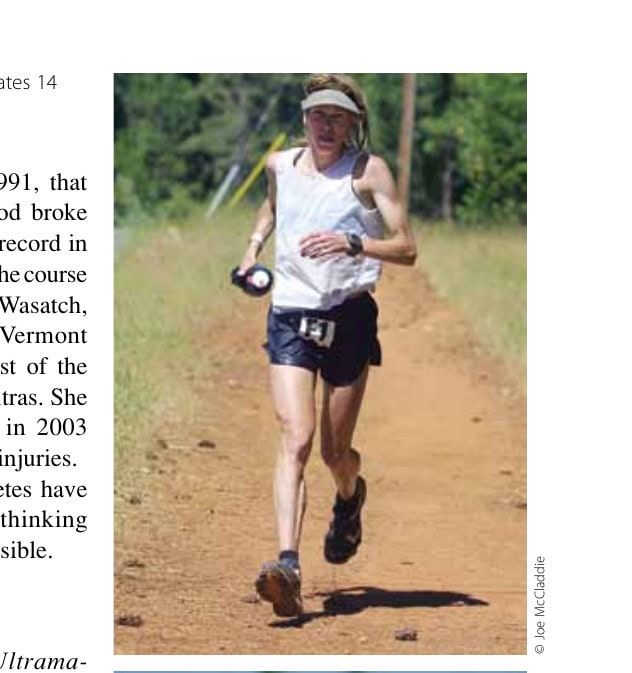
If Kouros is the king of the multiday events, then Trason is surely the queen of the trails. Beginning in 1989, she won the Western States 100-Miler 10 consecutive years, missed a year due to injury, and then won four more in a row. Trason loved the trails but was also a great road runner. The Californian won the Comrades Marathon in South Africa twice and was the World 100K champion twice. She set world records for 50 miles and 100 miles, both in 1991, that still stand. Ellie Greenwood broke her Western States course record in 2012, but Trason still holds the course records at the Leadville, Wasatch, Arkansas Traveller, and Vermont 100-Milers as well as most of the Northern California trail ultras. She retired from competition in 2003 following a series of knee injuries.
These two superb athletes have stretched our collective thinking about what is humanly possible.
Dean Karnazes
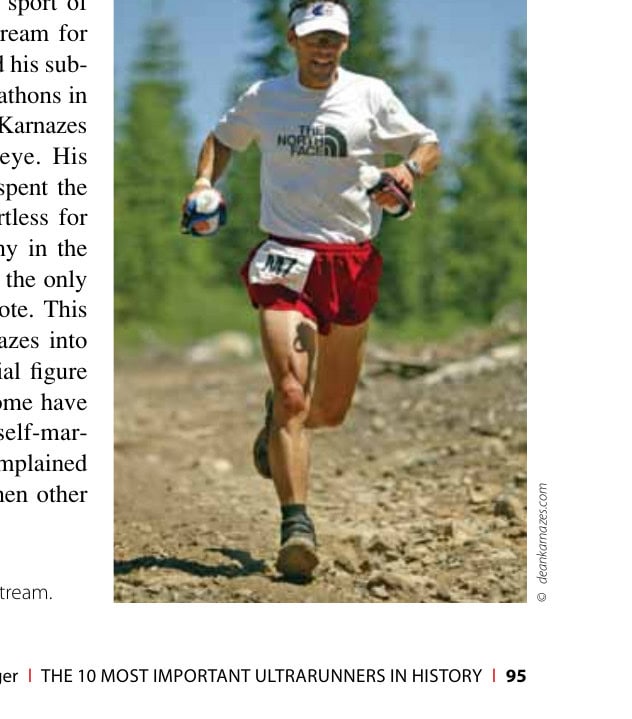
Karnazes’s 2005 book Ultramarathon Man surprisingly became a bestseller and brought the sport of ultrarunning to the mainstream for the first time. The book and his subsequent running of 50 marathons in 50 states in 50 days brought Karnazes squarely into the public eye. His friends tease him that he spent the following year posing shirtless for magazine covers. For many in the general public, he remains the only ultramarathon runner of note. This notoriety has turned Karnazes into somewhat of a controversial figure in the ultra community. Some have disdained his successful self-marketing, and others have complained about his relative fame when other runners with superior running careers continue to toil in relative obscurity. But for every complaint, there are a dozen others who cite him as inspiring them to give ultrarunning a try. Whether you love him or hate him, there is no doubt that he was largely responsible for creating awareness of the sport and doing so in a positive manner. The seeds of the current ultrarunning boom can be traced directly to his book.
Kilian Jornet and Ellie Greenwood
These last two selections probably deserve a bit of an asterisk, as both are still young and in their prime. They exemplify the youth movement in ultrarunning and the explosion in its popularity.
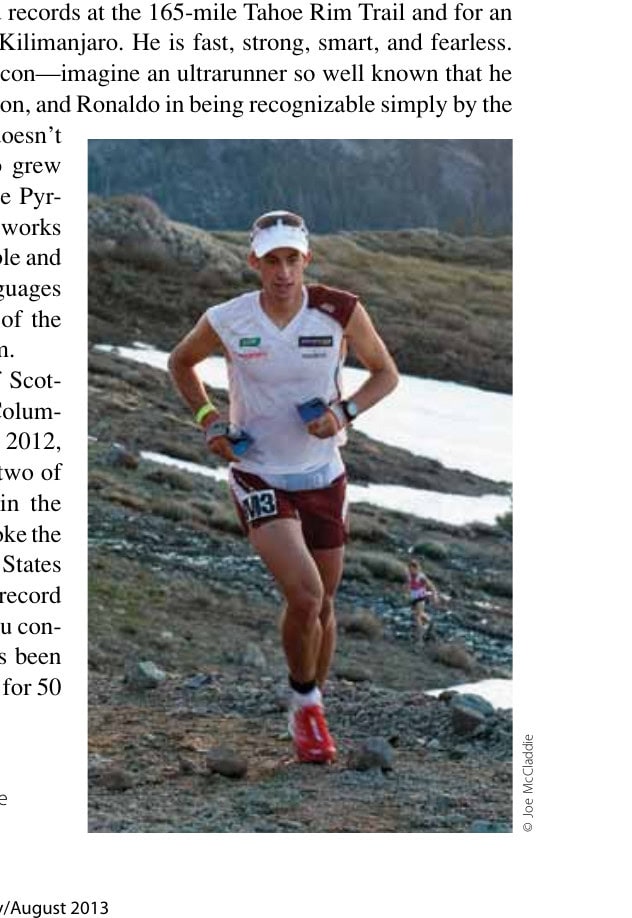
At the ripe old age of 25, Jornet has already won the Western States 100 and is a three-time winner at the Ultra-Trail du Mont Blanc, Europe’s most prestigious ultra event. He has set speed records at the 165-mile Tahoe Rim Trail and for an ascent and return at Mount Kilimanjaro. He is fast, strong, smart, and fearless. In Europe, he is already an icon—imagine an ultrarunner so well known that he joins the likes of Kobe, LeBron, and Ronaldo in being recognizable simply by the use of his first name. And it doesn’t hurt that the Spaniard, who grew up on the steep slopes of the Pyrenees where his father still works as a mountain guide, is humble and gracious and speaks five languages fluently. He is the epitome of the European trail-running boom.
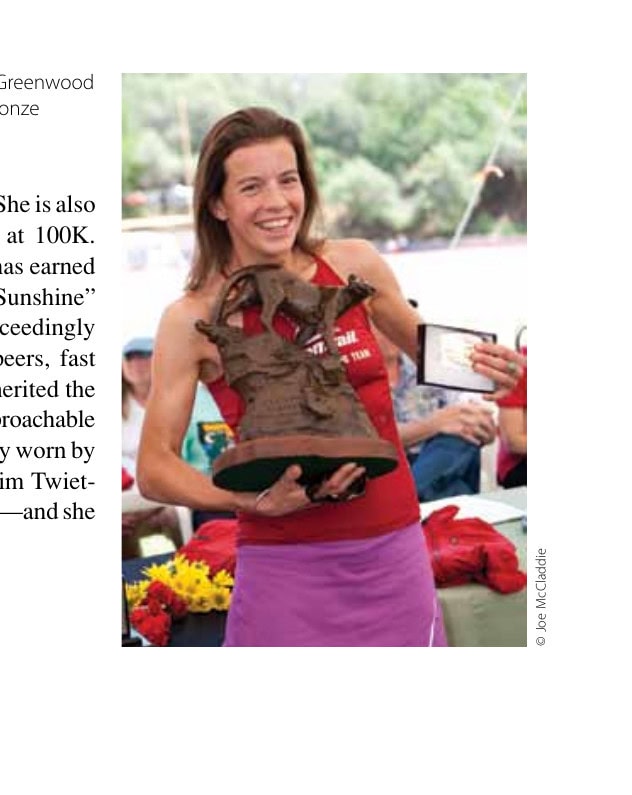
Greenwood, a native of Scotland now living in British Columbia, set a spate of records in 2012, including course records at two of the most venerable ultras in the United States. In June she broke the course record at the Western States 100 and in November set a record at the JFK 50 Mile. When you consider that Western States has been around for 39 years and JFK for 50 years, that is no mean feat. She is also a former world champion at 100K. The ebullient Greenwood has earned the nickname “Little Miss Sunshine” for her demeanor and is exceedingly popular among her ultra peers, fast and slow alike. She has inherited the informal mantle of most-approachable star that had been previously worn by runners like Scott Jurek, Tim Twietmeyer, and Marcy Schwam—and she wears it well.
This list of the 10 most important people in marathon history is highly subjective, and there has been no attempt to rank them in the order of their importance in marathon history. Instead, I have aligned them in chronological order.
Pheidippides (530 BC–490 BC)—The man, the myth, the legend
Though most likely apocryphal, the story has nonetheless taken on a life of its own that in 490 BC, a professional courier named Pheidippides was sent from the battlefield on the plains of Marathon to the city of Athens to announce that the undermanned Greek army had beaten back an invading Persian force. Having previously run 150 miles to Sparta and back over two days in search of assistance before the invasion began—support that was not forthcoming—Pheidippides was then sent on a grueling 25-mile run into Athens to herald the subsequent Athenian victory. Upon arriving in front of city magistrates anxious to hear news of the battle’s outcome, Pheidippides had only the strength remaining to declare “Rejoice, we conquer!” before succumbing to his valiant effort in death. Thus, the myth of the marathon as the ultimate test of human endurance was born.
Michel Bréal (1832-1915)
A 19th-century French philologist often credited with founding the study of modern semantics, Breal also studied comparative mythology and pedagogy.
This article originally appeared in Marathon & Beyond, Vol. 17, No. 4 (2013).
← Browse the full M&B Archive1,000+ stories from 19 years of Marathon & Beyond
The complete archive of the legendary long-distance journal — digitized and free to read.
