

The Toughest Race
IT WAS a sunny Friday afternoon, and the smell of spring was seething in the air. Every time the door swung open, the sunlight cut through the bar like a knife and illuminated the accumulated dust on the liquor bottles.
I was bidding a good friend adieu, as I was soon to be off to Ouarzazate for the 16th annual Marathon des Sables. The 150-mile, seven-day stage race would take me through the beautiful rugged desert of Morocco, and most contenders would be flying to the site via Casablanca, but I had arranged alternate travel plans to spend time in Spain and France as well. I was treating myself to a race well run, with some holiday time thrown in.
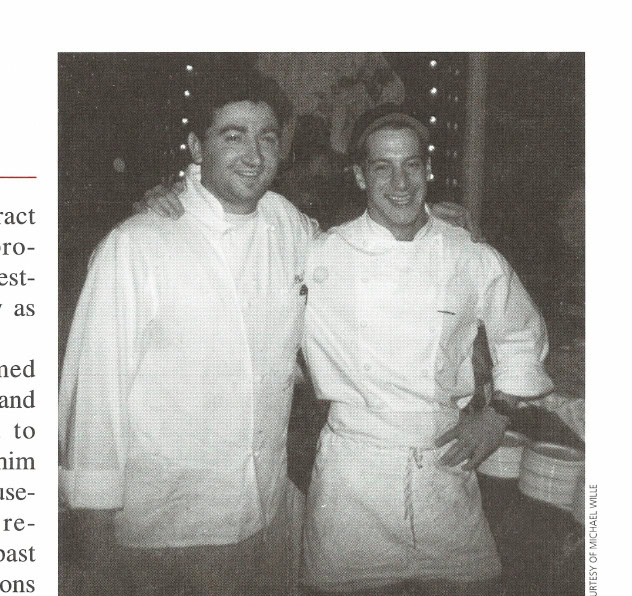
I’ve worked under Phil Green, executive chef of the Hilton Towers San Francisco, as his assistant chef in the past, and we’ve maintained a wonderful friendship throughout the years. He’s only a bit older than I am, but our lives have grown in very different directions. I’ve been running around the world, adventuring in East Africa as a remote catering chef, hiking the Pacific Crest Trail, and taking time off to cook on small sailing vessels crossing the Pacific. Meanwhile, he has been establishing a very respectable executive chef position in San Francisco and taking care of his wonderful family.
Every couple of months we have the opportunity to get together and share bits and pieces of each other’s lives, each of us enjoying many aspects of our own lives and envying the pieces that we are missing from one another’s. This particular midday session happened to be one of those times.
“So you’re going to Morocco for a month, but how many days will you be racing?” Phil asked, taking a pull on his beer.
“It’s a 7-day stage race, so the miles are broken down per day,” I explained. “Days one and two are 15- to 20-mile days. Day three is the dreaded Dune Day, where you run 12 miles across completely unmarked dunes, navigating with your compass. Then that’s followed by the 50-miler, which is lumped into 2 days. You’re given 40 hours to complete this. The first-place guy last year, Lahcen Ahansal, a local, of course, did the 50-miler in seven hours and 30 minutes. The temperatures were reported to be 120 degrees.”
I took a sip of my beer and gave Phil a moment to digest the ridiculous information as his eyes bulged. “That is then followed up by a standard marathon of 26.2 miles. So if you are one of the superheroes who completes the 50 in under 8 hours, you have a remaining day-and-a-half to hang out in camp and recuperate for your marathon. The final stage is the sprint, which is a mere 12-mile race into town.”
AN HONEST EVALUATION
Phil was giving me the “Are you freakin’ nuts?” glare that I was only too familiar with after spouting this spiel to hundreds of other innocent bystanders who may have been foolish enough to inquire about my antics.
“So what are these guys going to feed you along the way?” he inquired.
“Ah, that’s the beauty of the race!” I replied enthusiastically. “Every individual is responsible for being completely self-sufficient, so there’s a list of mandatory items that must be carried along with any luxury items you want to bring.
“Mandatory items are the 2,000 calories of food per day and a backpack that does not chafe your nipples and cause them to bleed. A lighter, from which I will drain half the fluid so as to not carry the extra weight. A mirror to send distress signals to the helicopters when I’m lying on the dunes yelping ‘Help me!’ from my dried, cracked, dehydrated lips when there’s no water left. A compass to help me get lost in the dunes since I don’t know how to use it. A pocketknife to cut the copious amounts of gauze and bandages that I will be applying to the blisters on my feet. A headlamp to help me get lost at night. And, finally, my mandatory, warm-as-hell, ultralight, synthetic, 1-pound 7-ounce sleeping bag to sleep in since it’s said to get as cold as 35 degrees at night.
“However,” I added, “my favorite piece of mandatory equipment is the life-saving anti-venom pump with topical disinfectant. The pump is used for the removal of venom that may be injected by the various desert-dwelling scorpions that burrow into your backpack, sleeping bag, and shoes at night. Fortunately, only five of the 1,500 species are considered to be man-killers. Unfortunately, all five are abundant in the Sahara. Much like their close cousins, the vipers, they inject a complex neurotoxin, which by molecular weight is reputedly 100,000 times more potent than cyanide. Which is a reason we would wish to extract such convulsion-promoting, cardiac-arresting fluid as quickly as possible.”
Since Phil seemed both overwhelmed and amused, I wanted to continue to amaze him with the plethora of useless facts I had researched over the past few weeks. “Scorpions grew legs and lungs some 300,000,000 years ago and burrowed their way into every continent other than Antarctica. They can survive in places like the Sahara because they have such a tremendous ability to adapt. They emerge only to hunt or copulate, and the female of the species often confuses the two. The feeding process may take many hours, since they need to chew their food to a semi-liquid state with little pincers called chelicera to suck the ‘slurpee of prey’ into their tiny mouths. It can consume as much as 30 percent of its body mass in one meal and can wait as long as a year between feedings.
“The scorpion,” I continued, “is so conservative with its own body fluids it can often absorb enough liquid through the fluids of its prey that it never has to drink. The fecal matter is dry, the urine is excreted in a crystalline form, and its shell is impermeable. The creature has adapted itself to become one of nature’s most indestructable desert predators, which is what I will have to model myself after to reign triumphant in the Marathon des Sables.”
WORK WITH WHAT YOU FIND
“You know, Mike,” Phil replied, “it sounds like wildlife is abundant in the Sahara. Perhaps you can shave a few pounds by leaving your food behind and hunting snakes and scorpions along the way. You’ve always been a pretty creative chef, and I’m sure you could adapt some of your cooking knowledge to make a viper chili or some scorpion kabobs.”
“Phil, that’s not a half-bad idea. It would probably be tastier than the granola, dried fruits, PowerBars, and GU packets I’ve got for lunch. For dinner, I have simple stuff like powdered mashed potatoes, Stove Top Stuffing, Ramen Noodles with black bean paste, miso, and dried shiitaki. I’m bringing lots of instant cous-cous, the grain so nice they named it twice. I figured that’s what the local runners will be eating, along with tons of dried dates. I figure if I eat like the Moroccans, I should be able to run like them. But, I won’t be able to do much cooking, as I won’t be carrying a stove. Apparently, it gets so hot during the day that all you have to do is cut the top off a water bottle, put your dried food and water in the sun, and let it bake until it resembles some sort of pliable, edible, starchy food-like substance.”
“Mike, I have no doubt that with your background and training that Stove Top Stuffing with powdered sausage gravy and bits of beef jerky will be a gourmet experience. A dash of Tobasco here, a pinch of dried basil there, a squirt of anchovy paste, and you’re talking Michelin three-star dishes. You may not have a stove, but I’m sure you won’t let Joyce Goldstien or Hubert Keller get one up on you. You could even make the big time and get aired on national television. The hell with Iron Chef! You could start your own show—call it ‘Aluminum Chef’ or maybe ‘Tin Can Chef.'”
Phil was amusing himself with this idea. “Instead of working with stuff like sweetbreads, foie gras, and black truffles, you can compete using only a small gas camp stove and a miniature penknife. They can give you ingredients like a can of chili, powdered mashed potatoes, a couple grams of dried basil, and some monosodium glutamate to work with. You could have locals as the judges and they would be spitting out your European-style cuisine while begging for goat, dates, and cous-cous.”
We both laughed as we continued to drink beer and tequila shots late into the evening, fueling ever more expansive menus. We discussed my limited knowledge of Morocco, old times we shared working together, and the most important thing in Phil’s life: his family. It was, to say the least, a grand evening.
A ROCKY MORNING
The next morning, though, was a pretty rough start. I had 2 days left until departure and needed to get in one more ambitious training run. I took off after breakfast, which consisted of a couple of Advil and a pot of coffee. Eight AM can be an ungodly hour for anyone who’s been up drinking and socializing into the late evening. And the San Francisco chill was so cold that my nose hurt and my fingers were numb. I knew I wouldn’t have to worry about that in Morocco.
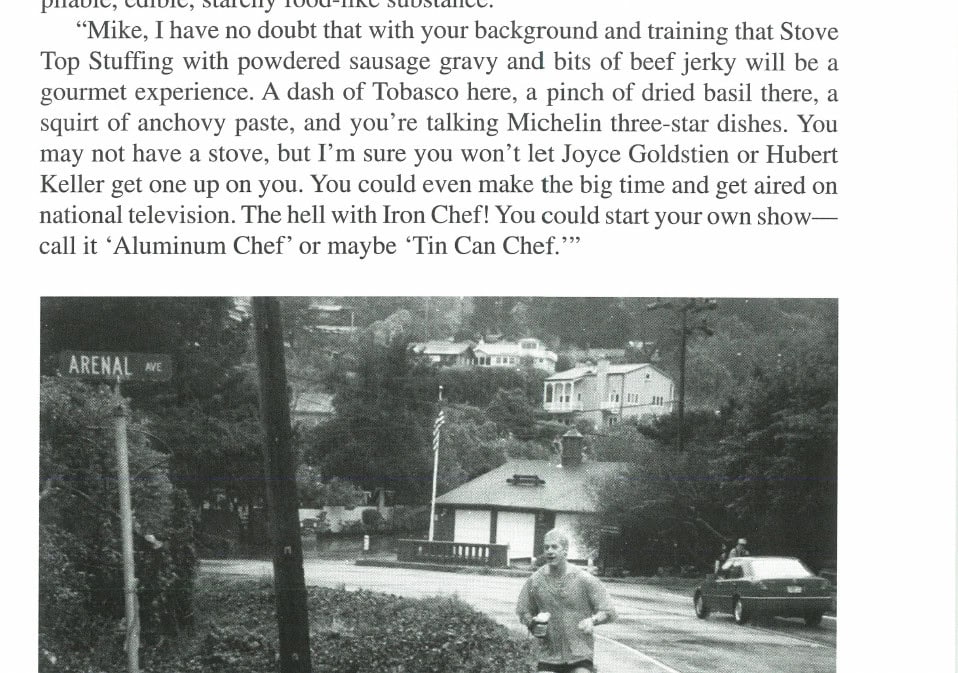
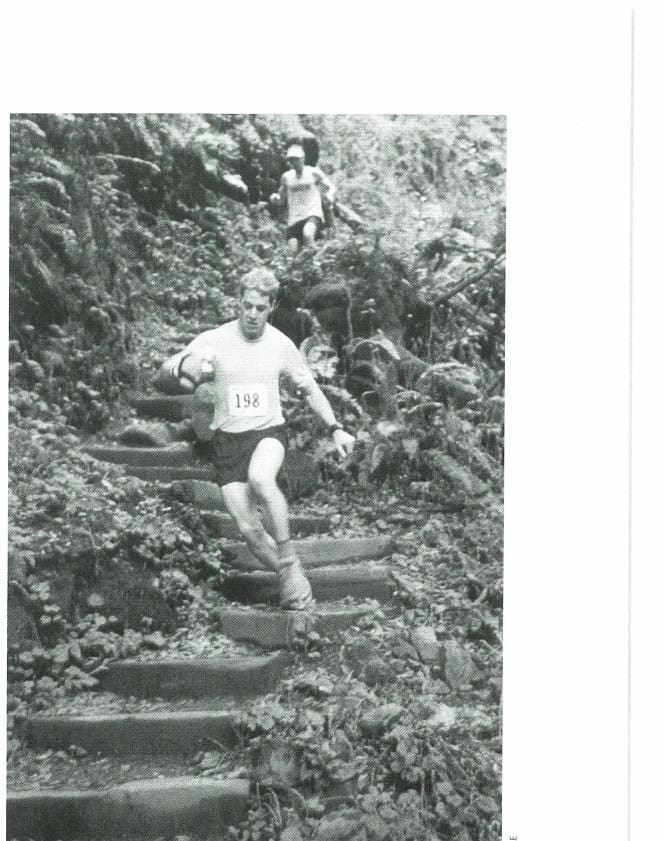
I was carrying my loaded pack and headed toward the beach to run in the sand dunes, as I had done so many times before. I must have done this run two dozen times over the past months, so I was on remote control.
I would often envision myself in the dunes of Morocco with Lahcen and Mohamad Ahansal in my sights as I plodded around in the dunes. The dune grass, which I was glad to hear was nonexistent in Morocco, was rigid and sharp. It would pierce the calves like pins and needles so that upon exiting the dunes my legs would be covered with tiny red dots of blood. There’s no escaping the sharp grass blades when running Ocean Beach; they plant the grass there to help hold the sand against the wind. I consider this to be “resistance training” and figure it provides some compensation for the relentless sun I would have to tolerate when I reached the Sahara. Suffering is good.
As I exited the dunes to continue along the trails, I still had a raging headache and stomach pains. But everything else felt great: the breathing, the legs, and the pack on my shoulder were all comfortable. This was all very important to me.
When I get to this point in a training run, my mind starts to race. I calculate all of the mileage I’ve covered over the last few months four or five times over to make sure I’ve got it right. I review the checklist of travel items I have and what still needs to be done:
“Remember to wrap your water bottle with some duct tape—that may come in handy.”
“Remove excess tags from all gear.”
“Get rid of all the froufrou carrying cases for sunglasses, snakebite kit, and compass. That’s just extra weight, and the stuff can be wrapped with the other pair of socks.”
“Unpack and organize all food into Ziploc bags, making it lighter and more organized.”
“Cut unused straps off of backpack.”
The list would go on as long as the miles.
Distance running is nothing more than a series of peaks and valleys. You have to push yourself through the lows to get back to the highs. And when you are at the highs, as I was right now, there is nothing like it in the whole world.
Regardless of my persevering abdominal pain, I had dinner that evening with my girlfriend Shelly at Frascati Restaurant on Russian Hill. It was the final “Hurrah” before I left. We enjoyed quail, risotto, fresh gnocchi, and crispy sea bass with lots of red wine. We ate like kings and were treated like royalty. I chased my dinner down with a few more chugs of Pepto Bismol and spent my last night with Shelly before the final day of shopping and tweaking my equipment.
My stomach was still churning, but I could tell it wasn’t from something I’d eaten, so I tried to carboload and hoped Pepto would help “coat, soothe, and relieve.” The only logical explanation I could think of was that I was experiencing departure anxiety, so I suffered through it and made the best of the situation.
THE ALMOST FINAL DAY OF MY LIFE
The next day was meticulously planned to the minute, but it immediately got off to a bad start. My 7:00 A.M. self-imposed assignment of bagging race food was interrupted by a trip to the emergency room due to severe abdominal pains that refused to back off. I was sporting a temperature of 104.
After hours of prodding, pulling, poking, needle sticking, forcing me to drink some chalky disgusting barium, and putting me through X-rays, fecal samples, urine samples, IV, ultrasound, MRI, CAT scan, and every test short of an SAT, the doctors finally came forth with a diagnosis. I was only half-aware that they’d come to a conclusion because I was groggy with the morphine they’d been using to suppress the pain.
“I don’t know if you’re aware of what we’ve been talking about here,” he said, looking down at me as I slipped into and out of consciousness, “but we need to run a few more tests. It seems that you have Portal Vein Thrombosis—a blood clot that’s blocking a vital vein carrying blood from your guts to your liver. We’ll have to check the tissue of your liver to make sure it’s healthy. We’re calling up some specialists.”
I came to the conclusion that Portal Vein Thrombosis was pretty bad and that I probably wouldn’t be scrambling to get onto a plane tomorrow to go to the Sahara. I hollered for the nurse to feed a bit more morphine into the intricate plumbing that was sticking out of my arm. I was flooded with emotions about missing the race, watching the distress on my sister’s and girlfriend’s faces as they watched me suffer, and a sincere appreciation that this was happening here and now instead of somewhere in the middle of the night in the middle of the Sahara in the middle of the Marathon des Sables.
It turned out to be a long, restless, morphine-influenced evening.
That evening was to be followed by a luxurious stay at the hospital with what seemed like hundreds of different doctors and nurses stopping by to feel my abdomen and ask repetitive questions. This was, after all, probably a once-in-a-lifetime chance to check out the freak case of Portal Vein Thrombosis. It made me wonder if the doctors were sitting around in the lounge drinking coffee while sharing work/gossip with each other: “Hey, Joe, did you check out the guy with the Portal Vein in 314? You haven’t seen him? Ah, man, you gotta stop and feel the guy’s abdomen! You can feel the clot, the bloodflow—everything. And man, does he look like hell. Hey, and get this: he thought he was gonna run some race across the Sahara! What a bozo!”
When my release papers were issued on Monday, I walked myself out of the hospital with vigor and determination. Aided, of course, by the help of my girlfriend and a few rest breaks that I had to take while holding onto a railing or sitting down on whatever was convenient. That was after they wheeled me as far as needed for insurance purposes. But I did, I really did, walk out to the curb on my own two feet. Runners do have their pride.
THINGS LOOK UP—FINALLY
Things began to look up after I ran through my dose of Lovenox, a blood-thinner that I had to have injected into my belly twice a day. The nurse and I practiced it at the hospital so that when I went home, I could do it “without difficulty” for the next week. I was to grab the fat at my midriff, insert the needle, and slowly inject the burning medication by depressing the plunger. Keep in mind that when I entered the hospital I weighed 160 pounds on a 5’10” frame. After a steady diet of Jell-O and IV drip, I’d lost 10 pounds, so that fat at the midriff was getting difficult to locate.
My additional 2 weeks of recuperation was not wasted. Through the miracles of modern technology, specifically the World Wide Web, I was able to follow
the progress of the 2001 race in which I should have been running. Lahcen Ahansal once again dominated, with a finishing time of 18 hours, 42 minutes, and 10 seconds; his brother finished 53 minutes and 13 seconds behind him.
It was amazing to gawk at the impressive first-place female finishing time set by Franca Fiaoconi, who was eighth overall with a 23:46:46. Tania Pacev was the third woman, 30th overall, and top American with a 29:04:48. The Web site provided photos and daily race stats, but following the race while lounging on the couch with a copy of The Lonely Planet Guide to Morocco opened on my lap just didn’t do it.
I learned that 59 other runners had dropped out of the race for one reason or another. Although none claimed to be suffering from Portal Vein Thrombosis, I’m sure all their excuses were more than valid. They at least made it to Morocco and lined up at the start.
Although I’m certainly not complaining. No matter how good Dr. Peltre (head of the marathon medical corps) and his staff of 30 were, I can’t imagine that they’d have been able to diagnose my problem—even with the additional support of 220 techs and logisticians, 90 support vehicles, two choppers, one Cessna, tons of medical equipment, and four camels.
My wish that I had been able to race in Morocco is offset by my gratitude at being alive. I’ve slowly been getting back into training. When I push too hard, I can feel the blood forcing through the clot; it’s a reminder to slow down.
It was difficult to explain to Phil and to everyone else I’d bored with my upcoming exploits just what had happened to derail it. But they eventually understood and were concerned for my well being. They’d all contributed mental support as I prepared for race day. They now provide me with mental support when I realize I can’t go out, at will, and throw down a hard 20-mile workout.
Like the scorpion, I must adapt to my surroundings and my capabilities. My running days are not over—things will, in their time, evolve and allow me to get back on course. In the meantime, I’ve begun work on a very short book on how to turn leftover trail mix into a gourmet meal.
This article originally appeared in Marathon & Beyond, Vol. 6, No. 1 (2002).
← Browse the full M&B Archive1,000+ stories from 19 years of Marathon & Beyond
The complete archive of the legendary long-distance journal — digitized and free to read.
