

Women Wept, Strong Men Lost Their Lunch
Although the motion picture Superman didn’t appear until long after he had retired, little Jim Peters could surely lay claim to being the Clark Kent of marathon running. Just like the comic-book hero, Peters was a mild-mannered, unassuming fellow who needed only a change of clothes to morph into something astonishing and heroic. Peters would cast off his optician’s white coat and replace it with threadbare running gear to become a demonic running machine whose motto was “Kill or be killed.”
In the austere postwar years when nutritious food was still rationed in the United Kingdom, Jim Peters single-handedly turned marathon running into a highspeed race against the clock, repeatedly smashing world records in what he called his “Woolworth plimsolls.” To Americans they were “five-and-dime sneakers.”
Until Peters came along, marathons had for decades been the preserve of elderly plodders who trained and raced slowly and steadily, believing it was the only path to success. Peters blasted such theories out of the water.
He came late to the marathon, having been humiliated into track retirement by the great Emil Zatopek in the 1948 London Olympics. The Czech lapped him in the 10,000 meters in front of his home fans, leaving an embarrassed Peters to crawl off the track like a scolded schoolboy, intent on never racing again.
Months later he was persuaded to try the marathon by coach Herbert “Johnny” Johnston, who was convinced that Peters’s capacity to endure hard work and pain could bring him glory. In 1950, Peters began training in the dark evenings after work and clocked up unprecedented mileage. Not only that, it was all intense, high-speed work with no gentle jogging: “I bashed it night after night,” he recalled with a grin. To outsiders, it seemed a crazy and almost suicidal approach, but it worked. Eighteen months later, his marathon debut on the famous Polytechnic
course from Windsor Castle yielded the first in a series of sensational recordbreaking performances.
A decided lack of good style
▲
A short, sharp training session on the track became a lunchtime routine during Jim Peters’s working day.
Private collection
Peters was certainly no stylist: he was no master tactician, and he ignored conventional wisdom, refusing to take on water even in hot weather so as to avoid upsetting his sensitive stomach. To the purists, he was a lurching and ugly runner, but his guts and sheer bloody-mindedness saw him grind out victories no matter how harsh the conditions.
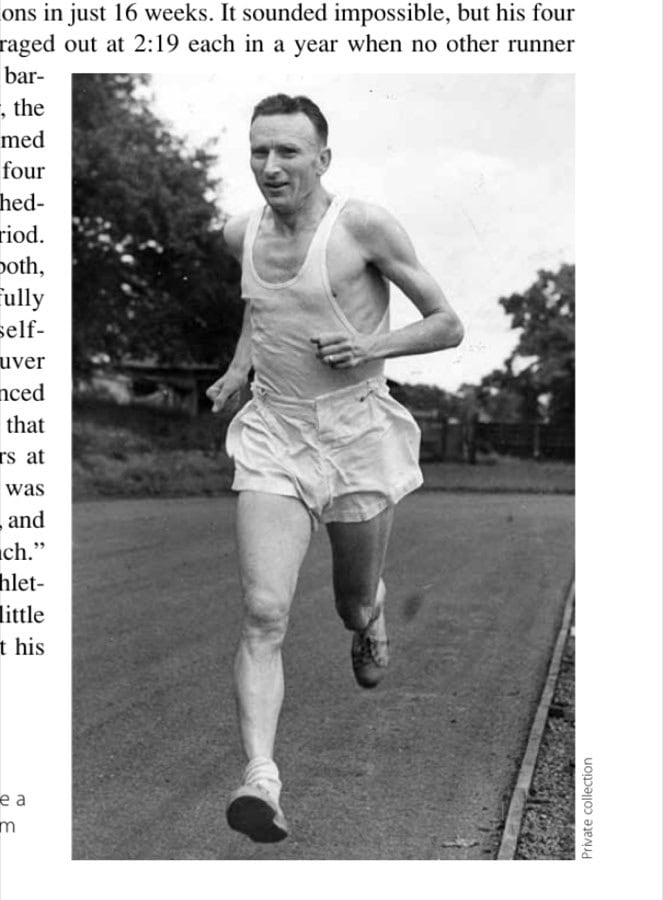
By the mid-1950s, he was regarded as Mr. Indestructible, having massacred the world record three times. The world marathon best was 2:26.42 when he first took up running, but by summer 1954, he had slashed it to 2:17.39.
His best year was 1953, when he announced, typically bullishly, that he would attempt four fast marathons in just 16 weeks. It sounded impossible, but his four times subsequently averaged out at 2:19 each in a year when no other runner could get under the 2:20 barrier. The following year, the proud little Londoner aimed to repeat the trick, and four big marathons were scheduled for a 20-week period. Brave or foolish, maybe both, he would fail in painfully spectacular fashion, selfdestructing in a Vancouver heat wave. One experienced onlooker would report that what happened to Peters at the 1954 Empire Games was so awful, “Women wept, and strong men lost their lunch.”
Jim Peters’s rise to athletics greatness had been little short of miraculous, but his
fall was simply horrible. The dreadful scenes played out in the final stages at the Vancouver race were the result of a combination of bad luck, bad judgment by Peters, and poor organization by Games officials.
His problems that day in August 1954 had begun even before the cream of the British Empire’s distance runners gathered on the start line. After being driven around the course in a courtesy car, Peters became convinced that it was too long (around 27 miles, according to the car’s odometer). His complaints fell on deaf ears, but it continued to worry the perfectionist Peters, who knew he was equipped to race 26.2 miles but felt less confident about going farther. Another worrying aspect was running during the hottest part of the day during a heat wave. Officials were unable to change their program, as the “Miracle Mile” involving Bannister and Landy and the finish of the marathon had to coincide with the presence of VIP visitor Prince Philip in the stadium.
Peters’s other concerns included the good form of England teammate Stan Cox, who he felt was peaking at the right time and would pose a bigger threat than usual. He also fretted that the few feed stations around the course wouldn’t have the damp sponges he needed to cool himself. He was visibly more tense than usual, and England team manager Les Truelove told him quietly: “No records today, Jimmy; look at that sun, just go steady.”
Sixteen men, six representing host nation Canada, assembled for the 12:30 start, their prize the Empire marathon crown currently held by England’s Jack Holden. Peters was the overwhelming favorite with a best time fully 15 minutes quicker than the championship record. Cox and others opted to wear large neckerchiefs to block the sun, an idea Peters abandoned after nearly choking himself when trying one earlier. He also decided not to use a baseball cap he had bought earlier for a dollar, worried that it would fall off because of the way his head wagged about when he ran.
Peters was to be on his own that day Vehicles containing helpers were banned from following runners to avoid a buildup of exhaust fumes, and it dawned on Peters that, unlike previous races, he would be completely on his own. His coach was back in England, and most teammates, officials, and spectators would be inside the stadium watching the long-awaited Landy-Bannister epic. The chances of getting useful information during the race looked slim, something he wasn’t used to.
England’s star turn in the mile race, Roger Bannister, recalled the glorious scene: “The stadium was filled with one of the most enthusiastic crowds I’d ever seen, the setting was perfect, the newly built stadium lay there in the sunshine, the flags of competing countries silhouetted against the mountains of Vancouver Island.”
South African ultra specialist Jackie Mekler, running the marathon, also has clear memories of the day: “It was difficult to relax or take one’s mind off what
lay ahead. I was pleased when we were finally called to the track for the 12:30 start. The temperature was 28 degrees [Celcius], with clear, sunny skies. There was a lighthearted moment when an unofficial runner tried to line up with us. He was a bit of a crackpot and was soon hustled off the track.”
Al Lawrence of Australia also remembers the “crackpot.” Now a well-known coach in the USA, 57 years later Lawrence recalls: “A man in a white singlet and red shorts elbowed his way between Peters and Cox. He didn’t have a race number, and both English runners, obviously annoyed and nervous, stepped off the starting line and called for the starter to remove him. Officials intervened and attempted to find out what country he represented. They discovered he didn’t speak English and wasn’t even an official entrant, for he indicated by sign language he’d come out of the stands! Incredible as it might seem, some of the Canadian officials initially thought it would do no harm to let him start, as he would soon get tired and drop out! Peters would have none of this and kept appealing ‘Remove this madman!’ and after several minutes of bedlam and Academy Award theatrics, the race was ready to start without the mysterious madman. I’d never thought of Peters being a particularly nervous athlete, but when this impostor crashed the start, I was surprised how upset he became.”
When the pistol finally sounded, Peters seemed to be following advice and didn’t rush into his usual early lead. They streamed out down East Hastings Street, the first three miles mostly uphill and tough. After about 20 minutes, Peters recalled being surprised to find the Australian and South African opposition nowhere to be seen, and he and Cox led with only Scotland’s Joe McGhee for company. Little changed as they headed south, and Peters recalled that near the 10-mile point, he and Cox glanced at each other and, without needing to speak, simultaneously accelerated to open a gap on McGhee.
Everyone was finding the hills and heat grueling, and Peters soon found himself pulling clear of Cox. Around halfway, he took a look round and estimated that Cox was 300 yards adrift. Far from being encouraged, however, Peters found this disturbing, for it forced him into a making a decision. Should he apply pressure to make the gap decisive or maintain the same speed and hope Cox would fade further?
Another injudicious decision It was a no-brainer, really, and as usual, Peters refused to take the cautious option. He began to speed up, even though he knew full well it was wrong to be working so hard with so many miles still to go: “I was by no means going all out, [but] the heat by now was almost overwhelming.” He dearly wanted a wet sponge to cool his burning head and neck but knew this “luxury” wouldn’t be available until the official feed stations later on—and
even then they might be bone dry, like those earlier. Up another slope, the centrally located Little Mountain area, Peters felt himself grunting and groaning more than usual. By now, he had forged a mile ahead of struggling Cox and had nearly competed 20 miles, but in his mind he believed the lead was probably around 500 yards. This false picture created unnecessary pressure and anxiety.
An official vehicle with loudspeakers blaring was traveling around the course but never came near enough for Peters to decipher its messages. He never received any information about how substantial his lead had become. Normally, his coach would have shuttled up and down the course by car to advise him, but lack of funds meant Johnston had been unable to travel. Peters had no helpers at all; he was hot, exhausted, and anxious and hadn’t a clue where he stood. He responded in the only way he knew: he continued to work like a demon.
Unbeknown to him, runners behind were dropping like flies as he plugged on along Powell Street toward the closing stages. The final feeding station was between miles 25 and 26, and when Peters arrived, he still believed Cox was close behind and refused to let himself relax. Had he known the truth, he could have stopped here, dropped into a nearby house for a leisurely shower and a cold beer, and still emerged with a healthy lead!
In truth, Cox was not only a long way adrift, he had actually collapsed with sunstroke after a nasty collision with a telegraph pole. He was out of the race.
ad
Running steadily farther down the course was McGhee, the Scottish schoolmaster, now unknowingly in second place. With less than 1,200 yards to run, the astonishing truth was that Peters now held a massive lead of more than three miles (roughly 17 minutes), but he was completely oblivious of the fact. “
If only I had known that, I could have stopped at the last feed station, had a good sponge down, and trotted in slowly,” he would reflect later. Lawrence dropped out at 22 miles and confirms that Cox’s dramatic exit came on the climb up Powell Street, an ambulance ferrying him to hospital: “Cox was told at that point that Bannister had just won the mile, and he assumed Peters had won the marathon by then, too.”
Anxiety-ridden Peters was by now massively fatigued and overheating but scared stiff at the thought of easing up and being caught. He reached the stadium district in around 2:20, a superb time given the circumstances. It was exactly on his target schedule, as he had been convinced earlier that 2:23 would be needed to win gold. He never dreamed the winning time would ultimately be a few seconds short of 2:40.
The Mile of the Century lived up to its billing Meanwhile, the crowd of nearly 33,000 inside the stadium was in uproar after witnessing the “Mile of the Century” live up to its name. Bannister and Landy served up a wonderful contest, the Englishman winning as both men dipped under the magical four-minute barrier. Working feverishly in the commentary box were the McWhirter twins from London. With the marathon runners now approaching, a message arrived that ABC of Australia wanted to take a live broadcast feed for a further hour. Ross McWhirter was instructed to keep commentating for an additional 60 minutes and wondered what on earth he would find to talk about to fill that amount of time. He would soon find out.
Arriving outside the stadium, Peters found himself in torment, wondering if somebody had really told him that Cox was out of the race or whether his exhausted mind was making him hallucinate. Peters recalled later: “I said to myself, you are being a coward; you’re just imagining he’s out of the race. Get on with it, you coward, finish it! When I came into the stadium, I thought, What am I working so hard for? but then thought, I must get on with it and get around that wretched last lap.”
As he went uphill toward the gates, he felt himself wobble, which surprised him, and then into the stadium came an untimely steep ramp. As he approached the top, he wobbled again and recalled: “I never did like looking down from a height. When I was young, even to look down from Tower Bridge [over the River Thames] used to make me feel giddy, and still does. On top of that ramp, I had a similar feeling for a moment but still didn’t think too much was amiss and went down on to the track. I then had about 380 yards to go.”
Private collection
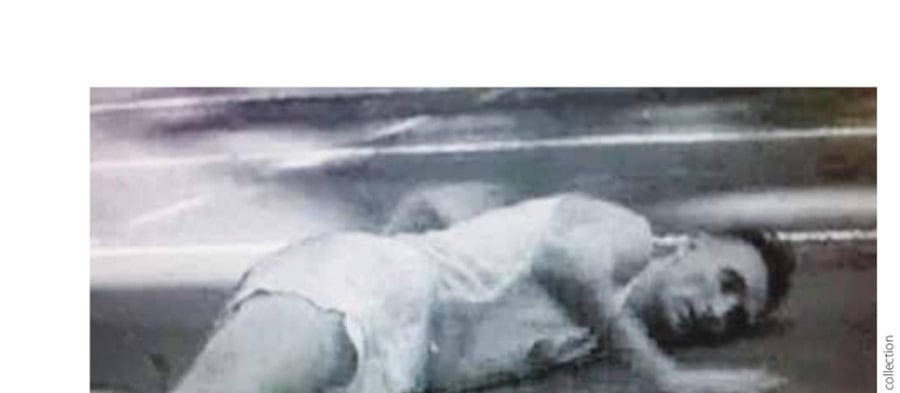
▲ “Women wept, and strong men lost their lunch”: 12 times Jim Peters collapsed in a heap on the Vancouver track before he was eventually rushed to the hospital.
At this point, he recalled pondering whether he ought to wave to the crowd as he usually did but decided against it: “You’re really tired, don’t kid them, just do those final 380 yards . . . [then] suddenly I fell to the track. I just couldn’t understand what had happened. For a moment, I was completely bewildered. Then I made my mind up I was going to finish. I didn’t want to disgrace my wife and kids. I thought of them at that moment and said to myself, I’m going on; there’s a tape you’ve got to break; you don’t stop till you hit that tape.”
Peters’s painful progress was the denouement of the mythical tortoise-andhare scenario, with him playing the part of a seriously distressed hare. By now, he was evidently slipping in and out of consciousness, so to get the most revealing views of the unfolding drama we need the recollections of eyewitnesses. Better placed than most was Australian runner Geoff Warren, who had competed earlier in the six- and three-mile races. Warren saw Jim at close quarters both outside and inside the stadium, and what happened is etched deeply in his memory. He says: “
Initially I was in the stands, sharing the intense excitement over the mile and the deep disappointment of Landy’s defeat, many of our Aussie party in tears at what we felt was an inappropriate defeat of a much-admired teammate. With the buzz of the mile still going on, I ran out the back entrance of the stadium and up the road to meet the marathon leaders and find out how that race was going. “
The road was deserted, no spectators or officials, no such thing as lead cars back then. Jim had just about reached the fence of the stadium. The only person in sight was him. He was weaving from side to side of the road. I spoke to him. His face had a fixed staring expression, and though he appeared to look straight at me, he showed no sign of recognition and went on weaving down the road, even colliding with a lamppost. He was still running, but slowly, so I followed and saw him directed into the back stadium gate.
Death in slow motion “He gained some impetus down the slope inside, leading to the track, but on the track started this long, horrible slow-motion run. It was actually more like a walk, with his arms grasping in the air in front, his legs also reaching forward like a puppet, and his head mostly tilted back. And every few steps he would fall over backward, turn over, climb to his feet again, and continue his awful progress. There had been a roar from the crowd at the first sight of Jim arriving on the track, but it was now replaced by a horrified silence.”
Warren goes on: “By now, I had crossed the field and was again close to Jim. England’s vice-captain, the giant thrower John Savidge, was also close and repeatedly implored, ‘Give up, Jim.’ This was later reported as him saying, ‘Get up, Jim!’ but that was not as I heard it. Nobody would touch Jim, no doubt aware that this would have him disqualified, for they were hoping he could somehow still reach the line. He eventually did and was gathered up in someone’s arms and carried to receive medical help. The realization soon spread this was not actually the finish line for the marathon, which was 200 meters further on at the end of the back straight. This was a shock to us all, who thought we’d seen an incredible win. But there was no way Jim could have gone any further.”
Horrified England teammate Chris Brasher was also nearby: “Jim was suffering from dehydration, salt deficiency, and overheating, and his balance was gone. He came down the ramp to the track swaying all over the place, collapsed, got up, and collapsed all over again. It was a hell of a scene and one of the most horrific in athletic history. I was on the side of the track and saw it all. They took his temperature right there, and his brain temperature was about 107 or 108 degrees. It is something absolutely unbelievable in medical circles. He was on the verge of cooking his brain.”
Skip Rusk of the Vancouver Sun had never seen anything like it: “His thin legs wobbled, his arms hung from beat shoulders. His glassy eyes stared straight ahead, and his mouth hung open. He fell twice on the concrete entrance to the stadium, landing hard on his back the second time. He pushed himself up with his hands, crawled on to the track backward, looking up into the blazing sun. Confusion and pathos mounted. Someone was heard to call out to Roger Bannister: ‘Roger, this is murder!’ and the shocked miler replied it was like ‘feeding Christians to the lions.’”
Bannister himself recalled later: “No one who saw the tragic gallantry of his futile attempts to reach the finish wanted the painful exhibition to continue, yet no one seemed to have the authority to remove him from the race. He crossed the same finish line as Landy and myself. He did not know his own finish was some 200 yards further on.”
During his painful and extended staggering, Jim at one point veered toward a shaded area of the cinder track under the main grandstand. Here he lay on the track for what was estimated as nearly five minutes before clambering back to his feet and attempting to go on. This was close to where Prince Philip was sitting. Roy Moor of the News Chronicle pointed out: “Children sitting in front of the Duke were told to hide their faces to shut out the pitiful sight. Men and women turned their heads away as Peters continually fell, sometimes lying spread out on the cinders for several seconds. Twelve times he went down.”
“I felt like being sick.” New Zealander Murray Halberg, who earlier finished fifth in the mile, observed: “There was a stark, shocked silence in the crowd, and I felt like being sick. I wished someone would stop this agony. It was beyond everything that is sport to see that stricken man, all alone before thousands of horrified spectators, lurching in virtual collapse. When a boxer is punched into that condition, the referee stops the fight. Peters should have been stopped. He was no longer responsible for himself . . . that deathly silence was in stunning contrast to the uproar at the end of the magic mile, it was unreal and something I’d like to forget, but I’ll never forget it.”
Another Australian, 440 yards gold-medalist Kevan Gosper, had just finished warming up for the 4 110 relay when Peters first appeared. “[He] came down the ramp in almost eerie fashion. He wasn’t running, he wasn’t walking, he looked as if he was in a trance. There was a sudden hush as the crowd immediately recognized something was seriously wrong. I completely forgot my race and moved into the center of the field to see what was happening. It was very distressing. His mouth was open and his eyes vacant and staring into space, his limbs didn’t seem to be coordinating, and I was worried he might collapse and die. The crowd alternated between being hushed when it was worried about him and then cheering him on each time he managed to lift himself forward. It was a pitiful sight.”
Celebrated Irish sportswriter Frank Keating described the scene: “A grotesquely hideous ballet . . . a pitifully tottering dance of death. Instinct and a misbegotten willpower under the merciless sun had Peters keeling over onto the cinder track again and again like a drunken vaudeville tumbler. Each time, he hauled himself up once more to stagger on in a groggy, futile nobility. When some from the grandstands, unable to bear it, began to shout for a stop, the stadium announcer crassly called for order and ‘respect for sportsmanship.’”
One paper reported that experienced Calgary newsman Gordon Hunter was physically sick while watching Peters, while hard-bitten Life magazine photographer Ralph Morse was seen in floods of tears. Many women wept and averted their eyes, and Prince Philip was also seen to turn away from the scene several times, a grim expression on his face.
Private collection
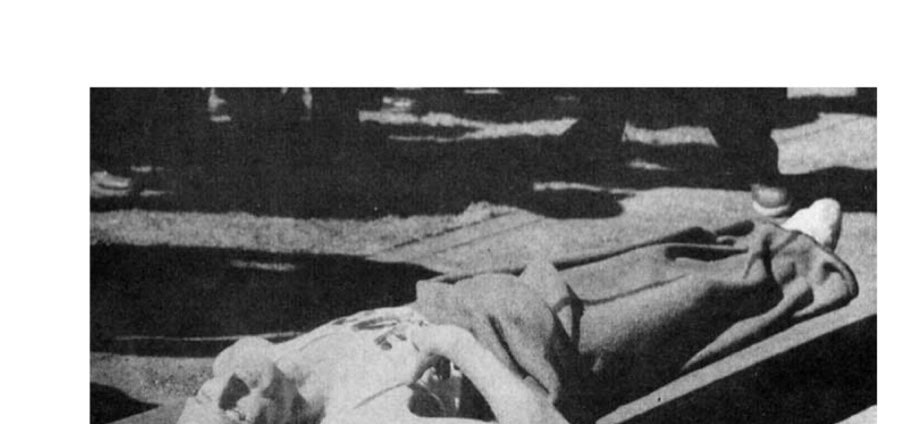
▲ Jim Peters is carried away after the horrendous scenes on the Vancouver track.
Al Lawrence is still amazed all these years later that the English management didn’t know, or hadn’t been told, that the marathon finish line was 200 yards farther on—knowledge that would surely have seen them pull Jim out of the race earlier to prevent this gruesome spectacle. Peters’s grotesque torment lasted around 11 awful minutes before he tottered to the painted line where he was caught by English trainer and masseur Mick Mays and official Ernest Clynes, just before he toppled for a 13th time. But he was still half a lap short of the appointed finish and officials had no alternative but to disqualify him, announcing this sad fact just as he was borne away on a stretcher.
Like a fish out of water Wrote George Whiting of the London Evening Standard: “Who can ever forget the convulsions of those skinny limbs over the sides of the stretcher as they bore him away like a wide-mouthed fish that has fought and lost?” Whiting also highlighted how England officials had restrained a doctor who tried to help the zigzagging Peters when he first arrived.
Beleaguered team manager Truelove tried to fend off the criticism: “Yes, had I known when Peters entered the stadium that he’d been expected to run nearly a whole lap more, I would have ordered him to be taken out immediately.” They thought their man was very close to finishing and didn’t want a repeat of the 1908 Olympics controversy when Dorando Pietri was disqualified after being helped across the line.
There were jeers from the crowd when the disqualification was announced, but the people gathered around Peters were by now more concerned about whether he would live rather than his fate on the results sheet. He was whisked away to the Shaughnessy War Veterans Hospital, put in an oxygen tent, and given a saline drip.
The crowd held its breath when McGhee finally arrived at the stadium, expecting to see another hapless figure struggling to stay on his feet. The relief was palpable when the Scotsman ran in smoothly and untroubled to win in 2:39:36. Mekler followed, amazed to find himself second in 2:40:57, his compatriot Jan Barnard a weary and blistered third in 2:51:50. Only six of the 16 starters finished the ordeal.
Mekler recalls: “When I finally ran into the stadium, I was told by excited spectators I was about to finish second but couldn’t believe it. Suddenly, I no longer felt distressed and sprinted that last lap. I was so relieved, I felt I had just woken from a bad dream.”
Frank Rostron of the Daily Express reflected: “I cannot recall anything in sport quite so shocking as the spectacle of the poor, semiconscious Peters . . . if you think I exaggerate, I can only say that over a score of women fainted at the dreadful sight of the three-parts unconscious Peters, staggering and falling, staggering and falling, getting up, crawling, pawing the air and stumbling blindly like some maimed animal. Red Cross men carried women out on stretchers. Thousands of others averted their eyes.”
Dick Beddoes of the Vancouver Sun was sickened yet awe-struck: “Memory of the Londoner’s raw courage in defiance of the comforts of quitting was so vivid as to be nauseating. For his performance was overwhelmingly wonderful yet completely horrible. It was like watching a man die. Each time he fell he grew more wretched, a tormented soul dredging the depths of his resolution. And when nature had exacted its terrible toll, he collapsed into the mercy of oblivion. The tragedy was compounded when he stumbled blind to the cinders, the finish line mocking him 185 yards away. What happened before unconsciousness set in caused women to weep and strong men to lose their lunch. One such was a veteran newsman, a good one and a tough one. He went under the stands and was revoltingly sick by himself.”
The results of “ludicrous rules” The Canadian public was horrified and later wrote to local papers in droves, some calling for marathon running to be outlawed. Years later, after the dust had settled, Jackie Mekler reflects: “What happened at Vancouver did not surprise me, but the manner and severity of it certainly did. Peters was no doubt a very fast marathon runner but needed ideal conditions to perform to his best ability. Should the event have been staged at a cooler time of the day? I would generally agree, but
not totally so. Is a marathon race not supposed to be a test of endurance as well as speed? Should a top marathon runner not be able to adjust to all conditions? While Peters was doing his short, sharp training runs, I was out doing 50-milers in the heat of the day. To me, one of the most lingering memories of Vancouver was the strict instruction that runners’ attendants or managers were not allowed on the course, no intermediate times were given by officials, and certainly at the final feeding station, shambles reigned. There were no officials present to ensure that their ludicrous rules were carried out.”
That Saturday night, nurses at Shaughnessy Hospital kept a close eye on Peters and Cox, their pale and limp patients from England. Fellow runners, reporters, and well-wishers descended on the hospital for news but were largely kept at bay by the medics.
Early the next day, rumors spread across the city that Peters had actually died during the night. Geoff Warren recalls: “I went rowing with a friend in a boat on Vancouver Lake, and we passed a couple picnicking on the shore. They had one of those huge, heavy portable radios, and we heard clearly a news broadcast to the effect that sadly Peters had died in hospital. The shock put an immediate end to our outing, and we returned gloomily to the Village, only to hear thankfully the reports were untrue.”
ad
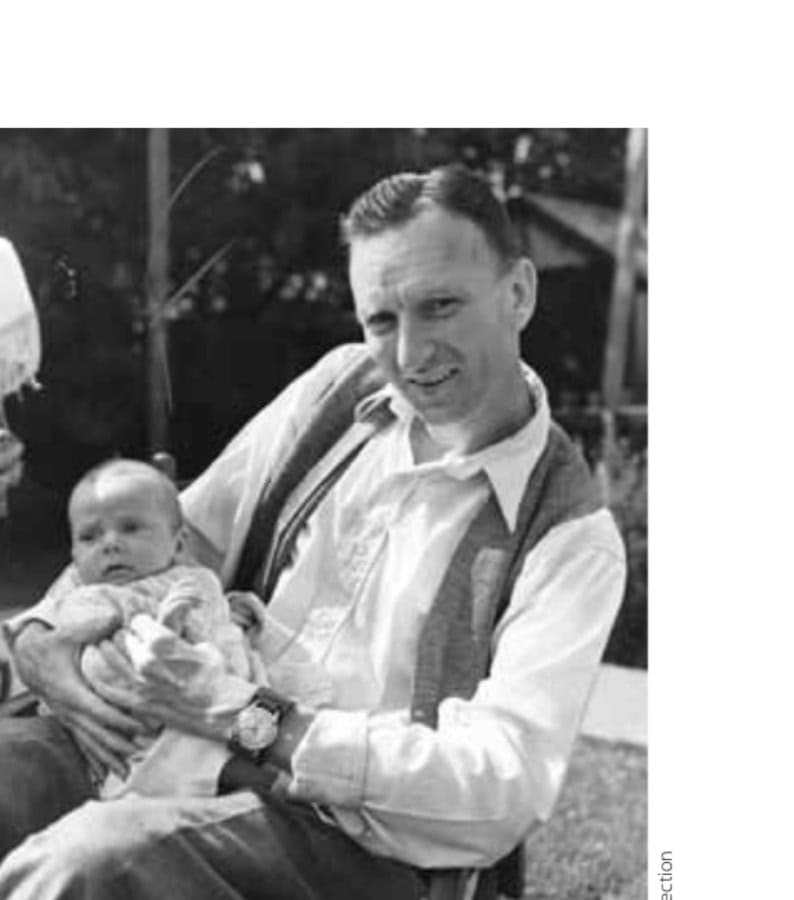
Several days later, a shaky Jim Peters emerged from the hospital, having been granted permission to fly home. Doctors confirmed severe heat exhaustion had nearly killed him. Roger Bannister, newly qualified as a doctor, kindly escorted him every step of the way back to his anxious family in Chadwell Heath, a few miles outside London. Peters’s body recovered from the ordeal, but he never ran another step.
He had toyed with the idea of going for marathon gold at the 1956 Melbourne Olympics before calling it a day, but lying in his Vancouver hospital bed, he had decided that tackling another marathon in the heat would be foolish, as he was clearly a danger to himself. He knew only one way to run, and if he reached Melbourne and race day was hot, “I would only go and bash it again.”
For once, Jim Peters took the cautious option. He called time on his fabulous, if truncated, running career and devoted himself to his work and family, opening his own optician’s business and hanging up those battered white “
plimsolls” for good. He retired to a quiet spot by the sea, and one day somebody visited and told him an important new book had been published (Lore of Running by Dr. Timothy Noakes) that named him the greatest marathoner of all time. It was a
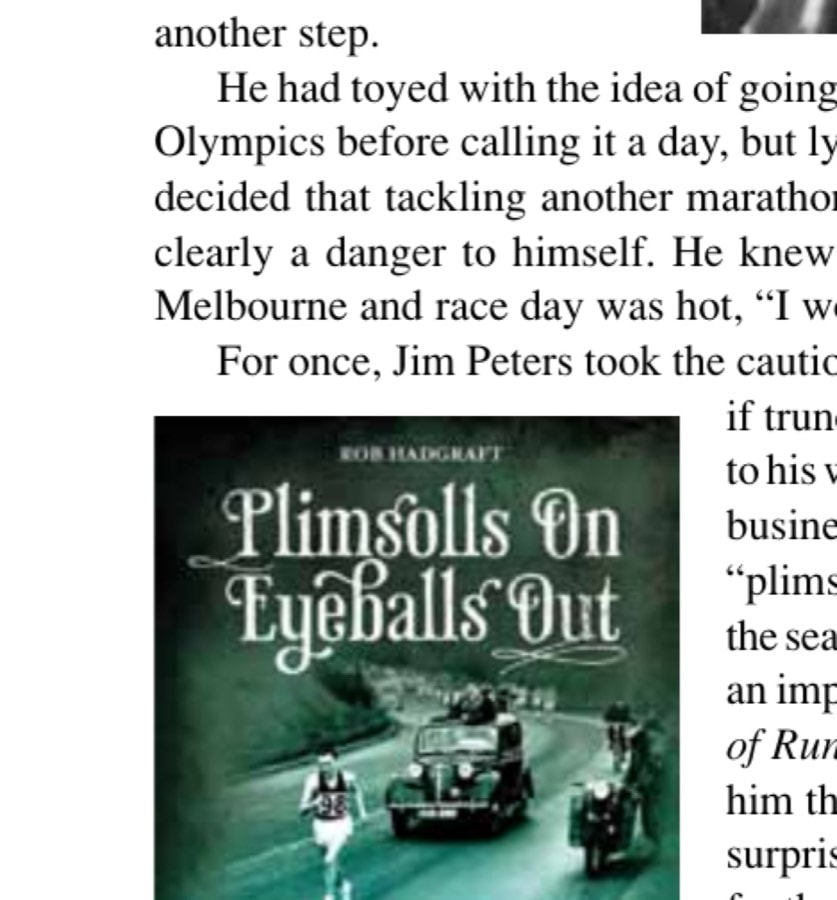
surprise and a proud moment. It didn’t make up for the Vancouver debacle, but it certainly helped. All Jim Peters had ever wanted was to make his country and his family proud. Rob Hadgraft’s biography of Jim Peters, Plimsolls On,
Eyeballs Out, was published in 2011 and is available through Amazon or www.desertislandbooks.com.
Private collection
▲
Still a hero in her eyes: Jim with daughter Jennifer, after his return from the Vancouver debacle.
This article originally appeared in Marathon & Beyond, Vol. 16, No. 3 (2012).
← Browse the full M&B ArchiveMore like this
1,000+ stories from 19 years of Marathon & Beyond
The complete archive of the legendary long-distance journal — digitized and free to read.
