


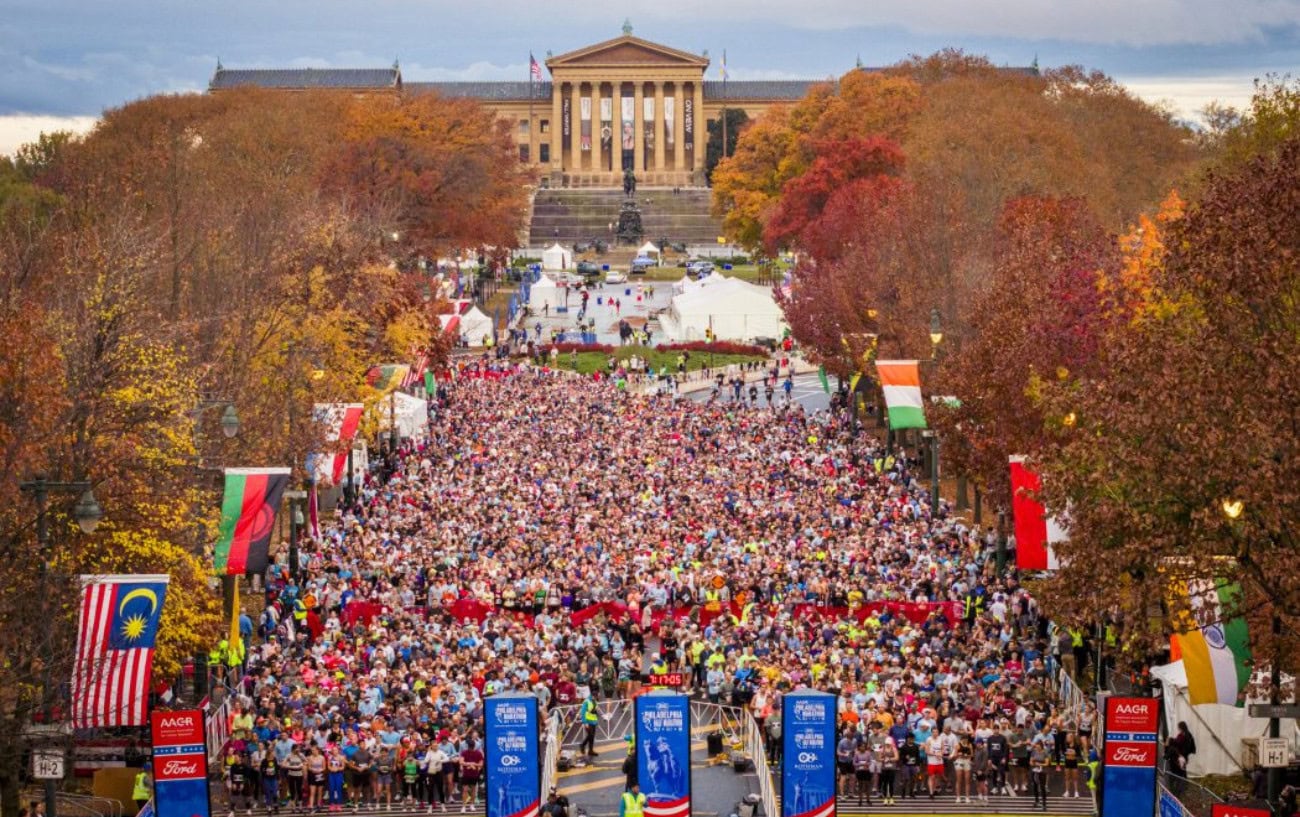
The Philadelphia Marathon kept a policy in place this weekend that still isn’t common in U.S. road racing: equal prize money for the top men’s, women’s, and nonbinary finishers.
The city first introduced the structure in 2024, and although it wasn’t a headline announcement this year, it’s still notable because only a small group of races have matched it.
Organizers introduced a nonbinary registration option in 2022. Two years later, they expanded it to include equal prize money for the first time.
Along with that change came a “face-value” policy: runners select the category that matches their identity, and the race accepts that choice without requiring paperwork. Philadelphia officials described the move as part of a broader effort to make the event feel representative of the city.
Philadelphia isn’t alone either.
Other races have moved in the same direction, though at their own pace.
The Maine Marathon is one of the clearest comparisons.
It pays identical prize amounts to the top five in all three gender categories, with time standards in place to ensure the awards go to competitive performances. Unlike Philadelphia, Maine’s structure is tied closely to hitting those time standards, but the result is all the same: three divisions and three equal prize pots.
New York Road Runners has also expanded its prize offerings even more widely.
NYRR introduced nonbinary registration in 2021, then added prize money in select races the following year. What started small has become common across many member-division events. The Brooklyn Half, Bronx 10 Mile, Manhattan 10K, and several shorter races now list identical payouts for men, women, and nonbinary athletes, along with matching time bonuses, borough awards, and team scoring setups.
Not every NYRR event offers prize money across all three divisions; some professional races, such as the Mini 10K, maintain gender-specific fields, but, across the calendar, the organization’s shift toward three equal tables is unmistakable.
Taken together, these changes mark a pretty significant change in how road races are structuring their competitive fields.
For decades, prize money existed only in the men’s and women’s divisions, and smaller races rarely even offered financial awards at all. The introduction of nonbinary categories came first, followed by qualifying time adjustments (for those races that require it, at least), and eventually prize money in some events.

Philadelphia’s adoption of equal payouts in 2024 placed it among the earlier races to make the change.
This year, the policy returned quietly. There was no formal announcement, and most runners probably learned about it only through registration materials or pre-race communication. Even so, the structure remains intact, and it’s now part of the event’s fundamental framework rather than a one-time marketing stunt.
As more races adopt three-division payout systems, the world of road racing looks a bit different than it did just a few years ago. What once felt almost experimental now shows up in multiple large U.S. races with thousands of finishers.
Philadelphia may not be alone anymore, but it’s still among the more prominent marathons applying equal prize money across the board, and its continued use of the policy shows how quickly the times are changing.
RunClub
Get more running stories — join RunClub
Daily running news, a community of 300,000+ runners, free training plans for every distance, and a daily running game. Free to join — no card.
Already a member? Log in →








Start the conversation