


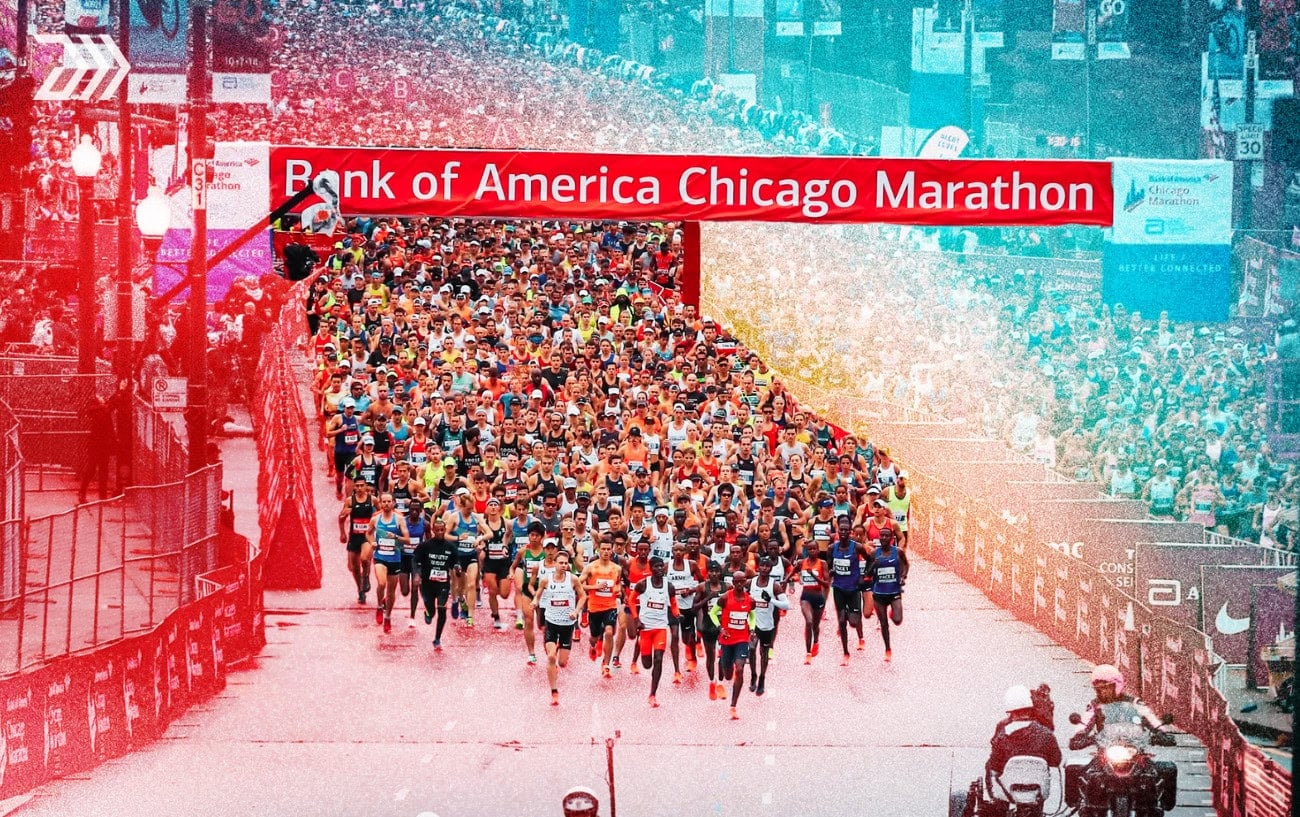
The 2025 New York City Marathon didn’t just return to its throne as the world’s largest marathon, it did so with record-breaking authority.
In his exhausting analysis of race data, running statistician Brian Rock (@RunninwithRock) unpacked everything from the demographics of finishers to the surprising patterns behind Boston Qualifiers, revealing a marathon that’s not only back on top but also subtly evolving in who runs it and how fast they go.
Here are the biggest takeaways from his numbers, and what they say about the modern marathon boom.
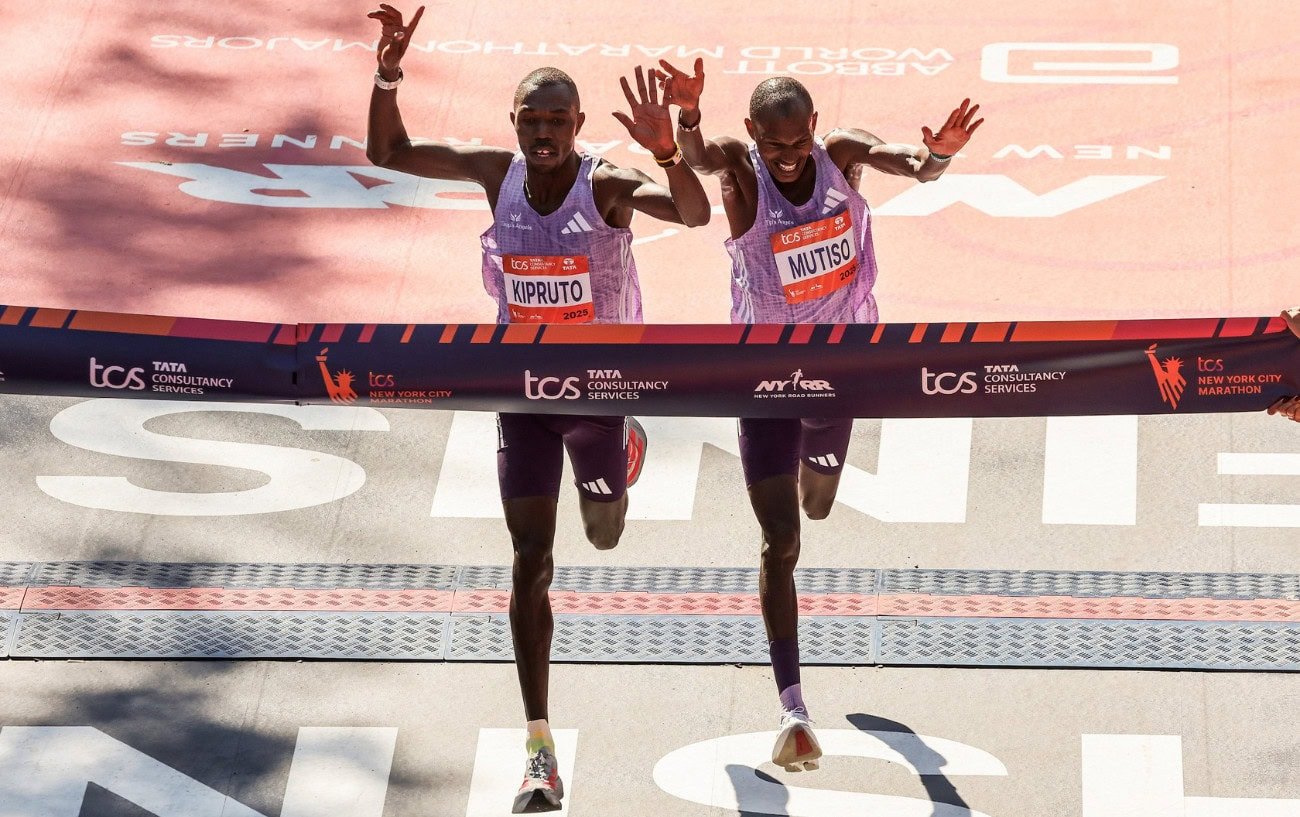
1. New York Is Back on Top, and It’s Not Even Close
After briefly losing its crown to London in April, the 2025 NYC Marathon surged past 59,000 finishers, eclipsing London’s 56,725 by more than 2,500 runners. That’s a 6.5% jump from last year, and the largest finisher count ever recorded in marathon history.
The race’s growth is remarkable considering New York already flirted with the 55,000 mark in 2019, while most majors like Berlin, Chicago, and Paris have plateaued or even shrunk slightly.
London’s record lottery entries suggest it’ll take another swing at breaking 60,000 next spring, but for now, New York is the undisputed giant of mass-participation marathons.
According to Rock, only five races globally (New York, London, Paris, Berlin, and Chicago) regularly surpass 50,000 finishers. But none combine that volume with the spectacle, diversity, and cultural gravity of New York, something no dataset can quite quantify.
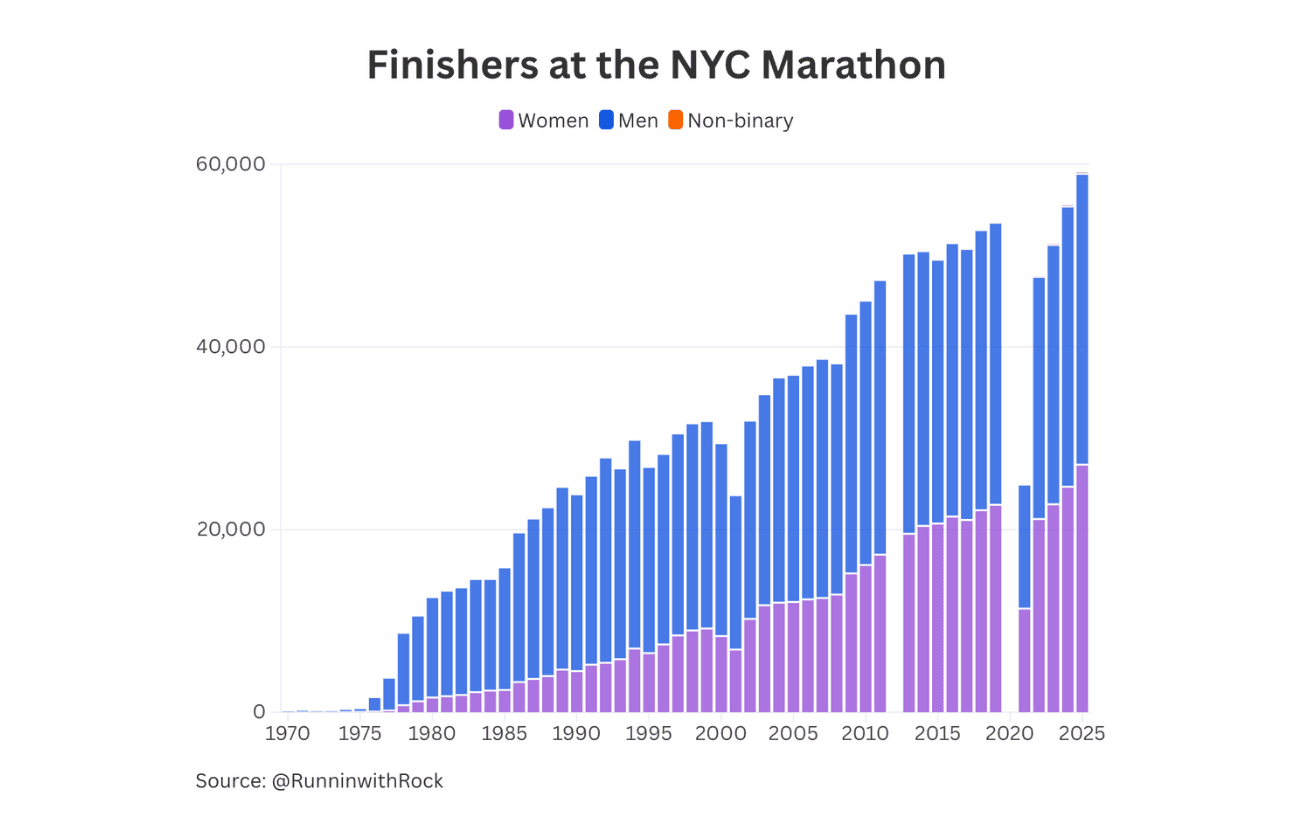
2. The Women’s Field Is Surging
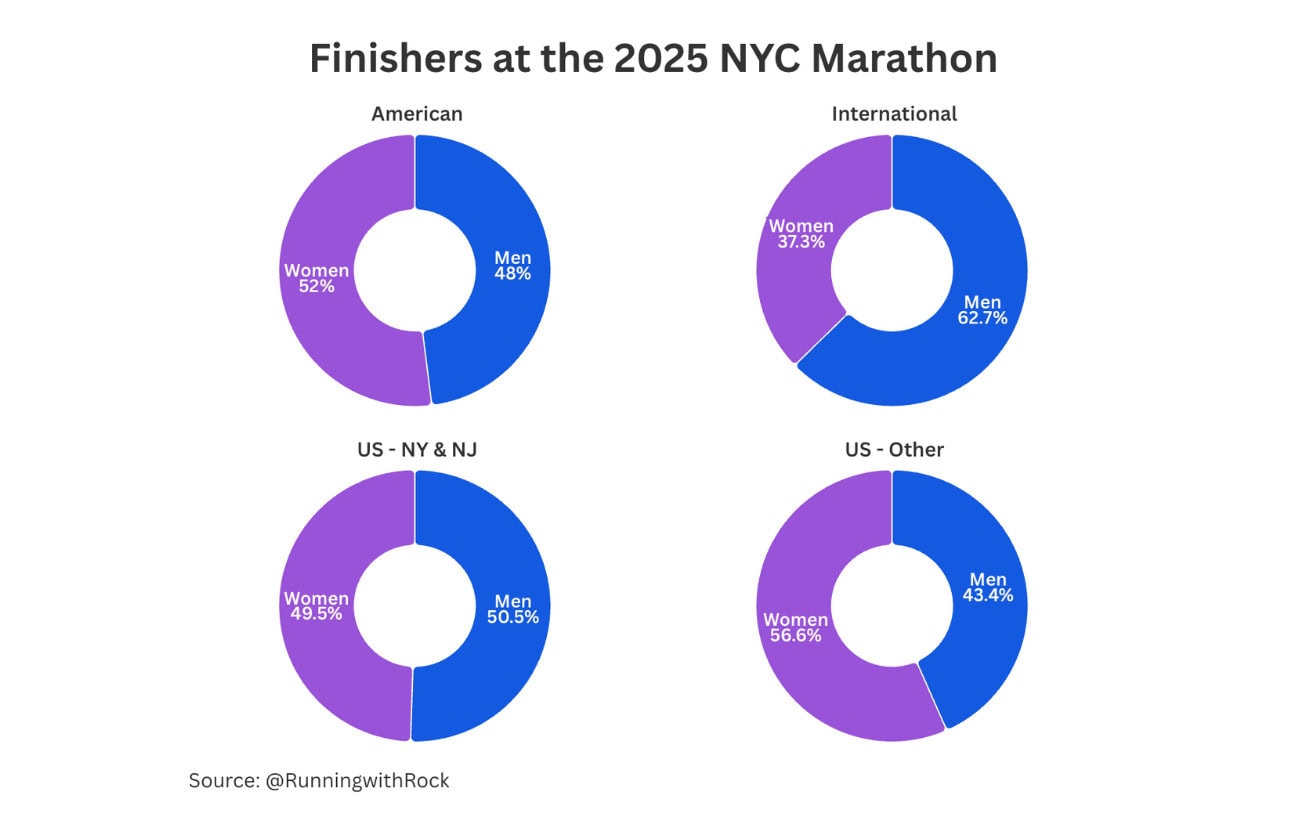
Women made up 46% of finishers, continuing an incremental rise from the low-to-mid 40s over the past decade. Among Americans, women actually outnumbered men, with 52% of U.S. finishers female, compared to just 37% among international runners.
Even more interesting, among runners in their 20s, women outnumbered men by a wide margin. That younger demographic growth signals a generational shift.
“The number of women in their 20s is almost double what it was in 2019,” Rock noted. It’s a trend mirrored across U.S. races, where participation among women, especially newer distance runners, continues to grow faster than any other group.
A 2023 Running USA report found that women now make up 58% of all road race finishers nationwide.

3. The NYC Marathon Is Becoming More Local, and More Global
The U.S. supplied 69% of all runners, with 31% traveling from abroad, a stable split from last year. But within those American ranks, the local footprint grew. More than 57% of all U.S. finishers came from New York State, up slightly from 2024, and another 10% from New Jersey.
That local surge could be tied to NYRR’s 9+1 program, which rewards local runners who complete nine races and volunteer once with guaranteed marathon entry. “It’s possible some of the additional runners came through 9+1 rather than the general lottery,” Rock speculated.
Internationally, Britain overtook France as the third-most-represented nation, and Brazil cracked the top 10 for the first time. Canadian participation, despite some cross-border travel tensions earlier this year, held steady, proving that international runners remain loyal to New York’s marathon magic.
4. Fast Runners Are Older Than You Think
The number of runners qualifying for Boston jumped dramatically, from 4,803 in 2024 to 6,164 this year, even though the total field only grew modestly. Rock attributes that spike to the inclusion of the Abbott World Marathon Majors Age Group World Championships, which took place within this year’s NYC Marathon.
Older runners dominated the performance charts. BQ rates among 40-, 50-, and 60-somethings rose sharply, while younger runners’ qualifying rates dipped slightly. The influx of fast masters athletes skewed the field’s overall pace upward.
The results echo a broader trend. Masters runners are rewriting what’s possible past age 40. According to World Athletics data, the number of sub-3:00 finishers over 50 has doubled in the last decade, a testament to advances in training, recovery, and the carbon-plated shoe revolution.
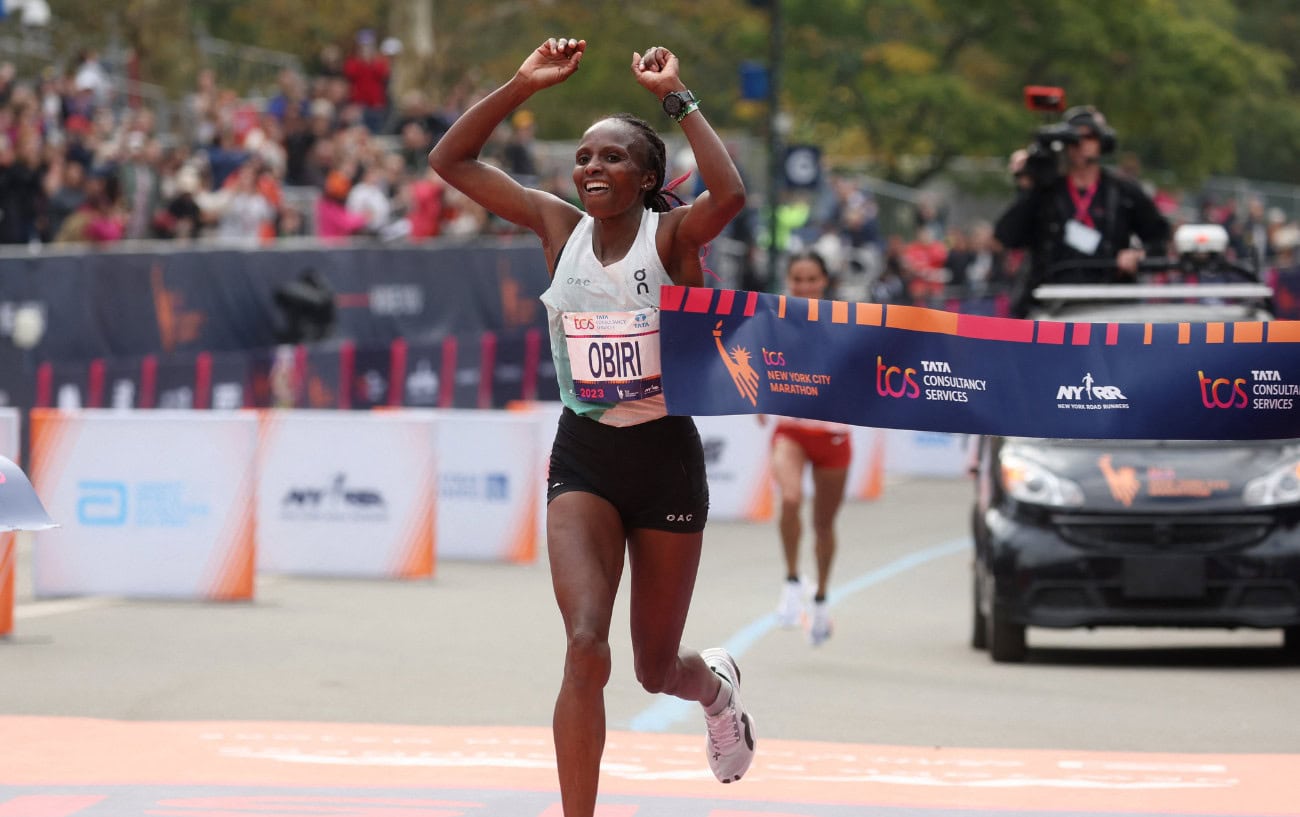
5. The Women’s Race Was Historic
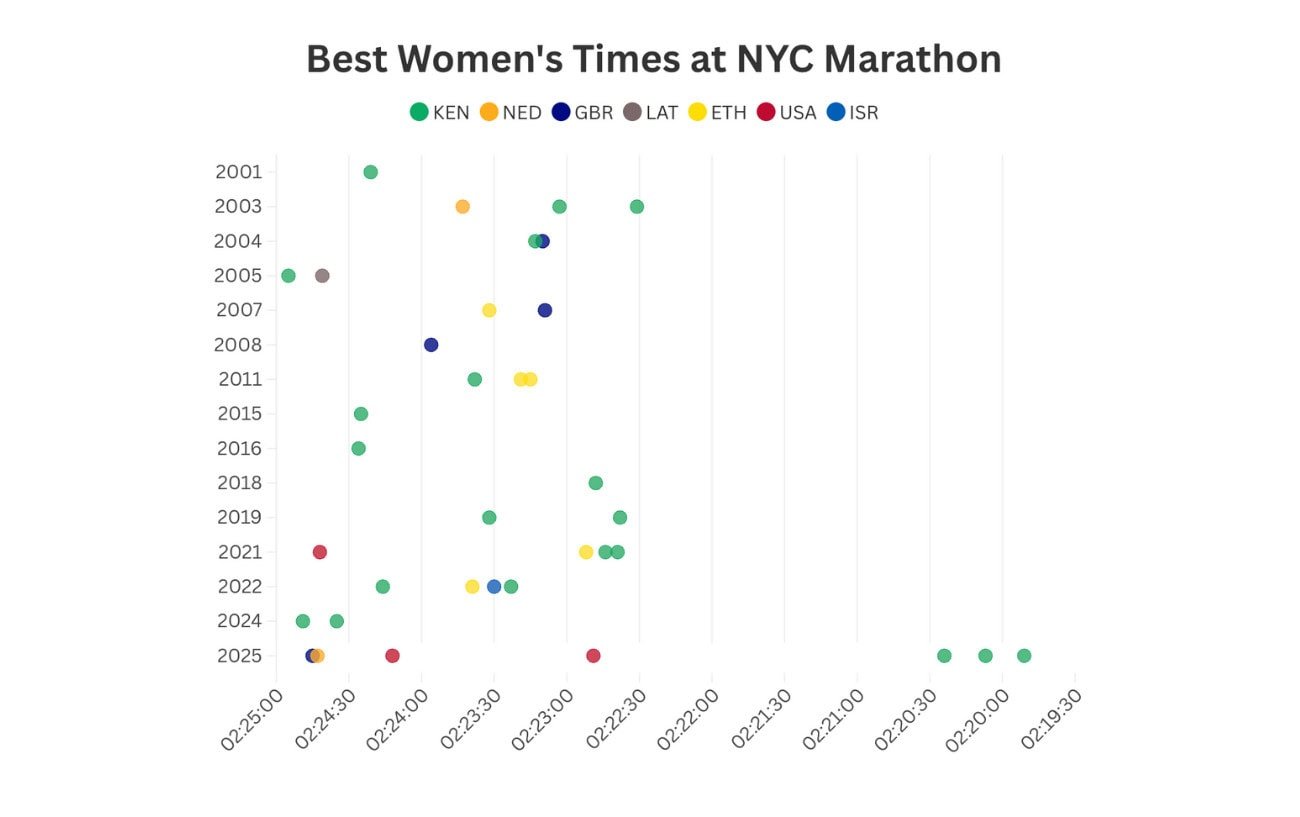
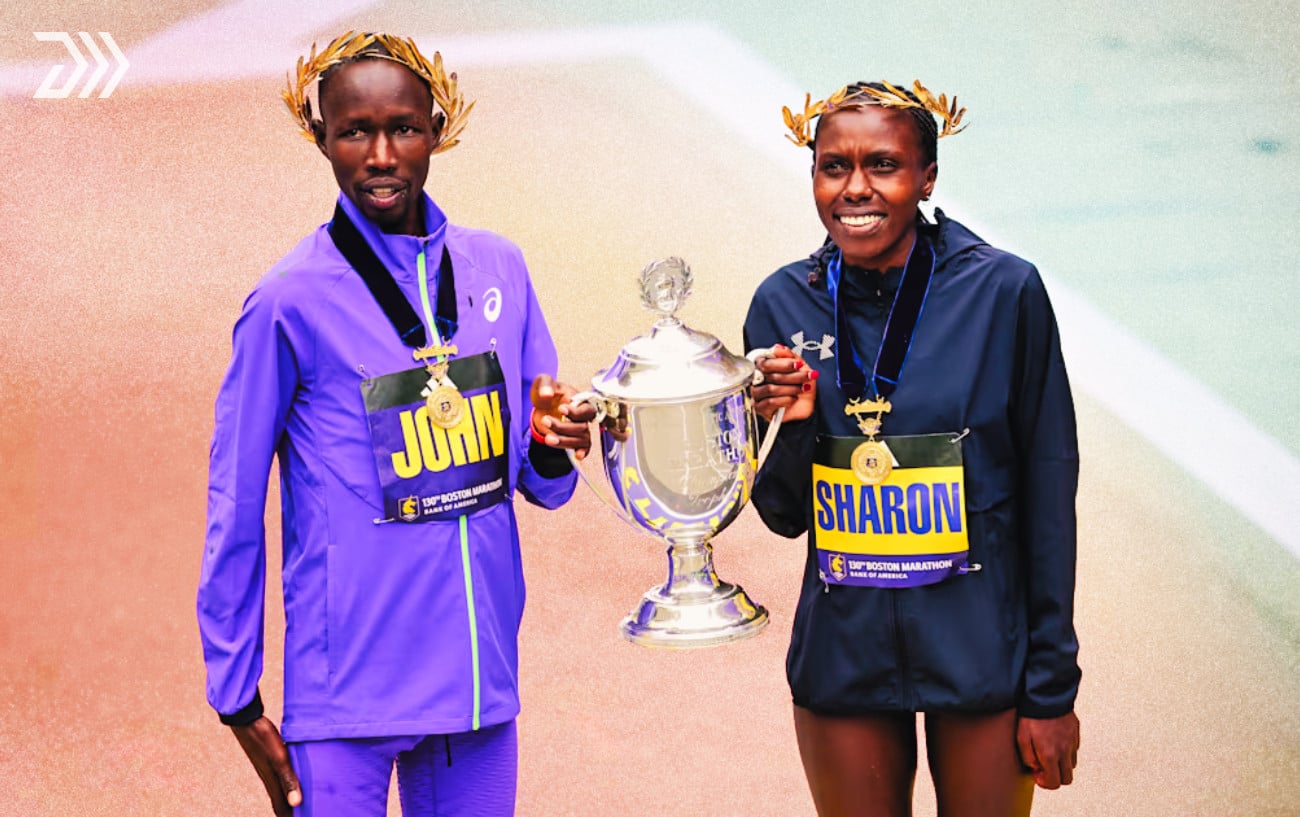
The women’s elite field delivered one of the greatest performances in New York City Marathon history. Hellen Obiri’s 2:19:51 obliterated the previous course record by nearly three minutes, with Sharon Lokedi and Sheila Chepkirui also finishing under 2:21, marking the first time three women went sub-2:22 in New York.
Fiona O’Keeffe’s 2:22:49 was the fastest time ever by an American woman in New York, beating Molly Seidel’s 2021 mark by nearly two minutes. Even Annie Frisbee, fifth overall, ran faster than Seidel’s old record.
In total, seven women broke 2:25, the most ever in race history, showing just how deep women’s marathoning has become in 2025.
On the men’s side, the race was more tactical. Still, several masters age-group records fell, including Daniele Meucci’s 2:10:40 (men 40–44) and Gwen Jacobson’s 3:17:57 (women 65–69), underscoring the remarkable depth that the age-group championship brought to the field.
6. The Race May Be Slower, But Not in the Way You Think
The Economist recently argued that mass participation has slowed marathon finishing times, but Rock’s data tells a different story. Among runners under 40, the slowest 10% of finishers have held steady for a decade, clocking in around 5:23 for men and 5:59 for women.
While median times have crept up slightly, the change is more about aging demographics than a decline in competitiveness. “This year’s field was slightly slower than last year’s,” Rock concluded, “but the record participation shows that speed isn’t the point, inclusion is.”
In other words, more people are running from more walks of life, and that’s a net positive for the sport.
7. A Race in Motion, Literally
Using chip times, Rock recreated how the race unfolded across all 59,000 runners in real time. His visualization showed the course at its most crowded around the 2:40 mark (about 11:50 a.m.), when nearly every wave was on the course simultaneously.
Wave 1 was about 75% men, while Wave 5 was nearly two-thirds women.
That gender dynamic means your “experience” of the race, who’s around you and the energy you feel, depends heavily on when you start. As Rock noted of Tokyo’s marathon earlier this year, “your perception of the race is shaped by who’s running next to you.”
8. The Marathon Boom Is Evolving, Not Peaking
The 2025 New York City Marathon didn’t just break records, it reflected a changing running landscape. Participation is up, diversity is rising, and elite performances, particularly among women and masters athletes, are at historic highs.
In a year when road racing participation in the U.S. rose 8% (Running USA), New York proved that the marathon still holds cultural and emotional power few events can match.
“Enough is enough,” Rock joked about the size wars among majors, but the data suggests something else entirely. The marathon’s best years might still be ahead.
RunClub
Get more running stories — join RunClub
Daily running news, a community of 300,000+ runners, free training plans for every distance, and a daily running game. Free to join — no card.
Already a member? Log in →




Start the conversation