


In the spring of 1966, the Boston Athletic Association sent Bobbi Gibb a letter informing her that women were not physiologically capable of running 26.2 miles.
She ran 26.2 miles.
This April, for the first time in the race’s 130-year history, runners will stand at the Hopkinton start line and see a statue of a woman. It’s Gibb, cast in bronze at age 23, caught mid-stride in the moment that changed distance running forever.
It only took sixty years.
How She Got There
Gibb watched the Boston Marathon for the first time in 1964 and felt an immediate pull toward it. She spent the next two years training in secret, running solo through forests, beaches, and California chaparral. She drove 3,000 miles across the country with her malamute dog, running every day in a new location, sleeping under the stars. She logged 65 miles during a three-day horseback riding event in Vermont. By 1966, she could run 40 miles without stopping.
When she wrote to the BAA asking for a race number, they wrote back with that memorable rejection.
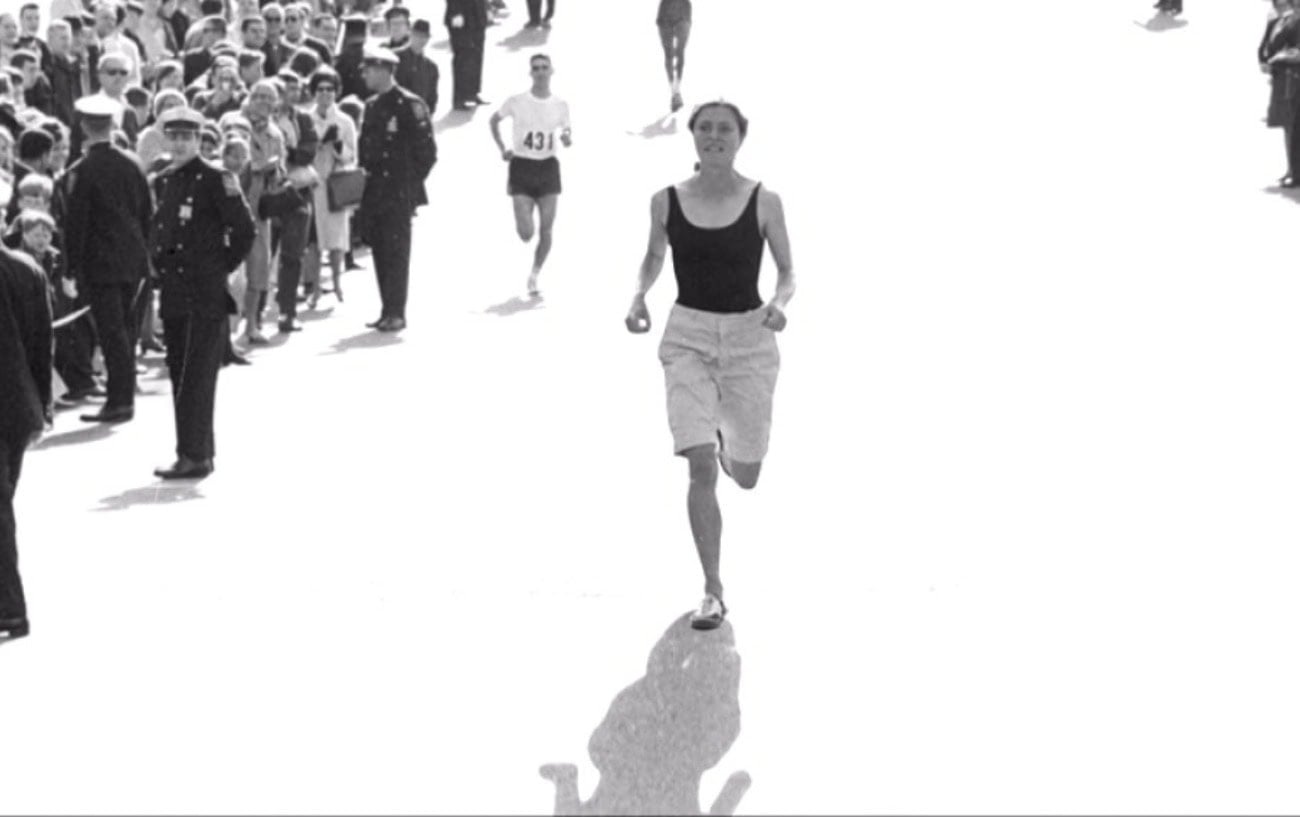
She hid in the bushes near the start line anyway, in a borrowed hooded sweatshirt and a pair of boys’ running shoes, and joined the race when it passed. She finished ahead of two-thirds of the men — you can get a sense of how competitive that field was from the data.
Diana Chapman Walsh was a Wellesley senior that day. She later became the college’s president, but she never forgot the moment news rippled through the crowd.
“Like a spark down a wire, the word spread to all of us lining the route that a woman was running the course. We let out a roar that day, sensing that this woman had done more than just break the gender barrier in a famous race.”
— Diana Chapman Walsh, Wellesley College Class of 1966, later President of Wellesley College
The Uncomfortable Footnote
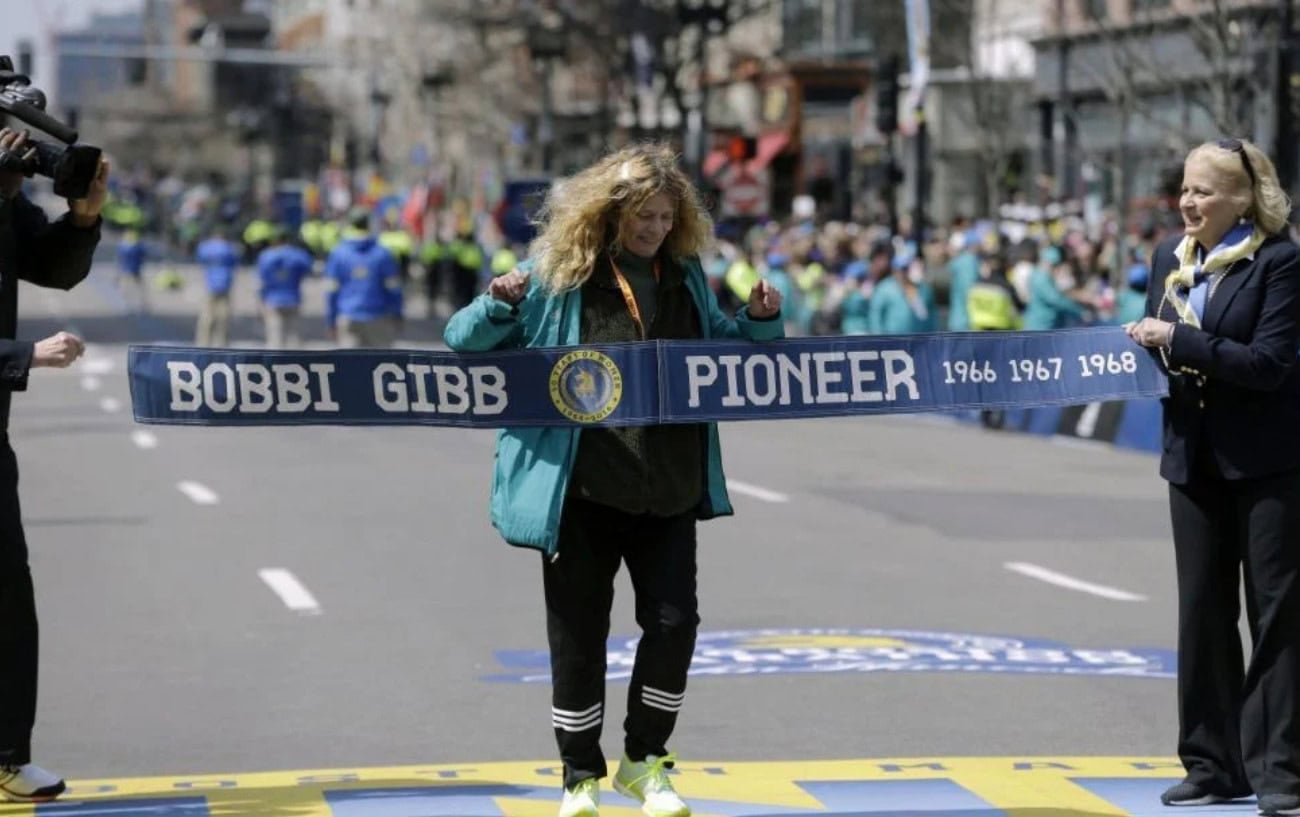
Here’s the part that doesn’t get enough airtime: the BAA didn’t officially recognise Gibb as the women’s winner of 1966, 1967, and 1968 until 1996. Thirty years after the fact. Not celebrated — recognised.
She won those races. She just wasn’t allowed to enter them.
For most of the decades in between, her story lived in the margins. The photograph everyone associates with that era is actually from 1967 — Kathrine Switzer, bib number and all, being grabbed by a race official. That story is real and important. But Gibb was first, unofficially, a year earlier, and she spent a long time as a footnote in a story she started.
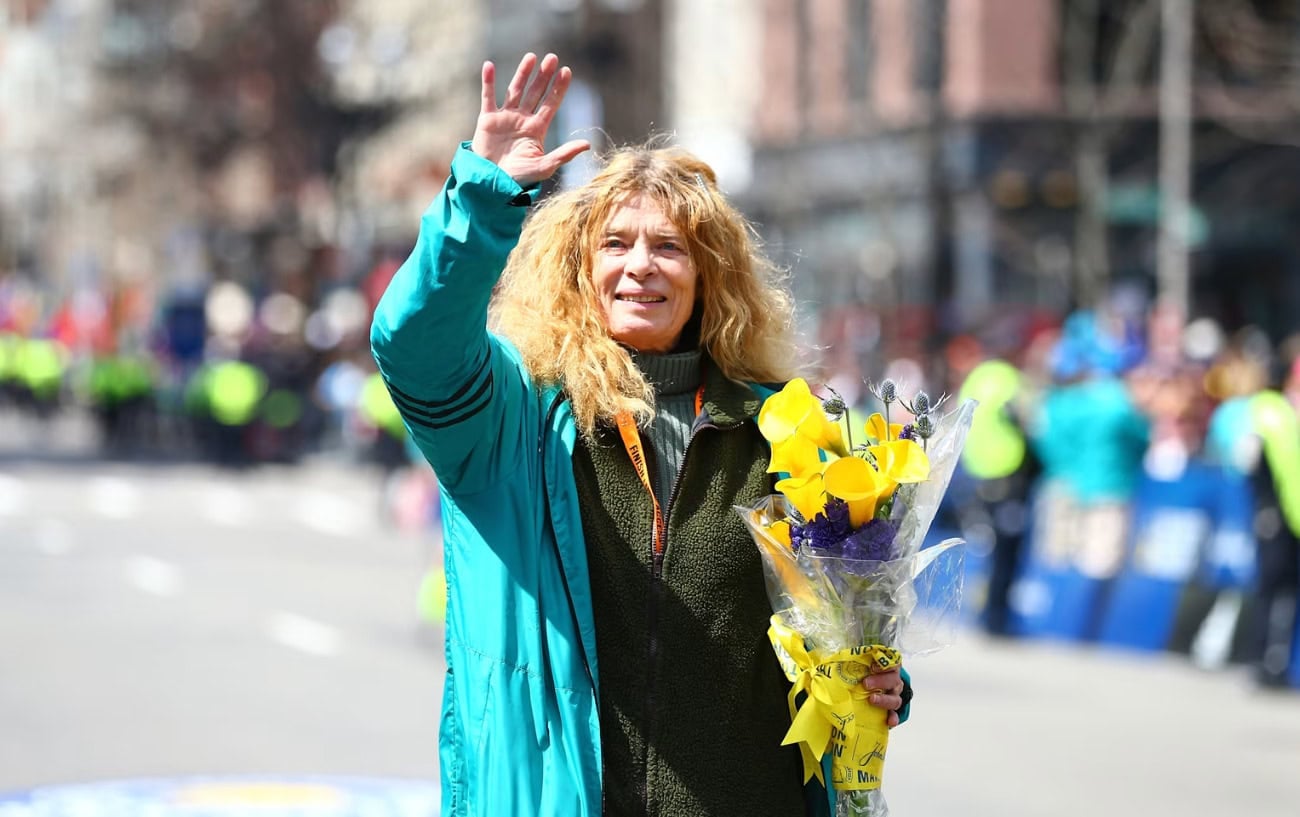
Gibb returned to Boston in 1967 (finishing about an hour ahead of Switzer) and again in 1968 (finishing first among five women). She sculpted the trophies for the first U.S. Women’s Olympic Marathon Trials in 1984. Nina Kuscsik and other pioneering women, inspired by Gibb, pushed until women were officially allowed to compete at Boston in 1972. In 2016, that year’s Boston women’s winner, Atsede Baysa of Ethiopia, gave her victory trophy to Gibb at the finish line. Gibb returned it to Baysa the following year.
The statue was unveiled on March 27, 2026, near the Hopkinton start line — the first monument to a woman along the entire course, installed 20 miles from where the first shots of the American Revolutionary War were fired, in the year of the 250th anniversary of the Declaration of Independence. Gibb, also a lawyer and philosopher, didn’t miss the symbolism.
She sculpted the statue herself. Of course she did.





Is she still alive??
yes 🙂