


Somewhere in the planning meetings for the Padang Besar Municipality Stadium in Songkhla, Thailand, someone must have looked at the architectural drawings and thought: sure, that looks fine.
It did not look fine.
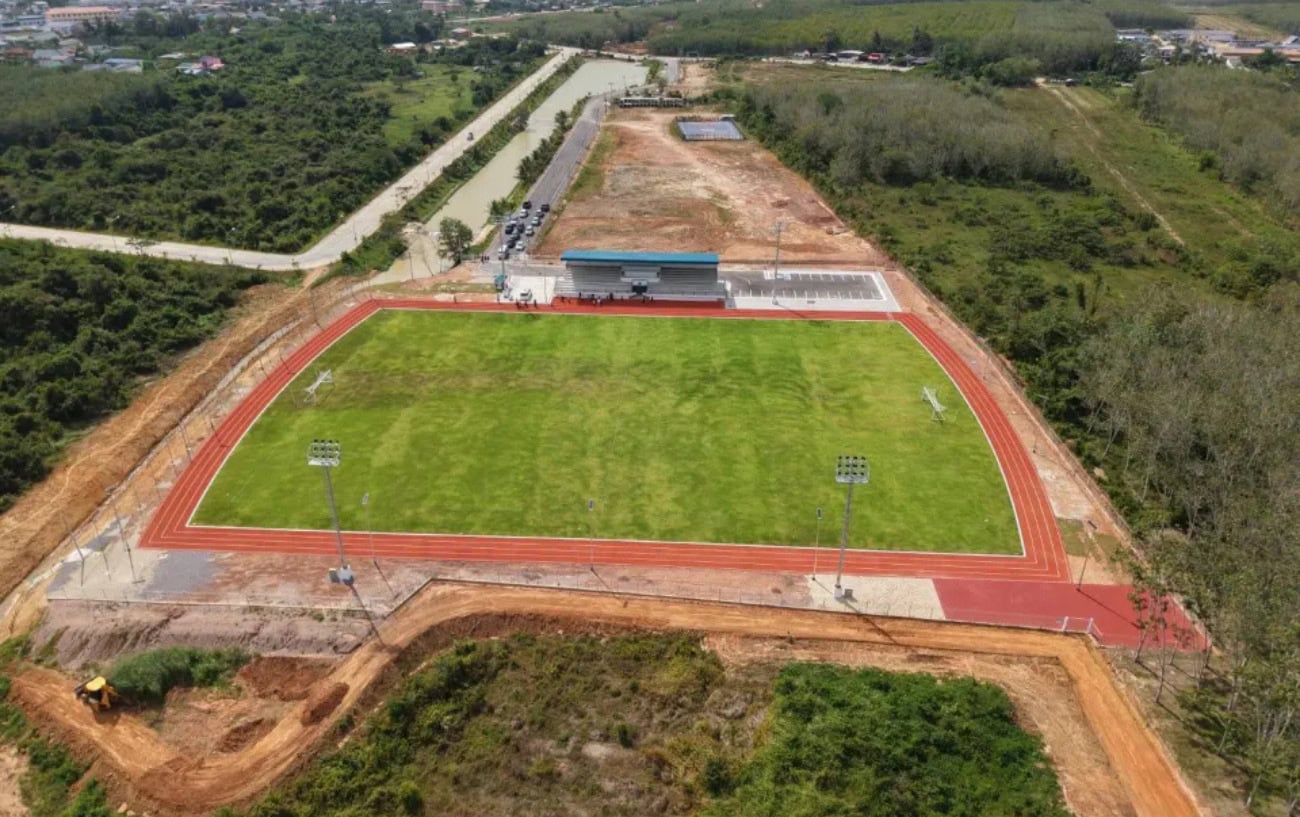
The 16-acre sports complex, which cost the equivalent of roughly £880,000 in public funds, opened recently to immediate mockery. The football pitch inside is regulation standard. The running track wrapped around it, however, bends at four sharp 90-degree corners — a design that has baffled runners, engineers, and anyone who has ever watched a race.
So How Did This Happen?
The football pitch was built first. Once it was done, officials discovered there wasn’t enough space left on the site for a standard oval track. Rather than acknowledge the problem and stop, someone decided to build a track anyway — one that simply follows the rectangular edges of the pitch.
A former MP for Songkhla from the Democrat Party defended the outcome with an explanation that will bring comfort to no runner: “The track was never intended for athletic purposes but only for an exercise path for walking. The track is only a bonus, and as for the pitch, it meets all international standards.”
Which is one way to look at it.
Why Corners Are Actually a Big Deal
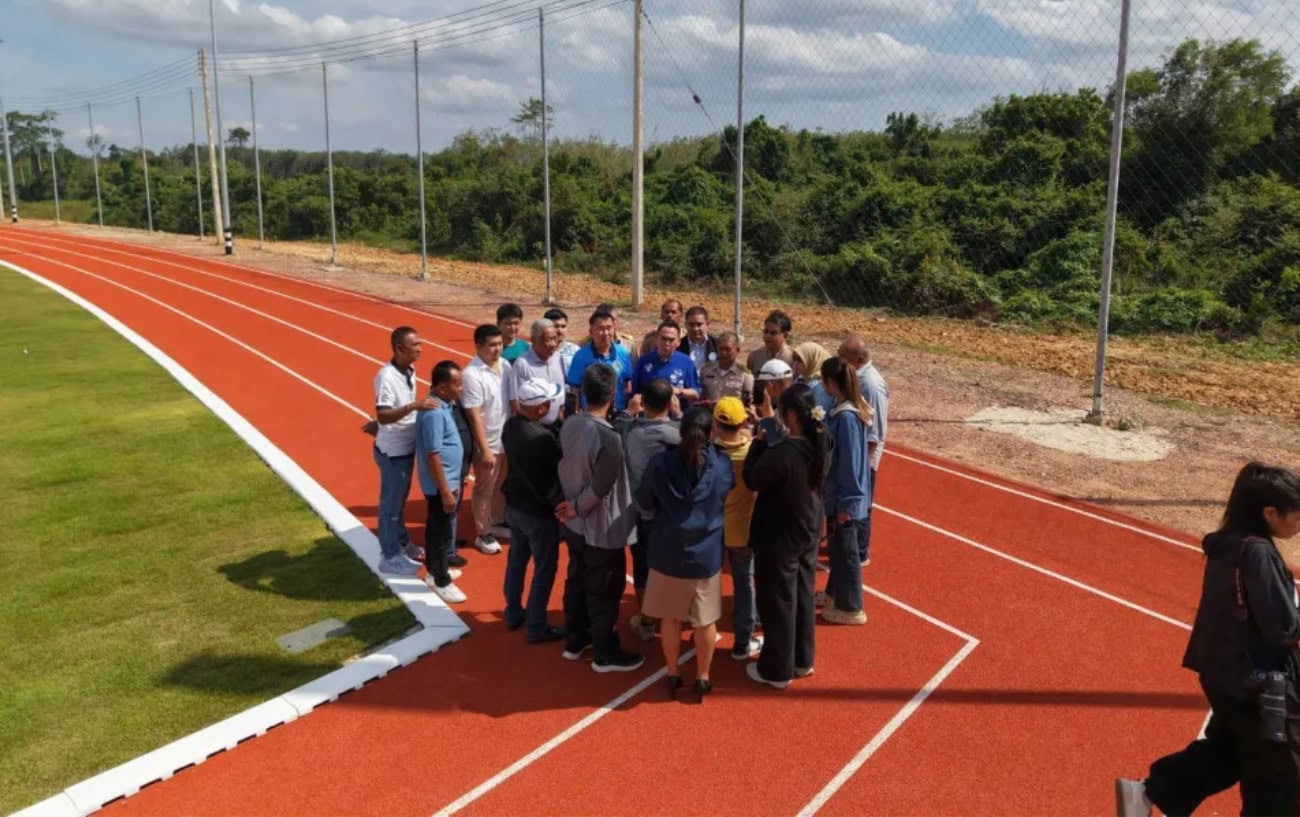
Running tracks are oval for a reason. Smooth curves let runners carry momentum through a bend without braking or fighting their own bodyweight. Proper running form depends on being able to maintain stride rhythm and efficiency — something a 90-degree turn makes essentially impossible. As any runner who has studied their gait analysis knows, even small disruptions to stride mechanics can cascade into bigger problems.
Hit a sharp corner at pace and you’re either stopping, skidding, or finding out your knee isn’t as cooperative as you thought. Reddit users were quick to weigh in. “Is today April 1st?” wrote one. Another offered a more practical concern: “In case this 90-degree turn concept catches on, we’ll need to start practising sharp turns. My knees may not cope.”
Abrupt directional changes at speed place serious stress on the knees and ankles — the kind of load that knee-strengthening exercises help runners manage on normal terrain, but can’t fully protect against on a track designed with right angles. Poor mechanics at corners also tend to show up as classic signs of bad running form under duress — hunching, overstriding, and lateral instability.
For a casual walk, fine. For anyone actually running, the track is essentially decorative.
The Investigators Arrive
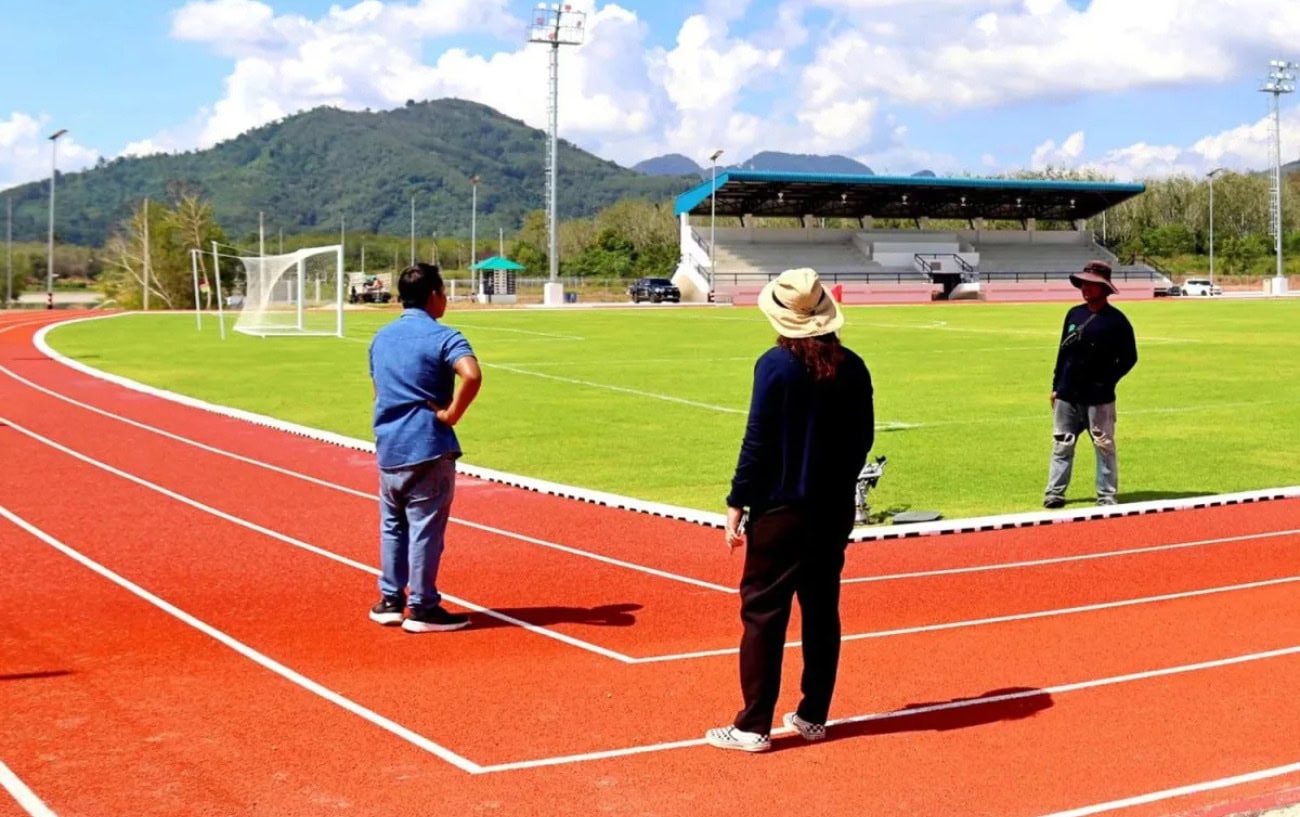
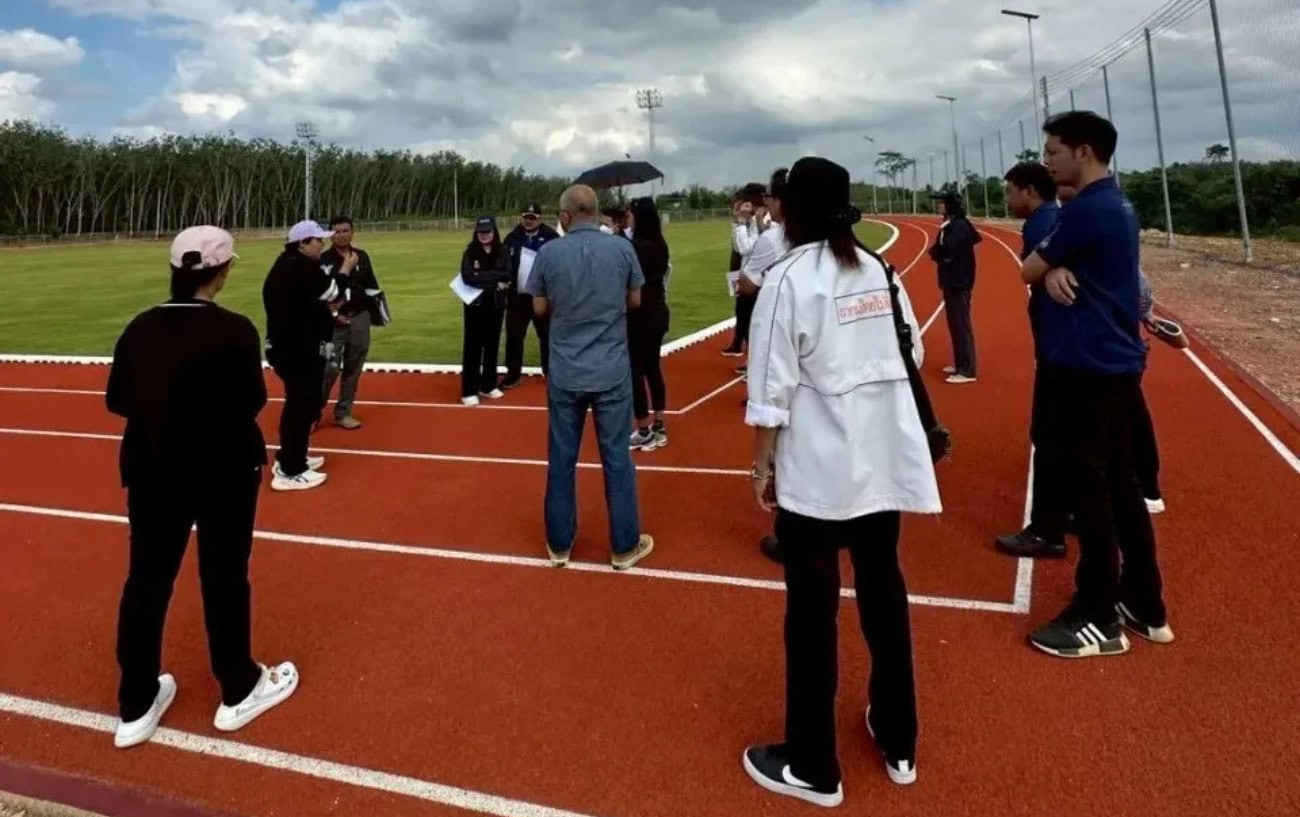
The public backlash grew loud enough that on January 14, Thailand’s National Anti-Corruption Commission (NACC) launched a formal investigation into the project. Their concerns go beyond the corners — drainage, maintenance, and overall value for public money are all on the table.
Ram Wasuthanapinyo, director of NACC Songkhla, made clear the probe is about more than aesthetics. “We also focused on the value for money of the nearly 35 million baht (£833,270) of public funds,” he said, “ensuring that the public would receive maximum benefit and that the project was transparent at every stage.”
The construction contract is now under review.
The Bigger Question Nobody Wants to Answer
At some point during the planning of an £880,000 sports complex, nobody stopped to check whether a running track would actually fit on the site. And when it turned out it wouldn’t, the solution wasn’t to redesign — it was to redefine what a running track is.
Critics in Thailand have pointed out the obvious: fixing this now will cost more public money on top of what’s already been spent. If you’ve ever mapped out a training plan or tried to build mobility into your routine, you know that good infrastructure takes planning. The complex was originally justified as a way to reduce scheduling conflicts when renting private venues in the province — a reasonable goal, undermined somewhat by building a track you can’t actually use for running.
For runners curious about how track geometry actually affects performance, ground contact time is a useful lens — it’s one of the metrics most directly disrupted when a runner is forced to brake suddenly and change direction at a hard angle rather than flowing through a curve.
The investigation is ongoing. The corners remain.
RunClub
Get more running stories — join RunClub
Daily running news, a community of 300,000+ runners, free training plans for every distance, and a daily running game. Free to join — no card.
Already a member? Log in →











Start the conversation