


Every athlete who voted on Grand Slam Track‘s bankruptcy plan said yes. All 123 of them.
The unanimous ballot, filed Tuesday in the U.S. Bankruptcy Court for the District of Delaware, marks a significant step toward resolving one of the messiest financial collapses in recent track and field history. A confirmation hearing is scheduled for Thursday, April 16, where a judge will decide whether to formally approve the plan.
Under the terms, athletes will recover roughly 70% of the approximately $7 million the league owes them — about $4.9 million in total. That’s a haircut from the league’s original proposal, which had offered to pay back 85% of athlete claims while leaving most vendors nearly empty-handed.
Among the athletes who voted to accept: Sydney McLaughlin-Levrone, Josh Kerr, Cole Hocker, Yared Nuguse, Anna Hall, Agnes Ngetich, Grant Fisher, Nikki Hiltz, and Jessica Hull. Sixteen athletes opted to be reclassified as general unsecured creditors, a technical move that puts them in a different repayment bucket under bankruptcy law.
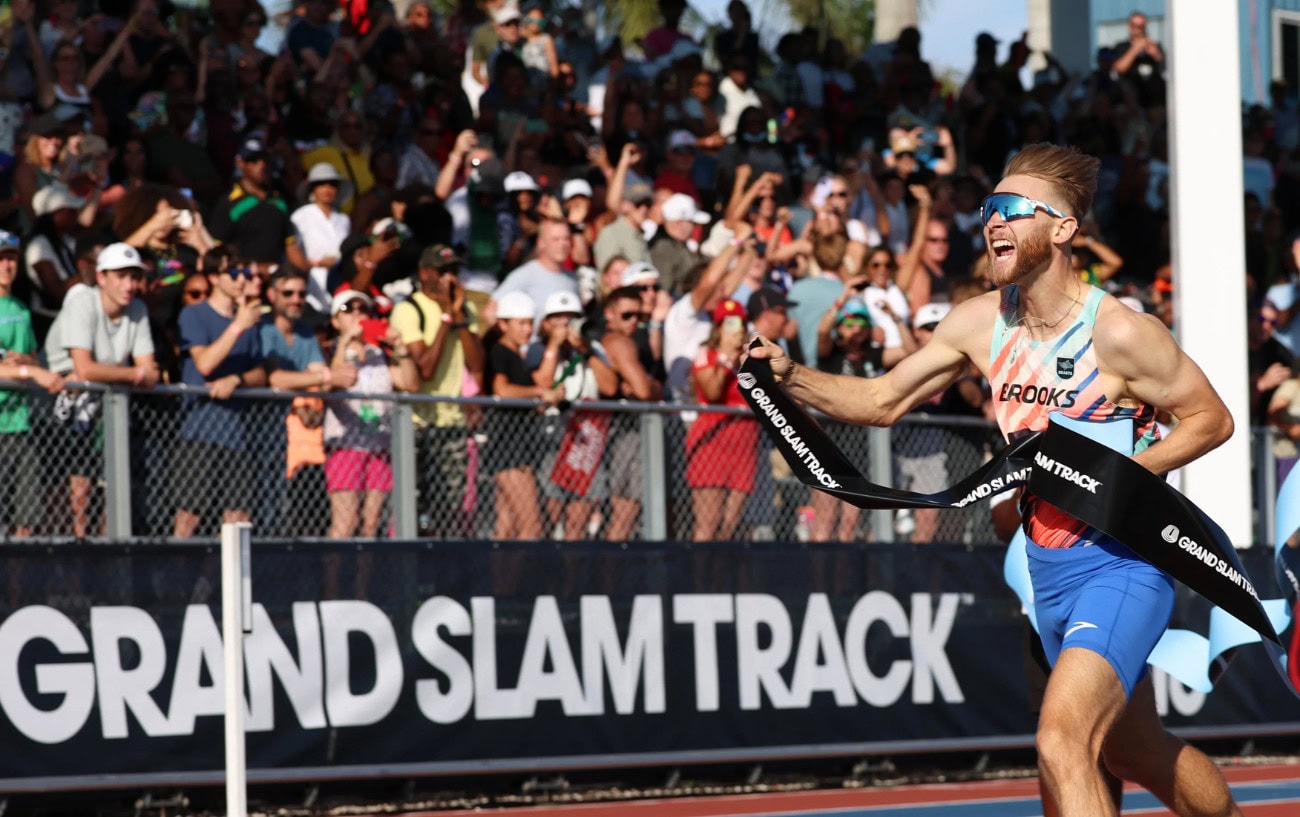
A League That Spent What It Didn’t Have
Grand Slam Track filed for Chapter 11 bankruptcy in December 2025, just months after completing a three-event series in Kingston, Miami, and Philadelphia. The league had entered those events without the funds to cover athlete prize money or operational costs. Court filings show it generated less than $2 million in revenue in 2025 while accumulating more than $40 million in total debt.
The league was founded by Michael Johnson — the four-time Olympic gold medalist and world record holder in the 400 meters — and has been financially backed since its inception by Winners Alliance, the commercial arm of the Professional Tennis Players Association. Winners Alliance is chaired by hedge fund billionaire Bill Ackman.
The league launched with enormous ambition: four annual meets, each featuring over $3 million in prize money, with the sport’s biggest names signed on as “Racers” — athletes contracted to compete at every event.
Johnson Returns $500,000
A notable addition to the revised plan: Johnson himself will return $500,000 to the bankruptcy estate. The league’s creditors’ committee alleged he paid himself that sum in June 2025 — around the time Grand Slam canceled a planned Los Angeles event because it had run out of money — “without proper Board approval or justification.”
Johnson disputes that characterization. A Grand Slam Track spokesperson issued a statement framing the repayment as a goodwill gesture, not an admission of wrongdoing.
“While Mr. Johnson has been clear that the $500k was a reimbursement and not a payment, to avoid disruption and continue moving forward he and Winners Alliance have agreed to fund the $500k to the plan so that all creditors can benefit and receive a greater distribution in connection with the company’s reorganization and efforts to resurrect the league.”
Vendors Get a Better Deal — Still a Fraction of What They’re Owed
The revised plan represents a significant improvement for the league’s vendors, though many will still absorb steep losses. The roughly 24 unsecured creditors — which include production companies, lighting designers, hospitality firms, and media services — voted 23-1 to accept the plan.
Under the original proposal, most vendors would have split just $200,000 despite being collectively owed nearly $13 million. The updated plan increases their share to approximately $1.8 million, or roughly 14–15% of what they’re owed. That $1.8 million includes the $500,000 Johnson is returning.
The three-member creditors’ committee had previously called the league’s financial management a display of “shocking levels of incompetence” and sought court approval to file a $25 million lawsuit against Grand Slam and Winners Alliance. The revised settlement effectively resolves that standoff.

What Comes Next
If the judge approves the plan Thursday, repayments will flow according to a strict hierarchy. Winners Alliance’s roughly $5 million in secured claims will be deferred for now. Priority tax claims of about $34,000 come first, followed by the $4.9 million to athletes, about $70,000 to a narrow list of “critical vendors” — including World Athletics and the U.S. Anti-Doping Agency — and then $1.8 million to the remaining general unsecured creditors. People with financial ties to Grand Slam or Winners Alliance are categorized under a new “subordinated claims” class and will receive nothing.
Grand Slam Track has said it intends to return to competition in 2026. The athlete-friendly structure of the payout reflects that ambition — getting the sport’s biggest names back on the start line requires, at minimum, paying them enough to trust the league again.
Whether that trust has been earned is a harder question — and one Thursday’s hearing alone won’t fully answer.
Related: Inside The Highs, Lows, And Lessons Of Grand Slam Track’s Inaugural Meet In Kingston | World Champion Josh Kerr Confirmed For 2025 Grand Slam Track League | Grand Slam Track League Confirms Roster For First Event In Kingston, Jamaica
RunClub
Get more running stories — join RunClub
Daily running news, a community of 300,000+ runners, free training plans for every distance, and a daily running game. Free to join — no card.
Already a member? Log in →









Start the conversation