


Trail and ultrarunning has spent the past two years assembling the machinery of a professional sport. UTMB, the premier event on the calendar, more than doubled its prize purse for 2024, to 344,500 euros (about $397,000) across its World Series. Salomon and other brands back the athletes who win with professional contracts. What the sport has not built, at anything close to the same speed, is a drug-testing system to stand behind the money.
What the Big Races Actually Test
Start with what the two biggest races actually do. Since January 2024, UTMB has handed its testing program to the International Testing Agency, the Lausanne body that also runs anti-doping for Olympic sports, and committed 100,000 euros (about $115,000) to it that year. On paper the program is broad: testing both in and out of competition, a biological passport, whereabouts monitoring, and a therapeutic use exemption process. Podium finishers are tested automatically, with further tests spread at random across the circuit. UTMB does not publish how many tests it runs, of what kind, or how many athletes it monitors between races, so the program’s real reach cannot be judged from outside.
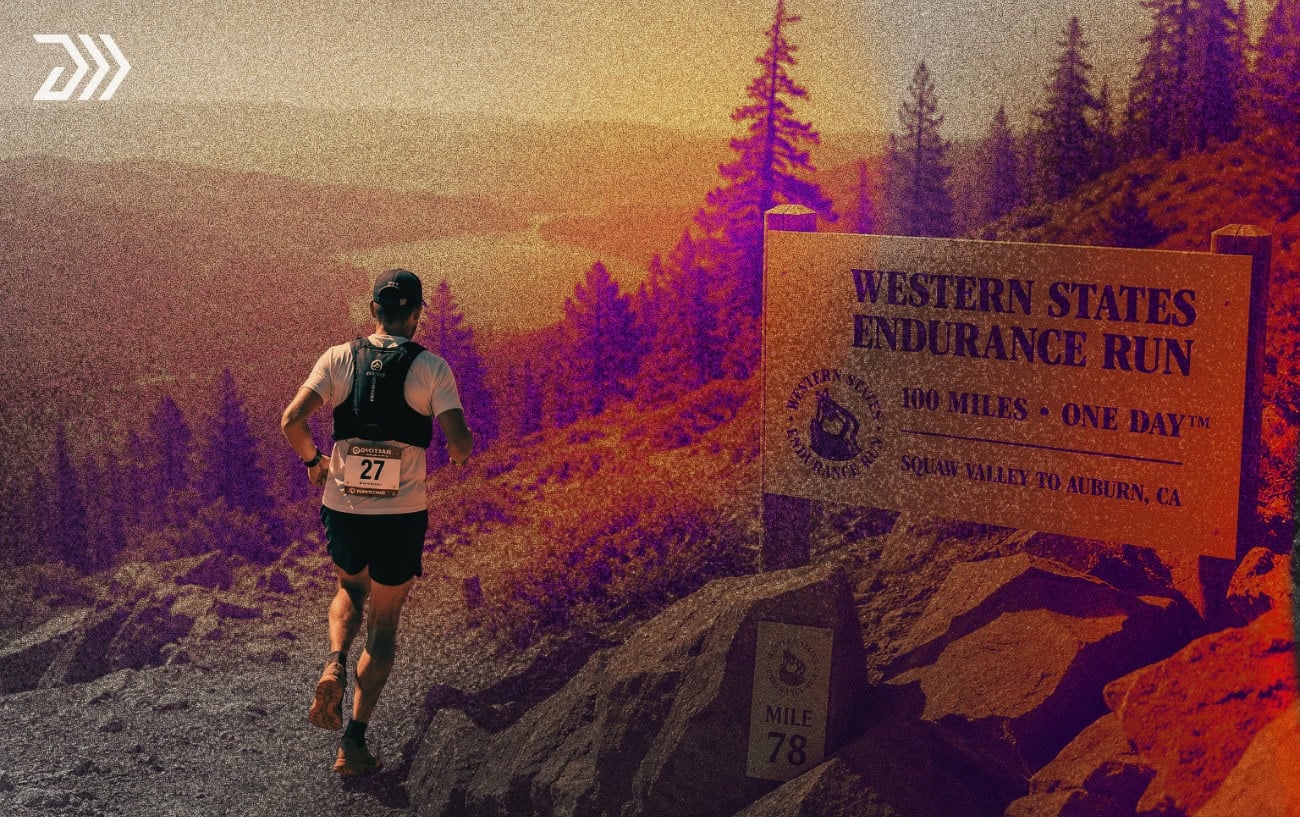
Western States, the 100-mile race through California’s Sierra Nevada that rivals UTMB for prestige, pays no prize money at all and tests along different lines. It partnered with the United States Anti-Doping Agency in 2024, but the program is built around the finish line: urine samples from selected elite and top age-group finishers, taken as they arrive, with follow-up testing possible for up to 90 days. There is no standing group of athletes who might be tested on an ordinary Tuesday in February.

The Out-of-Competition Gap
That distinction, in competition versus out of competition, is the one that matters. A finish-line test catches an athlete who doped in the days before a race or cannot clear a substance in time. It does little about one who builds fitness on steroids or a blood booster like EPO over a winter training block, then stops early enough to test clean on race day. Catching that means turning up unannounced, out of season, which is largely what trail running does not do.
Elsewhere in the sport of athletics, it is routine. Elite track and road runners fall under the Athletics Integrity Unit, the World Athletics body created in 2017. Athletes in its Registered Testing Pool file their whereabouts all year, including a 60-minute window each day, between 5 a.m. and 11 p.m., when a tester can find them with no notice. Enough missed slots or filing errors become a violation in themselves. Trail runners meet that standard only when they cross into World Athletics competition. Sabrina Little, a US 24-hour team medalist, spent a few years in the international and USADA pools after a world-championship result, as the American Trail Running Association has reported; most of her peers have never filed a whereabouts report. Elite athletes have begun saying so themselves. Francesco Puppi, a Western States podium finisher, wrote in September 2025 that testing only at races is a poor way to catch doping, and called for a dedicated out-of-competition program.
A Patchwork of Rules
Beyond the two flagship races, the picture thins quickly. A 2024 study in the journal Frontiers in Sports and Active Living surveyed 35 ultramarathon organizers, together responsible for 159 races and roughly 96,500 runners a year, and heard back from 17. Eight follow an outside authority’s rules, four wrote their own, and five reported no anti-doping policy at all. Only three test with any regularity. One, South Africa’s Comrades Marathon, was beginning to move toward out-of-competition testing. None reported ever sanctioning an athlete. The researchers put the cost of a single test at $600 to $700, which in a sport of small organizers and thin budgets is much of the explanation.
The inconsistency runs down to what even counts as banned. The professional ultrarunner Kilian Korth wrote in a recent essay that the organizer of Arizona’s 250-mile Cocodona race told him he needed no therapeutic use exemption for the prednisone and inhaler he uses. At a World Athletics event, the same medications would sit under the full exemption regime. The medications are identical and so is the athlete; only the start line changes what is allowed.
What the System Catches
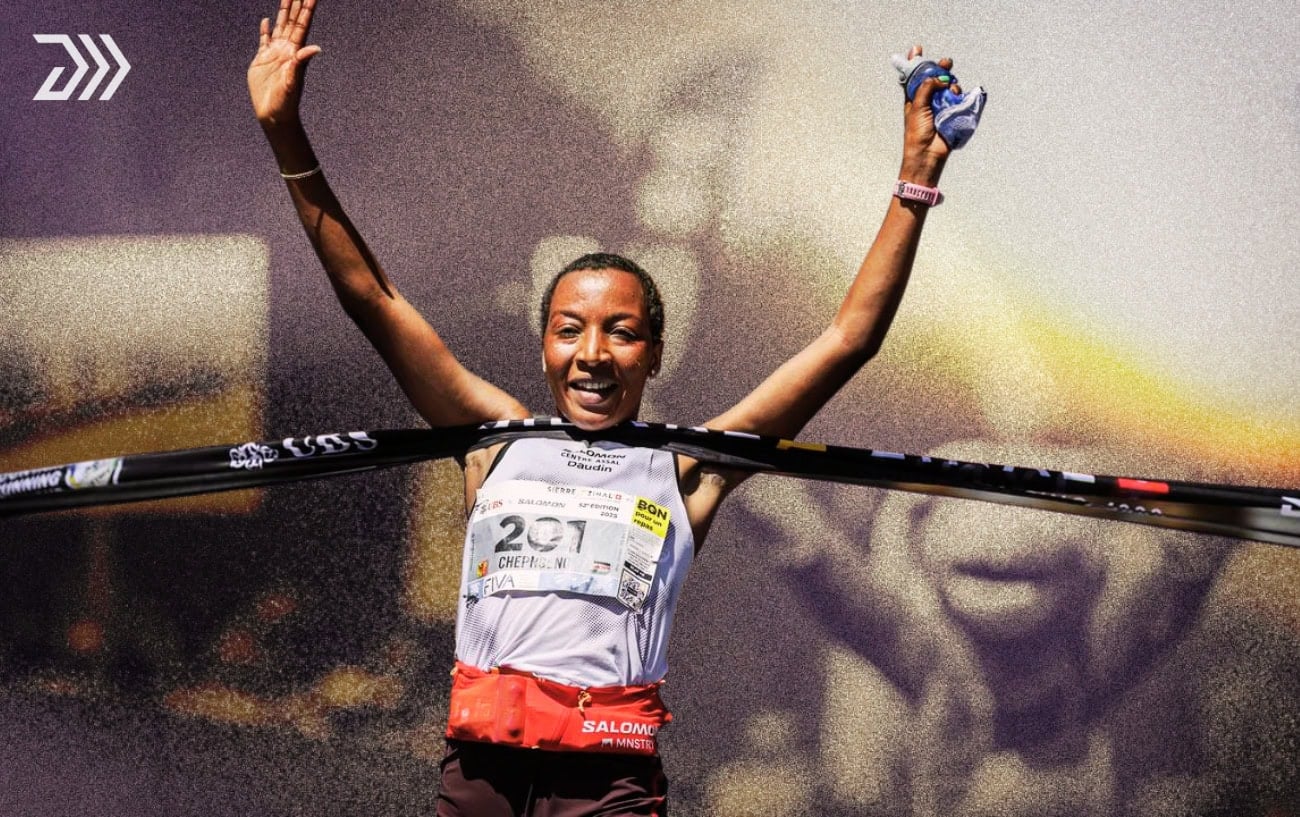
When trail running’s testing does catch someone, it tends to catch them in that gray area. In 2025, Kenya’s Joyline Chepngeno, winner of the Sierre-Zinal mountain race and of the OCC, one of UTMB’s championship events, was banned for two years after an in-competition urine sample at Sierre-Zinal, a World Athletics race, showed a corticosteroid. The ban came from the Athletics Integrity Unit, not from any race’s own program. Chepngeno said the substance came from a knee injection in July that she did not know was prohibited; she accepted the sanction, lost both titles and her Salomon contract, and had her results wiped back to early August. It was the kind of case the system is designed to find: a positive in-competition test, at a race under a federation, for a drug used in the open.
Whether trail running builds anything more rigorous depends less on any single race than on money and a central authority the sport still lacks. World Athletics runs its own World Mountain and Trail Running Championships under the Integrity Unit, the one corner where the sport’s stars face the same year-round testing as Olympic runners. The commercial races that draw the deepest fields and write the largest checks, UTMB, Western States, and the rest, sit outside that structure and share no common standard. Athletes have started to organize around the gap: the Pro Trail Runners Association, which represents elite competitors, runs an anti-doping working group and worked with UTMB on its testing policy. Closing it would take a shared testing body or a common rulebook the major races agree to fund, sponsor contracts that require clean-sport testing, and a real out-of-competition program, none of which exists across the sport today. For now, an elite trail runner can train and race through an entire season, for real prize money, without a governing body ever knowing where to find them.
RunClub
Get more running stories — join RunClub
Daily running news, a community of 300,000+ runners, free training plans for every distance, and a daily running game. Free to join — no card.
Already a member? Log in →




Join the conversation
The is a very good review.