


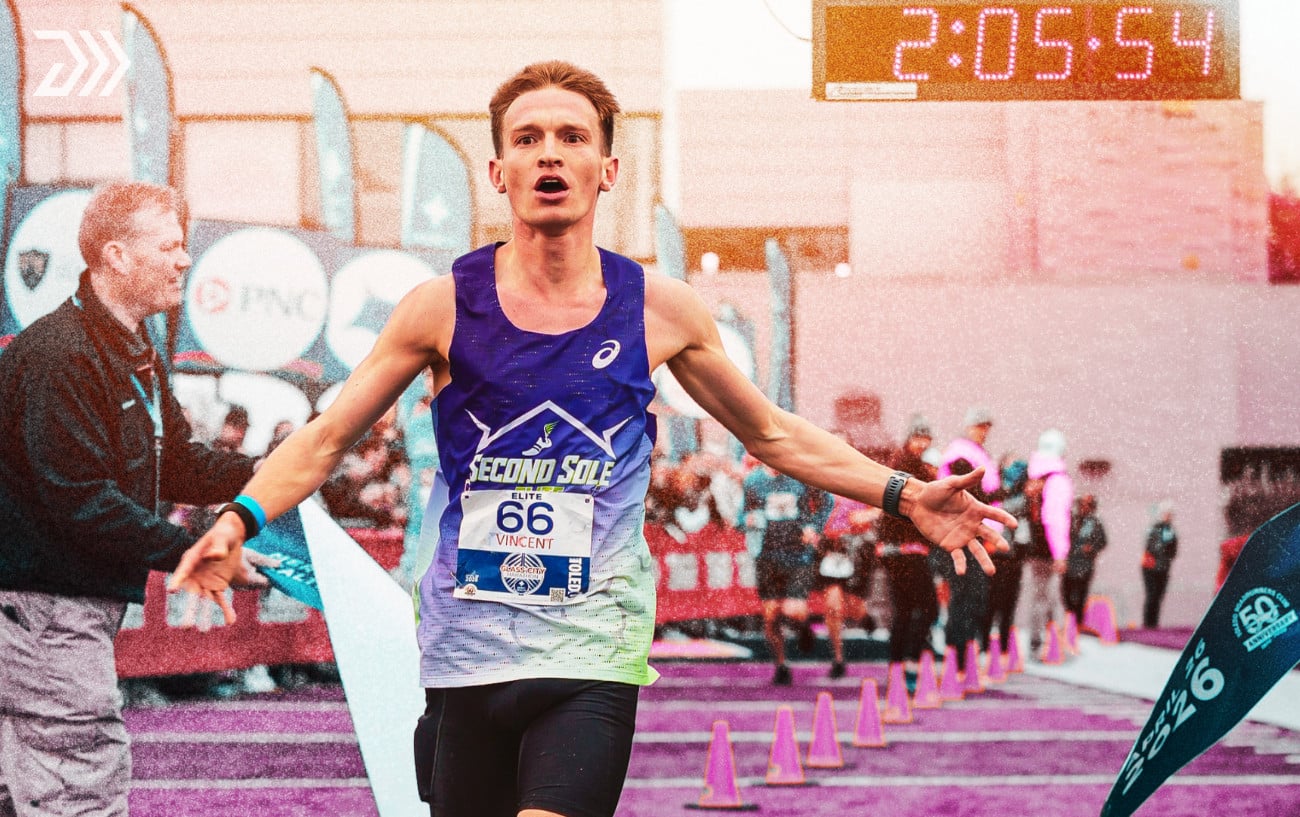
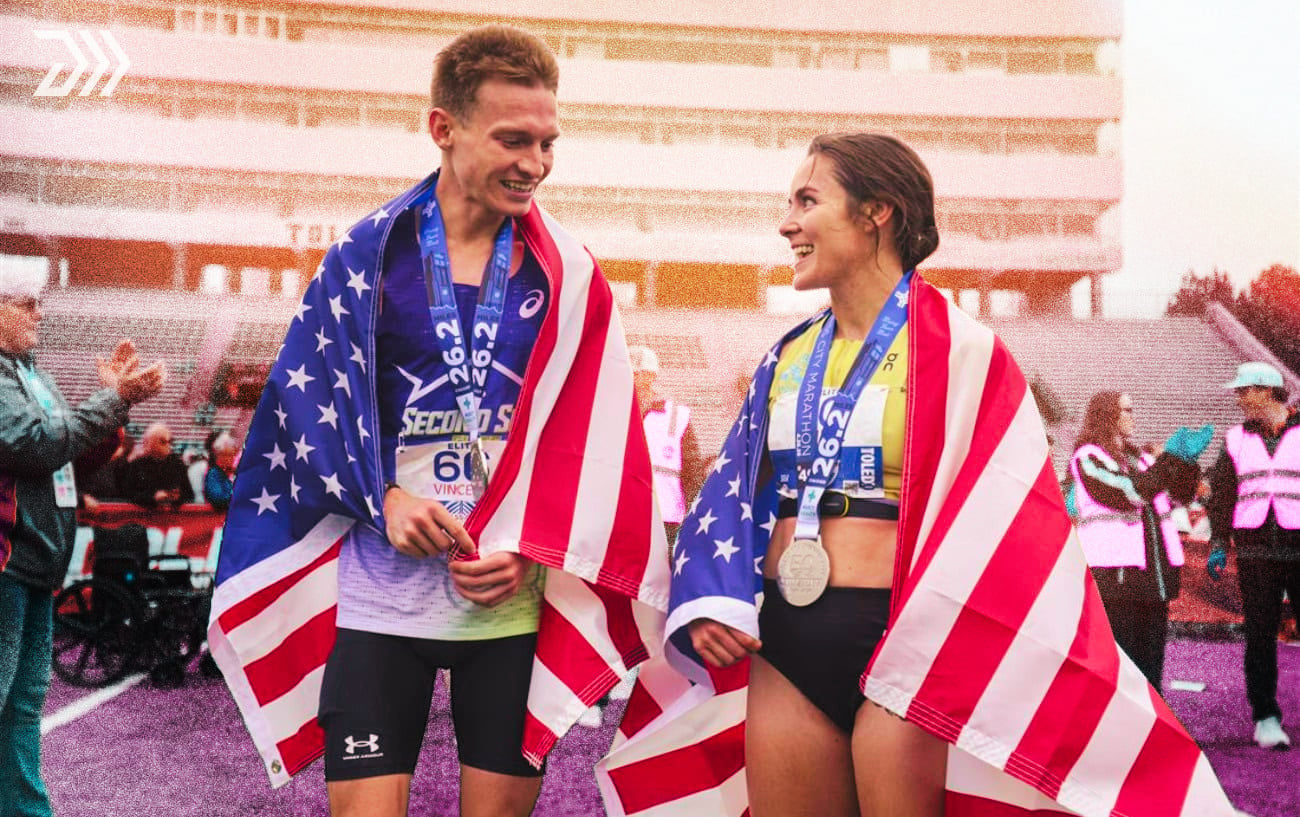
Vinny Mauri had run exactly one marathon when Chicago organizers named him to their elite field on Thursday. That race, a 2:05:54 win at the Glass City Marathon in Toledo in April, was the fastest debut any American has recorded. His second marathon will come on Oct. 11, in what the race is calling one of the deepest men’s fields it has ever gathered.
Mauri, 25, from Warren, Ohio, ran collegiately at Arizona State and Notre Dame and arrived at Glass City with no ratified half-marathon or 10K to his name, self-coached and without a shoe sponsor, as first detailed by CITIUS Mag and LetsRun. He had entered a race in Indiana chasing the 2:16 Olympic Trials standard; when storms canceled it, he redirected to Toledo and ran more than 10 minutes faster than the mark that would have satisfied him. “I wasn’t planning on running that fast, quite honestly,” he told the Toledo Blade.
That time placed him fourth on the all-time U.S. list on record-eligible courses, behind only Conner Mantz (2:04:43), Khalid Khannouchi (2:05:38) and Zouhair Talbi (2:05:45), and it beat the previous fastest American debut, Leonard Korir’s 2:07:56 from 2019, by roughly two minutes. Marathon Handbook covered the debut in full at the time.
Chicago is a different order of test. Jacob Kiplimo, who won here last year in 2:02:23 and owns a personal best of 2:00:28, the third-fastest marathon ever run, returns to defend his title. Amos Kipruto (2:01:29) and 2024 Berlin champion Milkesa Mengesha are in the field, part of a group that organizers say includes six men who have broken 2:04. Nine of the ten fastest entrants own personal bests quicker than Mauri’s, according to the field announcement. His U.S. debut record, remarkable in Toledo, would have him starting behind most of the room.
The treadmill mileage drew the headlines in the spring. The more unusual thing about his entry is the thinness of his racing record. Elite marathon fields are typically stocked with athletes who spent years on the track and the roads before their first attempt at 26.2 miles. Mauri has run one marathon and, by his own account, has never contested an official half-marathon or 10K. He will make his World Marathon Majors debut having never raced a field anywhere near this fast.
The open question is what a 2:05:54 means when it is produced alone. At Glass City, Mauri ran without a pace group, without other contenders near him, on a course that had never seen anything close to that time. Racing is a separate skill from time-trialing, and Chicago will place him inside a pack moving two to three minutes quicker over the distance, through the surges and repositioning a Major demands. A fast solo debut and a top finish in that company are not the same accomplishment, and October will indicate which one the spring performance predicts.
There is a training-methods thread here too. Mauri built much of his fitness on double-threshold sessions, the twice-a-day tempo approach popularized by Norwegian athletes, a good deal of it logged on a Planet Fitness treadmill, as Outside reported. The method has moved from the track to the marathon quickly, and Chicago will be one of the clearer tests of whether a self-directed version of it holds up against the fully professionalized programs around him.
His support situation is worth watching in its own right. At the time of his debut he had no sponsor, an unusual position for a runner suddenly ranked among the fastest Americans in history. Whether that has changed, and what backing he carries to Chicago, will say something about how quickly the sport moves to claim talent that arrives from outside its usual channels.
The race steps off on Oct. 11, with more than 55,000 runners behind the elite start. For Mauri, it will be the second marathon of his life, and his first against a field this fast.
RunClub
Get more running stories — join RunClub
Daily running news, a community of 300,000+ runners, free training plans for every distance, and a daily running game. Free to join — no card.
Already a member? Log in →



Start the conversation