


On November 2, nearly 60,000 runners will cross the finish line in Central Park, some in tears, some laughing, many hobbling, most euphoric. And around their necks will hang a medal that doesn’t just commemorate the feat, but invites them to relive it with their fingertips.
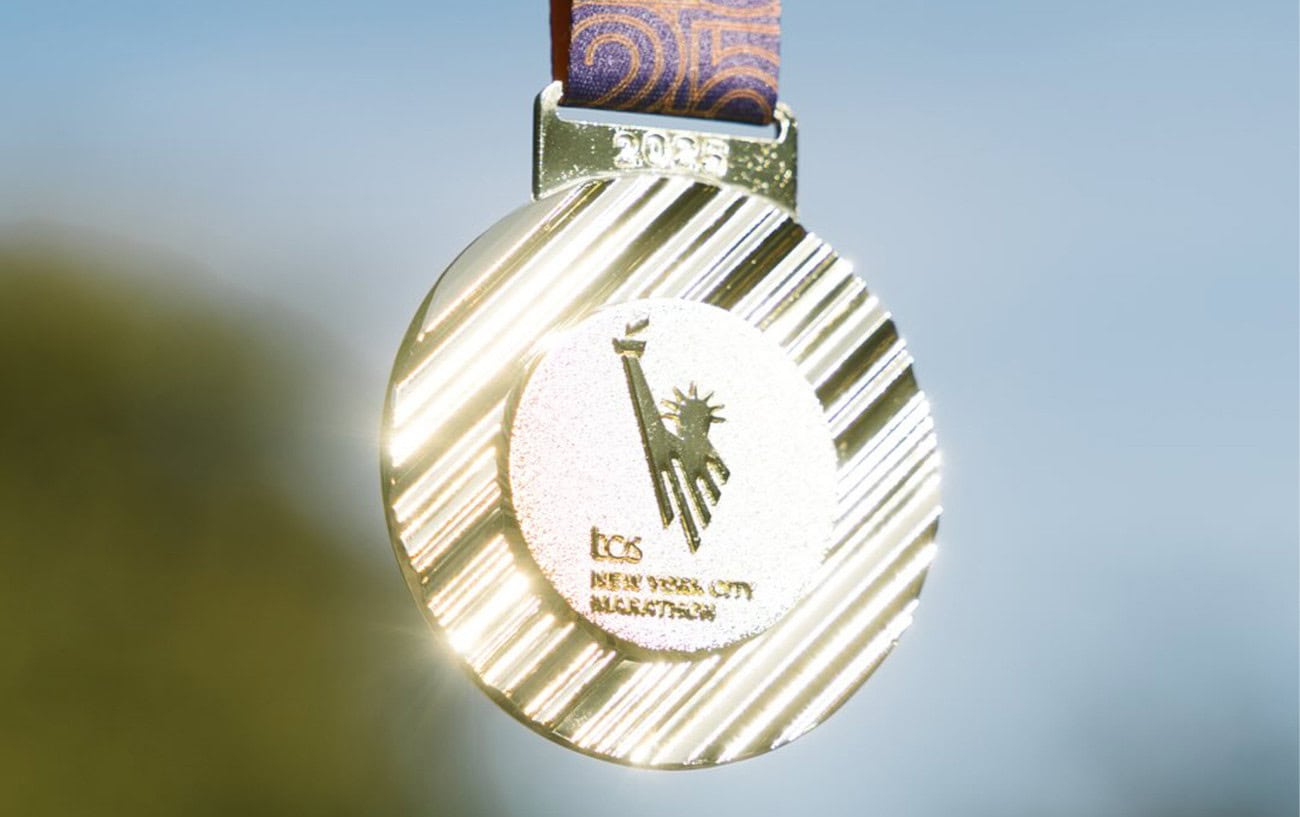
The New York Road Runners just unveiled the 2025 TCS New York City Marathon finisher medal, and it’s already being hailed as one of the most inspired designs in the race’s history. Gold, yes, but more than just shiny hardware.
This year’s edition has a special twist: a raised, tactile ring etched with the elevation profile of the course itself. Not a graphic, not a stylized version, but the elevation profile. A sensory map of every climb, every descent, every unforgiving bridge.
It’s a detail that somehow manages to be simple and profound. For those who have run New York before, you know the course doesn’t give you much, no pacers, no flat reprieves, and definitely no mercy from the wind. T
he five-borough journey is known as one of the hardest of the Abbott World Marathon Majors, and that’s part of its mystique. From the jarring early incline up the Verrazano-Narrows Bridge to the silent, soul-sucking Queensboro climb, all the way to the final, cruel rollers through Central Park, every hill demands something from you.
Now, those very hills are cast in metal, circling the medal like a victory lap.
One Reddit commenter captured it perfectly: “With the elevation, I can feel exactly when in the race the Queensboro Bridge took my soul.”
The rest of the medal stays true to recent designs.
The TCS NYC Marathon logo is raised proudly at the center, set atop a series of clean, diagonal streaks that suggest motion, or perhaps the momentum that carries you forward when the body starts to fail. The year 2025 is engraved above, understated but proud. If last year’s medal was respectable, this one feels earned.
What’s remarkable is how much emotion this tiny detail has stirred. Runners are already buzzing with excitement online. Some are calling it “the best design in years”, others, “Olympic-worthy.”
And it’s not just longtime marathoners getting hyped. First-timers are feeling seen and celebrated, commenting things like, “This makes me feel like an Olympian,” and “This medal just made me more motivated to finish.”
It’s not hard to see why.
The medal taps into something deeper than aesthetics, it’s storytelling. It’s physical proof that what you went through mattered. That all those tempo runs in the dark, those teary mid-training bonks, those godforsaken long runs in the rain weren’t just steps on a course, they were climbs. Measured, mapped, immortalized.
This year’s race already feels massive. Eliud Kipchoge is here. Sifan Hassan will be there. The pro fields are stacked, the atmosphere will be electric, and for many runners, it’ll be the biggest day of their lives.
This medal adds a layer of intimacy to all that grandeur. It’s not just a prize, it’s a souvenir of suffering. A keepsake of grit. A golden, glinting reminder that yes, you climbed those bridges, you crawled through those last miles, and you did it. And now you can hold it in your hands.
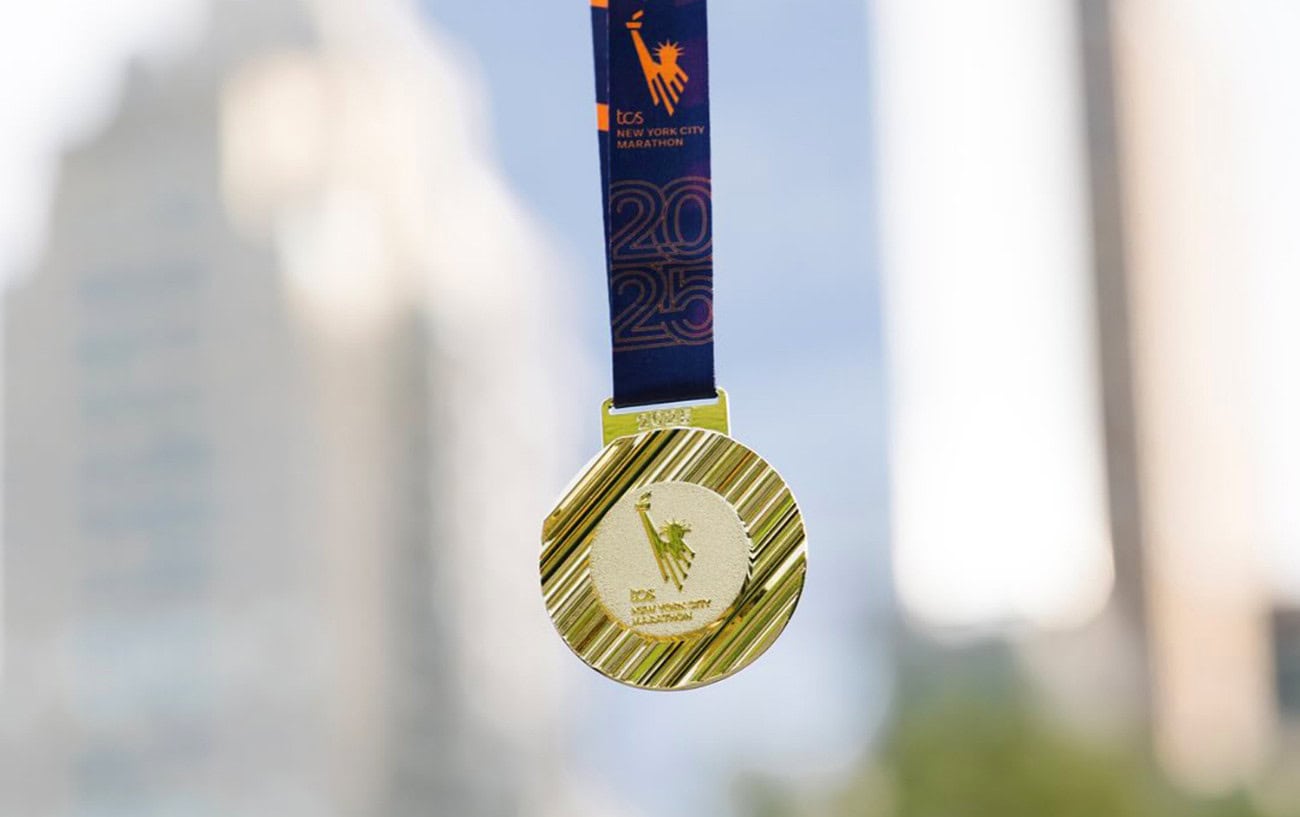
There’s something poetic about the fact that on Medal Monday, you’ll be able to trace the story of your race, literally. Your thumb over the Verrazano. Your index finger grazing the Pulaski. That final ridge before the finish? That’s Fifth Avenue, where the crowd screams your name and your legs are running on fumes. It’s all there, like Braille for the marathoner’s heart.
It’s a smart design, yes. But more than that, it’s honest. Because the New York City Marathon isn’t just hard, it’s personal. And this medal gets that.
So whether this is your first NYC or your fifteenth, whether you’ll run it, walk it, or crawl it, you’re not just earning a medal. You’re earning a story. One that you’ll be able to tell without saying a word.
Just hold it up. Let someone run their fingers over the edge.
And they’ll understand.
RunClub
Get more running stories — join RunClub
Daily running news, a community of 300,000+ runners, free training plans for every distance, and a daily running game. Free to join — no card.
Already a member? Log in →






Start the conversation