


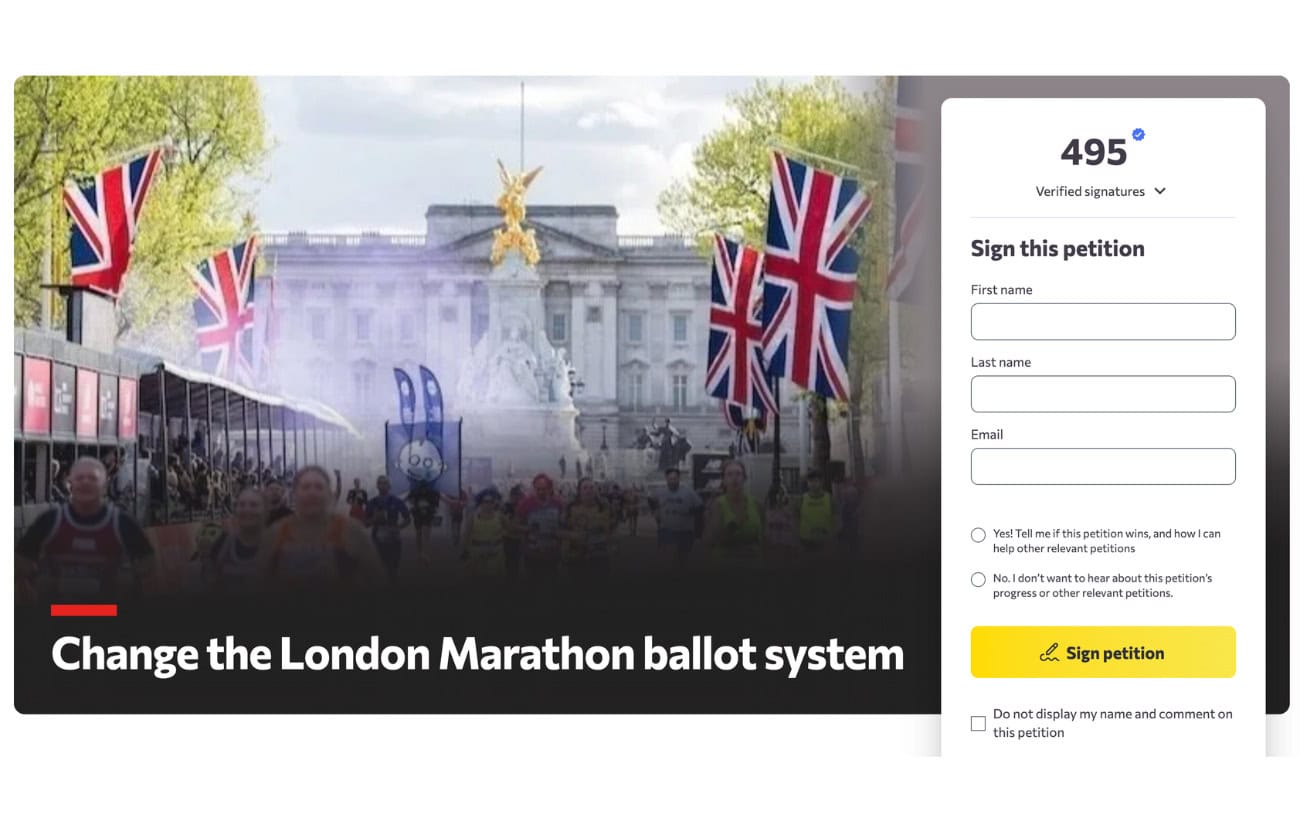
A runner who has spent years entering the London Marathon ballot without success has started a petition asking organisers to bar anyone who wins a place from re-applying for three years. The campaign was launched on May 6 by Martin Hopkinson through Change.org and had picked up 495 verified signatures at the time of writing, with new names rolling in every few minutes.
Hopkinson says he has entered the ballot every year and watched others get in repeatedly while he was rejected. “I’m not alone in this experience,” he wrote in his petition. “Many passionate runners like myself have faced similar disappointments, dedicating time and energy to prepare, only to find that their luck didn’t change.”
His proposal does not stop ballot winners from running London ever again. Anyone who scored a place would still be free to enter through a charity, fundraising for one of the roughly 15,000 charity slots the race makes available each year.
What The Current Ballot Looks Like
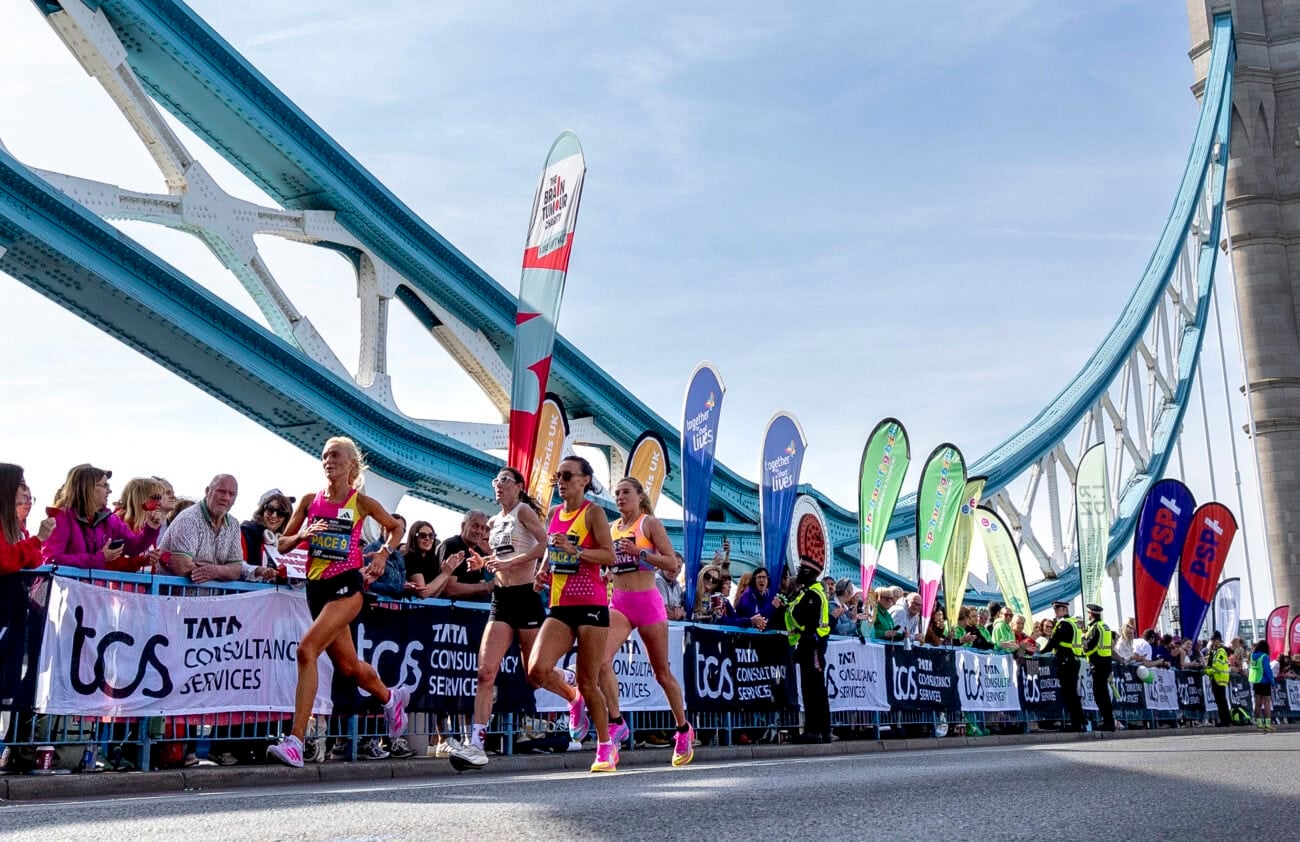
The petition lands at a moment when getting into London has become harder than at any point in the race’s history. London Marathon Events confirmed last week that 1,338,544 people had applied for the 2027 race, beating the previous record of 1,133,813 entries logged for the 2026 ballot.
More than a million of those entries, 1,008,091, came from inside the United Kingdom. As London Marathon Events pointed out, that means roughly 1.8 percent of the entire UK population put their name down for next year’s race.
Hugh Brasher, chief executive of London Marathon Events, called the surge “astonishing” in a statement issued through the organisation’s website. The figure, he added, “firmly establishes London as the world’s most sought-after marathon.”
London’s public ballot is a random draw. There is no weighting based on how many years a runner has been rejected, and no rolling guarantee for the unluckiest entrants. UK residents who miss the first draw are automatically entered into a second pool, which roughly doubles their chances. International applicants do not get that second bite.
The race once operated what runners knew as the “five strikes” rule, which guaranteed a place to anyone who had been rejected five years running. That guarantee was dropped, and entry numbers have climbed almost every year since. According to ballot tracker BibsAlert, the acceptance rate for the 2026 race sat at under 5 percent, leaving more than 95 percent of applicants out.
Charity places remain the most reliable backdoor for runners who want certainty rather than luck. Most major charities ask for a registration fee of £50 to £100 and a fundraising commitment of around £2,000 to £2,500, according to figures listed by London Marathon Events.
Whether A Three-Year Ban Would Actually Move The Needle
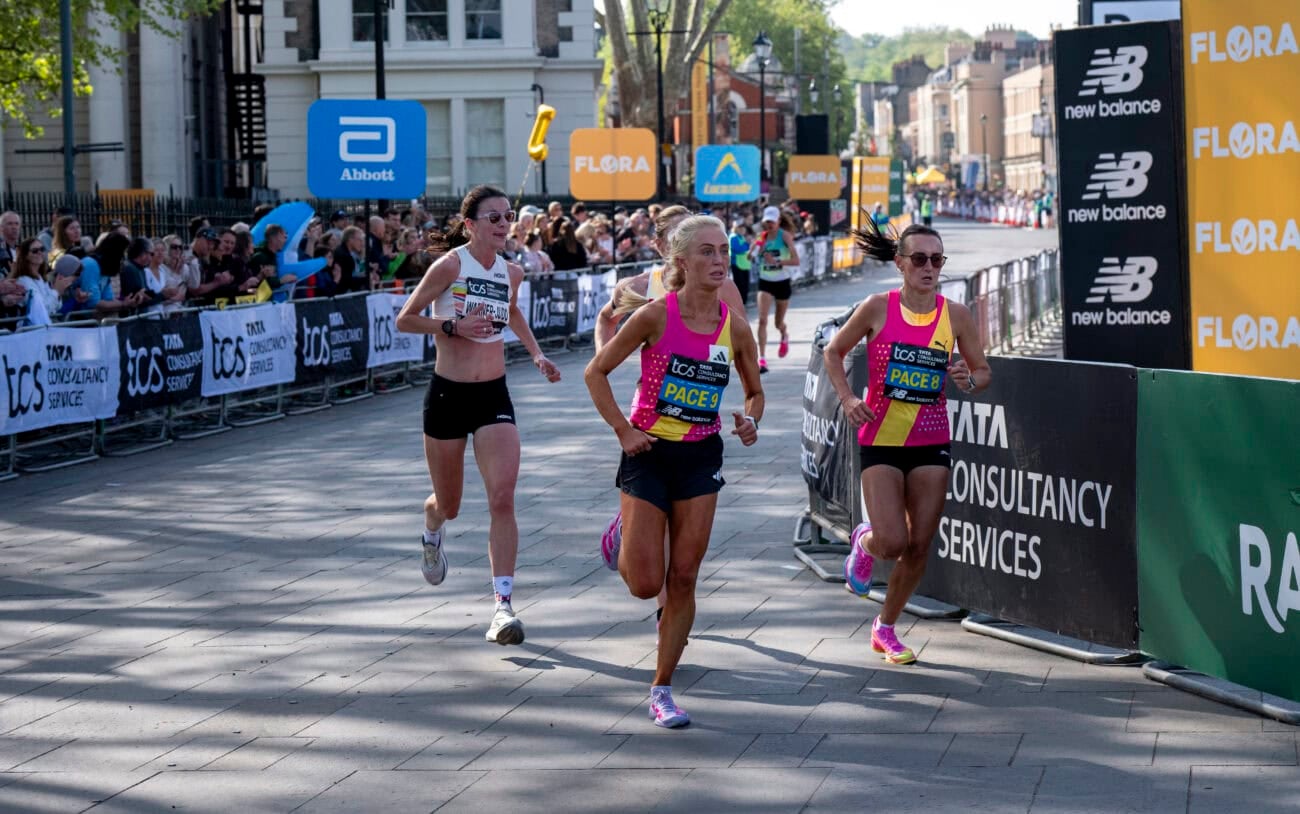
Reform ideas like Hopkinson’s surface every spring after ballot results, and they tend to run into the same maths problem. Running blog Mike Runs analysed a similar proposal last year and found that even if every previous finisher were locked out of the following year’s draw, the change would only free up around 850 places. That is a small share of the hundreds of thousands left disappointed. Many ballot winners are one-time entrants who never apply again, so the pool of “serial winners” is smaller than frustrated runners often suspect.
That has not slowed the resentment, and it is the resentment Hopkinson’s petition seems designed to channel. He frames the case as one of fairness rather than statistics. “The London Marathon is a symbol of endurance, perseverance, and community spirit,” he wrote, “but the current ballot system seems to overlook the value of equitable opportunities for all aspiring participants.”
His petition also leaves the door open to the race’s most prestigious entry routes. Runners who hit Good for Age qualifying times, who win championship places, or who make the elite field would presumably still be able to compete on those grounds, since those routes sit outside the public ballot. The same logic applies for runners chasing Six Star status across the World Marathon Majors.
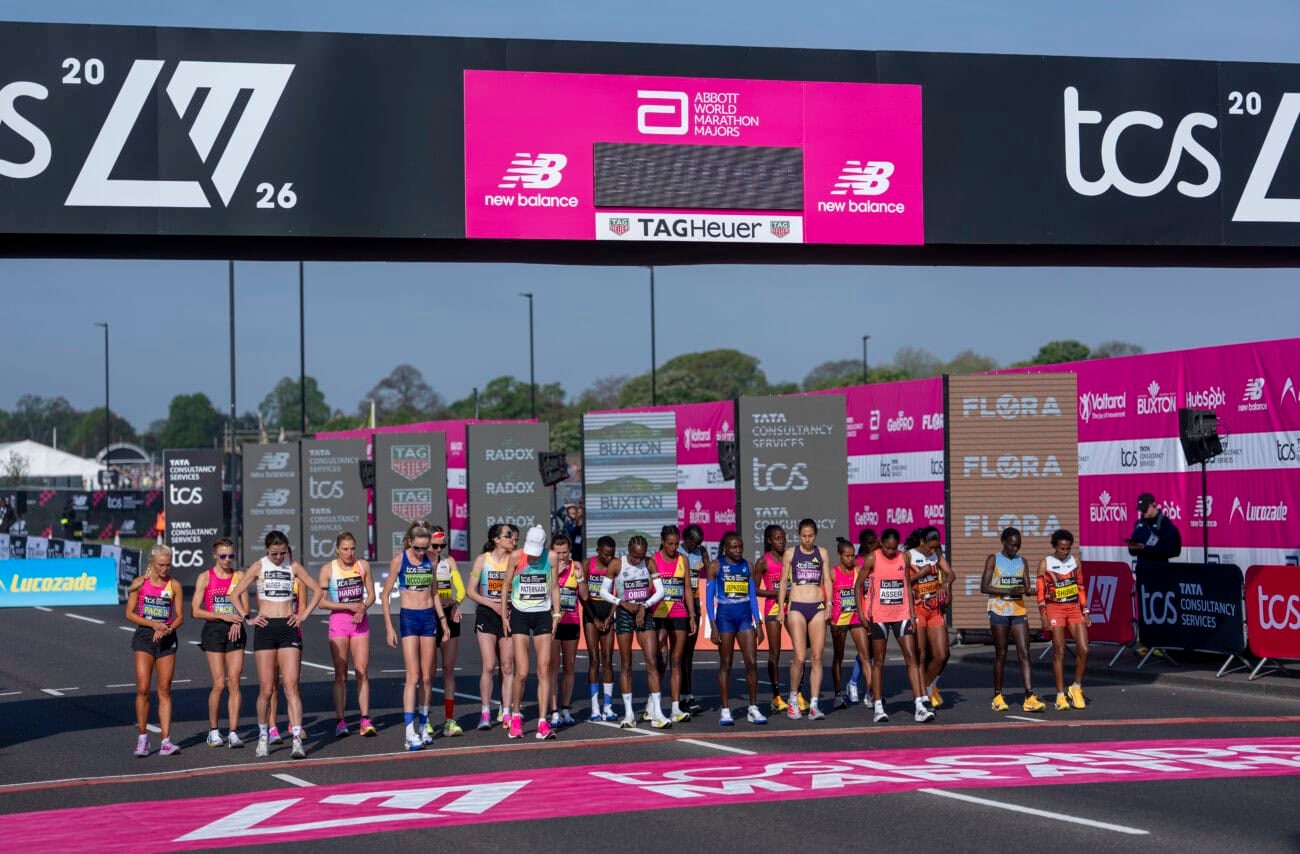
Photo: Jon Buckle for London Marathon Events
For further information: media@londonmarathonevents.co.uk
So, Where Do We Go From Here?
London Marathon Events is expected to announce ballot results in July. The race itself is scheduled for April 25, 2027. Organisers are also weighing whether to stage the event across both Saturday and Sunday in a one-off two-day format, with a decision expected by the end of May. If approved, that single change would significantly expand the number of finisher spots available and could blunt the frustration driving petitions like this one.
For now, Hopkinson’s campaign sits at a few hundred signatures and climbing. London Marathon Events has not publicly responded to the proposal. Whether it lands on Brasher’s desk in any meaningful way will likely depend on how many runners, after another year of refresh-button hope, decide to add their names.
RunClub
Get more running stories — join RunClub
Daily running news, a community of 300,000+ runners, free training plans for every distance, and a daily running game. Free to join — no card.
Already a member? Log in →









Join the conversation
How would a rule that change the entries for the Boston ballot? I've always wondered about that. I know a lot of people would be very upset if they couldn't run it annually or every other year, but it could also make quite a few people happy.
If anything is unfair about London Marathon, it's the Good For Age qualification, available to British only (which would be perfectly fine, if they won't be a part of global Marathon Majors). Other than that (and maybe even that included), everything is a price for one's vanity to have that six-star medal. I keep repeating it to myself every year I get that Commiserations email and postpone the hope to get my sixth star for another year :)